Creativity as resistance
Prelude
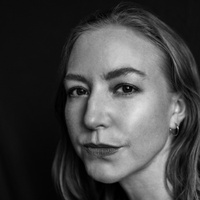
Kemi Ajisekola is a writer and creative strategist based in upstate New York, where she is restoring an 1873 Victorian home and building creative projects exploring history, resistance, and care through domestic space.
Conversation
Creativity as resistance
An essay on making meaning, sustaining care, and building what comes next.
As told to Kemi Ajisekola, 1542 words.
Tags: Art, Culture, Inspiration, Politics.
Recently, I watched yet another act of violence unfold on my phone. It wasn’t the first time, and it likely won’t be the last. What came next, though, felt different.
In the days that followed, protests and collective actions spread across the United States. From major cities to small towns, people showed up in response to violence, oppression, and deepening instability. Minneapolis remains a focal point, but it is far from alone. Even in places that rarely make national headlines, including my own small town in Upstate New York, communities gathered to bear witness and care for one another. More than the scale of the response, what stood out was how people were already making meaning together, through shared language, collective rituals, and acts of care that helped us interpret what was happening and decide how to respond.
What’s unfolding now can’t be reduced to an isolated flashpoint. It’s part of a longer arc of sustained resistance: mutual aid networks, labor actions, renewed conversations about collective refusal, and general strikes as tools for change. These efforts don’t always move in lockstep, but together they signal a shift. A growing recognition that the structures many of us relied on no longer hold, and that something else must be built in their place. In moments like these, when fear, grief, and uncertainty collide, the role of creativity shifts. It becomes more than expression or commentary. It becomes a way for people to make sense of what’s happening, stay connected to one another, and begin to imagine what comes next.
This essay is an attempt to name that shift and offer a framework for understanding creativity not as an escape from reality, but as one of the ways we stay in relationship with it.

Why creativity matters when certainty breaks down
For a long time, creativity has been framed as personal expression, a way to explore identity, share ideas, or make something beautiful. That framing isn’t wrong, but I believe it’s incomplete. In moments like these, creativity does something more essential.
Creativity is meaning-making. It’s how people interpret the world when official narratives tell you to ignore the evidence of your eyes and ears. It’s how communities name what’s happening when institutions can’t—or won’t. Culture shapes what people believe is possible, long before those beliefs show up in policies or systems. It gives words to questions that haven’t yet found language. It creates shared reference points when consensus feels like an uphill battle. What we imagine determines what we’re willing to fight for, build toward, or refuse to accept.
Every major shift begins as a story someone dares to tell. Stories have a way of changing what people can see, and once something is visible, it becomes harder to deny. Harder to ignore. Harder to undo.
Making as a form of agency
This is why creativity matters so much when old guarantees no longer hold. When trust erodes, making becomes a way to assert values and agency. It gives words to questions that haven’t yet found language. It creates shared reference points when consensus feels like an uphill battle.
Pointing out what’s broken is necessary. It’s often the first step, but critique alone won’t carry us very far. Change takes shape when people begin to build.
This kind of creative work is as practical as it is imaginative. It shows up as tools that help people take care of one another, systems that operate outside centralized control, and rituals that offer continuity when familiar structures fall away. It can be small, local, and imperfect, and still matter deeply.
In that sense, creativity isn’t a retreat from reality. It’s one of the ways reality gets reshaped. We have that power, and we must use it.
Art as translation, not escape
Art plays a role here, too. Not as commentary alone, but as a method of translating and interpreting reality.
Stories, designs, and objects that make different futures feel tangible. Work that asks not only what’s wrong, but what else could exist instead.
Art has always been a form of resistance, a way of meeting real needs when systems fail, and of sustaining people when certainty disappears. It doesn’t pretend to fix everything, but it keeps open the possibility of living differently, which is often where change begins.
Sustainability is part of the work
Moments like this can create pressure to do everything. To be loud. To be visible. To sacrifice endlessly in the name of urgency. Change doesn’t ask for martyrdom. It asks for sustainability. What we owe ourselves is the ability to keep going.
Tending to our physical and mental health isn’t just necessary, it’s radical. Preserving your sanity in this age of constant mental bombardment is resistance. Rest, boundaries, and support are what make long-term engagement possible. Burnout helps no one. Steadiness does.

Care, independence, and collective strength
Care also moves outward. When we care for ourselves, we have the power to lift up the people around us: sharing skills, checking in, offering resources, and showing up when and where we can. Change is not sustained by isolated acts of heroism, but by networks of people who look out for one another.
Practicing care also means choosing independence where possible. Building lives, work, and creative practices that are less dependent on systems that extract and more rooted in mutual support. In doing so, we develop the capacity to act with integrity while remaining in relationship with others.

What this looks like in practice
This kind of creative work already exists.
Across disciplines, people are building tools, stories, and systems that meet real needs, create shared meaning, and offer continuity in moments of uncertainty. These efforts don’t always call themselves political, but they shape culture by demonstrating what’s possible and by helping people imagine how life could be organized differently.
I believe this is where creativity moves from theory into practice.
Below are a few creative projects, built outside traditional structures, that exemplify how people are already moving forward:
-
Technofascism Survival Guide: Equal parts practical and urgent, Kim Crowley’s Technofacism Survival Guide is a resource for anyone navigating power, privacy, and digital life with eyes wide open.
-
The Rolling Library: As they put it in their mission statement: “Money is fake but community is real. We bring free books to nyc!!”
-
1741 Forstall Street: This is a residential parcel of land in the Lower 9th Ward, New Orleans that was acquired over the course of two years by artist Kevin Beasley. He turned it into a community garden. There is free WiFi on site and there will be a drinking fountain, public seating, and other amenities as the project develops.
-
Horror Not Hate: An Antifascist Horror Anthology: A genre-defying anthology that uses horror to confront fascism, bigotry, and hate head-on. Horror Not Hate channels fear into resistance and proves storytelling can be both unsettling and deeply principled.
-
RICKY: The filmmakers of RICKY launched a pay-it-forward campaign to bring the film directly to audiences, challenging an industry that increasingly sidelines character-driven stories.
-
Bed-Stuy Strong: A mutual aid network of neighbors helping neighbors in solidarity. All the money they receive is given back to the community
-
Bring Seeding Stories DC to Life!: At a time when community infrastructure is under strain, Seeding Stories DC builds the narrative and organizational foundations for collective power through storytelling, training, and cultural organizing led by longtime community organizers.
Together, they show how creative work can function as both care and infrastructure in uncertain times.

Where we go from here
There’s no going back to what was. Whatever we once called normal no longer holds, and pretending otherwise only delays the work ahead. The future is already being shaped, whether we choose to participate in that conversation or not.
Creativity won’t save us on its own. It doesn’t replace policy, organizing, or material change, but it does something just as essential. It prepares the ground. It gives people language and connection when those things are hardest to find. It helps us recognize one another. It makes different ways of living feel possible.
Creating is not a distraction from reality. It’s a way of responding to it. Of refusing to look away. Of insisting that imagination, care, and dignity still matter, even when the world feels unrecognizable.
What comes next won’t arrive fully formed. It will be built. Slowly, imperfectly, and together. Creativity, practiced with intention and care, will be part of how we get there.

The images in this piece come from the artist and activist jackie sumell’s TCI interview, On working through resistance. They document her projects Solitary Garden and The Prisoner’s Apothecary, both of which have positioned her at the forefront of the national campaign to end solitary confinement and seek humane alternatives to incarceration.
- Name
- Kemi Ajisekola
- Vocation
- writer
Some Things
Pagination