On Opting into Creativity
Prelude
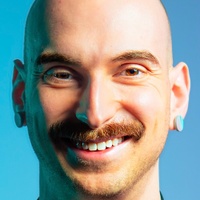
Sami McKay (she/her) is a mixed media artist and writer based in Toronto, Ontario. Her work is deeply symbolic and leans on themes of curiosity and exploration, (dis)connection, and navigating the human experience.
Fixated on the abstract and strangeness of our existence, Sami looks to share the paradoxical, existential, and confusing aspects of life, death and coping with the conditions of being. She aims to display through art and writing the rawness, complexity, and beauty of our existence.
Conversation
On Opting into Creativity
We won't feel creative everyday, but as writer and artist Sami McKay writes, we can treat our creativity like a muscle and learn to overcome moments of doubt and uncertainty and find ways to keep going.
Rolling out of bed this morning, I began the process of welcoming another day. How I do this is not romantic or attractive but is honest and slightly dreadful. I don’t feel creative all the time; today is one of those days.
Most of the creative life is feeling uncreative; it’s this overwhelming sense that perhaps we’ve run out of our greatest ideas, the creative well finally running dry. I’ll tell myself this is true in a hundred ways, believing each more than the last. But lo and behold, the creative energy will return, the fountain of eternal inspiration overflows, and we’re back to the mindset we thought we’d never have again. It’s funny how we forget every time.
As creative people, we are often told by others that creativity is unique to us. It’s this special, untouchable fragment of our brains that we can take advantage of while others can’t. It is true that creativity is a unique attribute, but it is only the difference in practice that marks a creative from those who say creation is not for them. It’s a muscle after all; it just takes strengthening.

Like all things, practice makes perfect, and though some are born more attuned to this muscle, it’s not exclusive nor is it necessarily difficult to flex it. In fact, the easiest parts of creativity are when that creative well is functioning at its peak, where we’re not worried about the next idea but are engulfed in the present one. What is difficult is the choice of creation when creation does not seem to come easily and we are tasked with overcoming doubt and uncertainty. This is where we, as creative people, set ourselves apart: we keep going.
The reality is, most of us have jobs to do, kids to keep up with. Our days are filled with tasks, and we have relationships and responsibilities that divide our attention significantly. Artist is only one of a multitude of roles we might take up. We simply can’t be creating all the time.
“Most of the creative life is feeling uncreative…”
This is to say that creation, the most enjoyable part of creativity, does not possess an attribute of perpetual access but is instead, by its very nature, a momentary lapse of ordinary thought and time into imagination and invention. It’s making space for these lapses to occur that makes inspiration, that euphoric spark of a creative mind, possible. These are not moments of inspired action nor are they inspiration at all; they are instead the foundation for a sustainably creative mind: the moments between the act of creation which seem to matter the most. It is not about creation after all; it is more cerebral than that; it is about choice.
So what we are talking about is not creativity as a characteristic, but as a way of being: a way of interacting with the world as a whole and operating within our individual lives. It’s not something born unto us, but something we continually choose. An act made deliberate by our desire to feed the well even when it seems to be dry.
When a creative experiences doubt, it can feel like the end of the world. The flow we rely on for expression has been dammed by some invisible force, the voice in our heads silenced by the loud call of the anxious mind. It happens almost like clockwork, sometimes in the middle of a project, sometimes between them, but it always happens; it’s unavoidable. The doubt and the creative enter a standoff, the creative begging for the ease of creation to return and doubt reminding us that it is here to stay; neither recognizes this dance for what it truly is.

Doubt is the unlikeable twin of curiosity, the answer when we wonder with a worried mind. It is a natural response to possibility, where we are uncertain of ourselves, of what is next; doubt hopes to fill the blank.
We might learn the creative art of acceptance and admit that we are experiencing doubt, or creative block. We might call it by its name, that is, remind ourselves that it is all creativity; it is just not anyone’s favorite part. Like all things, creativity is not born to please; it is instead born to be. This means that creativity, like all other things, is complex, multi-faceted, and confusing, and necessitates our learning.
We may view creativity as a very small segment of life and living, dedicating this practice to specific activities which ask very specific things of us. But really, creativity is simply problem solving, invention, and a sort of resourcefulness. We can do so in large ways, like creating a masterpiece, or small ways, like choosing a new restaurant to try for dinner.
“Artist is only one of a multitude of roles we might take up. We simply can’t be creating all the time.”
When met with doubt, we might seem to be stuck in this choreography of trying to stop doubting. We believe that the doubt is a sign to halt, to give up. We may begin to tell ourselves that our masterpieces are over, our skills are faulty or inconsistent. What if, instead of treating creativity as something we produce, we treated it as a muscle we can keep exercising? What if we tried creativity outside of creation?
When doubt comes to collect, it is probably not reflective of skill, quality or craftsmanship. Usually, doubt arrives when we are tired or burnt out, when the possibilities of the unknown are so countless that doubt takes on a fair share of plausible outcomes. It’s just a louder voice, not a more likely or more truthful possibility.

If we take our times of doubt and choose instead small acts of creativity, whether that is still in our crafts, a musician choosing a cover to learn or an artist doodling, or outside our crafts, we can rectify our relationship with creativity by distinguishing it from creation. We don’t always have to make something, but we do need to choose how we spend our days. What if we explored possibility in every regard?
As we do this over time, we begin to engage in what appears habitual but is rather extraordinary. It is that series of choices, of choosing to wonder and returning to that choice again and again, that allows creativity to become a way of life. Living creatively in persistent motion, then, is a creative life, or for creatives, just life. It is not the very moments of creative flow in art, or writing, or music that mark this, but the decision to carry forward that does.
Creativity is a lifestyle hallmarked by a unique way of engaging with life; we like to create, shape, mold, visualize and design our experiences. We become crafters quite literally in how we engage with life, not just our specific and identifiable crafts. We do not need to be hindered by the sense that our pursuits require significant inspiration and energy when we can start small. The vision of the creative life is the bigger picture; you just can’t see it from where you’re sitting. It takes time.

If we opt into creativity, opt into our lives with the knowledge of the nature of the creative cycle, which we are all privy to, we engage with doubt like it is simply a part of this. It means rolling out of bed dreadful and dreary because today, I will be creative in a hundred new, small ways. It is also recognizing that the moments between our inspired thoughts are moments of action, even if that action is waiting patiently for the next idea to arrive.
The truth is that we do not permanently graduate from doubt, and the goal is not to avoid it either. We do not need perfect ideas to move forward, nor do we even need to like the work or believe that we are particularly skilled at it to continue. The creative life asks only that we remain willing to participate how we can: to find ourselves in the flow when it comes, to accept its absence when it does not, and to recognize that both belong to the process.
“What if we explored possibility in every regard?”
Perhaps this is also why we need to expand our understanding of what it means to be creative people and include even the smallest acts of human invention, innovation, exploration and curiosity. The musician may decide to rest through a new board game with friends; the chef may walk in nature. Both, when paired with wonder, are creative acts; both are opportunities for rejuvenation, inspiration and overcoming doubt. Our lives become medicine for the discomfort of certain stages of creativity so that we might move forward; so that we keep at our crafts when creation resumes.

Opting into creativity might mean stepping away from creation. Today we might make a choice to remove ourselves from the act of output entirely and instead engage with the world in the act of reception. We might become curious not in how we make something but how something has already been made, or we might become romantics in our perceptions of the world, of nature and human life alike. That same musician might listen to the sounds of laughter; the chef might taste the fresh air. Fall in love again with the senses to soften the doubt, to be reminded by our worlds that we can tap in whenever we choose.
Living creatively is not forcing output but knowing when to loosen our grip on our craft and admire someone else’s. The creative life is then positioned not as a relinquishing of control but as diverting our efforts to more meaningful causes. Instead of asking ourselves to constantly produce, we choose to participate: to notice, question, experiment, connect, and respond. We do this by choice; we operate intentionally within the creative world.
So, as I said, rolling out of bed this morning, I began the process of welcoming another day. It is still not romantic or attractive, but it is honest and slightly dreadful. I don’t feel like creating at this time, but today, that might change.

- Name
- Sami McKay
- Vocation
- mixed media artist and writer
Some Things
Pagination