On being prepared for anything
Prelude
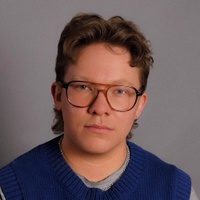
David Duchovny is an actor, director, screenwriter, musician, and author best known for his roles as Fox Mulder on The X-Files, as Hank Moody on Californication, and as transgender DEA agent Denise Bryson on Twin Peaks. He is the author of four novels, including Holy Cow (2015), Bucky F*cking Dent (2016), Miss Subways (2018), and Truly Like Lightning (2021), and has released four studio albums. Some of his recent projects include the 2025 miniseries Malice, the History Channel documentary series Secrets Declassified, and his fascinating podcast Fail Better with David Duchovny, in which he interviews notable personalities about what they learned from their greatest failures. His latest album, Prince of Pieces, was released in August of 2026.
Conversation
On being prepared for anything
Actor, director, author, and musician David Duchovny (The X-Files, Californication, Twin Peaks) on the connective tissue between his creative pursuits, trusting your gut, and wanting to believe.
As told to J. Bennett, 3059 words.
Tags: Acting, Film, Writing, Music, Inspiration, Process, Education, Failure, Success.
You’re an actor, screenwriter, director, author, and musician. Is there a connective tissue in the way you approach all these things?
That’s a good question. I wonder if there is. Obviously, each discipline is going to have different kinds of structural things laced into them that are different in terms of preparation—but I think always I’m looking at preparation as important. I try to do as much preparation as I can do: logical, rational, logistical kind of stuff. Or if it’s acting, memorization long beforehand if I can. And then leave that behind. As a director, I’ll have a shot list, but I don’t think I’ve ever actually done all the shots on the list. There’s always something that happens and it’s because of the preparation, but it’s not actually what you did in the preparation.
I was talking to a director friend of mine about some shot in a movie that I did, and I said, “I got lucky, I guess. I made a lucky choice.” And he said, “No, you’ve been educating yourself and preparing your gut in many ways. It’s not luck at that point.” I’m always just trying to get my gut as prepared as I can be and then let the gut take over. If you can have the freedom—sometimes it’s courage—to just say, “I’m not going to do what I prepared to do. I’m just going to go with this feeling,” that’s kind of the place where I’m trying to get to.
Have you always trusted your instincts?
No, I got there through preparation. I think I got to the limits of rational preparation or logical artistic expression or whatever. And then just trying to get to the point of… I once heard a director say, “Just do it really fast because there’s freedom in speed.” That’s not something I would’ve ever thought to say or to do, but I believe in it because if you can speak faster than you can think, then you’re going to get some interesting stuff—and we’re always doing that in life. We’re always speaking faster than we could think or we’re catching up to our thoughts and language. And that’s what you try to get to as an actor, I think.
But no, I was always very careful. I thought I needed to do well at school. And I’m not even talking about art because the kind of education I had was not really art-heavy unless you’re talking about literature. And even that we didn’t approach as art. We approached it more as philosophy or even religion or a craft—wordcraft. So, I was very careful, very scared. And when I became an actor, I thought I was too old to start acting, so I was like, “Oh, I’ve got to work. I’ve got to make a living.” So, I was scared that way, too. It took a while to get to a point where I could not be just trying to get it right.
I was listening to an episode of your podcast in which you said that you’ve always been driven to try new things. That’s obviously played out in your life and your career—you’re involved in so many different disciplines. Has that drive to try new things always served you well, or have you ended up trying things that didn’t suit you?
No, I think I have a good sense of what’s for me and what’s not for me—and it’s not unlimited. The connection between all the things that I do, I think begins with writing. It begins with the word. I started acting because I wanted to write plays and I thought, “Oh, I should learn what it’s like to say those words or what actors have to go through to do these things that I’m going to write for them.” And then I obviously started writing fiction based on the word as well. With music, I did learn how to play guitar, but it was really writing songs and writing lyrics that I was driven to do. I wanted to express this other thing through music. So, I think that would be the common denominator. And I really don’t have any other talent for anything else. I can’t draw. I know I’m not going to do that kind of thing. So, it’s not like there’s an unlimited supply over here.
What were your goals when you started writing Prince of Pieces, and did it turn out as planned?
They always end up different from what I planned. I didn’t sit down to write a concept album or anything. It’s kind of like when I look at the 12 or 13 songs that exist on an album, it’s then that I start to see patterns because the songwriting process for me is really just catch-as-catch-can. I’m not sitting down trying to write songs every day and I’m not a professional musician that way. So, it’s really just when I’m inspired to write this particular song or feeling like I’ve got a nice chord progression or a nice melody that I want to put some words on.
But what’ll happen is if the songs are all written within a certain period of time, let’s say a year, I’m going to have similar obsessions or similar thoughts. I’ll be attacking similar ideas through different lenses that way. I think that becomes clearer in retrospect. But also, some of the songs on this album are quite old. One of the songs is maybe the second song I ever wrote, and that would be 2016 or 2017 when I wrote that. So, it really covers a broad range of time. So, it’s not like they were all inspired by a certain event or time period.
Looking back, what do you see as the common denominator amongst the songs?
I kind of think of each song as being a different character in a play, in a way, but I don’t know what this play is. I think the title song seemed to me to sum up a lot of the things. On [his 2021 album] Gestureland, that was my state of mind at that point. I was living in this world of gestures. And then Prince of Pieces was just this commonplace thought that we’re all kind of compartmentalized or have these different selves. I liked the religious overtones of the title of the song, and I guess I could see each song as a piece in this album. So yeah, it’s a piecemeal kind of an album.
Many of the songs seem personal, but are any autobiographical?
I think it was Neil Simon who said that everything’s autobiography—even the stuff you make up. And I would say that’s true. But it’s not my goal to foist my autobiography on anyone, and I don’t go around thinking that my autobiography has any kind of interest to anybody else. I think we all go through similar things and I’m kind of distilling my personal experience in a way hopefully that resonates for all the other people that go through these similar things in life. So yeah, I think it starts certainly as autobiography because it starts with one’s feelings. Even if you’re making up a character wholesale, you’re trying to figure out, “How would I be if I was this person?”
There’re definitely a couple songs that are written to my kids in a way, but that’s an archetypical situation for any parent. But I don’t get into any kind of actual specific details about that because I don’t really like that game. I don’t like that game in acting. I don’t like that game in fiction writing. I don’t like that game in songwriting, which is kind of a connect-the-dots back to the author or the performer.
Why not?
Well, it’s something that’s really broken down over the last few years with social media. There’s a very different relationship between the artist and the audience, and it’s a much more personal one. And that’s not one that I’m comfortable with. Not that I don’t feel personally grateful or anything like that, but just the idea that you’re having a personal relationship with millions of other people. And also, I think it weakens the art. When you’re asked—and it’s a perfectly legitimate question that actors get asked a lot—“What role did you most personally respond to?” or “What parts of this role are like you?” And my feeling is always: Why would I give that away? It’s kind of like a magician telling you, “This is all bullshit.”
The tagline of your podcast is, “Where failure, not success, shapes who we are.” I think that’s absolutely true. How did you land on that as the basis for your show?
I’d always been interested in, well, not being a talk show host, but I always liked the idea of interviewing people. I feel like I’m interested in other people. And there were times when I was offered certain jobs like that, but it was just not something that I saw myself doing for that long a period. And then, when the writer’s strike was happening, I couldn’t act and a podcast isn’t written, so we could do that. I saw it was kind of a perfect situation for me to try to satisfy that itch about getting interested in other people’s journeys, but also not having to do it every night, five nights a week, for 50 weeks out of the year or whatever. I could do 25 or 30 for a couple years. So, part of it was utilitarian, just a timing-is-right kind of a thing.
But I really butted heads against the whole podcast ecosphere. I really wanted to talk to people that you don’t know, that I don’t know. I didn’t want to necessarily talk to this famous actor or that famous actress. I mean, I’m sure we’d have an interesting conversation, but what I really wanted was philosophers, religious thinkers, writers—not the people that drive the kind of numbers of a podcast. Which is a problem.
But you had access to other people who also couldn’t work because of the writer’s strike.
And I got a couple of people that I know who are well known to come and do it, but I never felt completely kosher about calling in a favor that way. I was always like, “Yeah, you really don’t have to do it. But if you want to do it, let’s do it.” And the people that did do it, I think they were interested in the concept and talking in that way. So yeah, that’s how that all came about.
Can you give an example from your own career where a failure has ended up being a lesson or an improvement in the end?
I can’t think of an actual example except to say all those instructive examples in the beginning when I was telling you that it’s all about preparation and then preparation allows you to make mistakes. I originally started out thinking preparation is going to allow me to be good, allow me to be perfect, allow me to do it the right way. But actually preparation allows you to relax enough to make mistakes and to go places. So, I would say everything that works is a mistake in that way.
When I first started writing songs, I was writing with this great musician, a guy named Keaton Simons, an old family friend. I’d send him my song, I’d just voice memo them or whatever, and I’d send him the lyrics and the chord changes. And he said, “I really like the way you write songs because nobody would put the chords together that you’re putting together who actually knew music.”
I’m not saying that I’m good because I don’t know what I’m doing. I’m just saying that’s part of what was fun for me when I started making music—just trying to figure it out with no pressure. I didn’t have to support my family this way. It was just really this kind of idea of sitting with a guitar and listening to what sounded good. And then I’d write a song that had the verses in A minor and the chorus in A. You wouldn’t do that if you were trying to write a rock n’ roll hit.
Do you have a favorite story from one of your guests on the podcast about their own experience of failing better?
Sean Penn told a really interesting story about auditioning for his dad. His dad was a director who was doing a TV show when Sean had just gotten interested in acting. He was probably in his late teens, and he didn’t get the role. And his dad said, “Why don’t you come watch it being done? Come watch it being filmed. It might be interesting.” So, Sean went down there, and the actor who got the role was Barry Miller, who also played the kid who jumps off the bridge in Saturday Night Fever. So, Sean is watching Barry work, and he didn’t go where it said he was supposed to go in the script, and he didn’t say it the way you were supposed to say it. Sean was there, having failed at delivering whatever it was he thought the script was asking him to do. And then he saw this other kid completely free and making it and he was totally inspired by that. He saw, “Oh, that’s what acting is.”
The episode you did with X-Files creator Chris Carter was great. You talked about how he gave you your first shot at directing with an episode of the show. At that point, you had already been on the show for years, and you knew how Chris worked. Was there anything you learned from him that helped you as a director?
Well, there was certainly a form of the teleplay, which I didn’t know and that I would’ve learned by reading so many of them at that point. I mean, the first time I wrote and directed was in the sixth year of the show. So, I’d read and acted in probably over 150 of these scripts. I saw there was what they call the teaser, which is the part before the credits and the first commercial run that kind of teases up the story. And then there’s act one, act two, act three. I would not have known how to do that or known what each of these parts of the script was supposed to deliver.
And then I would say just in a more general sense that—and this is not necessarily from Chris, but from the demands of the show itself—was that I was coming out of graduate school for literature, and I was not thinking about plot. That’s the last thing you talk about in those rooms. So, really, I had to unlearn all this kind of fancy shit that I’d been doing and really just dig into plot and realize that plot is the driver in television and most movies. I mean there are movies that are abstract, art movies and things like that, but really what we go for is the story, for the plot. And over the course of five or six years, all that kind of stuff melted off me and I was just like, “Oh, let’s just tell a story.”
When I approached Chris about directing, he said, “If you write a script, you can direct it.” Which is a weird thing to say. I wish he would’ve just said I could direct it. But I’m glad that he did because that forced me to come up with a story.
You’ve experienced the solitary process of writing a screenplay or a novel, and you’ve been involved in the very collaborative processes of acting, directing, and playing music. One process offers total control, but the others offer the benefit of ideas that you might not have come up with on your own. What do you see as the pros and cons of each?
There’s something about the solitary nature of writing, I feel like it really is just you out on a high wire. And that’s fine because you can take all the blame, take all the credit, whatever. I also know my motivation exactly. And therefore, I’m not really open to attack. I’m standing on my own two feet with acting and directing or even screenwriting, but it’s very, very different. And what you mentioned is the great part of it—when people surprise you and add to it.
A director doesn’t really do anything. A director is just a guy saying, “Do this and do that, put that there.” When I first started directing, I was afraid that I didn’t know enough. I was reading a book on it by Walter Murch, who was a great editor and a director. And he said, “The director is the immune system of the film.” And I was like, “Oh, okay. So, all I’ve got to do is kill the bad ideas and let the healthy stuff go through.” And again, you’re thrown back on your gut. And if you’ve prepared enough, then your gut is going to be educated and make good decisions.
I’d like to conclude by asking you the question you asked Chris Carter on your podcast: What’s the difference between believing and wanting to believe?
I guess it’s almost like the religious impulse. I would love to believe, but it’s hard. So, I think wanting to believe is actually so much more interesting than just believing. It shows the anxiety of it.
David Duchovny recommends:
American Pastoral by Philip Roth
Emily Dickinson’s poetry
Sly Lives! The Burden of Black Genius – Sly Stone documentary by Questlove
Star Trek (“They play the original Star Trek every night at eight in Los Angeles. I think I’ve seen every episode about 15 times at this point. It’s like a sedative for me. It bridges the gap between my childhood and now, and it’s surprising how great some of the stories still are.”)
- Name
- David Duchovny
- Vocation
- actor, director, screenwriter, musician, author
Some Things
Pagination