On flowing through it
Prelude
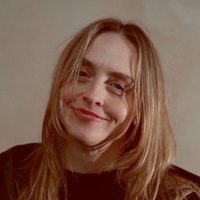
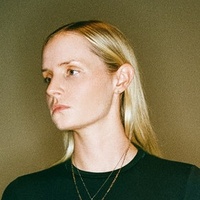
Sara Cwynar (Vancouver, BC, 1985) lives and works in New York. Her work in photography, video, and installation involves a constant archiving and re-presentation of collected visual materials. For over 10 years she has been evolving her own personal visual language in installation, photography and film, revealing the powerful role that images play in our daily lives. Cwynar holds an MFA from Yale University and a BDes from York University. Past projects include a commission for the Performa Biennial, New York (2021), “S/S 23”, Foam Photography Museum, Amsterdam (2023) “Apple Red, Grass Green, Sky Blue, ICA Los Angeles (2022)” “Source,” Remai Modern (2021), “L’Image Volée,” Fondazione Prada, Milan, Italy (2016); and “Greater New York,” MoMA PS1, Queens, NY (2015/16). Her most recent exhibition, Baby Blue Benzo, is an overwhelming environment of obsessively constructed images and video.
Conversation
On flowing through it
Artist Sara Cwynar discusses remixing reality, handling stress, and her imaginary male artist stereotype.
As told to Sara Black McCulloch, 2623 words.
Tags: Art, Video, Photography, Process, Inspiration, Family, Time management, Production.
This is such a weird way to start an interview, but I know you were a professional figure skater when you were a teen. I also figure skated, and wanted to know if you are at all superstitious? I’m asking because I definitely felt like landing anything was completely out of my hands.
I don’t think I’ve ever talked to anyone about this, but yeah, I would be like, “If I step on the crack in the sidewalk, I won’t land my double axle.” Really classic OCD things. And I realized later that it’s so outside of your control that all you can do is try to wrest some control—unless you’re supremely talented and always land your jumps, which I was not.
Have those superstitions trickled into your art practice at all?
I’ve tried to let go of that because it never worked for figure skating. I do have a lot of rituals that I need to do, which is maybe another version of that. My studio is always a mess, but it’s a very specific, organized kind of mess. And before I start doing anything, I have to sit for half an hour. I also like to work at night when no one is going to email or bug me.

Sarah Cwynar, Baby Blue Benzo installation view, 2024. Photo: Chase Barnes.
You tend to collect images, whether it’s archiving physical objects of finding them through Google searches. Do you feel a sense of urgency around that practice? Do you think about how AI might impact this kind of work?
I feel like there’s going to be more of a premium on the real, especially the more we see things that are fake, so I’m not that worried about the type of imagery [that I source] going away. I think the format and how those images come to us will be different, and that could actually be good for me. So much of my work is about going back to the idea of luck or accidents or superstition, about looking for one thing and finding something else. It’s about the things that searching through an archive surfaces and buries, both metaphorically and literally. A lot of the content of my work is about which images make it to the top and get shown again, and which ones get buried—and how I can try to bring those ones back out. If the structure for finding images changes, it could actually inject my work with a new source, and that could be really good. But I hate AI like everyone else.

Sarah Cwynar, Baby Blue Benzo stills, 2024. Photo: Chase Barnes.
As a child, did you get really attached to specific objects or images? Do any of those still resonate today?
I’m actually working on a project right now using this 1890 elephant automaton that was in the MOCA show. I’ve been thinking a lot about Disney characters, or things that happen in real life that have a lot to do with Disney characters—like how we feel so much protection over lions because of The Lion King. Remember when that dentist killed the lion on the safari and everyone was so mad at him? Someone pointed out that maybe we were mad because we’re all so connected to Simba from The Lion King. I was thinking a lot about Dumbo and how traumatized I was as a child by it, because the worst thing you can imagine is losing your mother. And now that I am a mother, the worst thing I can imagine is not my own death but that my child wouldn’t have a mother. It’s really crazy how your priorities shift.
What other connections are you making in these early stages of a new project?
I’m trying to connect these really benign images of Dumbo and the elephant toy to their more real incarnations. How, for example, the ivory and rubber trade in the Congo set the industrial revolution in Europe, and how all of these things are connected. We have this connection to elephants partly because of how endangered they became, but we also benefit from the things that they’re sacrificing, in a way.
You’re already working on another show, but didn’t you just finish installing the MOCA one? How are you managing all of this while taking care of a child?
I spent five days after the MOCA show just lying on the couch, and now I’m back in the studio. When I was in Toronto, I was living in this weird condo building across from the MOCA for 10 days. And I barely left that area because it was such a busy install. And I needed to run back and forth because I had the baby.

Sarah Cwynar, Peony on Ermine White in Baby Blue Benzo installation view at 52 Walker, New York, 2024. Photo: Chase Barnes.
Is it hard for you to take breaks at this point in your career?
I find this with museum shows: they either have a slot way too soon, or I’ll have to wait until 2046. I’m glad I did it, but it was really nuts.
So you work well under pressure.
I know a lot of artists who shut down under that kind of stress. I have always liked stress, but only to a degree. I like stress if I know I can meet the stress. When you have a baby, it’s harder to know that, because you don’t have as much free time.
You moved from British Columbia to Toronto, and then to New York, where you worked at The New York Times Magazine. Did you ever notice a difference in how images were presented to the general public in the US vs. Canada?
There was definitely more spectacle, money, and production value behind everything in the US. The bar is a lot higher for what makes it through, into print or online, and that makes American images seem more authoritative, even though we all know we shouldn’t think that way. Working at The New York Times, I saw how arbitrary and contingent the images were that made it into the paper. For example, last night, for some reason, I was in this rabbit hole, looking for that Dorothea Lange “Migrant Mother” photo. I found other photos taken at the same time, and in these, you can see her full tent and her kids, and it’s just totally different. It doesn’t tell this story they wanted to tell about [the Great Depression] and American stoicism. Even though she was described as “European,” I just found out that she was Cherokee. She also didn’t want those photos of her to be used. I had no idea. I love the photo editors I’ve worked with over the years, but I think about how much trickery goes into photo editing. And I think about how differently we would understand history if there was some rule that they had to show the other photos that came before and after the famous one.

Sarah Cwynar, Western Costume, Suit (band), Lt.Blu, Right Shoulder Missing Button; Ferrari from MoMA Collection II; Stocking on Sky; Prop in LA (Strip) in Baby Blue Benzo at 52 Walker, New York, 2024. Photo: Chase Barnes.
Did that experience ever make you reconsider your own selection process?
I am always trying to find the way of looking at something that isn’t the one stuck in our popular imagination. And I’m looking at ways to show how all the pictures you’ve seen before come into the way you look at pictures you’re seeing now; how things end up repeating themselves or get solidified over time. I’m also thinking of the ways we, increasingly, modify our own images and personas based on the feedback that we’re getting in real time and how insidious that is. I’m trying to pull back and show the apparatus that goes into making the photos, the outtakes, and other versions of things.
Does the medium of video help you expose different sides of an object or image? Was making the shift from photography to moving image difficult?
With photography, which was only for a few years, I would find an object that I really wanted to show and then obsess over how I could transform or show it differently. [At my MFA] they would always say: “The real world is weirder than any of your ideas.” So I think video frees up a lot of space to show something for half of a second, or to just have less weight on each of the materials. And in that sense, I was able to compare them more, build stories around them, use the narrative potential of the time-based media to pull out the meanings of things in much more involved ways.

Sarah Cwynar, Doll Index, 1865 in Baby Blue Benzo installation view at 52 Walker, New York, 2024. Photo: Chase Barnes.
I made my first two films, Rose Gold and Soft Film, in grad school, where I already had this built-in audience. And at first, I would play it in the crit room the night before I had to present it, to see how it looked. Every time, I’d be like, “This makes no sense. This is insane.” And then I’d stay up all night, re-editing the whole thing… You have no idea how anything sounds or feels until you’re watching it with an audience. So video really changes that, and you have to take into account other people’s understanding and experience a lot more.
I noticed a lot of theory made it into the show, especially in Baby Blue Benzo. Notoriously, theory can be very dense. Do visuals and narrative help an audience connect to the material?
That’s always been a goal. Even when I made books. With Kitsch Encyclopedia, I took these things that are really gate-kept and tried to make them more accessible. I was revealing their kitschiness or overgeneralization. I think of theory as distilling the world into little nuggets that can be handed over to someone else. A lot of theory is functioning the same way as images do: to remove a lot of reality and remix it as something more digestible. So I’m trying to think about how a lot of the fundamental theories and philosophies that we use to think about our world are kind of functioning in the same way as images.
It’s hard to make theory accessible. I know there is a certain number of people—and I’m not offended by this—who just watch my videos and hate them because it’s a lot to digest.
From my experiences at your MOCA show, everyone stayed to watch the full 21 minutes of Baby Blue Benzo. It’s impressive given our attention spans these days. Were you worried about doing more long-form video?
Something I think about a lot is that a mercurial, stereotypical male artist might be willing to just make a video of a piece of dust floating across the screen for 10 minutes, or an hour. He’ll be like, “Watch this. I don’t give a shit if you don’t get it.” Meanwhile, I would be stuffing in as much extremely overstimulating content as I could—and as soon as I thought I might lose my audience, I would throw in something else. But then I felt like over-explaining myself was doing a disservice. You’re damned if you do and damned if you don’t. At some point, I became aware of what I was doing and was able to manipulate that more, to play with it, and then to take it away. But at first, it was just this extreme anxiety that no one would sit through my artwork.
In Baby Blue Benzo, you unpack how something like a Mercedes-Benz 300 SLR can increase in value, while women lose cultural value as they age. At one point, you get to sit in the car. What’s going through your mind? Was there a live museum audience staring at you as you were filming?
I was sitting in the second copy of the car, not the one that sold for millions, in this very strange corporate museum that was totally amazing but also weird. The copy of the car was right in the middle, set against this landscape of a forest. The museum opened at the end of my shoot and there were all these men standing around, watching me, which was perfect.

Sarah Cwynar, Alphabet installation view at ICA Boston, 2025. Photo: Mel Taing.
Why was that perfect?
There were two things about this. One was that all these men showed up to the museum at the end of the shoot and were looking at me. I don’t know if they thought I was part of the exhibit, or whether they saw this camera equipment, or didn’t notice it at all. The other thing was really disruptive. Before we started, the curator of the museum, a woman, had already given me permission to do whatever I wanted with the car. She was wonderful, and pretty high up. Later on, after she had left, this man in a suit came up to us and said we couldn’t be in the car. My camera person thought he seemed important and that we should listen to him, and shoot everything before he came back. Once we finished, we found out that he was a 20-year-old security guard. It was interesting: because he was a man, he inserted all this authority he didn’t have. I mean, I can’t say it was just because he was a man. A woman would have done that too if she was a security guard. But he was definitely overridden by the curator, who had this authority.
You also feature this video of Pamela Anderson, back when you were shooting her for the Times. She really works the camera, but at some point, she breaks, looking frustrated and ready to leave. We see how in control she is of her image. What was it like photographing her?
She was supposed to be at our shoot with no makeup—that was when she was going to start doing that—but showed up wearing a full face. The day after the shoot, she was at the Jacquemus show in Paris, and that was her first public appearance without makeup. She’s amazing—so charming, and very intelligent. And yes, she’s very aware of her image, and she knew she had control of it. The footage that’s on the panel, which is the full roll I shot of her, shows that she’s able to turn this persona on and off. And only decades of being an extremely beautiful, photographed woman would allow you to do that. She was also really excited that I was shooting in 8 x 10 because that’s how Playboy photographed her.
Do you prefer video or photography? Are you leaning more towards one versus the other?
That’s a good question. To me, film is always the most important. With photography, there’s a lot of pressure to get that one shot, which I don’t like. With video, you just kind of flow through it and see what you get.
- Name
- Sara Cwynar
- Vocation
- artist
Some Things
Pagination