On creating work beyond your own direct experience
Prelude
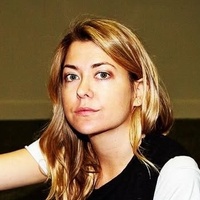
Stanya Kahn is an interdisciplinary artist working in film/video, drawing, painting, sculpture/installation, sound and writing. Dialectics, the uncanny, pathos and humor drive a practice dedicated to crossroads and undersides, of power and the unseen, absurdity and distress, fiction and document, language and the body, relations between the state and the commons, narrative time and the synchronic time of impulse.
Conversation
On creating work beyond your own direct experience
Artist Stanya Kahn on having the courage to explore new mediums, mixing humor with pain, and making art during political upheaval
As told to Claudia Ross, 2477 words.
Tags: Video, Activism, Adversity, Process, Promotion, Success, Independence.
I was first introduced to your films, and your recent show is a combination of ceramics, painting, mosaic, and animation. How has your process developed over time?
In part, I try out different mediums as a way to keep processing ideas. When I get blocked around writing for film, for example, I’ll draw. And the drawing organically evolved into painting. It came organically and deepened during the pandemic when I couldn’t make films. In 2020 I was either checking twitter or in the streets during the George Floyd Uprising. And in the studio I was learning to paint better. I felt that more language, and my voice in particular, weren’t what was needed at the time.
But I’ve always been a multidisciplinary maker. Maybe because as a kid my mom was always dropping me off at some community center, so I took ceramics, printing, silk-screening, modern jazz dance, theater, drums, piano, and decoupage at these free or low-cost public spaces in the city. By junior high and high school, I was studying classical flute in public school, jazz saxophone, playing in punk bands, doing photography and ceramics.

Alter and Urn 1, 2025, Glazed porcelain and stoneware tiles, glass, grout, pigment, wood, aqua resin, stones, wheel-thrown glazed stoneware vessel, 27 x 18 x 10 inches, Courtesy of the artist, Photo by Chris Handke.
While getting a BA in interdisciplinary social science I started training as a dancer, making performances and organizing. Then I worked for nearly five years as a full-time case-manager with dual and triple diagnosis unhoused adults, making performances at night. I toured nationally and internationally as a solo performer and with a dance theater company I co-founded (called CORE). I’d write the texts, choreograph, make my own costumes (including a bedazzled and feathered Vegas showgirl costume), design the lights, and make original music and sound scores. My practice has always been quite broad, shifting forms according to content and informed by life and jobs.
In 2014 I returned to ceramics, making some small sculptures for a show of drawings and videos. Then I made a wall of ceramic sculptures for my installation in Trigger at the New Museum. Then I thought I should be skilled at throwing, to honor that history of ceramics. I liked the meditative concentration and discipline it required. I found that the vessels could carry conceptual weight in an installation. And I like to make everything myself. I don’t have things fabricated and don’t have assistants, so that becomes part of the content: my hand, labor, effort, sweat.

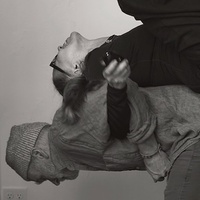
Documentation from The Ballad of Crappy and Seapole, evening length solo performance by Stanya Kahn at PS 122, NY 1998. Photo by Donna Ann McAdams, Courtesy of the artist.
My process for making films and videos is also always different. The performative videos, like It’s Cool, I’m Good (2009) are very different from Stand in the Stream (2011-2017), which is a highly edited, fast-paced collection of footage I shot on digital devices across six years, intercut with screen-recordings of internet live-streams. The film that followed, No Go Backs (2020), was shot on super-8 16mm film using a cohesive and slow approach, which was different for me again. This current show has paintings, tiled wall-based works, vessels, installation, an animation, and music. I practice, train, study and only show the news things when I feel they can hold meaning.
It’s scary and feels like a risk to go outside of the expectation that I only make films and drawings. But in the end, I have to be accountable to myself. And of course, there are plenty of inspiring artists who’ve been exploratory across mediums. I’m certainly not unique in this.
In many ways, it all feels the same. Making pots is like editing film. You’re sculpting a thing into shape, shaving off, adding, and cutting.

Still image from Atopolis (after Whitten for Glissant), 2025, digital animation with sound, Courtesy of the artist.
Usually, the work tells me when it’s time for a change. I remember distinctly at the end a three-week, four nights a week run of a very intense evening length solo performance I was doing at PS 122 in New York in 1999—I knew that was the last performance. It was taking a toll on my body. After about ten years of it, I was done. I was sitting with a video editor working on a promo tape of performances and I kept taking the mouse out of his hand. I realized editing was like music and comedy and performance. After that, I started learning how to edit and bought a Digital8 video camera. The shift to video was organic.
One of the things that jumps out to me about your work is this inseparability of art and politics. I read an Art in America interview where you said, “There’s little separation between perceiving pain and perceiving funny.”
I guess it’s about a certain kind of sensitivity. At the time I was thinking a lot about the relationship between trauma and comedy. When comedy’s good, it’s breaking something open. It can tread into territory that’s scary to say out loud. And my own experience of trauma has been that it breaks things open, too. It upends expectations of what is acceptable. One residual effect can be acquiring the new ability to perceive another set of possibilities, because one must.
My making is always in proximity not only to my own traumas, but also with an awareness of pain and trauma in the world.
I never try to address it didactically, but for me, it can’t be turned off. We live it in our families and communities. And the presence of the world beyond my own direct experience is always in my consciousness because politics and power have always been forefront for me, both as lived experience of stakes and also as an intellectual set of conundrums I am compelled by. So it’s always in the work. I also feel accountability as a maker, as someone who’s putting things out in public. Can I offer a thought? Can I offer perspective? Outlet? Vision? Can I offer respite? Pleasure? Humor?
Most of my humor is a gallows humor. It’s coming from a dark place. Can I offer that to other people who are hurting? Shared exasperation and even rage can be a powerful tool. My favorite comedian of all time is Richard Pryor, for example, and he was full of pain.

Silverbacks, 2025, Oil on linen, 84 x 60 inches, Courtesy of the artist, Photo by Chris Handke.
Experiencing pain and experiencing comedy both strike me as fundamentally unstable experiences. Humor is also about recognizing the self in something else, and there’s a way of representing pain that allows people to do that, too. I think that your work gets at the similarity between those experiences, and I’m curious how those ideas have been translated into this new body of work.
I’ve not been able to figure out what’s funny in the past two years, honestly. I mean, maybe that’s hyperbole, but with this body of work, I really had to sublimate in a way. I’m speaking most specifically about Israel’s genocide of Palestinians in Palestine which is supported by every major power of the West—so, the entire West’s genocide of the Palestinians. These things have been in the forefront of my mind as I went into making these works. And the intensification of fascism here with the increased terror of ICE kidnappings, censoring of antifascism and anti-Zionism, ramping up of anti-Black policies, policing of trans/queer people, gutting of the earth, construction of cop cities, etc.

Olive Grove, 2024, Oil on linen, handmade ceramic tiles in artist frame, 40 x 26 inches, Courtesy of the artist, Photo by Chris Handke.
I had to go into a poetic space, where maybe I’m making these vessels because they could hold so much grief. While they function conceptually as signifiers of history, modeled after shapes from ancient Greece, North Africa, the Middle East, China—my thought was that someone could stand in front of these and grieve or deposit rage or stare into the abyss.
The large primate paintings present a gaze that’s about autonomy, an interiority we can’t quite read, inspired by Eduárd Glissant’s notion of “the right to opacity” in which the colonizer is refused access and not allowed to appropriate or consume the colonized. The impenetrable, uncanny gaze leaves the viewer to their own positions, to negotiate accountability and their own autonomy or lack thereof. Glissant hints that there is power and magic in that which is kept secret but shared in relation, as resistance.
The animation offers a different way into the same issues with affect, now through death, land, spirits, migration, home, and “other space,” which can’t be recognized or defined with familiar terms and tools. I wanted to make a liminal space, with wonderment and disorientation. So, this show is also very much about an invitation to envision other worlds. Including resistance.

Love Hours: rites and curses, installation view, Courtesy of the artist, Photo by Chris Handke, 2025.
We talked earlier about artists being ostracized for beliefs like yours. For the kind of work that you do and the kind of person you are, what are the most valuable resources to you? What kind of resources do you wish you had?
Well, I wish there was an end to capitalism. I wish there was housing and healthcare and care and food and enoughness for everybody, right?
You know the moment that many of us signed the perfectly clear letter that David Velasco was fired for printing and put a bunch of us on blacklists, I think that laid bare a lot of positionality really quickly. It was almost a watershed moment and a relief to have those lines laid bare after so many tense decades around this issue. Here was a long-brewing genocide, and many people courageously stood up. And many scurried into obfuscations like “it’s complicated.”
The community that came out in support of a free Palestine, an end to the occupation and the end of the genocide has been the biggest resource for me, a salve for the deep loneliness of holding certain politics in this country. Solidarity is a resource.
I’ve always kept one foot out of the art world. It’s full of wonderful, beautiful, incredible people, artists, writers, curators, people I think are brilliant and amazing. I’m grateful to get to show my work and be in dialogue with other makers and thinkers. But it is also the shopping mall of the 1 percent. In capitalism, nothing’s ever going to be clean and clear. I’ve always kept my expectations right-sized in terms of the limitations of this milieu.
It has become very clear to me who my people are. At the end of the day, who has your back? Whose back do you have? At the end of the day, where do you want to be standing?

Love Hours: rites and curses, intallation view, Courtesy of the artist, Photo by Chris Hanke, 2025.
It’s wonderful to hear you say that. I have a quick, last question. I am such a fan of It’s Cool, I’m Good, which I first saw as a teenager in high school. That film really means a lot to me. I wanted to ask where that idea came from for you.
Thank you! I love the idea of your teen-self watching that video! My writing at that point was disjointed, coming in spurts and one-liners. I was going through difficult things in my personal life and the jokes that were occurring were cynical and dark. I had this yellow legal pad full of one-liners interspersed with “factoids” from texts on architecture, science, natural history, permaculture, even plumbing.
I was in a lot of emotional pain and I thought, what if there’s a hurt person and we don’t know if they’re dying or recovering? What’s that space in between death and recovery?
That piece is like all those issues but at human-scale, in a dreamlike tragicomedy. I bandaged myself up, taped my lip, added a swollen black eye with theater make-up. The effects hindered my speech and physical movement. I couldn’t even operate the video camera, so I called my friend Mariah (Garnett), who is also a filmmaker and said, “Can you come over and shoot some video for me?” I asked friends to be the “nurse,” a caretaker who gets cajoled into documenting this narcissistic but charming injured person. The costume brought out an obnoxious, non-gendered, sad, flirtatious character.
I also felt the spirit of an old boyfriend who died of AIDS. By the time he was hospitalized, gangrene had set in and they had to cut off half his feet. He was always really funny, but the dementia made his jokes weirder and they became more pointed the closer he got to death.
Joking has always been my coping mechanism through difficulty. At that time, I thought, “Yeah, man, I feel so fucked up, maybe I’m dying, film me.” Not literally dying, but psychically. Sometimes when we’re in a vulnerable state, we can see the most clearly and be candid, because the stakes are low at that point. It’s like, “What have I got to lose, I’ll call it like it is.”

Still image from It’s Cool, I’m Good, 2010, color video with sound, Courtesy of the artist.
It’s amazing, because that film did resonate with me. I was 16 and I thought, “I feel this. I resonate with this.”
I love that. That means so much to me. Thank you.
Is there anything else you want to add?
I think with this show in particular, I put a ton of heart in it and a lot of energy and love and labor in it. Even though it is made through these heavy times, it was made to return love to the community that has resourced me. I wanted to make something that felt like an offering, that it could double as a funeral rite for people we haven’t been able to have funerals for, but also an offering of a magical space, too.
Stanya Kahn recommends:
Engage in mutual aid
Donate to the Sameer Project, most effective on the ground org in Gaza
Try new forms
Do it without AI
Pause
- Name
- Stanya Kahn
- Vocation
- artist
Some Things
Pagination