On prioritizing play
Prelude
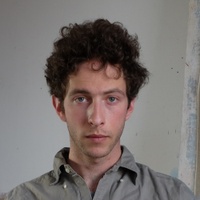
One thing you should know about Matthew Prebeg is that he is incessantly curious. He is a Toronto-based artist, technologist, and researcher exploring how digital systems influence media and culture. He’s interested in the natural and material qualities of technology. His work moves through various mediums, including critical making, performance and writing.
Conversation
On prioritizing play
Artist, technologist, and researcher Matthew Prebeg discusses having fun on the internet, meeting people where they're at, and wielding hope as a creative force.
As told to Mercedes Torrendell, 2139 words.
Tags: Art, Technology, Writing, Politics, Research, Education, Beginnings, Inspiration, Process.
You work across a lot of different materials and formats. What’s the through line, for you?
I’ve always been interested in the ways that technology influences our ways of knowing and engaging with one another. I’m particularly drawn to critical making. This is a term coined by Dr. Matt Ratto from the University of Toronto, my alma mater, referring to the hands-on, material engagements with technology to open the door for critical, cultural reflection. Learning through making, so to speak. I enjoy playing with different mediums to explore new ways of engaging with abstract concepts like digital decay or online surveillance. It’s what inspires me to do strange things like print on leaves and cast microSD cards in a silver locket.
When did you first start thinking about the internet as something to explore rather than just use?
As a kid, I just loved to play on the internet. I had so much fun coming home from school to log on to the family computer and find websites. It was a whole other world for me to explore. There used to be this website called StumbleUpon—rest in peace—where it would just take you to funny, random, silly websites. I would refresh that for hours. I thought it was the most fun thing. Or I would go play Club Penguin and Neopets. That primed my brain to be curious about technology. It wasn’t until maybe three or four years ago that I started to get more intentional about how I can make art about it.
You started a publication called Dig.site, focused on art and culture in the age of digital technology. Where did the name come from?
I wanted something that felt tactile, tangible. Funny enough, my undergrad was in forensic science, so there was a lot of anthropology and archaeology involved. I love how physical those sciences can be. I find that sometimes when we talk about the internet, it’s so abstract and so hard to grasp. I wanted something that made it a little easier to dig into. I also just think it’s a really fun contrast, giving the internet something with bones.
Reading your work, you treat digital spaces as if they’re alive—like ecosystems that need tending, not machines to optimize. When did that sensibility arise? Was there a person, an essay, something that cracked it open?
Donna Haraway is a cultural researcher who wrote “A Cyborg Manifesto.” She said: “The machine is not an it to be animated, worshipped, or dominated. The machine is us.” That quote really resonated with me. A lot of narratives about technology assume that we either control the machines or the machines control us. But the reality is that technology is so interwoven into our lives, our culture, our values, our power structures, that everything about technology reflects us right back. They are intimate extensions of us. This lens is such a big part of how I choose to interact with the world. It’s not really about the technology; it’s about how we see ourselves in it.
You’ve described yourself as, “first one to ask why, and the last one to let it go.” What does this mean? How do you feel that tension in your own practice?
I love to ask questions, and I love to play. I think play is one of the most important things in the world. There’s this quote by Johan Huizinga in Homo Ludens: “Play is older than culture.” Asking questions, curiosity—they come to life with play. Play is how we explore the world without a fixed goal. It’s the sandbox that lets us be imaginative. How can I use these ingredients in the “wrong way,” and have fun with it? That’s how we learn how things work, or how they could work. And once a question is out there, I can’t really let it go until I’ve played with it enough times. I get excited to think about a world where different rules apply, where we can challenge the way we understand things and imagine different futures. Play is political in that sense.
A work of yours that I found super interesting was the composting project. We live in a world that tells us to save everything—more storage, bigger iCloud plans, never delete. Talk to me about this project.
There’s so much junk, you know? Imagine if you had bins of all your digital archives sitting in your apartment. If you had it in front of you, you’d be forced to confront it. But when it’s online, it’s the illusion of just buying more storage. It’ll live on some server farm that I don’t need to see; it’s infinite; it doesn’t matter. And that is really interesting in a lot of ways. It’s really futuristic that we can store things seemingly indefinitely. But it also changes our relationship with what we save. When you have thousands upon thousands of photos, each photo means a little less. When your Notes app is just garbage upon garbage, it means a little less. For me it became this practice of asking, what do I really want to save? What resonates with me? We’ve been conditioned to think that hitting delete is a really scary thing.
Do you think there’s something specific about this moment in internet culture that makes going physical, or going tactile, feel more necessary?
I’ve been seeing the word “analog” everywhere. There’s been a bit of a shift towards more physical media, fairly so. But I’m not totally sure that now is a uniquely physical time in our digital history. What we’re seeing is a lot of anxiety around how the internet is progressing, this feeling of losing our grip on the parts we can control, with algorithms, with AI. That’s a very real anxiety. I think “analog” really represents a tension in our values and priorities as an online-native culture, and may be a strong signal for reimagining our digital presence rather than replacing it.
This reminds me of a piece you wrote, “Where’d all the time go,” about platform time. You said, “Being an artist online is accompanied by this sort of present-tense anxiety, like if I’m not posting, I’m disappearing.” How do you feel this playing out in your own practice as a creator?
It’s this weird tension where you want to go where the people are, but that can feel limiting sometimes. I’m a big proponent of being legible. For a long time there was this need in myself to be a little obscure and esoteric… I think there’s something quite radical about meeting people where they’re at. For me, that meant social media. But that comes with this anxiety of needing to perform. It becomes hard to control how much agency you have. I want to post online because I think it’s a great way to share my work in a way people can access, but now I need to optimize what I’m sharing in a way that platforms will platform.
I think that’s a trick of the platform. We mystify the way that algorithms function, treating it as this universal thing where you need to act this way, perform in this manner, to get your work seen. But really, that’s manufactured. There’s a term I came across—”algorithmic lore”—that I think is such a beautiful way to describe it. We attribute our own presumptions of how algorithms work, thinking “you have to have a hook in the first three seconds,” or “the algorithm doesn’t like it when you don’t do this.” But in reality it’s a very abstract, obtuse system designed to be particularly abstract so that we don’t fully understand the ways we engage with it. Knowing these tricks, naming them, gives me a little more agency back.
I love the cache links you add at the bottom of every essay. Tell me about the Utrecht Fish Doorbell.
The Fish Doorbell is a livestream of the canals in Utrecht in the Netherlands that allows users to ring a doorbell when they see a fish, and someone comes and manually opens the canal for them so they can pass through. It’s had so many proven benefits to the aquatic life and the water quality, too. I just think it’s such a beautiful example of how the internet can be really fun, but also serve a larger purpose in society.
What keeps pulling you toward those edges, toward the things that resist easy meaning?
I think I’m just a very curious person. There’s just so much out there. You start to see this world where people interact with the internet as a medium, as something that can be an expression of creativity. Drawing attention to these more fun, creative corners just makes me feel more hopeful and happy when I scroll.
Hopeful is not something many people feel about technology right now. You’re actively building community around this through the Living Web Institute, which consists of things like public talks and Internet Home Tours. What do creative communities keep missing when they think about their relationship to technology?
I’m learning to see the internet as a place. Technology can feel abstract and uncontrollable, like it’s happening to us, especially with AI. I think that’s why a lot of conversations about the internet tend to revolve around nostalgia and retreat. We tend to miss the way the internet used to be, and so we come up with solutions to address this. Maybe it’s going “analog” or the “cozy web.” But then the question is, who benefits from this? What happens when companies learn to profit from “analog” or “coziness”? So I come back to thinking about our digital public spaces as worthy of preserving and improving. How do we gather as communities? How do we organize and advocate for what matters to us? To me, hope is what makes reimagining these spaces feel worth doing.
Is there a conversation or project from those spaces that really stayed with you?
[laughs] I’m laughing because it didn’t necessarily inspire me, but one person told me that the Internet Home Tours series was like “MTV Cribs but for the internet,” and that was the best thing I could have ever heard. Because that’s kind of the exact playfulness that I want to foster.
Who’s inspiring you?
Mindy Seu and Laurel Schwulst consistently inspire me. James Bridle, who wrote Ways of Being, which I think should be required reading for everyone on the internet. I’m also drawn to a lot of non-digital contemporary artists: Nam June Paik, James Turrell, Ana Mendieta. Ana Mendieta, for instance, creates silhouettes of her body in nature, which makes the relationship between the self and the environment impossible to ignore. Using material experience with the world to say something that words alone can’t—that’s really inspiring to me right now.
What are you working on right now?
I’m actually working on a book right now about learning to see the internet as a place, as an ecosystem, and what the natural world can teach us about curiosity and care online. Place-thinking has really changed my relationship with technology, how I engage with digital public spaces. My hope is that people read it and feel a newfound sense of agency and optimism for the future of the internet.
What’s the process been like so far?
It’s my first book and I’m learning a lot. I knew it was a lot of work, and it’s even more work than that. But it’s really fun. My professional background is in academic research, so I’m very much the research guy who wants to gather all the citations, connect them with strings, and make a little map of how it all comes together. I’m deep in the weeds of that right now.
Matthew Prebeg recommends:
A book worth reading: Braiding Sweetgrass by Robin Wall Kimmerer. A beautiful exploration of Indigenous ways of knowing as a complement to traditional science methodologies. Truly a comfort read.
A website worth visiting: Chess.com. I think we’d all be better off with a bit more chess. See also: “What was the Deal with Marcel Duchamp and Chess?“
A film worth watching: Perfect Days (2023) by Wim Wenders. Life is beautiful, and so is Japanese toilet infrastructure.
An album worth listening to: In the End It Always Does by The Japanese House. Real yearners rise up.
An artist worth knowing: Richard Long (b. 1945). He is a land artist known for his walked path sculptures. I loved seeing A Line Made by Walking (1967) at the Tate last fall.
- Name
- Matthew Prebeg
- Vocation
- artist, technologist, researcher
Some Things
Pagination