On creating space for reflection
Prelude
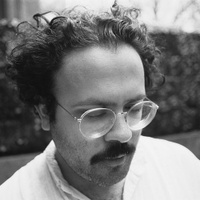
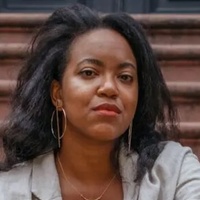
Zoe Koke is a Canadian artist living between Los Angeles and the Mojave Desert. She is interdisciplinary in her approach to making art and has exhibited internationally. Her most recent exhibition tide can be viewed at franzkaka.com. She has an upcoming exhibition with Luchita Hurtado and Lee Mullican’s archive curated by Wolfpack HQ at the Hurtado Mullican Archive in Gardena, California in January.
Conversation
On creating space for reflection
Artist Zoe Koke on making something slow, her allegiance to beauty, and art as a project of connection.
As told to Jancie Creaney, 2628 words.
Tags: Art, Painting, Process, Focus, Income, Creative anxiety, Mental health.
Your solo exhibition tide was recently on view at Franz Kaka in Toronto. Could you talk about how that body of work came together?
I wanted to make something really slow. In my own work, I was feeling, I guess, pressure—but also welcome pressure—to meet deadlines and make a lot of work for different contexts. I’m not just a painter but a lot of the work that I’ve shown in the last couple years is painting. It can be overwhelming to be on deadlines for paintings. In a way, the work looks the way it does because I wanted to make something that would slow me down in the process of making the paintings.
I was thinking a lot about where we are at in the world and politics and this feeling of helplessness and dissociation that I know a lot of people have been experiencing, myself included. I wanted to make something that could become a contemplative space, almost as if the paintings form one painting.

Zoe Koke, iv, 40 x 40, oil on canvas, 2025
I rented a studio the same size as the gallery so I could walk through this space and feel this sort of embodied sense of the transition between the colors and the light that I was trying to evoke in the paintings. And I was thinking about a lot of my heroes in art. In a way, the works that they made are very simple. To name a few, there’s Agnes Martin, there’s Rothko, there’s Robert Irwin, who has this beautiful work at Chinati in Marfa that’s called “untitled (dawn to dusk).” It’s in an old army hospital in a horseshoe configuration. The space is painted so that it goes from white walls to black; the heights of the windows were altered, and there’s just a scrim running through the space. When you walk through, you experience all these shadows and this slight transition of color, and if you go at sunset, it’s one of the most beautiful art experiences.
There’s another work that really changed me, called Meeting. James Turrell has this little room at MoMA PS1. There is a bench in the room, around the periphery of the space and a skylight that’s just a cutout to the sky, and you sit in there and it’s incredibly meditative. At sunrise and sunset warm lights automatically turn on and make the portion of sky you see even more prominent. I guess they have to shield the space for when it’s going to rain or whatever, because it’s fully an open cutout to the sky.
Reflection and meditation really come through in tide. I experience it as incredibly generous. I think what moves me is the thought of the person who made that. That somebody would give that kind of space to the act of reflection.
I’m so glad you experience it as generous, because I think about that a lot: how is art a service to others? There’s a need for us to really consider the real estate we take up as artists. You are being blessed with this opportunity to share yourself with other people or [to share] a vision with someone. That is a responsibility as well. As the art market and art world has a frenetic agenda, often, I want to move through my practice in a way where I’m cognizant of the people that interact with my work and the space that I take up.
It seems like more and more of a feat to slow down in that way.
It’s not marketable necessarily. There’s something about these slower, more simple paintings that I guess kind of lives outside of the commodification of art—which I was also trying to consider, because when you start selling your work as an artist, you are consumed by that system. And it’s also good, you get to live off your work. But making an installation is a little bit harder to figure into that. It’s a bit of a risk.

Zoe Koke, v, 40 x 40, oil on canvas, 2025
What draws you to painting as a means of exploring sense perception or the experience of looking?
I think what’s interesting about painting is that it is tactile. It’s this play between touch and sight. It’s very physical. I make other art forms, and there’s a sort of serial quality to photography in my practice, where it feels almost happenstance, because the camera’s this mediator between you and what you photograph. It’s not quite as tactile or visceral.
I really like the idea of touching this image into being, conjuring the image with your hands. I don’t think people think of painting as necessarily so tactile; but you have a brush, and you are touching the surface over and over again. When I’m making a painting, I’m squinting and moving around the painting and feeling through where the image is and how it wants to come through. It feels like a choreography of space, a tactile choreography. When I’m thinking of a memory or an image that I want to make into a painting, I think of my whole sense perception of that image.
Painting has a way of making this larger window to experience, to replay or retell that vision. Whereas other forms, there’s a bit more specificity that you’re balancing, that signifies something to someone very immediately. There’s also the difficulty of painting, too—wanting to render something and then not really being able to fully control the course of that. It’s redirecting you constantly, and it’s a conversation. I like that. I find it very challenging, but I do find it vulnerable and interesting.

Zoe Koke, viii, 40 x 40, oil on canvas, 2025
I thought about your darker paintings, especially while looking at Timbre, a triptych from your 2024 solo exhibition, Unchained Melody, as depicting an object or moment at risk of going unnoticed. The inkier, oceanic or twilight paintings demand a more intense consideration of time, as if I’m implicated in their creation in that instant. The paler compositions evoke, for me, an interval of time and a sense of grief, as if what I’m looking at is already in the past. I wonder if this resonates and if you can talk about how you experience those tonal shifts.
I love this observation and I’m glad that it feels emotional for you because it’s hard for me to fully qualify what the language of the tonal shift is in the paintings. It’s nice to hear that you’re experiencing differences between the way time is experienced.
I haven’t quite thought about it that way. What I think about is, in regard to the darker ones, there’s this sense of possibility and unknowing in this dark space. I like this kind of metaphor of the unknown as a feminine space, too. When we don’t know anything about something, or we fear an unknown, we are also being met with a lot of possibility. And the void. What is the void? What is the unknown? Those are questions I ask the paintings, in a way. Timbre is a sort of statement of, we are moving into a dark time, or, this is a dark moment and it’s a moment to be confronted and felt.
There is a withholding of information in the painting, too, which I think speaks to that as well—the anxiety of that but also the kind of spaciousness of that. There’s an allegiance I have to beauty, in my art. I think that’s kind of intellectually unpopular. I find it fascinating that we’re still in this moment of people fearing what is intimate and vulnerable and seductive in visual art. My experience of that kind of information in art and culture is that it provides an entry point or access to something. I think it’s negative if people feel they can’t enter a conversation about art. Pretentiousness and elitism around art is actually really scary for us, culturally, because art can be healing and effective at communication, and so helpful socially… There’s so much in the art landscape that’s about gatekeeping and power and exclusion. It feels toxic to a project about connection, which I would argue art is.
I love the idea of “allegiance to beauty.” It made me think of Byron Kim’s project Sunday Paintings, where he painted a little square of the sky every week for years. I remember seeing this for the first time and being so moved by the simplicity of that.
Air, the sky, water—these are all environmental factors that we as human beings share. There might be this consideration of that as kitsch, because it’s such a repeated subject in art, but there’s a deep reason why things become kitsch. They’re overly identified with, and it is powerful that we have subjects or images that become like a sunset: overly understood.
In a conversation with Marie Heilich at Smart Objects, you said, “I really think of my role, as an artist, as a role of conduit.” I’d love to know what that feels like to you, and how holding that mindset affects your relationship to a painting.
I think if you are someone who makes art, for most artists, it’s a need. It’s something you have to do. I don’t know if everyone would consider themselves some sort of channel, but I definitely feel that way with my work. I feel like it’s not a choice, and images or moods that I’m called to transcribe in an artwork are very present and they recur.
There’s a lot of information about artists as narcissists or the ego project of artists. Obviously, it’s materially difficult to sustain an art practice, financially. It’s this fringe thing to do, really. Maybe it’s become more popularized, but there’s a reason why we have archetypes of the starving artist. It’s because society neglects its role… This question of what you’re actually doing for other people by making art is a complicated question for me and requires a lot of inner strength and discipline and compassion for oneself, and also a lot of ego death.

Zoe Koke, Installation, tide, Franz Kaka, 2025
The role of conduit makes me think of the space that opens between the early spark of a feeling or intention, and the act of creating. To traverse that space can be scary, and maybe holding that mindset of conduit is a helpful way to cross that space?
Recognition of the role itself helps free up the ego around the role, and then the painting becomes more for itself and less for the maker. That’s something that I’ve really learned from my paintings—and all of my art projects, actually—is that they don’t rely on me. They have their own form outside of me. They have their own kind of way of meeting the world. Their points of reception are not dependent on me, after a point.
You mentioned discipline. How do you think about discipline?
I don’t have a rigid schedule but I do have a very specific meditation practice. There are certain things I need to do to feel at capacity, to even think about what I might make or how to fulfill this role of artist for myself. I need to take care of my body mostly, and my mind. I would say I’m not disciplined, but I have certain activities that frame my day to day. When I really need to make something or I know that I have an idea brewing that finally has more legs to it, I go to my studio and work on the idea.
I would say I’m a fairly anxious person, but in this way where I need a lot of stimulation. I read constantly. I’m always reading articles, books, poetry, a lot of current news, honestly, because my role is to reflect the world. So it’s important for me to be aware of what’s happening. I have a walk I take every day and a meditation practice every morning.
It’s a lot of waiting and there are times when I really don’t feel like I should be working. I think a lot of people have ritualistic, ongoing practices in their studio, but I don’t as much. I need a lot of space between making things. I also write. I’m working on a screenplay right now. Sometimes I’m just needing a completely different type of outlet. So I’ll make a painting and then work on a couple writing projects for a while, and then go back to the painting when it starts to make more sense.
You’ve described your practice as “painting light and obstructions to light.” This reminded me of a line from a novel I recently read: “There’s only one real subject: the relation of beings to time.” These two reflections feel similarly open and subtle, showing an appreciation for the thing and also the thing that makes the other thing possible. How did you come to this understanding of your work?
I love this quote, because in a way, it’s allowing for the subject to be big. You know what I mean? I think that light and obstructions to light could be virtually anything. I like this spaciousness. It’s the same with the relation of being to time, right? I’m very attached to the sensations we experience in our lives and the mood of a situation, and how that can be translated.
Light becomes like an actor in the scene, and the obstructions become a set design. The whole mood of the situation can be described as light and obstructions to light. I’ve come to this for a few reasons, partly because I’ve studied photography alongside painting in my undergrad. Everyone always asked, how does photography relate to painting? So maybe I’ve come to this [description] over time in order to connect them. It reflects that tie between the mediums that I work with.

Zoe Koke, Installation, tide, Franz Kaka, 2025
That makes a lot of sense. It’s capacious. It’s more an interest and an obsession that you can draw from, or that naturally you’re drawn to, regardless of whether it manifests as painting or photography or screenplay.
Even the relationship between the viewer and the artwork—that kind of tension and space, too. I consider that. I usually want—and maybe this is mostly subconscious—to draw people in and have them contrast themselves with the work, because that’s what I do when I make something. It’s reflective [of the process] of questioning myself, and myself and the thing going back and forth a lot. I’ve always imagined that that’s what my work or what art in general does. There’s that relationship with the viewer; the viewer completes our work.
Keeping these general ideas of mood, light, and sensory reception at the core of my work makes it possible for me to extrapolate on so many different themes and ideas at once, and to kind of stay away from a branded-ness or one kind of angle on what I’m doing. Because honestly, every project is its own universe. It poses different questions and pushes me in different ways.
Zoe Koke recommends:
Watching sunrise whenever possible
Vedic meditation, once or twice daily for 20 minutes
Writing something in a journal every day
A daily walk
- Name
- Zoe Koke
- Vocation
- artist
Some Things
Pagination