On emphasizing process over outcome
Prelude
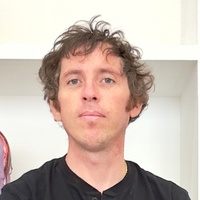
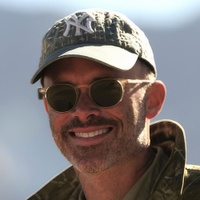
Laurel Halo is an American composer, producer, recording artist and musician, born in Detroit and based in Los Angeles. Her music is known for its depth and sense of presence, melding the materiality and spirituality of sound to focus on concepts of transmission, memory and impermanence. She has toured and presented work around the world at places including the Barbican Centre, Ina-GRM, the Sydney Opera House, Kölner Philharmonie, Unsound Festival, and the Julia Stoschek Foundation, among others. She is currently touring her live score to the film Midnight Zone across Europe.
Conversation
On emphasizing process over outcome
Musician Laurel Halo on the necessary constraints of collaboration, helpful limitations, and the benefits of scary deadlines.
As told to Arielle Gordon, 2391 words.
Tags: Music, Film, Fashion, Process, Collaboration, Focus, Time management.
How’s your day going? Is it morning or night where you are?
It is 5:00 PM. I am in Milan.
What brings you to Milan?
I’m doing the score for a runway show for Jil Sander.
Is Milan still crazy from the Olympics?
The Olympics ended the day that I arrived. Despite the fact that I love Heated Rivalry, I have zero interest in or knowledge of the Olympics, with the exception of Alysa Liu, who is an extraordinary inspiration to women and girls everywhere. But it didn’t seem too crazy.
Are you somebody who consumes a lot of television while you’re in the creative space, or do you try to shut that all off when you are in a compositional mindset?
I think when I’m in a compositional mindset, I actually have a tendency to shut off listening rather than consuming other forms of media. I’ll still watch films or series or read books, but my listening habits can take a dive. I don’t want to get too stimulated by an external source and then have the music be too swayed in one direction or the other.
When you were starting to do work for Midnight Zone, did you consume more media about the deep depths of the ocean, or purposely try to surround yourself with those sounds?
At the beginning of the process, the filmmaker [Julian Charrière] gave me a folder of amazing ocean foley. He had gathered all of these sounds from different institutes, including the US National Park Services as well as universities in the UK, Canada, and various ocean conservation societies.
There were a lot of animal sounds, but then also sounds of human activity that were inspiring: the sound of natural animal echolocation versus industrial sonar sounds, the sounds of cargo ship noises or mining noises such as seismic pulses. So it was quite interesting just to get an initial impression of what oceanic sounds could be used as a basis for inspiration. Of course, recording underwater is imperfect and prone to imprecision and distortion. So it’s interesting thinking about how our hearing mechanisms aren’t optimized for a liquid-based environment.
I’m curious about your live sets coming up and how you’re planning to translate these very dense sounds from Midnight Zone to a live setting.
We have a series of live score versions of the film: Zenner in Berlin, at the ICA in London, at Sónar in Istanbul, and Rewire Festival in The Hague. Essentially, I’m going to be attempting to recreate the feeling of the score. My hope is to try and perform some abstracted synthesizer, to process and render it somewhat removed from its sound source, to smear the transience.
A lot of the ambient sounds and drone sounds on Midnight Zone* *actually came from one recording session at the Yamaha Studios in NYC, and then it was later embellished and layered upon. Yamaha has this absolutely amazing instrument called the TransAcoustic. The TransAcoustic is such an inspiring instrument to me, because it’s one of these ultimate hybrid instruments, where it can act as a MIDI controller to an external synth, similar to a Disklavier, but it also can receive audio from said external synthesizer and feed it back through the string board of the piano via transducer technology within the body of the piano. You can blend that with the original piano sound, or you can also entirely mute the piano sound.
When you entirely mute the piano sound, you get this absolutely gorgeous acoustic rendering of synthesized audio because it’s being amplified through the wood and the string resonance of the actual physical instrument. These synthesized sounds then take on this incredibly embodied physical sound. And then, of course, you’re recording it in air with microphones, and so you get this pretty otherworldly, really beautiful sound quality with the TransAcoustic. Unfortunately, TransAcoustics are marvelously difficult to source because they are quite novel.
How does the intended listening context of a piece of music impact your creative process? Creating music for a runway show vs. a film score, for example.
What’s interesting is the process of creating music within a collaborative capacity, rather than making solo artist music, and the unique challenges of composing, whether for a film, a runway show, or for some media or sound installation, because it actually can be quite a different headspace to get into.
Sometimes you’ll compose something and think, wow, I nailed that. Then the feedback is “no.” You get these little ego deaths along the way, which I think are actually healthy. As an artist you’re making your own thing, and you have your own sound. It is very easy as an artist to go down your own rabbit holes. So it’s good to be in the role of the composer and to have to check yourself essentially.
Have you consciously sought out collaborators?
Yeah, absolutely. My primary instrument is the piano, and one could argue electronic music production is an instrument, knowing how to use synthesizers, drum machines,samplers and signal processing. But there’s lots of things that I don’t know how to do well. I grew up playing violin and I can convincingly fake spectral harmonics, but if I want to get a really beautiful top line on a string, then I need a collaborator like James Underwood or Biliana Voutchkova, because I can’t do that on my own. Or with cello someone like Leila Bordreuil, or Lucy Railton, or Oliver Coates. Or for the voice, someone like Coby Sey. A collaborator I love reaching out to is [saxophonist] Bendik Giske. He creates ecstatic and unpredictable harmonic layers that can make an otherwise electronic arrangement come alive.
There were a handful of these amazing musicians and other special sounds on Atlas, which elevate the sound into something different or unusual, because there is a fundamental difference between music that originates from inside the box, versus outside the box. First just the unpredictability of the capture: the sound of air or noise in a recording, the sound of a room, a leaf blower or a police siren, which is a hazard of recording in a home studio.
At Yamaha Studios in Midtown [Manhattan], I was doing this patient, slow and empty piano recording, and then honking from the street would bleed through. But it’s cool because it’s live, and there’s something beautiful about that. I tend to reach out to work with acoustic players, both to realize sounds that I technically can’t create on my own, but then also to bring just the magic of a more organic or unpredictable feeling to the recording.
When you’re composing, would you say that you’re somebody who’s largely improvising or are you notating as you go?
It’s been a mix. For the most recent recording, Midnight Zone, I composed and performed that solo. There was a map and a structure. Julian Charrière and I sat down and watched the film together, and he gave me specific cues about what the music should be doing from zero to six minutes, and then what the music should be doing from six to nine, and having visual cues and points of reference for how the music should be shaped. I had this compositional structure already in mind through talking through the pacing and structure of the music with Julian, but then it was up to me to fill in that structure with shade and contour, and that process was pretty exploratory.
There was a lot of trial and error trying out different synth sounds, recording a lot of string sounds, to the point of having dozens of layers of violin and viol da gamba alongside the synth textures. Then, shaping and layering, and then muting and grouping. Then I have this cacophony and then it’s, “Okay, what do I need to get rid of in here to make this sound like music?”
I have some pieces in my catalog that are made in a more spontaneous way. For example “Belleville” from Atlas* *was a one take, and the only part of it that was composed was a vocal harmony. I recorded some scratch layers for Coby, and then he just ran with it. He sent me back 25 different stems to play with!
A friend of mine told me that my music sounds very much like painting, which I might be hesitant to own. But if you start with a sketch and a base layer of colors, then you start adding additional colors for shade and contour, I can maybe see it. There’s a lot of detail work. You see these memes about music producers being like, “Trust me I can hear the difference of raising the volume of 4 KhZ by 0.7 DBs.” It is actually like that, and it’s very sad. But it’s satisfying when you hear the music, and it just clicks, and it feels natural. It feels like the music is actually a living thing.
Is that a muscle you build up over time, hearing the moment when it clicks, deciding when a song is finished?
It’s always hard to decide when something’s done. To go back to the painting metaphor, maybe deciding something’s done is just letting the canvas dry and stepping away. There is this simple resignation that takes place. The benefit of working with collaborators is you get the take and that’s what you have. So that’s also something that helps push projects to completion. And also, scary deadlines. Scary deadlines are always a great way to finish projects, which is why composing can sometimes be a great antidote to whatever baked-in perfectionism I might have. With artist records, you can take years and you can say this isn’t good enough, but then you have a deadline for a project and they’re like, “We need the stems by Tuesday at midnight,” and you have to do it. Accepting something is good enough is a skill in and of itself.
I was curious how you pick your projects. You’ve collaborated with such a wide range of artists across mediums. How do you know when it’s a good fit to work with somebody?
Generally, it’s pretty easy to know when a potential collaborator is a good fit. If I feel like I could meaningfully contribute and add something, and vice versa, then it makes total sense. Right now my focus is more on the composition side of things and maybe that’s where my direction is heading. I can’t predict the future, but I love creating music that’s part of an overall narrative rather than an artist’s catalog being a narrative in and of itself. It’s so special when you work with a team and the music is part of the overall story. I’m lucky that I get interest from special artists like Julian or inspiring creative directors like Simone Bellottifor my musical perspective.
Does the intended audience impact your composition? Do you approach writing differently if you think a song will be played in a club versus on a runway?
Since we’re in a post-Olympics mood right now in Milan, I think what was so special about Alysa Liu is how she emphasized how for her it’s not about the outcome, but rather the process. I think that those are words truly to live by with any project. Midnight Zone, for example: the music is heavy, dense, subaquatic, highly pressurized. It has moments of beauty and the ecstatic, but it also has moments of dread or terror. And it’s not as “pretty” as Atlas, but I can’t necessarily be worried about the audience not following. It’s on them to be like, “Oh, that’s a soundtrack for a film. It makes sense.”
It’s not beneficial as an artist to worry too much about your audience. At the same time, I do think that when you are working in a composer capacity, it is important to think about the intended audience. I don’t think that I could make obtuse dark music for a runway show because models need a beat to walk to, and we want to feel some level of magic or joy. In certain contexts, thinking about the audience is useful as a compositional reference, but for artists albums specifically, one has to try and ignore the audience as much as possible and just follow one’s creative vision or process.
Laurel Halo recommends:
Radio.Garden: I listen to the radio a lot. Mostly KLLI 93.9 or KJAZZ 88.1 in my car, or favorite NTS hosts at home. I just discovered Radio.garden, which is a website where you can listen to radio stations from across the globe, with curated playlists of various recommended stations.
Everything Now: Lessons from the City-State of Los Angeles by Rosecrans Baldwin: A beautiful tribute to the city-state of Los Angeles, told through weaving portraits of the various characters that inhabit LA. One of those engrossing books that you finish in three days because you have to.
Shane Parish - Autechre Guitar: Direct, dry, gorgeous acoustic guitar renditions of various mid-90s Autechre tunes. 100%
Hayao Miyazaki - Nausicäa of the Valley of the Wind: Shot to the top of my favorite Miyazaki films when I watched it the other day. The ecosystem of post-apocalyptic Earth is mostly destroyed, with a growing ‘toxic forest’ inhabited by poisonous spores and giant sentient multiocular insects called the Ohmu. Humans live in neo-feudal societies scattered throughout this otherwise wasteland Earth, fighting over limited resources. A teenage princess named Nausicäa, praised for her abilities as both a natural leader of her people and an expert windglider, has a special relationship with animals and nature. She recognizes the soul inside the forest and Ohmu. Joe Hisaishi’s score is truly bizarre and incredible, carefree childlike singing during deeply existential moments, ‘60s raga-infused psych-rock during moments of terror and destruction, plus the use of synth for sound design of animals, wind, and airships. Kind of like an animistic Dune but with the most psychedelic visual sequences. I learned that the film covers only about 3 chapters of Miyazaki’s manga of the same name, which was finished a decade after the film’s release.
- Name
- Laurel Halo
- Vocation
- composer, musician
Some Things
Pagination