On prioritizing the process instead of the outcome
Prelude
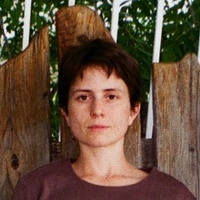
Viv Li is a Chinese filmmaker and artist based in Berlin. Her film Across the Waters was nominated for the Short Film Palme d’Or at Cannes in 2024 and won the Lights On Women’s Worth Award. Her work has also competed at the Venice Film Festival. Two Mountains Weighing Down My Chest, her documentary feature, celebrated its world premiere at Berlinale Panorama 2026.
Conversation
On prioritizing the process instead of the outcome
Documentary filmmaker Viv Li discusses starting in the unknown, when a project is done, and being honest with your material.
As told to Teresa Xie, 2672 words.
Tags: Film, Collaboration, Success, Process, Production, Income, Money.
I never thought about making documentaries until I watched films from directors like Bing Liu and Sean Wang. Then I was like, “Oh, this type of documentary is stuff I’m interested in.” What was that moment for you, or have you always known that you wanted to be a documentary filmmaker?
I always loved film, so I just really wanted to do film. I studied theater, so I was in theater for a long time. Then I worked for fashion for a bit as well. Later on I just felt like, “Oh, I really want to do films again.” Then I found out about this scholarship in Europe for documentary-making. That was the first time that I felt like, “Okay, I want to try to do something with documentaries.” My understanding of documentaries was almost zero. Then I went to the school, and I got the scholarship. Because the program is in Europe and takes place in three schools, they have quite an open way of teaching what counts as a documentary. It gave me a lot of ideas of like, “Okay, it could be very personal or it could be very artistic. It could be more on the installation side. They can all be called documentaries.”
I spent two years in school trying really hard to make a documentary that the teacher would approve of, but it was never that good because you can never imitate something as good as the original. In 2019, I went to a film festival called IDFA in Amsterdam. I saw a film by a Canadian director called L.A. Tea Time. The director’s name is Sophie Bédard Marcotte. It’s called a documentary, but you clearly see that a lot of scenes are kind of staged. It’s about how she drove from Montreal or somewhere in Quebec to L.A. to meet Miranda July.
That’s funny!
Yeah! Then in the end, Miranda July didn’t meet her. I don’t know, it was quite inspiring for me. It’s not really a famous documentary, but I just watched it and was like, “Wow, that’s a documentary. You can actually make a film however it is for you.” In my last semester, I made a short film in my own way, and it got good reception. I thought, “Okay, maybe this is my way of making films.” That’s how I started the journey of this feature film as well. I do feel what you said about how there’s a lot of people, especially in the North American market, that have a certain idea about documentaries, and in China as well, like in Asia. I think in Europe, the line between documentary and fiction is very blurred. Nowadays if you go to festivals, they don’t really separate the two, but put them in competition together, because in the end, it’s just storytelling.
So it’s 2019 and you’re just discovering this medium and how to do it your own way. But still, there’s not that much of a blueprint. You see one documentary film and you’re like, “Oh, this is different.” But you don’t see a bunch of films like that. How did you jump from that to working on Two Mountains Weighing Down My Chest over four or five years and have confidence that it would become something and not just like…a giant waste of time?
Yeah, I think that’s a good question because I think everything starts with the unknown and insecurity. I think even the biggest filmmakers in the world don’t really know if what they’re making is going to work out. I don’t believe that anybody just knows from the very beginning that something will be a masterpiece, but a masterpiece is made by all the decisions and all the people that you encounter along the way. For me, working on Two Mountains Weighing Down My Chest was very simple, because I came to Berlin during the pandemic, and I was completely lost I would say. I thought that I would stay here and that the pandemic would finish in a few months, and then I could start working. But there was absolutely no jobs back in 2020 here in Berlin. So basically, I had nothing else to do but to focus on making this film.
For me, it was also a way to meet people. Making the film was partially just to enjoy my life or find friends. I filmed more than 300 hours of material, and I would say that 280 of them, I’m just really happy to be with the people that I’m there with. Those 280 hours and the time that I spent with them are definitely not wasted. You can never really control the result or see into the future.
I feel like if you can control the moment that you’re in, then whatever the result is, you at least know that those five years are not wasted. I look back at those five years, where I went to the desert, met so many interesting people, and became a different person because of all of these experiences. Then I also spent a lot of time with family. Because of that, in the end the film came out with good results as well.
I was going on Instagram like normal people do, and I saw a clip of David Bowie saying something like, “All artists will be more interested in you asking for the process than what their work means.” Because for me, I think the point of making films is to keep making films. I want to be on set and be with people. I think for any artist, making a film is never really about standing on the stage with the film, but more about creating it.
Even though you don’t think about the result, it must be somewhat in the back of your mind anyways. How do you balance making art with things like funding and the logistical, un-sexy sides of the process, and not let that take over from, say, funneling your project into a grant proposal that sounds more palatable? How do you balance that?
I started working on Two Mountains Weighing Down My Chest by myself. I think the first two years I was completely alone. I did things on Kickstarter and applied for grants. I got a little bit of money and I was really happy, but quickly I knew that it was never going to be enough to finish the film. In 2023, I made a short fiction film. There, I realized that a director’s job is actually just two very important things. The first is to find the best people that you can find, and the second is to communicate with them what you want, gather them together and charm them to work with you. I realized that I am never going to be good enough to fund my film, so I need to find people who are good at it. For me, it’s really as simple as that, to just find the best people and communicate with them. Obviously, you need a lot to convince them to work with you. I did a lot of pitches in the beginning, and shot a lot of film myself and edited myself.
Rather than working on something I’m not really good at, I worked a lot to convince people to work with me. I think my producers, who are German and Dutch, are really good at finding funding and they’re really sharp at it. I went for them, and in the end it worked out really well. I didn’t really need to think about money anymore.
Then again, the first two years I was struggling myself trying to find money. I guess it’s the same for everybody. This goes back to the even more important point that you really need to enjoy what you’re doing. Otherwise, all these ugly things will just consume you too much.
Okay so once you involve these producers, now you’re working with a bunch of people and this is a very personal film. How did you know when to stop filming? What was your sense with feeling like, okay, now I’m done?
To be honest I talked a lot with my editor. We started editing before we finished shooting. I think the moment for me would be when I realized that I am not really enjoying this anymore. I realized that I’m just shooting for the film now. It’s not something that’s like, okay, I’m going to go to this desert anyways and then I’m going to film.
I think what I became quite good at from working on this film was how to distinguish myself from myself as a character. I separate them very clearly. When I watched the film in editing room, I didn’t see myself at all. I am just another person. Then I also did the same thing, where I would just ask myself, “Do you still want to do this or is it really just for the film?” If my answer is, “I would still do this even if I don’t shoot it,” then I will shoot it.
But then if my answer is, “I don’t think I would ever do this if it wasn’t for the film,” then I probably will not shoot it. In the end, I just realized that my desire to shoot and to go somewhere became less and less. My life changed a lot. I really see this film as a chapter of my life that already ended. My life is different now. It was a gradual learning process to say, “Okay, maybe we don’t need to shoot anymore.” And also from the editing point of view, my editor said that we really have enough footage. He watched so many gossip conversations between my family and my friends.
I feel like when you’re editing, you’re getting all these different ideas of what the film could be about. What were other ideas that you were playing with that felt strong, and what made this eventual edit feel more right?
Actually, there was a lot of different things on the plate in the beginning. If you see our deck from the very beginning, it’s very different from what the film turned out to be. I remember when we were showing the film to the funder, we were a bit nervous because it was completely different from what she saw before, but she was really happy about the film because she really related to it. I think the strength of documentary is that you can always rely on reality and you can always rely on your material more-so than with fiction. You can just watch the footage and see what speaks to you the most. Some things that I thought were interesting before were not really interesting anymore. Then in the footage, you see something else that comes out and you just have to be honest with the material. For me, I just saw something more about loneliness in the footage. I never thought that I was lonely, but there’s so many lonely moments in the film. I never thought the film would be about loneliness.
Interesting.
Yeah. I always thought that maybe the film is about belonging home, but then in the film, there’s so many lonely moments. I always thought that the film would be about sexuality, and that gender is the front row of the film, but in the end it’s not. It’s more about the cultural differences, and that was just part of it. You have to be honest with this. I think for documentaries we are really lucky to have all this material to work with. With fiction, it’s very difficult. That’s why in the writing process with fiction, you need way longer because you need to research, go back to real life, and fact check to see if things really work this way.
That’s so interesting because I often assume documentary is harder because you don’t have a script, but I think you’re right because you can be more honest with what you see. You can’t fake what’s in front of you.
I think there’s two sides of that point in both documentary and fiction, and I try to mix them a little bit. In my documentary work, there’s also hybrid parts. There’s scripted parts. In my fiction work, I take documentary elements as well, because it’s just more interesting that way. Then you just see what speaks to you the most.
I feel like the first film I made was also very personal and that was the first time I had an editor. Something that I realized was that it is really hard to not be so attached to your narrative, especially when it’s personal. Is that something that you struggled with?
I think I’m always very detached. I don’t know why, but I just know that this film is a story. This film doesn’t represent me. In this film, we hid a lot of the facts. We felt like there were a lot of things that are were not very interesting so we really removed it from the story. I had a boyfriend during this period, but we just removed all of it.
I didn’t see a boyfriend in your film!
Yeah. It’s a bit sad for him, but it wasn’t really helping the story. In the film, you also don’t see me working, but I was working throughout it, so we removed working part as well.
What advice would you give to anyone, not just making a documentary, but anyone who wants to make art, who feels particularly discouraged in this economic environment or feels like they’re just competing with people who were born into it?
This is something very interesting because I’m Chinese and I grew up in China. I grew up in a very normal middle-class family, I would say. I never really thought that making films would be realistic for me, because I didn’t go to film school, and most people need to have some extra money to make films. Then I came to Europe and realized there’s all this public funding that I can apply for. I can support what I want to do even as an immigrant here.
For me, everything was just better and I didn’t think everything was worse. I was just like, “There’s all these new opportunities that I can try. And then I hear all my other friends who have been supported for many years in Europe and said, “Ah, everything is so bad and everything is getting cut.” I really think it’s just about perspective.
That’s why for me, I always talk to my other friends who are in different situations. I talk to my U.S. friends all the time who make films. It’s so hard. They always put their own money into the budget and in China as well. My friends who are Southeast Asian filmmakers always just do films on such a tight, shoe-string budget. I talk to my African filmmakers and friends and it’s also very difficult for them. I think I would not think or depend too much on the outside environment, but just try to just find different perspectives so that we can keep hopeful and still fight for things. I think if you can shift the perspective and realize that there’s a lot of good parts of your life, then you can really fight for it. And so for me, that was really helpful for me.
Viv Li recommends:
No Longer Human, book by Osamu Dazai
Teresa Teng, Taiwanese singer
A Year Without Summer, theatre show by Florentina Holzinger
Yanji, a Chinese town at the border of North Korea, very fun and great food
Xiao Wu, 1997, a film by Jia Zhangke
- Name
- Viv Li
- Vocation
- documentary filmmaker
Some Things
Pagination