On the discipline of trust
Prelude
Christalyn Hampton is an award-winning director and producer whose work amplifies culturally significant stories with depth, rigor, and emotional resonance. She is best known for The Rebellious Life of Mrs. Rosa Parks (Peacock / Soledad O’Brien Productions), which earned a Peabody Award, a Gracie Award, and Television Academy Honors, and helped redefine the public narrative surrounding one of America’s most iconic civil rights figures. Hampton made her directorial debut co-directing HBO Max’s Oscar-nominated film The Devil Is Busy, alongside acclaimed filmmaker Geeta Gandbhir. Before becoming a filmmaker, Hampton was a professional dancer, choreographer, and artist with over 15 years of experience. Hampton continues to build a body of work that bridges history and the present moment, using documentary film as a powerful tool for reflection, accountability, and change.
Geeta Gandbhir is an award winning filmmaker. She embarked on her career in narrative film under the guidance of Spike Lee and Sam Pollard. After working for eleven years in scripted film, she transitioned into documentary filmmaking. As a director, recent credits include The Perfect Neighbor (Netflix, Academy Award Nominated for Best Documentary Feature) and The Devil is Busy (HBO, Academy Award Nominated for Best Documentary Short).
Conversation
On the discipline of trust
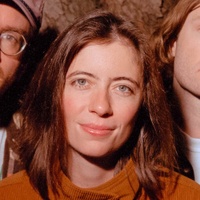
Documentary Filmmakers Geeta Gandbhir and Christalyn Hampton (Oscar-Nominated Short Film The Devil is Busy) discuss building trust, leveraging their platform to make a change, and the bottleneck in the film industry.
As told to Reina Bonta, 1525 words.
Tags: Film, Collaboration, Money, Process, Identity, Inspiration.
We were on a panel together at DOC NYC where you shared that you’ve known each other for many decades. As co-directors now, did you come into your political and artistic consciousness together?
Geeta Gandbhir: We’ve known each other since we were 18 or 19, which was, like, two years ago. No [laughs]. We were in college together and then we lived in Brooklyn together. I was working for Spike Lee and Christalyn was a dancer doing amazing work with different companies and traveling the world. We were a part of this renaissance—this art movement in Brooklyn in the ’90s.
Christalyn Hampton: Fort Greene. That’s where all the cool people lived.
Do you ever find moments where your interpretations of the story diverge?
Geeta Gandbhir: There’s rarely that. I think there’s a little bit of a hive mind happening. We see the parts of a film that are emotional very similarly. We both focus on the humanity of a story—leading with humanity, but also wanting it to be entertaining… Christalyn perhaps more than me. Sometimes she’s like, “It’s slow. Speed it up. I’m falling asleep.”
Christalyn Hampton: I have learned that the quiet moments are just as important.
Christalyn, how has your background as a dancer informed your voice as a filmmaker?
Christalyn Hampton: Dancing makes you disciplined. My work ethic has been consistent from my discipline as an artist. As a choreographer who produced her own shows, I learned what it takes to talk about lighting, space, and spatial awareness. As a choreographer, my work was always about telling women’s stories. I danced with the Urban Bush Women, an all-women’s company. It’s not the same language, but it’s a similar principle that I was able to apply to filmmaking.
Geeta Gandbhir: It’s all storytelling. She was a choreographer producing her own shows. That really stood out to me. She would put something together that seemed impossible. I was like, “Aha, this is a talent.” And also, she’s bossy. She bossed me around and I was like, “You’ll be a great producer.”
Geeta, you’re currently in the midst of not one, but two Academy Award campaigns in the same year with The Devil is Busy and The Perfect Neighbor. Are you alive?
Geeta Gandbhir: I’m very much alive. What a blessing for us. What an honor to be nominated by our peers who we admire and respect, who inspire us. The documentary community is the rowdiest. They are not the canary in the coal mine, they’re the lion in the coal mine. They will fight back. They will not sit down. They will not be quiet. They are the best in that way. Those are my people. To be nominated by them, to have them choose us, what an honor. Beyond that, it also allows us to speak about these issues: women’s reproductive justice and Stand Your Ground laws. We have a platform to try to make change. That’s huge.
Is there anything that you learned or had to unlearn in the process of making this story?
Geeta Gandbhir: Our film [The Devil Is Busy] reaches into the realm of religion and how religion is weaponized against women. The most eye-opening thing for me was Tracii, who retains her faith and is actually more faithful than the men spewing sometimes the wrong scriptures outside [of the women’s healthcare clinic]. Tracii has chosen a path of love, light, acceptance, and openness. She’s like a unicorn, but also a dream. Here is someone who can hold both, who can believe in women’s reproductive freedom and carry her faith.
You’re using Tracii, your protagonist who’s the security guard of this women’s healthcare clinic at the center of the documentary, as a conduit into the story. How did you find her? How did this project begin?
Geeta Gandbhir: Our shoot was in January of 2024. It was a big shoot where we really focused on the clinic and Tracii. But before that, for about a year, there was a research process where we essentially took a year to try to figure out what the story might be. Abortion has been a battleground. Like the battle for women’s reproductive freedom, it’s been going on forever. It took us a while to figure out what the story was.
Christalyn Hampton: The clinic is majority women of color. I thought that was important—to be able to walk into a space where I was able to relate to people right away. The first person you meet is Tracii after you are accosted driving through the protesters. She is the kind of person that can manage chaos. She kept coming in and checking to make sure I was okay because I was a little taken aback by the aggression of the protesters when I drove up. We just started shooting the breeze and I was just like, “Oh, she’s a very interesting person.” She would stop and pray and I was just like, “I would never think this would happen in an abortion clinic or any kind of healthcare facility. She stops and prays for the people who are there and who are leaving.”
How do you balance storytelling with conflicting ethical instinct when you’re shooting something so personal?
Geeta Gandbhir: We made a point not to showcase the stories of the “clients,” as Tracii calls them. We chose to focus on the staff and Tracii because this is their day-to-day and what their chosen profession is. They were fearless about it. You never see the face of a patient. We don’t identify them. That was really important to us and that was an ethical decision. But this was something that they chose to do. They wanted this film about the clinic and they wanted their work to be showcased.
Christalyn Hampton: We wanted this to be an immersive experience. We wanted to build trust. We actually didn’t film for a week. I just got to know everyone and talked to them about the process. I talked about Geeta and the team so that everyone felt comfortable, heard, and respected.
How did partnering with HBO amplify your story in terms of accessibility? What are the trade-offs for independent release versus institutional backing?
Geeta Gandbhir: Where the bottleneck lies right now in our industry is distribution. People will get their films made even if they have to sell a kidney. They will find the money. They will max out credit cards. They will always make the film. But how do you get people to see it? Self-distribution is absolutely possible. I think it’s harder with short films to monetize them unless it’s part of a block. It’s challenging. So to have had HBO helped us so much because we could say, “Go look. It’s here. It exists. You can find it.”
If you could make one particular aspect of documentary filmmaking easier for filmmakers, what would it be?
Christalyn Hampton: Show me the money. No, I’m just kidding. I think we need to figure out how to create budgets that help filmmakers pay themselves. Filmmakers have a tendency, as Geeta says, to max out their credit cards to get the film done. They rarely take the time to pay themselves.
Geeta Gandbhir: Funding and distribution. Those are the two biggest problems.
What would you advise creatives who might be inspired by something in their world and are deciding if they should make a story about it?
Geeta Gandbhir: There are constantly people who are like, “This could be a film.” I would ask right back: Is it a film? Is it an article? Is it a book? Is it a podcast? Even if it is a film, is it a short or a feature? The thing I always ask people is, “What are we going to see on screen?” Film is a visual medium. Okay, you have a story. But how are you going to put it onscreen? So, really, “Why is it a film?” is the first question. Not because you want it to be a film. Why, why, why is it actually, really a film?
Christalyn Hampton: I would add: pitch it to people you love and then pitch it to someone in the industry. The people who you love will probably be more honest than the people in the industry. Throw the spaghetti at the wall and see what sticks.
Christalyn Hampton Recommends:
Insight Timer app - a meditation app that really helps to ground you
Black Girls Rock - empowers young girls and women by giving them essential life tools to elevate themselves that is focused on leadership, cultural enrichment, and education
Bill app - a great app to organize your spending for a small business or a loan-out company
Photocircle - a media-sharing app that works well for your film crew to send BTS pictures
Skyguide - a star-gazing, planet parade/identifier app. Perfect for when you’re out of the city and can see the stars!
- Name
- Geeta Gandbhir and Christalyn Hampton
- Vocation
- documentary filmmakers
Some Things
Pagination