On making work that cuts through the noise
Prelude
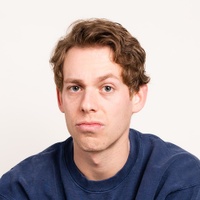
Arielle Knight is a documentary filmmaker, producer, and writer whose work traverses documentary and hybrid forms. She is the founder of GoodKnight Films Inc., a studio rooted in collaborative production models aimed at sustaining both artists and communities. Over the past decade, Knight has produced and directed work that has screened at Sundance, Tribeca, TIFF, Berlinale, New York Film Festival, including the Emmy Award winning Going to Mars: The Nikki Giovanni Project. As a director, her short documentaries A Song of Grace and The Boys and the Bees have been supported by Tribeca Studios, Queen Latifah’s Flavor Unit, Catapult Film Fund, and POV’s Independent Lens, with broadcasts on BET and PBS; most recently, The Boys and the Bees received a Jury Award at the Sundance Film Festival, further cementing her emergence as a distinct directorial voice.
Conversation
On making work that cuts through the noise
Filmmaker Arielle Knight discusses working slowly, following curiosity, and healthy delusion
As told to Reina Bonta, 1314 words.
Tags: Film, Focus, Success, Identity, Inspiration, Collaboration.
How do you make room for play and getting in touch with your inner child in your creative process?
In general, I am someone who is very childlike. I thought that I would grow out of it. But I understand the beauty of being playful and incorporating play into our adult lives. The way that I do that is mostly getting out into nature and being curious, because that’s when I feel the most connected to my child self.
Were you creative as a child yourself?
My mom is always threatening to throw my stuff away. Finally, the last time I went home, there was a box of my stuff waiting at my door. I was going through all of my things–journals, doodles, whatever from when I was a kid. I found something that actually said, “I’m going to be a screenwriter.” It must have been from some time around middle school. I don’t even know that I knew what a screenwriter was at that time, to be honest. I must have heard that somewhere. I didn’t say “writer.” I said “screenwriter”. I never wrote scripts when I was a kid. But I was always writing and spent a lot of time in the imaginative space. Low-key, I was always just in my own head telling weird little stories.
Do you remember any of those moments where you really felt like you were in that imaginative space?
I remember climbing trees a lot when I was young. I would climb trees and then just stay up there for a long time. I don’t remember many specific stories, but I spent a lot of time imagining what it would be like to be something other than a human, to be something like a bird. You know what I mean? I think I was interested in what it felt like to spend long periods of time in a different relationship to the human perspective. So I just was up in the trees like a little weirdo.
Some people feel drawn to film, citing that it’s the amalgamation of a lot of different art forms. Why did you gravitate towards the medium of film?
I’m now starting to think about [film] like that as I’m exploring more hybridity in my work. I sort of came up as a somewhat pure documentary filmmaker, always dealing with something rooted in reality.
More than a creative artistic medium with endless possibilities, I see film as a “communication-imagination” medium, meaning it feels like one of the few ways that I can still reach people who may have really different life experiences or perspectives. Images are still one of the ways that we can affect people on an emotional level that transcends all the other bullshit, maybe because it touches so many different sensory experiences. I am interested in art that has the ability to cut through the noise, the bullshit, and the skepticism, and makes people feel things.
Do you feel like you are someone that has always had a fairly easy time romanticizing life or finding beauty in mundane, everyday moments?
I am somebody who lives a lot in the imaginative, romantic, and nostalgic space. I’m actually learning how to be a little more grounded in the present and in reality, just in terms of my life. In terms of my creativity, I am always making up possible realities and stories for people that I encounter. New York is a crayon box of worlds. I think that a lot of filmmakers are like that. There’s a part of doing this–making films–that is quite delusional. Everyone tells you that it’s going to be impossible. Everything indicates to you that it will in fact be an impossible road, and you still proceed ahead. I do think it requires a kind of romantic identity.
How do you balance freedom to explore different themes in your work, and a curated “brand” that makes you identifiable as a filmmaker?
I care about telling Black stories. But I also don’t actually think that that’s specific. You know what I mean? I think some people will think, “Oh yeah, this person is a Black filmmaker.” It’s actually a very wide canvas for me to draw on. Within that, I plan to be indefinable. My hope is that I can evade being pigeonholed, because ultimately, that’s freedom, right? None of this exists without artists with original ideas who still go into nature and touch grass.
What do you see when you’re looking outwards towards the future?
With The Boys and the Bees, I was really trying to practice a way of making a film that I didn’t really have the space to do on my first project: moving slowly, following curiosity, and being open to letting the thing be what it wanted it to be. With my next project, I want to push it further. I’m like, “Okay, I like to work slowly. I like to work intentionally. I like to work with people who get that and vibe with that. What else can I do?” The next project is a hybrid project. I worked with my family. It’s partially scripted and partially documentary, and that’s a new way of working for me. I want to keep exploring new ways of stretching this medium and my own capacity as a storyteller. It’s like building. I’m building a little house of creative ideas, philosophies of working, ways of seeing and making images, and learning how to be a leader.
What is the easiest emotion for you to access in your storytelling?
I am very empathetic and that’s the reason why I make films–hopefully creating more empathy in other people. It’s both the easiest to access and the most elusive. We’re so overexposed that creating empathy in other people through images is this shifting thing, and you have to keep trying to understand how to affect people on an emotional level.
Do you think often about your audience when you’re making a short or a film?
I often actually think about my family when I’m making work. In terms of storytelling, I’m drawn to more of an art house sensibility. But ultimately, I am trying to make work that my community can connect with. I don’t want to become so into what the medium can do that it becomes inaccessible to my family members. And when I say “family,” it’s sort of a metaphor for Black folks, folks who have and haven’t had an arts education. You know what I mean? I take it more as it’s like a challenge. The Boys and the Bees is a film about very revolutionary ideas. I am getting people of all shapes and colors to sit for 19 minutes with a beautiful Black family where the father is present, where nothing seriously traumatic happens, and just be in their world. That’s some radical shit. It’s not that the work has to be simpler.
How do you personally find closure around a project?
Starting another project is always, for me, the way that I’m able to synthesize an ending. We’re taking the energy that I put into that project and moving on to something else, and letting it inform the next thing. You also have to accept that sometimes what you get from something is just that you did it. Sometimes the closure is just: “I started something and ended something.”
Arielle Knight recommends:
Taking your shoes off and touching grass (particularly if you live in a city)
Khalil Joseph’s blk news terms and conditions, it’s not a documentary, it is everything.
Facetiming with loved ones, bring back long phone conversations, take your people with you to coffee, dinner, and a long walk.
Regular Foot massages (no further context needed)
Stretching—everyday
- Name
- Arielle Knight
- Vocation
- documentary filmmaker, producer, and writer
Some Things
Pagination