On knowing when to stop
Prelude
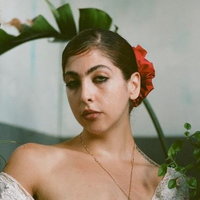
Kelsey Armstrong is a Brooklyn-based mixed-media artist working across jewelry design and collage. She is the founder and creative director of Haricot Vert—a whimsical dreamworld that invites creation and curiosity.
Conversation
On knowing when to stop
Founder and mixed-media artist Kelsey Armstrong (Haricot Vert) discusses being obsessed with your ideas, learning to lean on other people, and the dangers of working too much.
As told to Jun Chou, 2636 words.
Tags: Art, Jewelry, Business, Collaboration, Process, Success, Production, Business.
I know Haricot Vert was inspired by your time in Paris. What’s the lore there?
My whole wall was collaged as a kid. It was an art form I didn’t even know was a thing; I just started doing it as a kid. I ended up meeting a French man when I was in high school and we fell in love. He was my first love. We were together until college came around.
How did y’all meet?
He was my exchange student.
Oh my God. Romantic.
We would exchange back and forth. I would go to France, he would come to Florida. It was just a beautiful high school experience, but it was long distance so it was very hard. I decided to go to school in Paris so I could be closer to him. I ended up moving to Paris, we [broke] up. So I moved on with my life and started really focusing.

I was majoring in business and marketing because that’s what my parents wanted me to do because it makes money or whatever. I started combining my creative mind with a business sense. When I graduated, I decided that I didn’t want to live in France anymore. I started working for French companies in marketing. During that time I had a mentor who believed in me and pushed me to believe in myself. I started experimenting like, “I love collage. How could I make this a product that people want? I love jewelry. What if I combine jewelry with collage?”
I just kind of got obsessed with this idea. I would spend every waking hour I wasn’t at my other job working on this concept in my room. I was pouring resin in my room. Once COVID hit, I was like, “You know what? I’m going to take this really seriously. I’m just going to do it. I’m going to erase the imposter syndrome and just go for it.” Sure enough, I started on Instagram. I kept posting and then eventually one post went viral and then another one and then another one.
I ended up moving into a studio after things started going viral because my house was literally boxes everywhere, packing supplies. Then my boyfriend at the time was like, “I think it’s time for you to find a space.” Because it was unlivable, basically. Things were in the kitchen, it was just bad. I moved into a studio and I quickly learned I needed help. And so I brought in my first production assistant.
You grow your business by having people help you so I can focus on other things to grow the business. It was a snowball effect and then it helped the business grow. Eventually I had five girls on the team and then we grew out of that space.
I had the idea of putting the production studio and the store all in one. The main floor is the shopping area and the top is the workshop area. So yeah, it’s definitely evolved from just the collage jewelry terms into this community. We have a cafe now. It’s really cool. Honestly, it’s surreal. At this point, I would say I’m 50 percent business, 50 percent artist. I’m constantly balancing the creative with the business side because it is very hard to run a business in New York City. And here I am.
In one interview you call yourself a romantic, which I relate to heavily. It comes across in your art. It sounds like from your journey there’s been a lot of instances of romance and love driving you. Tell me about your relationship with romance—how does love inform your creative process?
I didn’t even realize this. Everything was based off of love. Am I romantic? That’s crazy.

It’s always funny to have a realization when you take a bird’s eye view of your journey and you’re like, “Wait, there’s a common link here.” How do you stick true to doing things borne from your own desires?
It was tough when I started my first production studio because I realized all we had to do was make orders. It was just order after order after order. Strawberry with pearl. Prosciutto and melon. You see the same orders coming in and I was the one who was actually making them.
There’s been really tough periods where it has been hard to be my true artistic self. But in this very moment, I’m very blessed because the team has gotten so strong and they’re so capable and the business is running itself in a way. Now I feel like I’m getting back in touch with my true creative self. The other day I made something just for me for once and it’s not to sell. I talked to a lot of artists about that. When you’re creating and you have a business, you’re always creating to sell. My goal this year is to create just for me as well.
I talk to so many artists who, once they find success or their voice, whether that’s a visual voice or a writing voice, it becomes difficult to experiment because then there’s certain expectations you feel shackled by. It’s lovely when you create out of pure desire for your own self. What was the thing you made for yourself?
I decoupaged this milk jug. I’m going to keep it for myself. I’m really excited.
That’s lovely. Are there any other media you want to experiment with?
I always call myself a demi-fine jewelry designer because in no way am I a metalsmith, but we do sell demi-fine jewelry, gold filled, sterling. But my biggest dream is to actually go through an intensive metalsmith course and really understand that because I really want to take my vision into a fine jewelry space eventually. That’s a big dream of mine.

What are the mistakes you learned the hard way in creating your business?
I learned to be a little bit less impulsive. Just because it’s super busy today doesn’t mean it’s going to be super busy tomorrow. I would get excited. We would have a crazy day and it seemed like we had no staff. I was like, we need another associate on the floor. But then the next week we had a slow week and then it’s like, “Okay, well, we didn’t necessarily need that person.” We needed to work with the resources we have. I’ve also learned that with just inventory and buying materials. Because that’s another thing, just buying inventory. Our inventory is so crazy. I mean, the amount of toilet paper and paper towels we go through things like crazy. It’s wild.
Those are the behind-the-scenes things I feel like people don’t think about when it comes to running a small business.
On Instagram, people see the dreamy vibe, but behind the scenes, it’s like, “Okay, we have a bug problem downstairs. We have to get an exterminator.” It’s always something.

Tell me about your relationship to burnout.
Working, for me, was like a drug. It was becoming workaholism because I literally love what I do so much and I care about it so much that I could never let go. I’d get there at 9:00 A.M. and stay until 9:00 P.M., and then I’d go home and still be on my phone doing the socials. People would keep warning me like, “Kelsey, you’re going to burn out. You got to take care of yourself.” I stopped taking care of myself. I was literally this manic artist running around with construction. It was a really crazy period of my life.
I ended up having some really tough mental health issues that I had to deal with that were exacerbated by all the stress and the working and the burnout. I realized I can’t live this way anymore. It’s almost like an alcoholic or a drug addict saying, “I don’t want to be this way anymore.” It was like that. I can’t be this way anymore because everybody in my life, they’re asking for more love for me, more attention for me, and people were concerned for me that I was working so much and it turned out to be not good for me. So now I’m in a place where I’m like, “Okay, eight hours a day is enough and I can let go a little bit.” It was really hard to do, but here we are.
How did you do it?
I started having really bad depression and anxiety symptoms. I started going, “What’s the point? What’s this all for?” I started getting detached. I went through therapy and she made me realize, “You really do need to take a step back on this. It’s not good for you. It can kill you.” Stress is the worst thing for you and you have to take care of yourself. So I think it was also maturing a little bit and realizing, “Okay, there’s a reason why there’s 24 hours in a day. Eight hours is enough.”
At the end of the day, it’s your job and your body comes first. So what’s your self-care routine now?
Now I’m spending more time with my dog and he’s really healing to me. Taking him to the dog park and just stepping away. I love animals so much, so animals are my therapy. I love to swim, so I swim quite a bit. Water is very healing for me. I got a lot of Cancer in my chart so I feel like it makes sense. When five o’clock hits, I try not to work anymore because before I would always stay. I am by far not where I want to be mentally, but we’re getting there.
As creatives, we have absorption periods and then production periods. It can’t be all the time, always. So it’s exciting to see what the absorption periods of signing off at 5:00 will do to your creative process as well.
It is hard because I have moments in the middle of the night when I wake up and I have a vision. I’m like, “I want to make this right now and I can’t. I’m not at my studio, so I can’t.” The old me would’ve taken an Uber to my studio in the middle of the night and worked.
When was this burnout period for you?
Funny enough, it was exactly one year ago. My one-year milestone of seeing a therapist, working through the workaholism. I’m really proud of myself this past year, honestly.
It all goes thanks to my team because I wouldn’t have been able to step back and focus on myself if it weren’t for them. I feel like they sensed that I was going through something.

What is your future looking like for Haricot Vert?
I’m excited because we’re shifting from just being a jewelry craft brand. We’re launching our clothing line in about a month. My goal is to transform this business or company to be a universe. I’m really excited to see what that looks like because the clothes are looking super cute.
Did you design the clothes?
These ones are designed by me. Ideas I’ve had for a long time. But there’s been some one-of-a-kind pieces I’ve already launched. There’s one piece that actually went viral that we recreated with a manufacturer.
Is this your first time designing clothing?
Yeah. When I first started out, I would upcycle clothes. I still do. I’m always working in different mediums, but this is my first time designing a proper line.
What advice would you give to young creatives looking to start your own business?
I would recommend to anybody out there to believe in themselves and realize all the insecurities in your mind are only in your mind. Nobody cares. At the end of the day, just do what you want to do. People always find reasons. “Oh, I don’t have money or I don’t have time.” But you can save up money. You can carve out the time. And if it’s something that you really, really want, then go for it. But if you want to be an entrepreneur, be prepared for the craziest rollercoaster of your life. Be prepared to not see your friends and family as much as you used to. You have to just go all in and dedicate yourself to the mission.
Another thing I also talk about a lot is KISS: “Keep it simple, stupid.” Everybody who works here is a creative and you see them overthinking something or they want to overdesign something.
And I always say, “You know what? Keep it simple. It’s good where it’s at.” It doesn’t have to be perfect. A lot of people want to be so perfect, but the truth is some of my first pieces I launched were literally unfinished. The backs didn’t have resin on them. They were literally half-baked, but somebody bought them. When they bought them, I finished them. So it’s one of those things where it’s like you could literally take a photo of an unfinished piece, hope somebody buys it and then finish it.

How do you keep yourself from going down those overthinking spirals?
Nobody cares about these thoughts that I have. These are just thoughts my brain is generating that don’t really matter. It is all about the journey, not the destination. At the end of the day, it’s really not about the final piece. It’s about the whole journey of creating. And the best way to do that is anxiety-free. I mean, we all struggle with anxieties, but learning to let go a little bit.
You mentioned this notion earlier when you were talking about your burnout and feeling those depression symptoms and stuff like, “Nothing matters.” There’s a power to that as well because you can look at that and be like, “Yeah, nothing matters.” So that allows me the creativity and the play and the improvisation that is more liberating.
I love that. In the moment when I was dealing with depression and anxiety, it was horrible. I had to go on medication. It wasn’t fun, but it taught me so much about myself and so much about what I do and what’s the purpose and why I’m here. Who do I want to be in this world? So again, it was the journey. It still is the journey. We’re still not there.
Yeah, I don’t think anybody is. It’s a whole lifetime of figuring that out. And it can either be like, “Oh, fuck, that’s so much work.” Or it can be like, “Hell yeah, I’m never going to know.”
You have to humble yourself, too. When I started, it’s like, “I want it a certain way.” But over time, I learned to let go. I also learned people I brought into the company could really add value and also give a new perspective that I don’t have. There’s so many new perspectives in the business and I love it. I’m good on my own, but I’m better with other people.
Kelsey Armstrong recommends:
Don’t overthink it—keep it simple. Show up and create every day, even if it’s just for 10 minutes.
iSpy books by Walter Wick
eBay rabbit holes
Vintage Seventeen magazines
The real world (not Pinterest).
- Name
- Kelsey Armstrong
- Vocation
- mixed-media artist, founder (Haricot Vert), creative director
Some Things
Pagination