On rebalancing how you work and live
Prelude
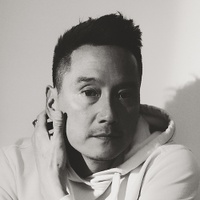
Rachelle Robinett, RH (AHG), is an author, herbalist, and explorer of the human experience whose work explores the relationship between health, nature, and the pursuit of a well-lived life. With more than a decade of leadership in wellness, including founding and leading multidisciplinary companies that helped redefine modern herbalism, she has helped thousands of people improve their wellbeing. Called “a philosophical voice at the vanguard of natural living,” Rachelle writes about the philosophy of health, self-inquiry, and what becomes possible when we return to our nature. She is the author of Naturally: The Herbalist’s Guide to Health and Transformation and is based between Costa Rica and New York.
Conversation
On rebalancing how you work and live
Herbalist and author Rachel Robinett discusses the romance of your discipline, the power of place, and learning to think for yourself.
As told to Meredith Graves, 3232 words.
Tags: Ecology, Business, Writing, Mental health, Time management, Business, Independence.
Who is your current best friend, plant-wise? Is it different from the plant you reach for first thing in the morning? Is it a hot new crush that’s grabbed your eye and piqued your interest? Is it unique to where you’re currently at in Costa Rica?
My current best friend… who are you? God, I have a really good crew so it’s hard to choose. I’m looking at them now.
My longest-term relationship, close relationship, is with nettle. That’s a plant I grew up with in the Pacific Northwest that I learned first as a weed and something that was an inconvenience. Then later I learned it was a beautiful food, and then [even] later I learned it was an herb. That was definitely a moment that was eye-opening to me–when I say herb, I mean medicine–and it is for so many people when they encounter herbalism for the first time [when], all of a sudden, [we] see so much of what surrounds us in a new light.
I also love the concept of nettle being both a poison and a cure, and the idea of a pharmakon. That is why my company was named Pharmakon Supernatural. It was supernatural. Then when I trademarked it, I actually became Pharmakon Supernatural. I think I write about that in the book at some point maybe toward the end. Or maybe in the beginning, I’m not sure.
Now, my relationship with herbalism and with the natural world is so, so much richer even than when I was practicing as an herbalist. Now that I live in Costa Rica, I’m in essentially constant contact with the elements and I consider that to be herbalism. Not all of that is engagement with plants, but it’s engagement with dirt, and the sea, and the air, and the sun every single day, in all senses of the word. We’re covered in it. We’re looking at it.
That’s not a single best friend, but it definitely, at this point, appears to be the love of my life from a natural relationship perspective. When I first encountered this place, I fell in love with this place like it was a person. It was so hard–meaning heavy hitting, intense, physical, emotional. I didn’t know people here; I was brushing the sand as if it were skin. I was just so in love with this land. I’ve never had that happen before, and I’ve traveled a ton. So it really was special, the way this place stole my heart.
That makes me think of Donna Haraway, who coined that term “cthulhuscene” to push back against the modern obsession with apocalypse and the end of the world and the collapse of the climate in a way that is designed to fill us with dread, as opposed to action and co-creation. Are there women in the fields of ecological philosophy, in herbalism, in all of these connected landscape-like worlds that you yourself take part in, who you look at right now and think, “This person’s thoughts are in communion with mine”?
The first that come to mind are literary. Well, the very first that came to mind was, again, just the environment. I think having a relationship like we can with the environment can be so informative and so inspiring. Granted, it’s often nonverbal, so that’s a little different learning from a thinker per se.
I’m very inspired by Sheila Heti and Annie Ernaux as very specific literary references. I am working on my next book, so I’m thinking a lot about the literary world right now. There’s a lineage there of writers and thinkers who work in similar ways. The work tends to draw on, not always, but often it’s personal material, it’s journals. I’ve been a journaler my whole life. I’m again, staring at a stack of about 29 of them right now that I’m working on with the next book. So that as a form is very interesting to me.
Then there’s a sort of almost-naïveté that Heti writes with that reminds me of the beginner’s mind, and the idea of encountering things, not necessarily for the first time, but with that rawness, nakedness, innocence. That’s something that I’ve always valued and strived to maintain as a lifestyle, again, as a perspective. There needs to be a sort of thinness, even, or porousness about us in order to access information or in order to allow that information to surface.
That idea of thinness and permeability when it comes to knowledge acquisition is something I think about constantly with regard to esoteric traditions, especially when it comes to herbalism, plant magic, whatever side you’re coming to it from. There’s this longstanding history of people, when they first get into it, looking for a book or a teacher or a class, while also being encouraged to commune with plants directly via one method or another. As someone who is considered an expert in this field, how do you approach that question? Where should a beginner start when herbalism itself is enriched by this dual tradition of lineage-based knowledge and experiential hands-on knowledge?
I really, really like to teach people how to think for themselves. That is more or less how I answer that question. There are all the nuances of safety and “what if I know nothing, I don’t know how to make a tea.” We need some essentials, some foundation, in order to stand upon and from there, be able to navigate a bit more intuitively. I could sidebar about intuitive eating because I have similar thoughts about that. I think that, again, we need to have some degree of education.
But with education, I hope there is also always the empowerment piece, which is the encouragement to explore this world as yourself and learn more that way. I think it’s a balance. It’s like, we have the education, we have the exploration, we learn more, then we can go back to the education, learn more about what we just learned, then we can go out and explore more.
So I think there’s a balance there. It’s pretty unfair to just ask somebody who doesn’t have any experience with this to just go figure it out. Of course, plenty of people who feel inspired to do that will do that, and that is absolutely a right path, too. So I never recommend against that, but for those people who prefer to proceed with some guardrails or something like that, that is also totally appropriate.
It’s harder now–or maybe, it can be more complicated to know where or how to begin now, I think, because we have access to so many plants, access to so many resources, access to many, many great teachers in all the ways that we can reach them and learn from them. We have more than ever before, “thanks” to the wellness industry, which has a tremendous amount of influence and input and a directive. Much of which is misdirective, in terms of what to be taking and what to be using.
That also results in skipping so many steps that are involved in the practice of learning herbalism and becoming an herbalist or not, just learning how to work with plants. We’re skipping straight to the, “take this capsule now as part of your stack.” There’s essentially a total disconnection from that even being a natural ingredient or production of nature. So much of the value–the majority of the value in herbalism–is not in that capsule. It’s in everything that comes before that capsule.
Was that wellness industry situation the tipping point that made you finally say, okay, it’s time for me to write this book?
It’s funny, because I was just rereading some of my old journals and I found the entry where I said, “It’s time to write this book. It’s time.” At that time, I had not been directly responding to the wellness industry. So what I would say is, number one, I’ve been a writer my whole life and it was always, always my dream to write books–not a book, but to write books. I took a bit of a circuitous route to get there perhaps.
There became a time, which I think was much more personal than it was professional, where I felt like I had reached some sort of conclusion with my relationship, not with herbalism, but with entrepreneurship. I had multiple companies for over a decade. We did all the things, products, cafes, education, so many things, and I felt done. I didn’t want to do it anymore. Which again, was not specific to herbalism. That’s a lifelong relationship or part of my identity. It was related to the role, and it was related to the way that I was spending my days, and it was related to the trajectory of my life, and it was related to having a calling and feeling like enough time had passed. I was finally ready.
I’d been approached to do books multiple times prior to that point; I didn’t feel ready, I didn’t feel mature enough, I didn’t feel experienced enough. I didn’t feel like I had rounded out my education in the form of experience enough. I just didn’t feel that it was time.
Then I felt like it was time, and then I was determined to do it. The professional arc had, I don’t know, arced. It had reached a natural end point. It was time to put all of that into a book, and then it was time to move on after that book into the next chapter of my own life, which is becoming the next book.
I’d love to know what an average day looks like for you. I ask this because I really do feel like, depending on who you’re talking to, people do have preconceived notions of what a person who “does plants” does over the course of a day. Are we waking up and taking the crystals out of our armpits, or are we waking up and going into a laboratory to make light bulbs out of celery juice?
In some ways, my life now looks very different than it did in the past. However, the things that matter the most have remained consistent.
So of course, when I was in New York, I was city bound, I was desk bound. I was working essentially nonstop all the time, but I was also always maintaining my health and my relationship with plants. Here in Costa Rica, an average day for me looks like waking up usually quite early so that I can check the waves, because surfing has become the priority of every day. I was not a surfer before and now I’m totally hooked as happens.
I take some of my herbs in the morning. I take herbs all day long, but I use herbs in the morning. I do drink coffee. People are always curious about that. I drink a little bit of coffee in the morning, that’s all I need. Then I essentially run to the ocean. Not literally, but I’ll ride a bike or I’ll get there as fast as I can, it’s quite close, and hopefully surf until I can’t anymore, which is just joyous.
It is absolutely beautiful. It’s an incredible experience of adrenaline, and beauty, and friends, and challenge, and grace, and also destruction, and all these things. You come out of it completely humbled and euphoric. I love surfing. Anyway, if I don’t surf, I’ll do something very physical. I always exercise in the morning. I’ll do strength here at home. I’ll go to a class. I’ll run, I’ll cycle, something like that.
I spend most days more or less flowing with the rhythms of this place or my schedule. I work way less than I used to. I try to create blocks where if I’m on camera or on my computer working, I’ll do that for a day, but then I’ll be off the next day. That for me, I find to be just preferable so I don’t have interruptions in the middle of the day to take a meeting or something like that. I’d rather be fully immersed in whatever I’m doing.
I live in a tiny town where we all know each other, so I’ll walk through town or ride through town and see multiple friends. This morning I went for a run and I saw three of my closest friends. We see each other every single day and that is amazing. When I lived in New York, I had to schedule two weeks in advance to see my friend who lives two blocks down.
Every day, we will all go see sunset together. Seeing sunset here is a big priority for everyone. So you see everyone again out at the beach just sitting watching sunset, which is often a psychedelic experience.
Oh, man, sometimes I’ll get to surf sunset as well, depending on the conditions and that is absolutely incredible. You’re literally surfing in a rainbow that is the sky, that is also the water, that is also the same temperature as your body. It’s a total trip and it is beautiful.
I’m moved to tears on a regular basis just by how beautiful it is here. I walk through jungle paths, I get sweaty, I get sun exposure, I get dirty, I get bitten by the jellyfish and the bugs. I get hit in the face by palm branches. It’s just a constant conversation with the environment here.
One thing that I do, every single day at different times of day is I write. In New York, when I was writing Naturally, I was doing it for five hour blocks; that’s usually what I needed. Because of the phase that I’m in with the next book, I don’t need five hours at a time, but I am really committed to doing some amount of time every single day. If it’s rainy season and it rains for the whole afternoon, I’ll write the whole afternoon.
I flow with the rhythms of this place. Our lives here are dictated by the elements. If the tide is a certain way, we surf. If it is pouring down rain, we are inside, and probably the power goes out. Everybody is in their own little worlds. If the sunset is beautiful, we do that. It’s a really different rhythm than in New York where, weather be damned, you do what’s on the calendar. I see friends. I have a lover I see most days, and I have a lot of time alone as well.
And in keeping with some things that you’ve said in your book, it isn’t just about plants, is it? It’s also interacting with the landscape, with community, figuring out what needs aren’t getting met that may not be vitamins, nutrients, and so on. Is this why your life is changing and starting to reshape itself in the way that you’re describing, because you’re refining that balance between the plants and the stuff-of-life that makes for a healthy overall experience?
Yeah, absolutely. I dramatically changed my life in the last few years. I left my career, I left my city, I left my country, I left a marriage, I left my home. My family wasn’t close, but I’ve left them in that country. I left so much that at some point here I was like, I’m not sure if my name is still Rachelle. I let myself be stripped bare.
What I have found, and what my closest friends have confirmed as well is that, no, I’m just more myself than ever before. Yes, it was a dramatic rebalancing, and it was a rebalancing that left me with more of the life-giving essentials, period. Less of the rest.
Where are the first few places that you encourage clients and friends to look if they’re looking to seek more balance in their life? You’ve mentioned exercise, friendships, boundaries. What do you point people towards first when you’re looking to help them recalibrate?
<span class=”highlight”I always recommend that everybody start with as much self-reflection as possible</span> rather than the inputs from, say, the wellness industry or whatever it is. It could be inputs from close friends and family, but really starting from within first. Balance so often is about less rather than more.
Something I have said nine thousand times–and it’s not my idea–the pillars of health have never changed. We need the same things we’ve always needed to be well. I now live in a blue zone where that’s in my face every day in the most beautiful way. I recommend that people start with one focus at a time and start on truly the basics. They’re not sexy, but these are the things that will change your life.
It could be sleep, it could be movement. Movement is an essential and powerful medicine for me personally. It is also powerful for basically everyone who has access to it. Nutrition, of course. Community. I think that pleasure has become a very big focus for me, and it doesn’t have to mean leisure, it doesn’t have to mean “exiting the matrix” and moving to a surf town, but seeking pleasure and finding pleasure is so life-giving. It can change our relationship with so many things.
It could change our relationship with exercise. It could change our relationship with food. It could change our relationship with our career, change our relationship with our partner, and on and on and on. In my experience, it was so easy to disregard pleasure in the name of productivity or all the other things.
Purpose–that’s one of the keys. What are we getting out of bed every day for? How are we spending our time every day? Where is our energy going? Is that what we believe, what we know, is most important for us to be happy? There’s so much denial there. There’s so much. It takes a lot of courage to live in alignment with that knowledge, which I think we all do have. We may just not know it. We might have to go encounter it in our depths, and nature.
Five herbs Rachel Robinett recommends to support creativity:
Nettle (Urtica dioica): For discomfort. It stings before it nourishes. I named my first company Pharmakon because I’ve always been interested in medicines that ask something of us before they give something back. In art-making the best work rarely arrives comfortably.
Mugwort (Artemisia vulgaris): For mystery. Mugwort reminds us that there are more ways to know than thinking alone.
Dandelion (Taraxacum officinale): For determination. Every creative needs the resilience to grow even where they’re unwelcome. Split concrete and bloom skyward.
Rosemary (Salvia rosmarinus): For remembrance. The best work often comes from remembering something we hadn’t realized we’d forgotten.
Bay Laurel (Laurus nobilis): For poetry. The word laureate comes from the laurel wreath once placed upon poets in ancient Greece. Bay reminds us that inspiration may arrive unexpectedly, but art is earned through devotion.
An Imaginary Herb: For what doesn’t exist—yet. My book is illustrated with plants that don’t exist. Every creative work begins as an imaginary species.
- Name
- Rachelle Robinett
- Vocation
- herbalist, author
Some Things
Pagination