On learning to do a lot with very little
Prelude
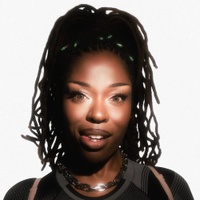
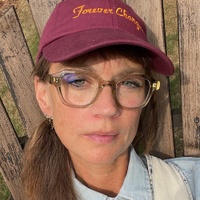
Joelle Arawjo is a 37 year old natural illustrator and co-owner of Fennec Design, a printmaking studio based in Harrisburg, Pennsylvania. She once found both a surprise tater tot and a fourteen inch long french fry in the same take-out bag; so I guess you could say she’s pretty lucky.
Conversation
On learning to do a lot with very little
Artist and illustrator Joelle Arawjo discusses nurturing your special interests, the exaltation of cheap art, and why we should probably chain our phones to the wall.
As told to Meredith Graves, 3154 words.
Tags: Illustration, Business, Creative anxiety, Production, Promotion, Business, Inspiration, Mental health.
You just survived the holidays as a long-term small business owner. How are you feeling today?
I think every year, January feels a little bit different for me. This January feels very different from years past. Last year in January I was about a month out from major surgery, and this year, I’m a year out from it; still processing it, still coming to terms with the impact all of that’s had on my business for the past year. Then if you throw in all of the hurdles coming at small creative businesses right now, I feel… sometimes very overwhelmed, sometimes very, very grateful.
My favorite thing about January is that I get to re-center my mind on my practice. I get to return to my rituals, to my routines. I get to re-center my days on what I feel matters most about what I do after a very heavy sales season where I don’t get as much time to create as I would like.

Alchemy of Luck, pen and ink, 2025.
You’ve been running your design studio with your now-husband for well over a decade at this point. What are these practices, but also, how long did it take you to establish them?
Oh, I mean, I don’t think they’re fully established yet. If they were fully established, I think I would feel like my process had totally atrophied. The idea that you’re going to arrive at a perfect routine that will serve you forever is a fantasy. I’m a person who is drawn to routines, is drawn to ritual as a way of conjuring the emotions that I need to do my best work. But I also recognize that we have phases of life, that there’s seasonality, particularly as I deal with long-term chronic illness. I can’t necessarily depend on routine to be exactly the same for the long-term. I think I’m in a constant act of reassessment where I’m considering, okay, this is what I’ve been doing. What about this serves me? What about this is holding me back? It’s a dance between ritual and experimentation, and also a healthy element of play–because I think we have to be careful that ritual doesn’t get in the way of our capacity to play.
A lot of the really lovely content that you and your husband are putting out lately seems to be about archiving, about history, looking back on how far you’ve come and where you’ve come from. If the you of today, January 2026, could go back to speak with the Joelle of 2010 … let’s say you only had 60 seconds, you pop in and out, what are the things you would want her to know immediately and with urgency?
“It will be okay. You will survive this. You are going to become a more whole person. You’re going to fall in love in a lot of different ways. You’re going to step into your power. It’s going to be really, really, really hard. There’s going to be a lot of pain, but pain and magic are companions.”
And then you’d sit and look at each other real weird for a minute, right?
Yeah. Yeah, she would understand the energy.
That’s probably a good litmus test of whether you’ve made it to where you’re supposed to be as a person. If you time-traveled back, would your past self recognize you?
Oh, absolutely. I think I’m not that different of a person. I think what’s changed is that I’m no longer afraid to be that person.

Closer, pen and ink illustration, digital color, 2025.
A lot of your artistic work has remained thematically consistent over a really, really long period of time. What is it that brought you to that core image set for your body of work? What keeps you devoted to it?
I think in some ways the aesthetics are sort of secondary to intense special interests. My husband and I spend a ton of time in nature hiking, creating work when we’re outdoors. Some of it also comes from the fact that we both have these punk roots, so we’re pulling from the aesthetics of our childhood. It’s this way of combining natural illustration, which feels very innate to my interests, and this early punk aesthetic that gives me that connection to the past. And then I also like to draw from disparate mythologies, the esoteric, the occult. I’m a big reader, and so I’m constantly seeking new avenues that I can explore aesthetically. I don’t want to be afraid to try new things either.
Is that some or all of what you meant when you referred to the importance and the appropriateness of play in an artistic practice?
I think that’s part of it. We both have been working musicians at different points, have toured, things like that. My husband started screen-printing when he was DIY-ing T-shirts for his band, which I think is a not-uncommon path for printmakers who don’t go to art college. A lot of our early artistic endeavors were very tied to the music scene.
At the same time, now when I think about play, it’s about my ability to move between mediums and my personal practice. I like to call it crop rotation. Essentially, I want to create the work that I sell, the work that pays the bills, but also have a number of different mediums that are just for me. They’re things that I do on my own. I paint abstractly, I collage, I write, and I think that all of these things feed back into what I create for Fennec. I need that ouroboros of a feedback loop in order to come to the work that I actually do professionally with my best possible self.
One thing I think we falter on occasionally, those of us who work across multiple mediums, is not talking enough about the times we’ve tried something new and bombed, or totally hated it. Is there anything you’ve tried and just went, “Absolutely fuck that. I’m never touching it again”?
Public speaking! I am horrible at public speaking. At one point I thought I wanted to do lectures and speak. I get so nervous, It’s just not for me. I tried teaching–originally, I thought I wanted to be a professor. It really wasn’t my skillset. I do well with people one-on-one, but the second there’s a group I’m overwhelmed, it’s too much. I always excelled at making music on my own, but the second I was performing in front of a large crowd, it was harder for me. I’ve started to learn that there are ways that I connect to other people, but it’s often after the work is completed, not in the process.

Home, screen print, water based ink on 100lb. stock, 2025.
So how has the social media landscape affected you as an artist who prefers to have more intimate encounters with your viewing public, or who prefers to show your work in post?
It’s definitely difficult for me to put myself out there. At the same time, I think there was a point where a lot of that friction had to do with the belief that I had to manufacture aspects of myself to succeed in sharing online. I think there’s a lot of messaging towards artists about how we’re supposed to market ourselves, and so much of that is rooted in a kind of corporate, I guess, conception of marketing. I’ve come to realize there’s a separate path where you can be boundaried, but sincere. You can be earnest and available. You can put the best parts of yourself into your work and people are going to see you, because the work is you.
A lot of the time, when people are struggling with the idea of being seen online, some of that uncertainty is that they know their work and what they would put out there of themselves is not in alignment. As I find my work aligning more with who I am, and I can see a movement in the direction of the best honesty I can offer another person, one, I see my work connect more with other people, and two, I feel I have to do far less performance. I can simply show up as myself and people see themselves in it.
People are desperate for authenticity. They crave it. They want something with rough edges and they will pause when they see it. And I think people are afraid to show that unpolished side of themselves, but not only is it necessary to succeed online as artists, but it’s necessary for your work.
What makes you want to show people your own rough edges?
For me personally, it has a lot to do with my sense of time. I currently suffer from a condition that is potentially progressive, and so there is a non-zero chance that I will not be able to make the work I make now in perpetuity. It’s a question mark, but there’s a decent chance that there is an endpoint to what I do that is well before the endpoint of my existence on this planet. This sort of acute awareness that what I have is finite drives me in a big way to want to find work that is quintessential, that is the best expression I can give, that is what I have to offer. I don’t want to get to the end of this aspect of my career and feel like I left something on the table.
Do you think this push for rough edges is any sort of response to the last few years of AI-art supremacy?
That’s very likely the case. I think that people are craving something that feels analog. They want to know that it’s real, they don’t want to question if it’s real. A lot of my work and the way I talk about my work too centers on connection. I think that when someone looks at my work, yes, I’m in, it’s me–but I don’t want them to see me. I want them to see themselves.
I think that art as a point of connection has been somewhat diminished. It’s part of the reason that some people are so willing to accept generative art–because they view art as primarily a superficial aesthetic product. They don’t view it as a fundamental human birthright that they themselves have access to.

The Isopod, pen and ink illustration, 2025.
I make art because I love making art, not because I want to be the best artist and better than everyone else. My goal in speaking about the art-making process is to convince every single person I talk to that there’s a form of art that they could be creating, that they could feel invested in, that they could have a practice around. It’s something I will evangelize for, because I think it’s transformative.
It is a beautifully inconvenient act. We have lost sight of collective art-making, of dance, of ritual, of song. We used to make art and community, and I think the antidote to the atomization that the art world is currently experiencing is to center our practice on pulling other people in. I don’t want to present a vision of art that says what I do is somehow special or inaccessible. I want to show people that it’s joyful and it’s theirs if they want it.
It’s that persistent, dangerous idea that “real art” is what hangs in museums, it’s made by a dead guy, it’s a Rothko that costs as much as the museum itself. Your work goes on t-shirts. Is that part of the collectivization and democratization of your practice–wearables?
I love cheap art. I want anyone who wants it to be able to afford my work. I put this phrase on the inside of every single one of my sketchbooks, and I have for years. It’s, “I’m not here to be good. I’m here to fall in love.”
There’s that quote that goes, like, “every American thinks they’re a temporarily embarrassed millionaire. Every artist thinks that they’re a temporarily embarrassed Basquiat.” Why? Why?! These “great artists” are one in what, 10, 20 million? I’m never going to be that person. 99.999% of us never are. I think living under the slight, slight, slight chance of that possibility just holds most of us back.
I don’t want to worry about my legacy when it comes to whether or not someone I’ve never met can use my work to launder money. I care a lot more about someone who messages me to say, “This piece I bought from you meant something to me at an important moment in my life.” I get messages from people with photos of t-shirts of mine that they bought a decade ago that are full of holes and just torn to shreds, and they tell me stories about what that piece of clothing meant to them because of what they were doing at the time they wore it. It’s a different kind of powerful for me. I would much rather know that my art is out there in the world living with real people who love it than in some rich guy’s vault somewhere, accruing him just a little bit more wealth.
If you want to be in big museums and you want to sell paintings for tens of thousands of dollars, you do you, but it’s still commerce. And if you think that there’s somehow a huge difference between the money that you make and the money that I make under capitalism, you’re not more of an artist, you’re just a classist.
People want to separate art from blue collar work or from physical labor, but especially in your case, as a printmaker and an illustrator, that’s so not true.
Right. Everything I do is very physical. I see an orthopedic doctor and he always jokes with me, he says, “You’re an athlete. What you do is athletic.” I have to do PT. I have to have surgeries. I have to do these things because what I do is a physical practice. If we get too in our heads, we can abandon the fact that art making is a physical somatic practice first. The other stuff, it can come before, it can come after, but I like to focus on the physicality of what I do. It’s the best part.

Tomato Tee, screen print, water based ink on cotton, 2025.
A lot of kids out there probably feel kind of distraught about making a foray into the arts during such inclement fiscal and sociocultural weather. What would you turn around and say to the legions of younger artists who may be coming up looking at you as a role model, because you’re handling all this stuff so differently than most do?
First of all, I want to affirm that it’s harder now. I don’t want to pretend that it’s not. I think it would not be in service of younger artists to say something falsely optimistic there. At the same time, I think the internet provides huge opportunities for the democratization of your capacity to have your work seen. So there are some ups, there’s some downs.
I launched into adulthood during the 2008 recession. I remember the type of hopelessness I felt, applying for hundreds of jobs and not even being able to get a call back at Target. “Artist” was my first real job because I couldn’t find another job. I think there are ways you can live your life that best support your ability to make art, if that is truly what you want to do. If you are in love with art and not simply the idea of being an artist, learn to be scrappy.
People have made art under the most extreme conditions, and I think a big part of being able to make art in the current climate is putting thought into how you care for yourself, putting thought into how you regulate your nervous system, and paying special attention to your ability to pay attention. There are a million and one things screaming for your attention all of the time, and your ability to step back when you need to and control your attention is your single greatest asset.
You need to get control of your relationship with your phone. It will undermine every single thing you need to succeed in your process. I don’t care what you have to do–I literally have a tether on my phone and I chain it to the wall when I work, on the opposite side of the warehouse, so I cannot touch it. The world is at your fingertips; the world should not be in your studio. That is where you are alone. Everything has to follow that.
I also think you need to take a step back from constantly consuming the thoughts of others on a regular basis. It is a bizarre moment of human experience that we are in, where we are constantly being exposed to the interior thoughts of other people 24/7. You need to be alone with your thoughts, frequently, in order to do your best work. You need to read books. You need to journal. You need to take walks outside. You need to learn how to stretch a dollar and you need to take care of your body. You can do a lot with very little, but you need to be building the correct toolkit to do it.
Joelle Arawjo recommends:
The Color of Pomegranates (1969). director Sergei Parajanov’s last just before his imprisonment in a Soviet labor camp under accusations of homosexuality and corrupting the youth. An avant-garde exploration of the life of Armenian poet Sayat-Nova. A singular, truly radical act of filmmaking.
Jumbo packs of those tiny flash cards on metal key rings meant for studying. I buy in bulk and leave them everywhere. Ideas are apt to slither away and these are an inexpensive net.
Acadia National Park. An ideal haunt, the kind of beautiful that they thought could cure your tuberculosis.
Windsor & Newton Cotman Water Colour 14 half pan Field Box. Fits in my smallest bag. Ideal for painting on hikes. A sturdy, practical, perfectly tiny kit at a good value that does not demand any preciousness.
A long silent and exquisitely hot bath by candle light. Daily if you can manage. Good for what ails you–body and soul (leave your phone on another planet).
- Name
- Joelle Arawjo
- Vocation
- Illustrator, designer, business owner
Some Things
Pagination