On letting friendship fuel the work
Prelude
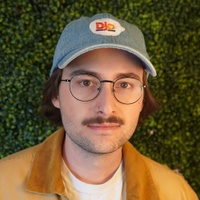
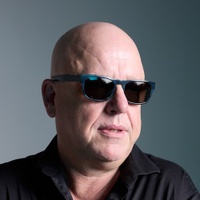
Croz Boyce is the duo of two musicians who have made some of the last quarter-century’s most inquisitive music, Dave Portner (aka Avey Tare) and Brian Weitz (aka Geologist) of Animal Collective. Their new album, Croz Boyce, is a celebration of friendship, of the chance to share a lifetime together even if from a distance.
Conversation
On letting friendship fuel the work
Music duo Croz Boyce, aka Dave Portner (Avey Tare) and Brian Weitz (Geologist) of Animal Collective, on friendship, mystery, and working on your own timeline.
As told to Jeffrey, 2755 words.
Tags: Music, Collaboration, Process, Success, Production.
What did making music in the 90s look like in Maryland?
Brian Weitz (Geologist): Dave and I started playing together in ‘94, Josh and Noah, maybe even earlier. The area of Towson was a big part of it. There was a guy in our school named Guy Blakeslee who played in the The Entrance Band. He was a couple years younger than us, but he lived in Towson and his cousin was in a few bands. He introduced us to the world of basement shows, DIY stuff that bands in Baltimore were doing, as well as a few other people at our school, one of whom is my wife now. Her brother played in a band with some of the guys who went on to be in the band OXES. Within the next year or two, we made a 7” and started playing. We had a show that we hosted in one of the guys’ basements that was in our band. Mostly basement shows, but we played a few churches and one community center or two.
How does Animal Collective grow out of that?
Dave Portner (Avey Tare): I don’t think we had much of a plan other than just enjoying playing music together. All of us also really enjoyed recording music, too. Four-track, or even just crappy Dictaphones. That’s a lot of what we were listening to at that time—Guided by Voices or Silver Jews were recording that way, too. Even into New York, it was such a slow transition. Dropping out of school for Josh and Noah and I wasn’t necessarily a planned thing. It was out of necessity for me. Brian and Noah and I ended up in New York around the same time for different circumstances. We started playing a lot together around then. Then Josh made the move or decided to drop out of school as well and made the move to New York. At that point it seemed like we could start playing shows together in some form in New York and could get shows because in a similar way, we just met people that were doing that, the band Black Dice, who we’re still good friends with.
It was all based on a similar taste in music and liking going to shows. The bands that were playing around that time, Lightning Bolt, you could just go see down the block. None of us lived in Brooklyn at that time, but it started being a thing to go to Williamsburg. That’s where everybody was playing and coming through. We got a practice space there with Black Dice, The Rapture, Gang Gang Dance. We all just ended up in the same place.
Once we started playing shows, it was still like, “Oh, we’re going to be Avey Tare and Panda Bear for this show.” Campfire Songs was a thing we did around that time. It didn’t gel together until we signed to FatCat and it was just like, “Well, how do we sell this kind of thing?” It’s simpler to just call it Animal Collective.
Dave Portner: That was a plan that was more so imposed on us. Not that we were against it. It made complete sense to us, but it wasn’t part of our plan. Our plan was just to be this loose friend group where it was like Noah and Josh are available to play, let’s do this. At first Brian wasn’t even in New York for a lot of the time that we were jamming. So it was just this, “Oh, for this thing, Brian’s not going to be involved.” Even for the first few Animal Collective records, it felt like that, very loosely structured.
People have a lot of expectations of what a band should be.
Dave Portner: Even down to this record that Brian and I just did, it still maintains the “let’s see what happens” philosophy. We didn’t know back then if we were making music that was palatable to people. It was just, let’s put this down on a record or let’s have this group of songs be our next album. Maybe people like it, maybe people won’t. I don’t know. It’s fun to play. It’s what we like doing.
Brian Weitz: We had a few projects that were supposed to be under the banner of Animal Collective, and I guess were released that way, but we it was just the two of us in a similar configuration of what Croz Boyce is. I don’t follow internet chatter as much as I did when I was younger. I think people like those projects of ours. But it wasn’t like Dave and I wanted to then continue on because we were like, “Oh, this seems like a thing people want from us.” It’s just what we wanted from ourselves. To explore. It’s a good way to interact musically and spend our energy. It didn’t have to do with trying to fill what we thought was a need or a demand.
What helped keep this project keep moving given it was written and recorded remotely in your respective cities/studios?
Dave Portner: Keeping it minimal, at least to start, was big. Especially working from afar and in our own studios. There aren’t a lot of tracks on any given song. They’re all basically two passes, me laying down the guitar parts, then Brian laying down synth parts or other acoustic instruments. We wanted there to be a lot of space in there and not a lot of overdubs. It keeps the vibe or the ability to play along with what’s already recorded a little bit easier, more intuitively. It becomes tough because all the songs except for one were loosely structured. There’s no grid or anything like that. Even the tracks that have some percussion or whatever, it’s an intuitive groove. It worked out in the long run, and felt like a natural flow. Also we’ve been playing together for so long. It helps being able to intuitively know or have a good sense of what the other person is going to do. Trusting what the other person is going to do.
Brian Weitz: I don’t feel there’s always an answer for what’s the best way to work. Remote working is faster these days. I remember when we were kids and hearing about Pavement, they would name check certain bands like Tall Dwarfs or something and then I would go read about them and find out it was just this four track, back and forth passing. This is still in that spirit, we’re just not mailing tapes. I do like working this way when it comes to composition. My synth passes are rarely just one synth patch. I like to think of it like sound design. When Dave changes chords there, that should be a unique moment. Then ten seconds later, another unique moment. I edit myself a lot. Usually by the time I send it back to Dave or the other guys, if it’s an Animal Collective project, I’ve gone through a few ideas that I felt weren’t quite there and I need to sit with it for a bit. Playing live, you have to turn off that part of your brain and switch to a different part that’s more in the moment. That to me is just as rewarding.
Is it harder to tell when a song is finished working this way?
Brian Weitz: It depends on the person and the project.
Dave Portner: Definitely. Especially within Animal Collective. Some of us are better than others. I know musicians and engineers that have a hard time finishing stuff. It’s not even because they’re unhappy with anything, it’s because it’s just never finished. You could just keep tweaking something forever, changing it and changing it. I think it’s a skill, at least for myself, that I’ve developed over time where I’m able now to be like, “All right, let’s not go overboard,” or just giving myself a time limit or having some sort of time limit if somebody else imposes it on me or in the project, I think is good to just be like, “All right, well, this has to be done in three weeks or something like that.”
For other things, like Brian’s saying, it’s nice to be able to have the time. There was no deadline for this. It took three years to do and not because we were trying to make some detailed masterpiece. More just because we would be like, “Oh, let’s work on this now. It feels like the right time,” or, “We don’t have time to work on this now, so we’re going to set it aside for a minute.”
How do you stay organized with so many different files?
Brian Weitz: Like Dave said, there wasn’t that much to it this time. With Animal Collective, when we were making Time Skiffs during COVID, we had to be very detailed about, as soon as you open the project, whoever’s in it that day, remove it out of Dropbox so nobody can accidentally be working in it and then save a new version and this is the date/format of how you label it. For this project the most that ever happened was two exchanges. Dave laid down the foundation of acoustic guitar, sometimes there’d be two layers of it or an electric guitar and that would be it. Then he would send it to me, I would do all of my stuff and I would send it back. Despite how much technology had to be involved in allowing us to make the record, the process felt, to me, more organic than even being in a studio. It was just so relaxed.
Dave Portner: We had previously worked on one film soundtrack and were doing the soundtrack to a documentary. Just that system of how that world works, of how many things you need to keep track of and how many people are involved that need to know exactly what clip you’re using. I think that got us so organized in that sense. You have to immediately know what somebody else is talking about and be like, “Oh, you mean this for this visual.” So I think that aided it, too, just made us better at keeping organized in our own way, in our own sense of what’s being recorded and what’s not.
I hear the sound of close friends on this album.
Brian Weitz: It felt very much like that to me. It comes back to the no expectations thing. Bands and musicians don’t always have the luxury of doing that, but there were times in our life when we were students or we had other jobs where it was just making something because you just had that energy in you that you felt like you needed to get out. When you do that with another person, it’s reflective of and it feeds the friendship. Generally, I think Animal Collective does that, otherwise I don’t think we’d be doing it 25 years later. There is still always some kind of timeline or something that imposes a structure on it. Sometimes for the better, like Dave said, deadlines or budget or something. Every time one of us returned to it or sent something new, it always felt like it was only done because the inspiration was there to reenter the project and then share an idea. It kept the vibes good the whole time.
I’m sure there were some nice surprises too.
Dave Portner: That’s what it’s all about in some ways, the surprises and being able to hear the song change in such a sweet way or the things that you wouldn’t expect, the things that you’re hoping for or the pleasant turns.
Does the trust you’ve built with your label allow you to release albums like this on your own terms?
Dave Portner: Especially these days, it seems like if you have a big backstory, if you have a lot to say about it, that’s encouraged. That’s not to say there’s anything wrong with that if it’s there. That totally makes sense if you make an album and that’s what you’re trying to put out there. But for cases like this where it’s just like, no, we’re just trying to make this environmental sounding record. Sometimes talking about it so much is detrimental to the music because it just puts things in people’s minds. Flexing the imagination has always been a big part of listening to music, especially for Brian and I. Our history of listening to music together goes back as far as playing music together. Even now, Brian and I enjoy sharing records with each other and be like, “Oh, I know he’ll listen to this or get into this,” and it’s a similar feeling too.
Brian Weitz: In the last 24 hours, probably four different records between the two of us.
Dave Portner: Wanting a listener to make up their own mind about it is still a big part of making music to me, but music serves different purposes, too. I don’t think there’s one right or wrong way.
Brian Weitz: Mystery is a discipline. I know this now from doing more of my own stuff outside of the bands. I used to be okay with Animal Collective being more mysterious, even sometimes when we would get, not like Dave said, rules, or to be like, “It would help if you guys were a little more open or took photos where you’re not wearing makeup,” or stuff like that.
I find myself doing things where I’m like, “Well, I’m just lucky that anybody wants to put my music out so I want to make people happy because they’re giving me a chance.” Before I know it, I’m over-explaining. And I realized, oh, my confidence was in being mysterious. It was almost like a false confidence because I had a shield of bandmates around me. When a solo artist can still remain mysterious, that’s a discipline that I don’t think I even knew to what extent it was. Not for everybody, maybe for some people they’re like, “Oh no, it just comes naturally to me to be hidden.” It’s something I look at differently over the last couple years. It’s harder than I thought to be mysterious. A lot of times you want to explain yourself to somebody because it comes out of insecurity. I’m just like, “Oh, I hope you like this. Maybe if I explain it more, you’ll like it more.” And like Dave said, sometimes that’s totally to the detriment of the music or the listener’s experience to begin with.
Dave’s Recs:
Shaw Brothers Studio - Ive been revisiting the familiar and exploring unseen Shaw Brothers films on the Eternal Family app. I am mesmerized again and again. The colors, the mysticism, the choreography, the fantasy, the horror. Some of my favorite films to watch at the moment. Some of the best cinema that exists period.
Susan Seidelman (film director) - She’s become one of my favorite directors over the last couple years. Desperately Seeking Susan, Smithereens, Making Mr. Right, and She Devil are all fun watches.
Clay (Album) by Herbert and Momoko - Matthew Herbet always brings the cool production. Dig these songs. This was one of my favorites from last year.
I Ching (Oracle) - Endless advice from a wise teacher.
Book - Hernan Diaz, In the Distance - I’m a big fan of what one might call Existential Westerns. One of my favorite modern reads of late.
Brian’s Recs:
Cyrus Pireh - Thank You, Guitar - Love this album so much. Also would recommend watching his live set at Roulette during the Bill Orcutt residency on March 21, 2026. You can stream it on their youtube channel.
Warlock by Oakley Hall - Here’s another book in the existential western vibe.
Barbara Buckner (video artist) - Love early NYC video art and recently been diving into her work.
Monir Sharoudy Farmanfarmaian - Really love the Heartbreak Boxes.
1800’s Crazy Quilts - My mother-in-law has one from her family that is over 100 years old. Always get lost looking at it.
- Name
- Dave Portner (Avey Tare) and Brian Weitz (Geologist)
- Vocation
- musicians (Animal Collective, Croz Boyce)
Some Things
Pagination