On following the deep feeling
Prelude
Eartheater practices her own strain of poetic alchemy. Shapeshifting between electronic experimentation and acoustic texture, Eartheater has long delved into themes of erosion and lithification, along with the infinite possibilities of metamorphosis. In October 2025, she celebrated the 10-year anniversary of her first two albums, Metalepsis and RIP Chrysalis, classics in experimental electronic music. She’s collaborated with a variety of artists, including FKA twigs, where she contributed the top-line melody, guitar playing, and production to the lead single for twigs’ Grammy-winning album EUSEXUA, modern music chamber ensemble Alarm Will Sound, Irish-Chilean electronic producer Sega Bodega, and British singer, DJ, and rapper Shygirl. Comfortable on large stages, in punk houses, and in museums, she also understands the fashion runway: Chanel has featured her music three times in their shows, as well as Dior, Proenza Schouler, and Mugler. Her most recent album, Heavenly Body: If I’m The Bottle You’re The Message, explores the pregnant body as a vessel for something greater than itself, offering an intimate portrait of what it means to carry another life and how that experience transforms both body and identity. While rooted in one woman’s experience, its themes of transformation, vulnerability, and creation resonate far beyond parenthood, giving the album its remarkable emotional weight.
Conversation
On following the deep feeling
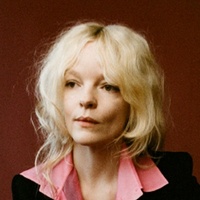
Musician and artist Alexandra Drewchin (Eartheater) discusses making her childhood farm her sanctuary, shaping her life with attention, and feeling good in the moment of creation without considering the end result.
As told to Greta Rainbow, 2697 words.
Tags: Music, Family, Process, Success, Focus, Independence, Production.
It’s been almost ten years since you last did a TCI interview. A lot has changed in your life, one big thing being that you’re a mom now. How has that new role affected how you make art?
Now that I have to clearly designate time that’s creative versus time that’s not—time that I’m being with my kid—I actually get things done so much faster. It’s an incredible surprise. It’s not what I expected at all, because I thought the scarcity of time for creative projects would drag things on, but on the contrary… I think that when I had infinite time to be creative, it was just a different beast. I was meandering way more. Allowing myself to be distracted, and wasting time more, is part of a beautiful process as well. Now it’s a completely different kind of elasticity. Like, I pack it in.
Do you still need to be alone to do that work, or are you okay having your baby with you, or having other people in the house? I feel like some artists really need dedicated alone time. Do you need that?
Well, I have a studio in both our Manhattan apartment and the farm. I do need to be alone to do certain things, like to write lyrics and track vocals—not all the time, but most of the time. I have to track the vocals as I write now. That’s something new, and I need to be alone for that, most of the time. I could be with tons of people once the song is written. But if I’m writing the song, I very much need to be alone. It’s fine for other people to be in the house. I’m not that crazy. They could be in the other room as long as the door is closed and I have my little sanctuary. Maybe the baby’s on my boob; when I wrote the album, a lot of the time she was there with me. She surprisingly didn’t set me off my my kilter. If she was with me, that was fine. But if it was anybody else, I think I wouldn’t have been able to be productive.
That’s special. The album, Heavenly Body: If I’m the Bottle You’re the Message, is a lot about her, or your experience having her. What did you want to communicate about pregnancy? What did you want to make sure came through?
I don’t think that I needed things to communicate. Really, I needed things to just feel good while making them. And I trusted that the catharsis of making it would translate on the other side. And if not, then that’s fine, too. It’s probably not for everybody. Though I think that there’s a track for everybody on this album. Like, not everyone is a parent. Not everyone is a mother. But we all have a mother. A lot of these songs can be interpreted in completely different ways, too: dealing with excruciatingly encompassing pain, or with physical earthquakes. The love songs that I’m writing to my kid could easily be a love song you sing to your mom or your lover. I don’t think I was thinking about the end result as much as I was making sure it felt really, really good in the moment.
I couldn’t really help myself with this album. There was a whole other trajectory that was the plan when I was pregnant. I was still getting ready to do something completely different, release-wise. And then after having the baby, I was like, “Wait a minute. That is not going to work at all.” Jumping around to really heavy, bombastic, energetic electronic music is not going to feel good when you’re, like, a milk machine, and you have a massive incision across your body that goes through seven layers of tissue, and you’re draining pus out of—sorry, but you’re draining pus out of an abscess in your stomach. You know? And this album needed to happen. The poetry was knocking at the door really strongly and really loudly. The love that I felt for my baby was oozing. I feel like writing a love song is the hardest kind of song to write. You need to be so genuine in your feeling for it to not be corny. So it’s always really exciting when you feel that deep, palpable, rich song coming and forming in the ether around you. I just had to follow that feeling.
I think a lot of artists struggle to follow the feeling, because you just get an idea in your head of how something is supposed to be and it’s hard to listen to intuition. How have you honed that ability to listen to yourself? You previously discussed writing things down. Is that still the method?
Yeah, definitely jotting things down and keeping an ongoing, sporadic note of little one-liners that come to mind. And then a whole entire song can be born out of one little idea. For the first time, I allowed myself to write a song like “Glowing Guts” on the album, which is just me basically reading out my journal without editing that much—figuring out how to say the words at the same time as the snare hit. It was more of a rhythmic game. Like, don’t worry about rhyming. Don’t worry about any kind of structure, and allow the chorus to be this really meditative, but also sort of tortured, mantra: Listen to my glowing guts, listen to my glowing gusts, listen to my glowing guts. After I recorded it and put it out, I’m like, “Oh, I didn’t even really think about the words being audible or the words being understood. It just needed to come out.”
I would say the majority of the songs came out of the air. I just needed to say what I needed to say. It was so apparent and so specific and so at the moment, I wasn’t literally looking back that often. With my other albums in the studio, I’d be combing through my past little notes, being like, “What’s gonna jump out today?” Whereas with this album, more than ever it was really immediate.
I am curious how your technical prowess has changed over time, hearing you talk about matching vocals up with the snare. I think that being self-taught can open you up to the idea that you never stop learning.
Exactly. I was just going to say that.
I love that. Tell me more about how your background shaped where you are now?
I feel like I just keep getting better. I often think that there’s a time in certain artist careers—and maybe I’m being a bitch, I don’t know—for people to sit back. Okay, you created multiple masterpieces, and they felt genuine and flowy, and then it reaches a point where you’re like, “That feels stale.” Like, Bob Dylan—I don’t know if it was a Christian album or a Christmas album that he did, but I was like, “Damn, dude. Just chill, just enjoy your life.” Sade is a really good example of stepping back at a certain point. And I always wonder with myself. I hope that I’ll have the awareness to not feel desperate to be constantly outside in that way. I hope my music will always feel genuine and fresh and rich and authentic—and not stale.
I’m creating the set list for my live show, so I was just listening to certain songs from this album next to certain songs from my older albums, and I’m like, “This album is so much better mixed and it’s so much better mastered!” I was listening to “Below the Clavicle.” I’ll be completely open about which song I was comparing to what. So I had “Below the Clavicle” adjacent to “Paradise Rains,” and I was like, I wouldn’t be able to put those two songs in a mix next to each other. “Paradise Rains” makes “Below the Clavicle” sound so rough. Live it’ll be different because it will blend into the live sound, but I was like, “Oh my god, this is getting better.” And it was a really assuring, cool moment. Okay, we’re still sharpening the sword. We are still sharpening the blade. We’re still polishing the pearl, and it’s an exciting feeling. It was a really objective mindset that I was coming from. It was just about the technicalities of making a beautifully recorded song, and I could just hear that it’s mastered louder. The highs, mids, and lows were just more rich.
And then the same thing with “Crushing.” And I always knew for a fact that “Crushing” was a little bit of a dinky recording, and a lot of producers wanted to get their hands on it and really beef it up, and I protected its innocence. I was like, “Actually, no. This is part of its charm.” I produced it completely myself with, like, Logic stock sounds, and I like that sound. I always feel like I need one or two songs on an album that I’ve 100% produced myself.
It’s so cool to track those changes in yourself. A cliche that I actually do really like is when people say that they are going through a “season” of their life. I’m like, that is true. That is what happens.
Yeah, absolutely. Part of the fun of whatever season I’m in right now is that I’ve finally come around to succumbing to the gearhead vibe. Being like, “Okay, we can only use this specific mic for every single song.” I’ve always rebelled against that ethos. Initially in my musical journey, that kind of attitude was very claustrophobic and strangled a lot of my creativity and my flow, and I felt like I wasn’t able to break out of it—until I did. And that was really liberating. It’s kind of cool that in my mid- to late 30s I’m arriving at this very lush age of being like, “I need a really nice studio. I need things to be comfortable and soundproof.” I think I’ve said it before, but I’m a late bloomer.
What does that mean to you?
Maybe it’s not about being a late bloomer. Maybe it’s that the bloom keeps getting more confident and self-assured… I still feel like my best work has yet to come.
That makes me think of blueberry bushes or something, where it’s like, once you plant them, they do start bearing fruit pretty immediately, but it takes a long time for them to be super bountiful.
I love that you brought up blueberry bushes, because on the farm that I recently bought back, when we grew up there, half of the property was covered in blueberry bushes that were in their early life. Now, instead of the blueberry bushes being at chest level, they’re, like, three feet taller than me—and I’m like almost 6-foot. Part of the identity of the property are these incredible blueberry bushes. I used to eat so many blueberries growing up that my shit was blue.
What has having the farm been like? How has it has it affected your practice or your identity as an artist, to have this additional space?
I feel like this is one of the major pinnacles of success for me. I mean, it’s beyond financial success. It’s something that’s just out of control—for the timing to be right, for that property to go on the market right when we were looking and had the means to. That person could have kept that farm for the rest of their life, and there would have been nothing I could do about it. And yeah, I feel like it makes me more productive for sure. Actually, back to that first thing we were talking about: now that I’m a mom, maybe the scheduling that I was talking about is only half of the reason why I feel like I was able to get so much that’s done this year. I think the other half is that I feel so peaceful having this sanctuary to create. It’s a huge part of creative productivity, I think, to have the perfect studio and the perfect place. My studio is not kitted out like Dave [Sitek]’s by by any means, but when I look out the window, I can see Bambi scampering in the wildflowers. It’s priceless.
What are you doing to ready yourself to go on tour and do live performances, which have historically been very spectacular and involved? Is the approach different now that you have a kid and need your body’s energy for other things? How do you protect yourself and get what you need?
I still don’t feel physically strong enough to be as physical as I was in the past, so I think that this tour I’m going to adopt a much more stoic stance. I’m probably just going to be more still. But I kind of love that I’m arrived here, because sometimes I wonder if my passion eclipsed my ability to sing in tune. Like, writhing around definitely compromised my vocals. I’m really embracing this moment to be more still and just sing better, and I love that. Whatever I’m going through physically has brought me to this place.
I just want it to be really, really beautiful. In the past, I feel like I was less nervous and anxious about things, but then it maybe wasn’t as spectacular as it could have been. I will admit that, though there’s no regrets. I love that I was just so kind of whatever, and truly avant about it. I was like, “I wrote these songs but I’m not gonna rehearse. I’ll just play them.” There was a period where I really didn’t give a shit about fucking up. I kind of embraced it. There was a silver lining; magical things come out of allowing yourself to improvise and capture the moment, and that always happens to a degree. But I love the fact that now I get more anxious, because it forces me to get all my ducks in a row. And that just makes a better show.
Another thing you mentioned in 2017 was your practice of writing sigils. Is that still something you do?
I actually haven’t done a sigil in forever. But I do think that if you do them right, they absolutely work. I’ve had incredible experiences with really intense focus on that front, and I think that I shaped a lot of my life with really intense, focused attention. Once you’re in a real flow in your life, and you set yourself on a current through the ether, it’s not as necessary. But I do think, for younger people, it’s a great way to carve out some spiral staircases for manifestation and dreams and finding what you want. You have to really want something, and you have to understand why, and it needs to be not about anyone else. It can’t be affecting anyone else’s life. It has to be purely about you and your path.
Alexandra Drewchin recommends:
Magnesium before bed.
Spending a few minutes a day actually fantasizing and daydreaming. Meditation is great and desire is the root of all unhappiness blah blah, but I personally find it very helpful to remind myself of who I am and how to steer my life.
Take super hot baths. It can be as effective health-wise as sauna but way easier. So you don’t shock yourself and spike your cortisol, I like to run it at a comfy temp, get in, and then slowly start adding in really, really hot water and letting some out in the drain until the whole tub is super hot and you’ve adjusted to it calmly. You’ll feel yourself start to sweat all those toxins out.
Listening to Tina Turner while making breakfast.
Ask your mom lots questions about who she was before she had you.
- Name
- Alexandra Drewchin
- Vocation
- musician, artist
Some Things
Pagination