On the importance of enjoying the process
Prelude
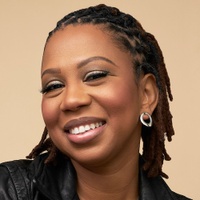
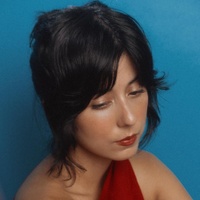
Mothica is the stage name of singer, performer, and visual artist McKenzie Ellis. She released her debut EP, Mythic, in 2015. Over the course of the next decade, she unveiled several albums and EPs that detailed her battles with addiction, her abuse by a youth pastor, and a suicide attempt. In connecting these deeply personal experiences with elements of rock, dream pop, and electronic music, she has amassed a huge global following. Currently based in Los Angeles, she is involved in every aspect of Mothica, from music and lyrics to video production, photo shoots, and merch designs. Her latest release, Somewhere In Between, was released in February 2026.
Conversation
On the importance of enjoying the process
Musician and visual artist McKenzie Ellis (Mothica) on enjoying the people around you, the value of humor, and doing almost everything yourself.
As told to J. Bennett, 3246 words.
Tags: Music, Art, Multi-tasking, Independence, Education, Beginnings, Success.
You view Mothica as a big art project–you have a hand in the music, lyrics, the artwork, the videos, merch designs, and photo shoots. Why is it important for you to be involved in almost every aspect?
The visuals just come natural to me. The music was actually the last piece of the puzzle for me. I started out as a visual artist doing illustration and graphic design and drawing, and I thought that fine art was what I was going to do. When I started doing music and got the confidence, it just totally made sense that I would get to use all these other little hobbies or interests I have in it, which is super fun. Because then I get to make props and I get to get excited about the details with music. And when you’re a musician, you’re usually not just a singer or anything. You get to wear all these different hats—and luckily, I like to wear all sorts of hats and wigs.
It must be nice to not have to rely on anybody else to do your merch or your videos, but I imagine it must also be stressful having to do everything.
It can be really hard for me to delegate, so it’s taken a really long time to find those people who I trust with my vision. I could either be a great client because I’m so involved, or it could be annoying because I know all the nuances of how to do these things. I’m trying to work on getting better at that because it used to be that I designed all of the merch and then I had to send the files off to print, and then I’m editing the lyric videos, and eventually when you get busier you’re like, “Oh, I need someone else to do this.” But it’s really hard to release that creative control when I’m like, “I want to bump that just a hair.”
It’s becoming more common for artists to be as involved in everything as you are, but it wasn’t that long ago that most musicians stayed in the music-and-lyrics lane and were largely clueless—or at least hands-off—about the rest of it. Do you find that strange?
Yeah, it’s funny. When I was signed to my last record label, the owner jokingly said, “One day we’ll just have you show up to set and you won’t know anything that’s going on, and you’ll shoot a music video, and it’ll all have been figured out.” And I’m like, “That sounds terrible.”
But yeah, I definitely hear artists that give all their creative control to someone else, or they have a creative director, and I would love to find someone that I could do that with. But it’s hard when you want to really have your stamp on everything. And honestly, what makes it fun is getting in the weeds, like when I’m hauling things in my little Kia Soul. I want to take that DIY approach into it.
Given the fact that you are involved in all these aspects of what you’re doing, would you say there’s a creative philosophy that ties them all together?
I always love dark comedy and surreal elements, and I think that’s something I always try to include in the visuals and in the lyrics—and really taking the lyrics and the song and personifying it. I had one music video called “Blackout” where it was about drinking, but I made alcohol into this blue devil character, and I’m dancing with him, and so I personified this metaphor. I guess that would be dark surrealism.
I really love being absurd, and I’m always trying to get my sense of humor and my sarcasm into the visuals because the songs are so emotionally charged, and that’s the most real me. But when you meet me outside of music, I’m just constantly joking and laughing.
In another interview you said, “My goal used to be, I want to play Wembley Arena and sell it out. Now my goal is I want to wake up and enjoy the people I’m around in my everyday life.” That’s a massive change in perspective. How did you get there?
I think I got there by accomplishing these very vain goals that I used to have, like the magic of getting your face on a billboard. And then you get that and you realize, “Oh, someone spent thousands of dollars to put my face up there.” It’s not this rite of passage. And I didn’t really feel anything when I saw that, either. Or the [streaming] numbers: If you see this big number, yeah, it’s cool, but you don’t feel that and you can’t carry that feeling with you throughout the day. It’s like, immediately you’re onto the next thing.
At the peak of my career, when everything seemed to be going well, and I was finally playing all these festivals, I didn’t enjoy it. I was with the wrong team around me, and I was suffering on the back end of it all. This is not sustainable if you’re not enjoying the everyday process of it. It’s like people who say, “I want to be a famous musician,” or “I want to be this,” but what actual everyday things and problems do you want to deal with? Because it’s not like you just go around and everything’s handed to you. You have to think about the minutiae. Every day has to be enjoyable with the right people and the right headspace. Otherwise, I’ll quit and move to the woods.
People often ask you about the difference between Mothica and McKenzie. You’ve joked that it’s just the types of clothes you wear, but there’s more to it than that, right? Are you stepping into a persona? Are you becoming something else?
I do think so, yeah. When I’m onstage, I am the most empowered version of myself. I think there’s even a difference between Mothica who’s writing the songs and then performing the songs because the songs come from the most secretive, vulnerable, fragile place, where they’re so emotionally charged. I’ll write when I’m crying or when I’m really angry and shaking. And then when I perform them, I have to detach myself from that emotion. When I’m doing meet-and-greets or something, that’s when I really notice it because I almost have to become a vessel for other people’s stories. People are listening to my music, and I just listen to what they have to say about it.
A lot of the things that you’re sharing in your songs are coming from heavy experiences you’ve had in your life—abuse and addiction and depression and suicide attempts. How do you decide what to share?
It’s crazy because I do get jealous sometimes of artists who just have a hit dance song and they can just go up there and have fun and wear crazy outfits. And then for me, it’s kind of happenstance that the top performing songs that I’ve done were about me calling out my abusive youth pastor, about my suicide attempt, about me getting sober. It’s all the hits of trauma.
When I first started writing music, I definitely wasn’t that open lyrically. I wrote everything shrouded in metaphor. And then, when I started writing more in a diary way and being very, “These drugs don’t work anymore,” saying things as open as that, that’s when it really connected with people.
I’m such an over-sharer, and I’m a terrible liar. I feel that’s just my personality: I spew, and it feels like a weight off my shoulders. Take me as I am. Sometimes I’ll put out a song and then want to throw my phone across the room and not see the comments, but it does feel like it’s just this open channel that I’m willing to share.
You’re connecting with people in a different way than the artist who puts out the hit dance song. Is there more responsibility that comes along with that?
Yeah, I think so. I think about what kind of messages I want to put in my music and how deeply cynical I want to be, especially after being surprised by seeing an eleven-year-old listening to my music and stuff like that. But also, it’s hard to know how to say the right thing.
In person, I’ll talk to anyone about anything, but if someone sends me a long message and tells me, “Hey, I went through this experience and what can I do?” It’s almost like something a therapist should help with. I’ve had to take a step back to give my own feedback because I am not equipped to help someone. I can only share what I’ve been through. And usually when I’m writing a song, it’s because I haven’t quite come to the other side either, so that can be daunting. I’ve definitely had the backlash of a fan who I didn’t reply to, and they’re like, “I’m going to burn all your merch because you didn’t respond to my heartfelt message.” But I can’t be a friend to everyone, unfortunately.
Even more than that, you’re not a therapist. You’re not qualified.
Definitely not qualified. And if I took the right advice, I probably wouldn’t have more songs to write.
I know you spent some time in rehab, which is a huge, life-changing experience for people who take it seriously. When you got out, was your creative outlook reconfigured in any way?
Yeah. I didn’t even want to make music anymore when I went into rehab. I just felt so burnt out from it all and was really thinking about, “What else can I pivot to?” So, I didn’t listen to music for 30 days. When I came out, I listened to Etta James. To me, that was my soft palate cleanser. And when I started being like, “Okay, I want to make a heavier album,” it was like starting from scratch, honestly, because I was so rusty with being able to tap into that thing. When I was on substances, I was so neurotic with, “I have a vision and I have to do it this way,” but now it comes from an honest, deeper place like when I was a teenager. I’m just trying to find myself again, really.
Before, I was always so visual first: I see the album title, I see the music videos, I see the branding. I see all this, and then I have to make the songs in that space for a while. But [after I got out of rehab], it became, “Let’s just make a song and see what it’s like.” That’s very backwards for me, but it’s probably the way most people do it: they make the songs and then the rest. But for me it was just a stream of consciousness and then afterwards having to figure out a through-line. And obviously addiction and recovery became a through-line.
What are you doing to maintain your mental health these days?
I’m really deep in recovery, so I have a ton of sober-community friends around me. I don’t do well being cooped up alone, and I think I’ve found out that I’m more of an extrovert. So, I just joined a book club, and I go to comedy shows all the time. I actually just performed some stand-up comedy. But I’ll walk my dog and I go to flea markets, and I just do all these things that bring me joy. But if I’m cooped up in my house for too long, that’s when the thoughts start.
What was doing stand-up like?
If you’ve ever seen me play live, I always have some stupid jokes I say. People are always telling me, “Oh, you should do stand-up, you should do comedy.” In rehab, I took some improv classes, and that was not for me. But there’s specifically a sobriety open mic. So, I wrote a five-minute set on sobriety and will definitely never share it with anyone. Stand-up is so much scarier than playing a show. But I definitely got some laughs, so that’s good.
Would you do it again?
I would, and I do think there’s one joke in my set that I’m going to bring on tour.
You went to art school. What were the pros and cons of that experience?
I went to Pratt Institute and I studied interactive media. But before you can do your major, they make you do a foundation year where you try everything, basically—even woodworking and soldering metal and color theory and figure drawing and all that. It was hard for me because I’ve never had to talk about my art or my choices or why I do things. And that’s all that art college was about. It’s like, “Okay, make this. Now, present your case of why you made this creative choice.” As someone who writes lyrics, that’s weird. It’s so difficult for me to stand up and be like, “This is why I did this.”
So, I hated it. I felt like it was a little pretentious or something. It was embarrassing for me to sell myself, basically. I’m like, “I just drew a decapitated deer head because I liked it. I don’t want to talk about it.” So, that was hard for me to get through, but honestly, I think music became my escape from my classes, because music was probably the newest artistic endeavor for me [at the time]. So, I’m glad I did that major because it was almost like music became my escape from the thing I thought I wanted to do. It just led to this whole new career that I always feel like I just fell into.
Did you finish the program?
No, I dropped out in my second year because I got an email from a record label, and I thought that meant that I was going to be signed. I didn’t know anything. It was just an email being like, “I heard your music, and it’s cool.” But I’m like, “Oh my God—Mom, Dad—I’ve got to go!” And the label never even followed up. I didn’t get signed or anything. It was funny how naïve I was, but obviously it showed me that my priority was to pursue music.
Would you recommend art school to an aspiring artist?
I would recommend it only because the biggest thing I regret is that I didn’t really utilize all of the classes and all of the studios and all the things you can do. And also just that college experience of making friends outside of your hometown that is so valuable. I don’t think I could do the YouTube Academy of just learning things on your own. You need that interpersonal connection with people. Honestly, I wish I could go back to school.
Your career got a big boost from TikTok. How has your relationship with social media developed since then? Is there something disheartening about reducing your songs to bite-sized clips, or do you just accept that we’re living in a short-attention-span culture?
I didn’t have any aversion to social media when I first started [using TikTok] because it was peak Covid. I’m bored, I’m at my parents’ house, I’m going to post everything. And it became my favorite thing to do, just coming up with new ideas. And then, when some things did really well or I got some backlash—or the worst is when you get misunderstood and it turns into this comment feeding-frenzy—I had panic attacks and I got really scared to share anything. Or people are finding some old boyfriend of mine and going down the rabbit hole. I was like, “What? This is crazy. I’m no one.” And it’s been hard to find that authentic voice. It’s really hard to set up a camera and a little light and talk, and have it be a true version of yourself.
The method I found that works for me is I just post whatever I want when I want in the moment and hope that works. Because if I get too bogged down by, “Here’s the schedule and you need to post this, this, and this” and everything’s going to be planned out, it loses all of my interest. But I think some musicians can do it differently, too. For me, I always have to interject my sense of humor or my personality and try to make it funny, because that’s easier than just sitting down and singing a song and being vulnerable. That’s scarier to me.
Humor is usually the best way to take the edge off of a serious subject.
Yeah. And it’s also, with half my songs I’m like, “How am I supposed to post about this and not get flagged or shadow-banned for some of the words?”
If you could go back in time, what would the current version of you tell the younger version of you who was just out of art school and starting to make music?
Just soak up everything and say yes to everything and follow every impulse and every avenue. When I was 18, I’d meet these older people, and they were so bitter and jaded by the industry. I was like, “I never want to be like that.” I think that opened so many doors for me because I wasn’t tainted by anything. I was just curious about the world. I think remembering that voice is what leads to making better art and just enjoying everything: coming at it from curiosity rather than bitterness.
Mothica recommends:
Lost Connections by Johann Hari. “The full title is Lost Connections: Why You’re Depressed and How to Find Hope. The author talks about depression beyond just a chemical imbalance and biology. It’s also a lack of connectedness to other people and not having meaningful work in your life. When I’m in a depressive state, I end up going into academic mode and reading about it, but this book is great for anyone.”
Ologies with Alie Ward. “This is a podcast, and every episode has a different expert on a subject, like an expert on volcanoes, an expert on pigeons, or an expert on fun. It’s great if you want to learn something random, and I love hearing an expert talk about their subjects.”
Pain Is Beauty by Chelsea Wolfe. “I love Chelsea Wolfe. She’s so cool. I think everyone is … what do they say? Reheating her nachos. She’s just such an influence, with her haunting vocals and cinematic music. This album is from 2013, and it’s still sonically relevant.”
Big Fish by Tim Burton. “I think this movie is peak Tim Burton. It has all these surreal elements and practical effects. It’s about a son reliving all these stories that his father told him, which are grandiose and unrealistic, so you have this collision of fiction and reality. It’s actually such a sad movie, but it’s really good.”
Best in Miniature. “This is a TV show that I discovered on YouTube recently. It’s a Canadian competition show for miniature dollhouse makers. Miniatures are really cool, and I love seeing how they make this little architecture. When you need that comfort show, this is it.”
- Name
- McKenzie Ellis
- Vocation
- musician (Mothica), visual artist
Some Things
Pagination