On managing creative highs and lows
Prelude
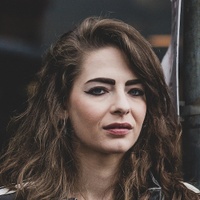
2020 was the birth of Jane Inc., a solo project forged after years spent building bona fides in the Toronto music scene with groups like U.S. Girls, Darlene Shrugg and dance-pop duo Ice Cream. In her live show, Bezic takes the conceptual edges of her work and pushes them with a physical abandon and “incredible presence, keeping the audience rapt even when she was just dancing hypnotically” (Brooklyn Vegan).
Conversation
On managing creative highs and lows
Musician Carlyn Bezic (Jane Inc.) discusses the power of an alter-ego, deriving liberation from near-death experiences, and anticipating limitations
As told to Fez Gielen, 2607 words.
Tags: Music, Mental health, Health, Focus, Inspiration, Adversity.
A couple of songs on your new record address Jane as a separate entity. Has the identity of Jane crystallized for you? Or did you previously have some idea of who she was, and has it changed?
I did have some idea of who she was, because she would come out on stage when I was performing. It was a version of myself that was more liberated; more comfortable taking up space, being loud or intimidating or overtly sexy. Jane was an aspirational idea for me—an aspect of myself that I wanted to express, but I had to do it in this rarefied, specific way, while playing music.
The record is about this feeling that she was able to be liberated and unleashed even more. She and I became more enmeshed because the things in my life that were holding me back from being fully Jane—if I even am—shattered in the wake of these heavy things happening to me. I was able to let go of a lot of insecurity and uncertainty. It was suddenly like, “I have one life, and I can choose however I want it to be.” There’s a real “why not” energy.
So it’s become easier to inhabit Jane?
Yeah. Especially because so much of the feeling of this record happened in the very immediate aftermath of that car accident when I was still on tour. The day of the accident, we decided to press on and keep playing shows. So I played a show that night, and it was the most liberated I’ve ever felt. In the shadow of what had happened that morning, the things that are scary about playing a show just didn’t matter. It was like, “I’m alive, you’re all alive, we’re all here. This is so beautiful and crazy that we get to stand around, and I get to express this thing to you. What a joy.” And because I was probably traumatized, I had a kind of fearless abandon. Like, they can do whatever they want to me, and I’m going to be safe because I’m here and I’m alive, and I know what scary is.
Jane Inc. - “what if” (Official Video)
Do you feel like you’re still in that awareness, or do you have to pull yourself back into it?
I have to pull myself back into it now. There are things that I learned in the wake of it that changed my life in real ways and made me more confident and grounded, so that has allowed some more liberation in my artistic life. But it feels like a hard truth that I have to remind myself of because, like anyone, you get bogged down in the neuroses of life.
With my vocal cord cancer, that is still real and present in my life. It’s a pretty constant reminder—or at least every three months when I have to go to get checked—that everything is impermanent. You could lose the things that you really care about right now, so you should seize the moment and say “fuck it” to any neurotic thing that is holding you back. That’s not to say that I don’t get held back by those things on the regular. But, it’s a luxury of a good moment in your life when those are the things that take up the most space.
Did the cancer limit your vocal range and capabilities at all?
It did limit my ability when it was growing, before I had it removed. That’s where a lot of the talk-singing on the album comes from. It was almost like an insurance, so that I could still perform the songs, because I didn’t know what would happen after surgery.
I had another surgery about a month ago, and I’m still healing. I trust the healing process now, having done it a couple of times, and knowing that I’ll get back to more or less normal. But there’s always a chance that there could be a significant difference to my voice—surgeries can result in scarring, or I might need a more invasive surgery to limit the chance of recurrence.
So, in many ways, yes, it has limited me; but in other ways, undergoing all these surgeries has improved my voice. I’ve learned a lot about my voice, and how to sing properly, so I feel like I’m singing better.
People talk about the value of limitations when making art. Were you able to find any sort of inspiration from the vocal limitations?
I think there was a threat of limitations more than there ended up being actual limitations. And the threat of limitations was helpful in that it revealed something to me. Say they had to do a surgery where they removed my entire vocal cord and I couldn’t sing or speak. Or they had to do a surgery that hits the [cricothyroid muscle]—the part in your vocal cords that is responsible for tonal shifts; if it gets damaged, it makes it hard or impossible to stay on key. There are creative possibilities in those scenarios. I was aware of that, and I had to cling to that while also anticipating some grief of what I might lose.
The record feels joyous in a lot of ways, and I wanted to project a freedom, so I had to really push my voice before it was ready and finished healing. There’s a lot of muscle stuff that happens when you’re healing from that kind of thing, which can make you really tight, and I can hear that on the record. I can hear how I’m pushing it, but I’m happy I did it anyway.
Also, in hindsight, I think I was trying to use the music as a means to overcome this difficult thing that was happening, or as a way of being like, “Okay, that shit happened with my voice and now I’m the best singer I’ve ever been in my life, and everything is great.” Whereas now, as I’m slowly starting to write new things, I like the idea of really accepting my limits, or leaning into what I can do that feels easy. That’s very appealing to me, as opposed to trying to push through something. So maybe now I’m accepting the limit.
I think people sometimes have a sort of subconscious fantasy of falling ill, just to have an excuse to check out from life for a while. When you received the cancer diagnosis, were you only seized by an urgency to create, or was there some contending desire to put the work down and sort of succumb to the sick role?
All of it feels simultaneously like this giant boulder that I’m pushing up a hill, and then also this other thing that’s pushing me and the boulder. It’s both a sign to slow down—simplify, take care of myself, prioritize health—and also a feeling of, “Well, fuck. If I have songs to sing, I gotta fucking sing them, and sing them now.” Before this last surgery I just had, I was excited about having a really extended break, but then the surgery revealed that the cancer had returned, and again I just felt an urgency to write songs.
There’s something about that that’s really beautiful and generative, but there is something about it that’s maybe oppressive. And I know it’s linked to other stuff of mine—feelings that I have to be at some perceived level of success for me to have a baby, or just anxieties about timelines and things. So, it’s all those things. It’s clarifying, powerful, generative, energizing, and it also heightens some things that I’m trying to let go of—which is ultimately good because I’m seeing even more that I have to let them go.
So there’s a destructive side to that propulsive generative energy?
Yeah, it can be destructive at times. Whether destructive or generative, I think it moves through those two qualities all the time. I just know that there is a painful root to it—feeling like I’m not enough, feeling like I need outside validation, and that I really want to express a lot of things that are happening to me, but I feel safest when I can do it in a very specific, rarefied way. But that’s also just part of what makes me an artist, so I’m happy for all those things too.
When you’re experiencing creative momentum, can that be an indicator that you may be avoiding something that needs addressing?
I think it can be that. Sometimes songwriting is just a lifeline that’s helping me move through and make sense of things. It takes all the things that are happening to me and transmutes it into something that is beautiful and communicative. That’s when you’re in the ideal flow state, feeling inspired and engaged with the thing.
But when I feel like the thing is torturing me, and I feel indecisive and confused and unable to parse my way through [making a record], that’s when I know something else is going on. Or maybe I’m able to parse my way through it, but I feel this pressure of “Do it, do it, do it. Time is running out. Get it done. Make it perfect.” That’s when I know that the pain is in the driver’s seat. But that’s just the natural stages we all go through.
Friends of mine who also make stuff are good at reminding me that your feelings about the work are never going to be constant. If you’re going through a phase where you think it’s all shit and none of it is making sense, that’s not the truth; that’s just the way you’re feeling about it. The same goes for when you’re feeling really inspired. I think being an artist is about having consistency in your work, pushing through and returning to your practice, and managing those two ends of the spectrum.
Pitchfork published a favourable review of your record today. For better or worse, that’s a big deal for a working artist. It might bring new ears to your music, and accolades lend so-called credibility to a career. What are your feelings around something like this?
It’s funny, I was talking before about things driving the work that are coming from a place that feels good and a place that feels painful. Another driver for sure is having some understanding of how the industry works, and knowing that you can’t take too long between releases. I’ve invested a lot so far in this career. So, part of the energy that is making me grind is that I want to not work at a bar.
When reviews are written thoughtfully, it does feel really good that someone has engaged with the work. I really deeply appreciate it. But it’s also so hard to understand. On the one hand, it feels important in this business sense, and you pay PR people to make that kind of thing happen, but then you’re like, what does this mean for my material day-to-day life? I don’t know, probably not much. I still need to have a job. I’m still doing this all mostly by myself. It’s really hard. Another thing I’ve talked about a lot with my friends who make art is how, right before an album comes out, you’re like, “Okay, now my life is going to change drastically. I can’t wait.” And it’s never like that.
But there’s still a satisfaction in having people engage with the work. I guess that is really what it’s about—playing shows and having people be there, no matter how big the show is. I obviously don’t ultimately care about making money, since I’m still doing this. If I really cared about that, I would be doing something totally different.
Is there a clear difference in your creative approach now, compared to before the car accident and cancer diagnosis?
Right now—having just finished a project, and being in the very beginning stages of something new—I feel pretty committed to letting this next thing be lower pressure and a little lighter. I don’t think I was particularly precious on the last album, but I want to be even less precious. I want to focus on process and try to focus less on the finished product. For the last album, all of the things that inspired it and surroundedit felt so profound and life-changing to me that I knew there was no way I could adequately express the depth or enormity of the experiences. So in a sense, it was bound to fail; I was just trying desperately to reach something that I couldn’t reach, and I was in my head about how I might be able to express that.
I think I had to go through that to get here, where I’m feeling like, no album is going to change your life. No album is going to express the true complexity of your individual experience. It’s cliché, but you just have to love the process. I think I just want to return to something that feels really good and intimate with myself.
For the last album, partially because I was just out of my mind in a lot of ways, I could not have done it without Edwin [de Goeij]. I couldn’t have done it without him for many reasons, but I needed someone else bringing ideas and expertise. I now feel a desire to return to something a little more private. I want to do something for me. Not that that wasn’t for me, but the aspirations for it were really big, and that’s what was right for that album. But, now I want to do something small and individual.
You had been through a lot, and the topics of death and relationships are pretty weighty. It’s hard to imagine packing it all into an album that doesn’t have a certain grandness to it.
Something occurred to me when I had this last surgery and they found cancer again. They booked me in for surgery the following week; it all happened very fast, and this was mid-album cycle. It occurred to me that, in the making of the album, there was a desire to close all these experiences and be like, “This is where it all exists, and it’s done now. Now I move on to my life.” Going through another surgery, I realized, “Nope”—this will continue to be a specter for at least five more years. It was a reminder that it doesn’t work like that. You can’t will reality through art. I realized that I was trying to do that, and I think that bled into the press release a bit too. So it feels like a little bit of cognitive dissonance between me and the way the album’s being perceived. It is triumphant, but inherent in that word is this idea that I’ve overcome something, when actually part of that album’s story is still very much happening to me, and it’s still in my mind every day.
Carlyn Bezic recommends:
Using a city as a search tag on Bandcamp and exploring recently released music there.
For example: [this EP] by Felice Bauer (London, UK)
A nice long walk.
The Merlin bird ID app — useful on your nice long walk.
This line from the film Babette’s Feast: “Through all the world there goes one long cry from the heart of the artist: Give me leave to do my utmost!”
- Name
- Carlyn Bezic
- Vocation
- Musician (Jane Inc.)
Some Things
Pagination