On starting now and learning later
Prelude
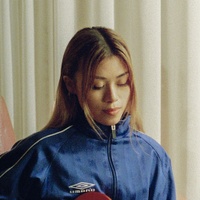
Courtney Marie Andrews has long been celebrated as an artist who challenges herself, and who finds new interplays of Folk and Americana. Also a vivid poet and accomplished painter, she brings a multidisciplinary richness to her work that shines throughout her 9th studio album, Valentine. Valentine is Andrews’s most sonically explorative record – she plays flute, high strung guitars, myriad synths, and draws heavy inspiration from her art outside of music. Co-produced with Jerry Bernhardt and recorded almost entirely to tape, the album features complete in-studio performances that prize raw performance rather than perfection. Andrews’s voice is gorgeous and acrobatic always, but on Valentine it finds a new depth, an assertiveness that brings new dimension to its biggest anthems and its softest moments.
Conversation
On starting now and learning later
Musician Courtney Marie Andrews discusses diving in unafraid, learning as your career progresses, and how to stay grounded when you lose sight of what matters
As told to Lauren Spear, 2583 words.
Tags: Music, Mental health, Creative anxiety, Family, Beginnings, Success, Focus, Process.
Where are you right now?
I’m driving back to Nashville from New York. I did a listening party for my new album Valentine at the National Arts Club, alongside some of my paintings, so I figured I had to drive them up.
Because your album isn’t officially out yet, I’m wondering how you’re feeling pre-release?
It’s only been three years since I released a record, which feels long for some people and short for others. For me, it felt long simply because it seems like the entire music world has changed in that time. I feel like it’s a completely new landscape. Mostly, I feel so excited and grateful to be able to continue to release music.
I was reading some of your other interviews, and you once said, “Being in a room amongst active listeners suddenly feels radical.” As music continues to move into the digital space, I sometimes worry that live shows might become less of a gathering point. Can you talk about that?
When I started touring, live was everything. It was the beginning of the social media era, with MySpace becoming popular, but it had not yet become a climate in which everyone was completely living online. For me, live shows and touring were how I learned to perform and how I imagined sustaining a career. Now, it feels almost like the opposite. The goal often seems to be creating a viral moment, even within a live performance.
If I’m being honest, I’m finding it really hard to connect with this. I feel like artists should be lauded for their time, their bodies of work, their depth, and the journeys that they go on. I don’t think that is the era we’re living in. I’m sure that there are exceptions to that statement, but overall, it seems very flaccid, and that makes me really sad.
I feel like there’s this added layer now where you walk off stage, and the show has already been reviewed within seconds. When you’re immediately tagged in videos post-show, does it shift how you perceive your performance?
I’m guilty of engaging in that instant feedback loop. But on my last tour in Europe and the UK, I went back to the merch table, talked to people, and sold my own merch, which was something I hadn’t done in a while. I was really taken aback by how different it felt to meet people again. It hit me in a really profound way. Maybe it’s because I hadn’t toured in about a year and a half, but I just felt very pure to it.
When you’re not trying to gain or capture anything, but simply feel what you feel in the moment in a room full of people while really interacting, there is nothing like it. I’m not saying it’s dying or anything, but there does seem to be a certain scarcity in underground music, a sense of fear, and venues being bought up.
How do you strike a balance between playing the game and doing what actually feels good to you?
Trying not to take any of it for granted is really important. It’s never lost on me how incredible it is that I get to do this for a living. As a poor kid from Arizona, I know there are people in my life who would love to have this lifestyle. I think the way I stay grounded is by remembering where I came from and remembering that these people bought a ticket to come hear me. If I give them any sort of healing, I am grateful for that.
Sometimes you lose sight of these things when you’re touring a lot and get tired. But it’s a luxury to be able to play music. I walk a lot before a show. I wish I could say I just put my phone away and didn’t engage with it, but there’s also this difficult balance of wanting to be a part of the world as it exists now. It’s really confusing.
I know you’re both a painter and a poet, and you recently released your second book of poetry, Love is a Dog That Bites When It’s Scared. I’m curious, how do you differentiate a song from a poem?
I know right away. Poems feel kind of like a bird’s-eye view, like I’m up above in the third person. It’s as if another part of me is talking to myself, whereas songs feel more conversational, like something I might say to a friend. The two voices seem to have different accents.
Both your new book of poetry and your latest record explore the theme of love. You’ve mentioned that Valentine is about the “pursuit of love.” How does that search play out across the album and in your other creative work? Do you see a throughline connecting the different mediums?
I created a series of paintings, this collection of poetry, and this album, all during a very tumultuous, intense time in my life. I was caretaking a family member who was terminal, and I was also navigating the confusing beginnings of a relationship. I just felt very hollow. I think the only way I could really come back to myself and find my center was to write or to create something.
I found myself writing the same song over and over because I was feeling the same emotions, and they weren’t changing. I probably have twenty B-sides from Valentine that all explore the same idea, just with a different guitar part or melody. It was really important for me to use these other mediums to tell the the same story.
A theme on the record is feeling older and defiant in what I want, while my inner child remains wounded, despite my defiance. The songs “Best Friend” and “Outsiders” explore these inner child feelings. I am both strong and striving to be strong, but also vulnerable, weak, and wounded.
To me, the record feels like a complete narrative arc. It opens with “Pendulum Swing” and that striking first line, “Man, I love a heart with one foot out the door. One that leaves you hungry, coming back for more.” Right away, it feels like we’re being introduced to a character who will carry this story. Then the line, “If I get what I want, gotta let the pendulum swing, can’t be good for too long,” lands almost like a foreshadowing of what’s to come. Did you sequence the songs with this narrative flow in mind?
We spent a lot of time sequencing this record because I love records that have an arc, that take you on a journey and feel like a story from beginning to end. All my favourite records do that, so yes, it was definitely intentional. With “Pendulum Swing,” I wanted to capture how love, at the beginning, always feels like this impossible beauty that could never cease to exist. Life is kind of like a pendulum—it always swings the other way, often when you least expect it. The foreshadowing was exactly intentional, so thank you for picking up on that.
I’ve really been listening to this album non-stop. In preparing for this interview, I’ve also been dipping into your catalogue. I was listening to “No One’s Slate Is Clean” from 2010 and noticed your intonation sounded slightly different, though I could still hear your signature vibrato. How has your voice changed over time, and how has it stayed the same?
I started recording, I think, too young. I was a punk kid thinking, “I’ll just throw it down and see what happens,” without really knowing anything. I dove in like most things in my life that way, not being afraid to make art. I think everyone, unless you’re some kind of savant, makes bad art in the beginning. Back then, you could hide it or conceal it because there wasn’t the internet.
As far as singing goes, I wasn’t trained. I didn’t go to college or study it formally. When I listen to those early records, I hear a girl who didn’t know how to sing yet, someone who was still developing. I can hear so much of myself trying to discover what I wanted to be, what resonated with me, or even what I liked. I was developing my taste. I grew up with a cowboy and a mom who listened to country radio, so I obviously went the opposite route. I listened to punk, the Velvet Underground, and that sort of thing, and got really into DIY music.
I feel like the texture of your voice has been present since the beginning. On this new record, your voice feels so elastic and untethered. At the same time, I notice that you exercise a lot of restraint. You’re really skilled at expanding and contracting. It sounds like you could sing anything, but you’re also very selective about the moments when you push your voice.
Well, it’s interesting you say that because that’s exactly how I felt. Back then, I thought the louder I sang, the more passionate I sounded. I actually had a conversation once with a gospel singer, and she said, “You know, I’m not singing that loud, but it sounds like I am.” That statement completely blew my world open when it came to learning how to sing.
I read that you made this in just ten days on a 16-track. I’d love to hear you talk about how recording that way brings performance to the forefront.
When you record in a modern way, the longest part of the process is cutting up every vocal take to find the perfect line. With a 16-track, the longest part is just getting the right take. But once you have it, everything starts to flow and it actually becomes fun. That’s the exciting part of the process. At least for me, the pressure of landing that take can feel pretty daunting.
It is a completely live vocal for the entire record. There is no vocal comping except for the very end of the song “Only the Best for Baby,” where we did a tape comp, which was really difficult. The engineer had to punch me in right at the end.
What was going on with that line?
My thumb hit the string wrong and it created this crazy sound that was not cute. Sometimes those moments can be magical, but this one was not a good accident. But the rest of the take was so great that we said, “We’re going to punch the last chorus, and if we don’t get it, we have to do it again.”
High stakes.
Yeah, it was high stakes, but our engineer was a master. But that’s what happens when you’re playing in real time. You can’t just fix something, it has to be fixed by you doing it well, not by trickery. I feel like it makes cooler records when you do it that way. There are so many great singers I know who comp every line, and it feels like every time you do that, the energy of the room gets taken out.
The energy of the performance changes too. When you’re cutting up syllables, it’s hard to have the emotion behind it. Was there ever a moment when you thought, “Yes, we got it,” but then later changed your mind?
When you have it, you have it. We recorded “Cons and Clowns” fifteen times. We really fought it. Hilariously, when we went back, the engineer said, “I think there was something in take two.” And of course, it ended up being take two. It was very imperfect, but it was the take.
Did you do a lot of rehearsal time before?
I did about ten days of pre-production. During that time, we worked out the general idea of what we’d do so that once we were in the studio, we could just lay it down.
Was it a song per day?
Yeah, it was actually. That became our rhythm.
How did you prepare emotionally for the time in the studio? I imagine there was a lot riding on things going well.
Yeah, that’s very real. I think all you can do is go for it and hope for the best. And if you don’t get it, you figure it out.
Oh, you got it!
I would be lying if I said it was a smooth, easy ride the whole way. I would say it was ten really intense days. We worked far longer hours than are probably humanly allowed. But everyone was really invested in getting the record done, so it worked out. Once you get the take of everything, you’re just throwing paint. But those first five days, when you’re not sure if you’re going to get the take or not, that’s actually the scariest part.
Well, it sounds incredible. I’m so excited for people to hear this record. It’s a whole world. There’s one song I want to focus on before we wrap up. “Best Friend” was, to me, the saddest song on the album. I found it so heartbreaking to hear you talk about not having a best friend, and I hadn’t heard a song like that before. Just the words, “I wish I had somebody to talk to, tell my deepest thoughts to,” felt like an outlier, a perspective I hadn’t really encountered in a song before. Can you talk about this song?
Well, you hit the nail on the head. After I wrote it, I thought that’s the saddest song I’ve ever written. I wrote it about my seven-year-old self. I asked myself, “What’s the saddest part of you?” And for most people, I think it’s childhood. Even if you had a happy childhood, the things that happened to you, the sadnesses, are so profound because you were so pure. It’s the hardest kind of sadness in a way. You don’t feel there’s an end to it. It’s your first sadness.
I was an only child and I had imaginary friends. I thought, “What was the hardest thing for me as a kid?” And it was the loneliness I felt. I spent a lot of time alone. I was a latchkey kid. My mom worked two jobs, so I felt profoundly alone. I read some old journals at some point, and that’s where the song came from.
I hope you find a moment to celebrate this record. I know on your birthday you posted about doing a big hike for your 35th. I’m wondering if you’re planning to do something on January 16th when it’s released.
Hikes are a great way to celebrate. They help ground you in the moment a bit more. I hope I’m able to do something like that.
Courtney Marie Andrews Recommends:
Blossom Dearie Sings. A hidden gem of songs written by the incredible jazz singer, Blossom Dearie.
All Fours by Miranda July. I loved this book. I’ve never read anything like it.
The new Richard Linklater film, Blue Moon, which is a film based off a night in the life of the great American songbook lyricist Lorenz Hart, who was a drunken romantic barfly. Ethan Hawke’s performance was outstanding, and this historical character deserves the spotlight. What a film.
Reading one poem before bed.
Japanese incense! They smell amazing. Way subtler than your typical hippie store variety.
- Name
- Courtney Marie Andrews
- Vocation
- musician
Some Things
Pagination