On trusting yourself
Prelude
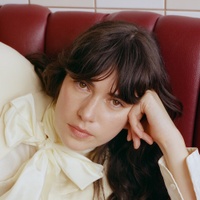
Jilian Medford has been making music under the name IAN SWEET for over a decade. Her latest album, Shiverstruck, finds her letting go a little and learning to trust her instincts more. The record follows the messier parts of change, heartbreak, and growing into yourself while still finding humor and beauty in the chaos of it all. She currently lives in Los Angeles with her dog, Blueberry.
Conversation
On trusting yourself
Musician Jilian Medford (IAN SWEET) discusses finding her voice through unlearning what she'd been taught, how her environment influences her work, and why a car is her biggest creative space.
As told to Arielle Gordon, 1973 words.
Tags: Music, Inspiration, Process, Focus, Identity, Mental health.
There’s a lot of car metaphors on Shiverstruck; cars as sites of romance; cars as places of transcendence. Do you find the car to be a creative space?
The car is the biggest creative space for me. I think a lot of LA natives are that way because you do spend so much time in your car. You have to re-shift what it means to be stuck in a car all the time. You have to get something out of it. Living in New York, that was something I romanticized a lot. The very simple action of listening to music in my car, I’ve always found that to be a really sacred, weird working space. That’s where I do a lot of my best thinking.
There’s a kind of meditative alone time you get in LA that you never get in New York, where you wrote most of the album. Do you feel like your environment made its way into the music?
Definitely. My environment affects what I’m writing about, how I’m writing, and even how I’m singing. I really love New York, but I just struggled a lot to find, fully within myself, a happiness. It was kind of an “every-man-for-themselves” energy. You’re alone without ever really being alone.
I was spending a lot of time alone though in New York. I had a partner who worked at Saturday Night Live and it was a 24/7 job. You could only get bits and pieces with that person. I have lots of friends in New York, but most of my time was spent alone in a city where you’re not alone. I was grappling with that chaos, that messiness, that really raw energy that buzzes through New York that is also beautiful. But I was still longing for a sense of calm and comfort and family and rituals that I’m used to. That seeped its way into the writing.
Do you ever feel pressure to lean into painful feelings when you write?
There’s pressure to keep the heartbreak, the turmoil, the utter sense of hopelessness through the music because that’s what some people are used to in my songs. Throughout this record, I was trying to manifest what I wanted out of my life through song. Even if I was struggling, I really wanted to put it out in the universe that I don’t really want to feel this way anymore.
There’s a wink that these songs are genuinely sad, but it’s the place that I’m approaching them from. They don’t come with that heaviness, that weight. It’s approaching it with a little more lightness for myself, a bit more grace in feeling that way. I think that comes also from the fact that I took a little bit more accountability for my part in what creates this cycle.
Yeah. There’s almost a kind of irreverent approach to it on “Jilian,” when you sing “Sad singer, such an idiot,” you’re directly poking fun at what people are saying.
Right.
I was curious about how humor plays a role in your songwriting.
My favorite thing to do in the world is laugh, and I’ve always surrounded myself with people who I make laugh and make me laugh. That’s number one on the scale of personality traits for me. It is so important in my songwriting to approach it from a place of humor as well. Not everything can be so serious. Life itself is humorous in the heartbreak; it’s absolutely ridiculous every day.
I really wanted to bring that into this record more because I wanted it to showcase my personality more; me rather than the Ian Sweet entity, if that makes sense. I love to make people laugh and love to poke fun at myself and don’t take life so seriously.
How do you, Jilian, relate to the entity that is “Ian Sweet”?
It’s like I have split personality disorder. I’ve been doing this for so long, and I’ve really neglected to think about what I need. This project is the most beautiful thing in my whole life, but it’s also really heartbreaking. This industry is really heartbreaking sometimes. It dictates how I feel constantly.
If Ian Sweet gets an amazing opportunity, or if something horrible happens, that will dictate my mood. It was important for me to try to just look myself straight on and say, “This is really important to you, but this is not do or die. You have so much of your life outside of this.” It can be hard to separate the two because I’ve been doing it for so long.
Is there anything you’ve found helpful in terms of separating yourself from your musical persona?
Going into this, I started writing a lot of songs about my struggles with the industry. It was more my relationship to the industry rather than a romantic relationship. I was also focused on my relationship with myself and with Ian Sweet. The writing process was a big deep dive into creating this kind of separation.
I had a job singing and working with children, and that really helped me get outside of myself. It was very pure. You have to be in the moment, you have to be present, you have to be honest, or else they’re going to know, and they will call you out. I had to be really honest with my friends and my family about struggling, and not try to act like everything was okay, or put on a brave face. Taking a step back and being a lot more honest with myself was the most important thing throughout.
What has working with children taught you about creativity?
No matter what, you have to show up for these kids and be really present for them. At that age, you’re so moldable, and every little thing is going to affect your personality, and so I tried to have that in the back of my mind. I didn’t want to have that hold so much weight, but it is true. That’s why a lot of the record is a bit humorous, too, because I couldn’t believe what I was doing in the moment that I was doing it. It’s just hilarious to be singing about farm animals to children, and then that night be on tour playing your songs to crowds.
I was curious if writing from different perspectives, which you do on songs like “987,” allows you to write more honestly or approach things in a different way.
Definitely. I think “987” is interesting. I actually made that song after leaving the studio, feeling like I needed one more song to sum up how I was feeling about everything. I write from different perspectives because it’s important to me to see how someone else views me and use that as a tool to look at myself. It helps me to realize my part in it all.
What does your revision process look like? Do you share your works in progress with anyone?
No, I never send any lyrics to anybody. I am very lone wolf. I can never really collaborate on the lyrics. I’ve tried in the past, but that feels so deeply personal to me that even if it’s one other person’s thoughts, it feels inauthentic. I take the lyric writing so seriously; that’s when I know a record is done. But I’m revising the lyrics up until the second I go into the booth to record them, or even while recording them.
I just want to feel so engulfed in those words because I know that I’m going to sing them. I’ve had songs in the past where I haven’t felt so great about the lyrics by the time I went into the studio. On tour, I was changing the lyrics while singing them to fit more into my life at that time. The revision process is just me chasing a feeling. Once I know that I’ve reached that feeling, then I feel settled.
How do you access your intuition as a musician?
Trusting your gut is the most important thing you can do as an artist. If you’re putting something out that doesn’t feel authentic or true to who you are, you’re not going to want to stand behind it and shout it at the rooftops or sing it at the top of your lungs. It just won’t feel as good to you. Writing this record, I wanted it to feel like all the parts that make up being human. Nobody is just one note. It was encapsulating grief, loss, excitement, embarrassment, falling in love; that’s just part of the story and every little bit that makes us who we are.
Do you have any rituals that you find help with the creative process?
A big ritual for me is tea. I drink a lot of tea. It was a really big practice for me, especially while making this record, because I was dealing with chronic strep throat. I had to eventually get my tonsils taken out.
While I was making the record, I never knew when I was going to have a flare up. I was down and out. I started seeing an acupuncturist who recommended getting into certain rituals with tea. It was really helpful for me just to have a routine to calm down my nervous system and try to refocus my attention. I was always thinking about getting sick and that was really troubling. It was taking over a lot of my thoughts. It was really important to recenter. Having that ritual every night and every morning was important for me.
You studied composition at Berklee. How do you think that musical environment shaped how you create today?
There was a lot of unlearning. I came into my own voice while at Berklee because I knew I didn’t want to be so formulaic with my songwriting. The energy there can be really intimidating, and you can question how talented you are based on these merits and these different levels you get put in. It was especially important for me to follow my instincts and be true to who I was, or I was going to get completely lost in it all.
There was a lot of learning and a lot of amazing professors, but there was a lot of unlearning. I think some of my teachers didn’t like me too much because I was a little defiant with the way I was writing songs. I remember one time, I was in a songwriting course and turned in a song that didn’t have a chorus. I got ringed out in front of the whole class. I was made an example of how not to do things. I knew from there that that’s what I should do and followed that instinct ever since.
It’s an interesting place. I think any kind of very specialized school is going to have its struggles because it feels hard to teach people the “right way” to approach music, and have rules. I think breaking the rules and making mistakes and hitting wrong notes or whatever was what brought me closer to the type of writer that I am.
Jilian Medford (Ian Sweet) Recommends:
Eating a rotisserie chicken with your hands
The best solo dinner order—Caesar salad, french fries and a Diet Coke
The Passion According to G.H. by Clarice Lispector: She’s always having a fricken existential crisis…girl, same.
Fucked Up Film Club: My friends and I started a film club where we go see bad movies (or I guess movies that aren’t necessarily critically acclaimed) It’s so fun! We saw Minions and Monsters the other night. It was incredible.)
- Name
- Jilian Medford
- Vocation
- musician (IAN SWEET)
Some Things
Pagination