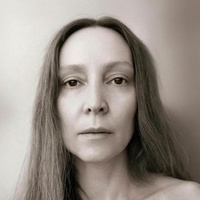
On learning to work faster than doubt
Prelude
Molly Nilsson is a Swedish-born artist, producer, and songwriter, living and working in Berlin since 2005. Nilsson first started composing in 2006, self-releasing her first album, These Things Take Time, on CD-R in 2008, and founding the label Dark Skies Association, which continues to publish her work, together with UK-based record label Night School Records.
Dedicated to an independent DIY approach, creating all artwork and music videos, Nilsson has performed more than 900 live shows in Europe, North America, South America, Oceania, and Asia. In 2024, she was granted the Villa Aurora residency in Pacific Palisades, Los Angeles, where she recorded the conceptual album Un-American Activities. Her twelfth album Amateur was released October 1, 2025, and was followed by a European tour. In 2023 she started publishing imprint Copycats Press, and in 2026 the D.S.A.ZINE was launched.
Conversation
On learning to work faster than doubt
Musician Molly Nilsson discusses developing her artistic compass, letting work be done, and bringing historical subjects back into the world.
As told to Emma Ingrisani, 2756 words.
Tags: Music, Activism, Independence, Politics, Day jobs, Beginnings, Inspiration.
Did you have a formative moment of exposure to music, when you first wanted to do it, or saw yourself as someone who could do it?
I can remember falling in love with the way music sounded and made me feel from a very early age, but I wasn’t drawn to it at all from a practitioner’s point of view. Nobody in my family played music in any way, so it was not really on my horizon. I think I felt like I could have more joy from music by not making it. To just be a pure fan was exciting enough. And then I could make things around music.
I thought that I would probably be working with something like film, which is maybe a type of music, because you’re also working with time and space, sort of. But it was not a plan, and not really a desire, even. I tried a little bit to get into playing in a band with friends, but the band format was just not something for me.
When you started to write songs, did your taste as a fan map very easily?
I think as soon as I started writing songs, my perspective completely changed. It was like a paradigm shift—so much so that I felt like I could never listen to music the same way again. It was as if I had looked behind the curtain, and suddenly if I heard anything, I would be thinking about how it was made, what the person or the people who made the music were thinking, what the intention was. So it kind of ruined my blind joy for music [laughs]. But then of course it gave me a wealth of other ways of thinking about it.
I mostly stopped listening to things where I thought, “Well, I could make this,” and I started mostly listening to things that were puzzling to me, like, “How did they make this?” or, “Why is this so good? How could I make something that makes me feel the way this music makes me feel?
And that’s the path I’m on still. I don’t really miss listening to music the way I used to. But I have friends who are not musicians, and I notice that they will listen to things where I’m like, “Yeah, I would also listen to this, if I didn’t have this corruption of my brain that’s always looking for clues and things behind the curtain.”
Your twelfth album, Amateur, came out in 2025, and you wrapped up an international tour at the start of the new year. Are you in a moment of rest or a break right now, or are you already working on new ideas?
I’m always working on new ideas, but this time around it was a bit different. I put out Amateur at the end of last year, and the year before I had made sort of a conceptual album called Un-American Activities. So the last two years I was in the same cycle of working on music very intensely—which is of course super fun. But then after that, there’s all the artwork, planning tours, making music videos, and constantly filling up the world of the album with more material in different directions and mediums.
I did feel, after this album, “Oh my god, I’m a little bit exhausted. I think I need to promise myself not to make an album this year.” For my own sake, for my own sanity, but even for the world. I’m like, “Give the world a break!” [laughs] So I’m going to take a year break from music, in the sense that I’m not going to put anything out. I’ll probably be recording, as usual, but I wanted to also focus on other things.
I decided to make a paper zine for one year. You buy the subscription so that the zine itself is free and you only pay for the postage, at a fixed price for the entire world. It’s a way for me to explore things that I think are really fun, but I had to make time and come up with a purpose for it. I’m not very good at just sitting around and chilling and doing things for no reason at all. I have to have an end idea.
I’m working on the third zine now. Last night I was patting myself on my shoulder, like, “This is the best idea I’ve ever had ever”—in the sense of forcing myself to explore other mediums. It’s been really fun to write, and do the graphics and the layout, and do cartoons, and also to reach out to people who do interesting things and say, “Hi, can I talk to you about what you do?” I’ve learned so much already. But now, I’m also very eager to start making some music again.
Creating time off is so good for letting other ideas come up. If you’re a musician and you make albums, it’s so easy to just be like, “On to the next album, I guess.” It was really good to just say, “Okay, no album.” What happens with all your ideas if you can’t make an album out of them?
Imposing a constraint channels that energy into something else.
I’m a big fan of constraints, by the way. Obviously, I run my own label, so no one’s going to come to me and say, “Oh, Molly, when will the next album be ready?” It’s up to me to decide. You have to split your brain up between the person who calls the shots and the person who is just being the artist.
With that division of roles, what leads you to a sense of “This is done,” or, “I’m moving on from this particular project?”
I think I’m quite good at arriving at that point myself. The way I see it is almost as if I have a canvas and I’m painting, and when all the canvas is covered, it’s finished. Not that every song is like a big smear of paint—it can be a very minimal thing.
I don’t know why that is or how that works, because I know that for some people finishing or letting go of something is really difficult. That’s probably one of the most dangerous things, if you’re a creative cultural worker, because you have to move on. It could be a block. Or when they’re finished with something, for some people that might be sad, that their work is done. But for me, as soon as I’ve finished a song, I’m just so excited that I get to listen to it. I listen to my own music so much. When I’ve made a song, I listen to it for months nonstop.
I have maybe two people in my life that I show things to, but not to ask, “Is this finished or not?” That was more important to me when I first started out, to be able to sort through the material, because I was writing so many songs in the beginning. I think the first year I wrote 200 songs, so it was important to just go through it, like, “Is this good, or is it just a sketch or whatever?”
After, like, 20 years of doing this, I’ve developed my own compass. Even if someone else said, “I don’t like this,” I would say, “Well, that’s your preference.” Even with these two friends that I usually share work with, I know what they like. They are completely opposite taste, so one will say, “This is my favorite song,” and the other one will say, “Oh, I don’t like that at all.” Somewhere in the middle, I kind of know that’s where I am.
But it’s very important to have people that you trust, so you don’t fall for the opinions of people who maybe just have what I call insecure good taste. That can be a very damaging thing, because it could lead to you only making things that are secure. It can be the death of a lot of cool ideas.
I would love to talk about the album Un-American Activities, because the circumstances of creating it are so unique, and it’s also just a very unusual and rich project. It came out of a residency you did in the United States, in California. Where were you in the conception of the album when you first applied?
Part of the application was to present what you wanted to do with the time, but it wasn’t the sort of application where I had to do what I said I was going to do. It was also not the kind of residency where you had to do anything. I think for some people it was just a way to relax and do research or whatever. But I felt like it was such a special opportunity that I wanted to go in with an idea and then also really execute it.
I had a very strict plan when I went in. I had a logbook for myself of what I was going to do: everything I was going to read, all these different subjects I wanted to cover, and I wanted to write one song a day during those three months. I realized that I wouldn’t actually be able to write a song every day, but that was my game plan.
I think going in with the plan made me feel more free artistically. It felt like I could try things out, because I already had the structure around it figured out. I got to explore other parts of songwriting and production and just making things work, because I arrived without any instruments. I had to just borrow stuff.
Also, being in a new space. I’m kind of a comfort artist. I like my home studio. And so being in this place where I was like, “Well, other people can probably hear me singing my stupid songs…” [laughs] I had to get over that discomfort, too.
Because the concept of the album [the McCarthyism era in the US] wasn’t about me, I also couldn’t approach lyrics in the same way. I had to be respectful toward the subjects, because the whole story is full of real people who lived, whom I admire. I always incorporate humor in my lyrics, even though people tend to focus on the opposite, but I couldn’t be telling my old jokes. I had to find a way of handling these tragic stories while still making the songs poppy and inviting, or listenable. And it felt strange to be thinking about those horrible situations, because I feel like we are living in a time that’s repeating a lot of them. It was kind of therapeutic, but also strange.
All the songs I wrote and recorded in one month, and then I spent one month tweaking and mixing. Afterwards, I thought, “Wow, I can make a record in a month.” I was like, “I could make 12 records in a year!” And that idea is also the reason why I’m not allowed to make an album this year, basically.
On Amateur, I was really intrigued by the song “Joe Hill’s Last Will.” I think of Joe Hill as such a major symbol in folk and protest music in the US. His being a historical and political figure, but also, through song, becoming…
Immortalized.
How did that end up on the record? And does it fit into your sense of protest music more broadly?
When I grew up, to me, Joe Hill was the most famous Swede in the world, ja? He was the man that never died. In Sweden, because of the political shift in the past 40 years, he is quite forgotten, but I was always fascinated with his story. Being an immigrant going over to America and then becoming a songwriter and cartoonist. And then, through being framed for murder and his execution, becoming this icon of the workers’ movement.
A couple of years ago, I started getting more and more interested in him, and he became a character that I would return to. I wanted to bring him back into my world through a song. Then, when I was trying to write a song, I realized: You don’t need to write a song about a songwriter! Just sing one of their songs, or their words.
There are a lot of versions of his different songs. [Hill’s poem “My Last Will”] is not something that there is music written for, but it’s also so perfect as a song. So it’s kind of a half-cover. I didn’t plan for it to be a cappella, but when I came up with the melody, I didn’t know how to make any instrumentation happen for it. That makes it even more in the vein of a protest song, and also in the vein of being in a prison cell without any instrument, except for the ticking of time.
It’s one of my favorite songs from the album. It’s very different from everything else on there, and very different from my other music. If it speaks to you, I think it will really grip you, but for other people—if you are not interested in the fate of this human being or his story, then maybe it’ll just pass you by. I think that’s something very powerful about a cappella: that you’re just relying on the words and a voice. The vulnerability in that is something you can either ignore or really take to your heart.
Considering how the world looks today, I think it’s strange that we don’t have more protest music. I think the Billboard charts should be full of protest music, and I don’t know why they’re not. I mean, I know why they’re not, [laughs] but yeah.
You’ve been able to build a career as an independent, self-produced artist. Is there a mindset or a principle that you think might be helpful to others trying to do that to some degree—having creative control and sustaining themselves also?
We all have to sustain our lives, and depending on where you live, that might be quite difficult. I was very lucky in that I moved to a very cheap city, while it was still cheap. I was able to get a job that would just pay the rent, and I didn’t have crazy living costs, and that gave me extra time to work.
I think time is the most valuable thing if you are working in creative things or art. If there’s a lack of time, it’s important to focus on the essence of what you want to do. Not worrying about perfection or getting everything right. Working fast and trusting that everything you do will lead to the next thing. Letting go of an idea that you’re not 100 percent sure about is fine. I always say that writing a great song is really easy, but writing a bad song takes months.
Not being in a rush to arrive at who you are, if you’re a young person, is a very good lesson as well. Today there’s a sense that if things go up online, it’s as if you’ve already published it. When I started out, this was not a factor. I had a lot of time to just learn and develop and get better, privately. It wasn’t until I’d been doing that for, like, two years that I decided, “Okay, I’m going to make a CD.” And the CD was a CD-R [laughs].
Another point about working fast is that you have to work faster than doubt. Doubt is this quite slow but very effective idea-killer. It really helps to work so fast that you don’t even have time to think about it. Ideas can be kind of fragile in that sense.
One other thing that I kind of keep as a rule: Don’t listen to anything while you’re working. Train your eyes and ears to only exist in your own world, so that you’re not comparing yourself as you create. Not all the time—you don’t have to stop listening to music! Just when you’re in that process.
Molly Nilsson’s favorite sounds:
Opening fizz of a soda can
Traffic sounds through open windows behind closed shutters
Crows calling
Fireworks in the distance
Applause
- Name
- Molly Nilsson
- Vocation
- Musician
Some Things
Pagination