On learning to see your work objectively
Prelude
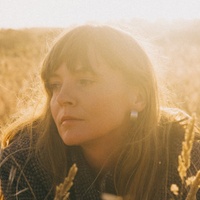
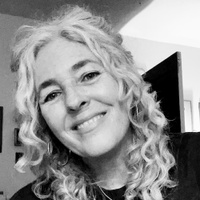
Confronting thoughts and ideas directly has its advantages. After all this helps to say what one has to say, sort things out and move on. On the other hand, when confusion and apprehension confront us, we can choose to look at things more obliquely. This approach sometimes raises more questions than provide answers and, no doubt, leads to more introspection. This is the preferred mode of Guzman, two photographers who examine the state of the world with a sideways glance. Known both in the U.S. and Europe for a highly sophisticated photographic style and an affinity for the eccentric, Guzman has worked across just about every category, with a concentration in advertising, fashion, conceptual photography, nudes, sports, and celebrity portraits.
Conversation
On learning to see your work objectively
Photographer duo Guzman (Constance Hansen and Russell Peacock) discuss making plans, embracing sabotage, and decades of collaboration with one another and the world
As told to Annie Bielski, 2356 words.
Tags: Photography, Collaboration, Inspiration, Beginnings, Process.
I recently attempted to get a lamp rewired, and the repair guy said it actually worked fine, and “you’d be surprised how many people just have two bad light bulbs lying around.” I keep thinking about that specific insight and wondering what I know. Do you feel like you have some insight about people based on the nature of your work?
Russell: Insight into the human condition?
Yes.
Russell: Gee, you’re going to make us think.
Constance: You know what? I’d say in a lot of ways we’re voyeurs, and so we’re always watching how people react to certain things. It’s like a visual dialogue rather than writing it down. So yeah, we do think about what’s going on in a sly way. A lot of times we maybe add little bits of it into our work. It’s ambiguous, but it’s in there.

Ozzy Westside Highway

Ozzy and Kelly
Collaboration is a significant part of your life and work together. Has your approach changed over the years?
Russell: When we first started, we both took pictures. We took turns kind of alternating, not every other shot, but it would vary. We did that for a while until about the year 2000. And then I stopped taking pictures totally, and Connie just took the pictures and I would kind of be around putting my two cents in. So that’s the biggest shift in approach. And then within that, things change.
Constance: We don’t really think about it. If someone has to climb a tree, go under water, I’m like, “Hey, Russell, you want to do that?” It’s not so regulated, it’s just that he likes to stand right there and he has a dialogue with the person. He makes suggestions, and I think it works out really well. In other words, I feel that we kind of know when the right moment is, and we work at it by playing with the person. In the beginning, we wouldn’t really know who was going to take the picture sometimes, or the picture could end up being from the side, a different angle.
Russell: The other thing I was just thinking about, is when both people are taking the picture, it’s kind of like a…
Constance: …press conference.
Russell: One person goes in a direction, and for example, the person currently photographing would say, “Oh, can you stand up and go over there?” Then the other person photographing has to start with them standing over there. It’s as if you’re doing a drawing with two people and someone draws something and then the other person has to add onto that. It’s a back and forth between the two of us and the subject. It’s a different dynamic than if you would be by yourself taking a picture of a person.

Ozzy Westside Highway
That’s interesting. Earlier I was thinking about chance and spontaneity in terms of outside forces with the work that you do, but now I’m thinking about how it’s also with one another.
Constance: Oh, yeah. Even someone saying something could change everything. When we go in to shoot, we bring all different size cameras and there’s four eyes instead of two eyes, so we’re like a monster. A lot of times we would have assistants for each of us, and we would have all these cameras, and we expected the cameras to be loaded, there would be no time for one person to get all that filled. We’re figuring out, “oh this is perfect for four by five,” because four by five changes the perspective, you’re lengthening people and twisting in reality. And then you have 35 millimeter, which is grainy and more off the cuff and spontaneous, two and a quarter, which is more formal, a big camera. We would play with it all, we enjoyed playing.
Russell: The other thing that is part of this is, there’s a certain amount of pre-thought before you even start taking pictures. That’s kind of half of the photo shoot right there, but not always. Sometimes there’s no thought at all. You just go in and take pictures.
Constance: Well, we have plans, and sometimes there’s sabotage, but in a way, we kind of embrace that.
Russell: To a certain degree, photography is a collaboration anyway. First of all, between subject and photographer, then sometimes you have…
Constance: Set designers, stylists, hair, makeup.
Russell:…depending on what you’re doing. Not unlike doing a film, there’s a lot of things that are getting put in. It’s not solitary. Photography’s always kind of in the world.
Constance: And we also collaborate a lot. I was actually just talking to [set designer] Marla Weinhoff this morning because [we were looking at that] Ozzy [Osbourne] picture, I’m like, “Marla, did you bring that car?” She goes, I don’t remember. “Did you put the dirt on the West Side Highway?”

Balancing Act
Russell: A stylist could say, “Oh, I have this great jacket. Can you try it on?” To the subject. And then you look at the jacket and it leads you in another direction, so you’re just piling on with ideas. That’s the fun part, you really don’t know where you’re going to end up. The best shoots are where you create an environment where people can collaborate and have their input all kind of go in a direction. Sometimes you go off track and you’re like, “What are we doing? This took two hours and it’s not working.”
Constance: We had this great idea with a truck and a boat, and we were going to take Soundgarden on a tour up 42nd Street.
Russell: The idea is an old boat on a flatbed truck, so when you photograph the band in the boat, you only see the boat, you are kind of looking up at it, and they’re floating through Manhattan. We thought it was a great idea. It was an editorial shoot for a magazine. Not a big budget, but we somehow got that all together. But they came in, we gave the idea, and they said, “Nah.”
Constance: “We’re not doing that.” We’re like, “Oh.”
Russell: So you’re like, okay, then you’re doing another plan B, plan C.
Constance: We did bring a chainsaw.
Russell: And then at the end of the shoot they’re like, “Oh, let’s do the boat.”
Constance: They got into the shoot, they got so comfortable. But by then it was too dark. We’re like…
That ship has sailed.

Jon Stewart
Russell: Bands typically are kind of wary about being manipulated, especially alternative bands. They want authenticity. They don’t want to end up looking stupid, which I understand.
Constance: We threw knives at…
Russell: Jon Stewart. You know that carnival event where someone’s throwing knives at a girl on the wheel?
I can imagine.
Russell: The wheel’s spinning and the guy’s throwing knives. So we had Jon Stewart do that, and he was like…
Constance: Brand new, really. He was hysterical.
Russell: It was the ’90s.
Constance: We were laughing so hard.
Russell: With portraits, you have to kind of know how far you can go with someone. Sometimes they say no and that’s okay. You’re better off pushing and not being afraid to ask something that you want to do. Sometimes you’re like, “Oh gee, I wish I had tried this, but maybe there was not enough time.”
Could you talk about some of your most recent work, in which you mine your archives and repurpose older images?
Constance: Everything we took, we consider fair game, so to speak. We’re always pulling things out and going like, “Oh, this is going to be a really good picture.” It could have been shot for Barneys, Bergdorf Goodman—who knows—but we decide we’re going to redo it. We’re always fiddling with everything we do and we bring it forward. Our work isn’t linear at all. We might have shot something in the early 2000s or in the ’90s or even in the ’80s, and when we bring it forward, it loses context, it has no reference to what it was. Right now we’re thinking of doing a gun show because over the years [of our archive] there are photographs of people that are pretending to have a gun, [or] they have a gun. Looking at it in terms of society, we always add something about what’s going on. If we think something is annoying, we might address it sort of subversively, and you notice it, but we’re not writing it out or we’re not hitting you on the head with it. It’s just there. We don’t really tell a story, we just give you something to play with.
Russell: You may think about this too in your work: when you have one image—whether it’s an abstract painting or a photograph of something, it speaks about something—and then when you put different paintings or photographs together, context changes. In our case, the context can drastically change from that one image to the next. That’s why books are interesting because they’re able to form a narrative.
Constance: But you don’t even have to know what this narrative is about.
Russell: The narrative is what this juxtaposition of pictures are together.
Constance: It’s more emotional, I think.
Russell: Our way of working is—we’re asking questions, we’re not trying to answer any. You can just put it out there. That’s probably how you work. You create something, and it’s interesting how people respond to your work.

Janus
Constance: Also, we’re not pure. For our last show, we dipped photos in persimmon and put together collages and cut things out.
Russell: And we were just kind of going back and looking at past work with a theme in mind. It’s a good exercise. Sometimes it’s good to have a box to work within, and then you can kind of see where that goes. That helps us.
Constance: Yeah, it’s terrifying, I think, if you can do anything.
Russell: A very common feeling for a lot of photographers is there’s nothing more terrifying than it’s just a blank white wall to photograph someone against, but we love that. If it’s just the person and you, there’s no other way to go.
No chainsaw.
Russell: Yeah, no chainsaw.
Constance: Well, we do end up sneaking stuff in. We might hand them a hammer or something.
Russell: And it’s hard for a person being photographed to just be kind of against this stark wall. They don’t know how to stand. They can stand awkward so it’s a challenge.
Constance: But sometimes you use that stiffness. Sometimes we just love it. You know what I mean? We want to capture that. We want that feeling.
Russell: People are fascinating as subjects because everyone’s different. How they stand and respond to the camera, it’s never the same.
Yeah, I’m sure even from hour to hour.
Constance: Yeah, they’re entirely different, sometimes from the beginning when they come in and they’re just getting used to us to where they’re throwing themselves, now they are annoyed.
Russell: And that’s not to say the first picture where they’re really uncomfortable and awkward is bad.
Constance: It could be our favorite.
Russell: Yeah, it could be the best one.

It’s Complicated
There’s so much movement and physicality in your process in the way you talk about it, too, which leads me to wonder about self-portraiture and your archive over many years of working.
Constance: It’s interesting because when you’re younger, you’re photographing yourselves too. From the very beginning, from the first time we have cameras, self-portraits. When you add 40 some odd years and you’re getting older and older, it definitely becomes a lot more intense, because you’re realizing you have a lot more behind you than you have in front of you. So that does inform me.
Russell: Well, this is common to self-portraiture in general, whether it’s photography or painting, whatever, you begin to see yourself objectively, and you’re just like another character. That’s kind of liberating. I think when you’re younger, you’re more self-conscious about who you are and how you want to be perceived, and then when you get older, you just say, fuck it. And it’s kind of liberating.
What would you say to your younger self or younger artists?
Russell: Where does one begin?
Constance: Well, I don’t know what I could even say to my younger self, but maybe that I see your life, and I wouldn’t regret anything.
Russell: It’s kind of impossible.
Constance: I rarely regret, I just keep going forward when I think about it. “Oh yeah, that was stupid, or that was a sidetrack, or whatever.” But I don’t really regret it because it got us here, you just keep going forward and you’re just sure. It’s one thing ruminating in your own brain, but to put it out there in the world, it’s very complicated.
Russell: And then as Connie says, you’re negating all the things you did right. You don’t tell on those.
Right. And no one really knows.
Russell: That’s it.
Constance: Yeah, I mean, all the experience I had was just because I’m like, “Oh, there’s this door I’m going to open it,” or “Oh, I think I’ll try this.” I never had a plan. I have just been floating through this.
Guzman recommends:
I Heard Her Call My Name by Lucy Sante
Bugonia by Yorgos Lanthimos
The Captain is Out to Lunch and the Sailors Have Taken Over the Ship by Charles Bukowski
Paul Outerbridge, photographer
Louise Bourgeois, sculptor and artist
Ashley Yang Thompson - Still Worm
- Name
- Constance Hansen and Russell Peacock
- Vocation
- photographers
Some Things
Pagination