On choosing honesty over glory
Prelude
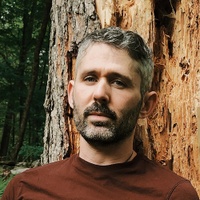
Reina Bonta is a queer Filipina American award-winning director and professional football player. Her most recent short documentary, Maybe It’s Just the Rain, screened at Cannes Marché Du Film, was selected to DOC NYC’s Academy Award Short List, and examines her experience representing the diasporic Philippines team at their FIFA World Cup debut. Reina was an Archival Producer for Judy Blume Forever (World Premiere: Sundance 2023), was an A-DOC 2025 Impact Producing Fellow, and her directorial debut, LAHI, secured national streaming distribution. She holds a bachelor’s degree in Film and Media Studies with distinction from Yale University. In addition to her work as a filmmaker, Reina has had her photography featured in world-renowned publications including Forbes Magazine, worked as a Brand Strategist for Nike, and her writing has been published by ESPN. She is also a professional football player who has represented the storied Brazilian club Santos FC, as well as her national team at the FIFA Women’s World Cup 2023.
Conversation
On choosing honesty over glory
Pro footballer and filmmaker Reina Bonta discusses creative forgiveness, knowing your team, and letting work breathe on its own.
As told to Laura Zeng, 2918 words.
Tags: Sports, Film, Collaboration, Focus, Process, Success, Multi-tasking.
Do you think athletes make good artists?
I feel like sport by nature is hyper-structured, and doesn’t allow a lot of room for individualistic thought. In team sports specifically, you’re a part of a machine, and your duty is to serve the machine. So in that sense, maybe not. On the other hand, the thing I have taken and will always take into my process, no matter what, is ruthless determination. If I have this idea, no matter the goal, it’s really hard for me to get off track. But I do feel like I need to release a lot of the rigidity of sport when I make art. There are days when replacing your training time one-for-one with writing a script or book doesn’t translate the way you might imagine it to.
Is determination the through-line between these two identities? How do you hold both if sometimes they’re co-constructive, but sometimes they’re contradictory?
I hold them like an egg in my hand—delicately. Maybe the through-line is determination, but the other common variable is understanding interpersonal community to get the best out of the people around you. Being on set is probably the closest thing I’ve found to being on a team.
What does releasing rigidity look like?
When you’re making something creative that’s born from the soul, you have to give it room to breathe and grow. That’s been a huge thing I’ve had to unlearn as an athlete. To make work as an artist, you have to know when to let things breathe on their own.
What does letting things breathe mean?
I think for the artistic process, especially in development, it means having creative forgiveness with yourself. You can’t get away with approaching things so perfectionistically.
Is there such a thing as athletic forgiveness? In sports, everything revolves around effort, and constantly reconsidering what you consider to be your “best.”
I know. I’ve had so many coaches tell me, even if you’re not having a good day, even if your touch is awful, even if your shots are terrible—as long as you’re putting your head down and working hard, that’s all that matters. What gets validated is your effort, and how much of yourself you’re pouring into the game or practice or whatever it is. And I feel like that’s 100 percent translatable to art. But at the same time, effort is a flexible term. Taking a creative break from your work—not trying to write the same page over and over for 10 days straight when it’s not working and being intentional about that decision—is effort too. That’s also serving the work. So I don’t think it’s the same… and I don’t know, it’s hard for me to describe. You can’t define effort the same in two extremely different worlds. But the idea of it is true in both of them.
That’s what I wrestle with. In sport, effort is always measurable—even when it feels abstract. A coach can say, “You’re not at 100%, but give me 100% of your 80%.” But in art, I can’t measure my effort. I can only question it. I’m constantly asking myself: Is this my best? Am I doing right by the work?
Yeah, totally. Sport is numbers-reducible. In our training and in our games, we wear GPS vests that literally show us after we take our benchmarks at the beginning of the season how hard we’re sprinting compared to what our maximum is, or how many miles or kilometers we’re running in a match compared to what our average is. You’re constantly in this cloud of data and statistics that quantifies and proves how much effort you’re putting in. Versus in film and in art, I feel like it’s so impossible to bring that mindset into it, because it’s just not a metric we use in the same way. It’s not a helpful thing. But yeah, I feel like it’s really healthy to have conversations about what we’re bringing into both of these spaces.
I struggle with the line between goals and expectations—I feel like my goals can often turn into expectations, which I end up disappointed by. When you’re making a film, how do you protect your faith without letting the outcome eclipse it?
I mean, it’s a really complicated question, especially in the doc film space right now, where we’re putting so much weight onto the distribution plan. If you get bought, does that recognize all the work that went into this? Are you only successful if you strike a deal with a buyer? For this film, we ran an impact campaign, where I went to the Philippines earlier this year and hosted community screenings. We hosted a free clinic for young, under-resourced girls in my lola’s province, which is distributing the film to a new community that would otherwise never have seen it. And so while there’s all this weight on distributional opportunity, I feel like it’s really a dangerous thing to put so much weight on it as your end goal. Because if you don’t achieve that goal, then you think you’ve failed. But along the entire process you’ve built community, and shown it to new audiences. And that’s the whole point of making a film: changing minds and touching hearts. It is a hard thing when you’re coming from sport, and there are always quantifiable goals. I have this conversation with my fiancée all the time, because she’s in season right now and our lives are just so different. She’s like, “I have this championship. You can track my team’s progress week in, week out, how we’re doing in the standings. If we win the championship or not is a binary answer. It’s a yes or a no. It’s a one or a zero.” And in film, you can’t bring that same binary or clarity of success to your work. It just isn’t the same.
I feel like I’ve been trained to measure success through numbers. But with film, if you don’t have effort — and you just have intention instead as your guiding principle — where do you derive your sense of progress from?
I feel like honestly the most rewarding and fulfilling moments I’ve had in sharing either of my films have been after a screening, when someone comes up to me and is like, “That really touched me in a special way,” or “I am so excited to show this to my family. When is it going to be out? When can I show it to them?” Those moments that feel deeply personal and so intimate are the most fulfilling thing I’ve ever experienced in film. And I think that’s a perfect way to measure your progress: Am I touching people’s hearts? Are they feeling moved by my work? Are they resonating with what I’m trying to say? Do they feel connected to my voice?
Spike Jonze and so many of my favorite directors were skateboarders in the past, and to me, that makes a lot of sense because they are improvisers at their core. There’s so much creativity and spontaneity involved with the craft itself. But with other sports, I’m not sure if there’s necessarily that same freedom of spirit you need to create good work.
Football is regional: your style of football is totally dependent on where you play it. So in the US, we’re known for being hyper-rigid. We’re known for being soldiers, and incredible athletes — a lot of the time, playing a really formal, classic game that favors athletic traits. But playing in Brazil is literally the complete opposite. They prize creativity and intention. And if you absolutely mess up doing it, they’ll still really appreciate you for trying, which is just different from the US.
That sounds fun.
It’s super fun. That’s why I’ve been here for three years. There are a lot of reasons why, as someone who’s drawn to creativity and ideas and trying things, I’ve loved playing football here in Brazil so much.
How do you feel like you bring out the best in people? Whether you’re on a soccer field or working with a film crew, what allows you to bring out the best in people?
The best way to get what you want out of your team is to know your team. It’s to know that the forward I’m passing to has a really great shot, but she’s not someone who is going to run onto the ball and beat her defender in a sprint, so I need to play it to her feet, and that’s what’s going to help our team do the best. You don’t just play the through-ball because it’s on, you play it to her feet because that’s what she can handle and what she’s best at. On film sets, it’s a very similar thing of knowing what your strengths and weaknesses are of your crew, but also speaking to them in a language that makes them feel heard.
I feel like that’s probably one of the biggest ways I’ve seen film sets deteriorate—when community or vibes go south on a film set. When a director or crew member doesn’t really understand what their gaffer is doing, or if the ask they’re making for that gaffer is impossible. You really need to know your team and speak to them in a way that makes them feel heard. You need to show them that you understand exactly what they’re doing, and that you’ve been there with them before.
Do you want to be a coach? I’m curious if being a director is more akin to being a coach, or being someone who’s actually accountable on the field?
I’ve never wanted to coach, but I do feel like my position on the field is one. I play center back, and my job as a center back is to clean up people’s messes and give the ball to them in spaces where they can do good things with it. You really have to know your team and where they want the ball, so they can go and create the best outcome for the team, and you don’t have to clean up another mess.
Wow. What a humble position. Cleaning up people’s messes… I feel like that’s so directly transferable to being a great director. As an individual performer, I was mostly just accountable to myself. Collaboration on that level has always appealed to me, but it feels somewhat foreign, because I’m so used to learning how to communicate my own needs rather than necessarily reading others’. There’s real humility in stepping back from your own performance to serve a bigger picture.
Yeah, I feel like it’s weird. As such a niche space, sports are a very specific community and a very specific type of person. But within this community, there’s so much variation. Even just the fact that there are team sports and individual sports leads to totally different approaches.
I know—that difference between team and individual worlds feels so fundamental. Sports can look like one culture from the outside, but inside it, everything changes depending on what you’re responsible for. And I think that difference shows up in how we deal with fear.
I feel like athletes are often called fearless because we’re so prepared. But I don’t know if I ever felt fearless—I honestly felt scared most of the time. I just learned how to move through it. But with creative work, the fear is still there, just less visible.
I feel like for me personally, in a healthy way, a lot of my fear neurons have been fried from football.
I had a screening recently that was a private screening for a group of people I was really excited to wow with my film. And my film paused halfway through because there was an error in the file, and it was a really intimate room. It’s every filmmaker’s worst nightmare to have that happen. You spend years making this piece; for 15 minutes of it to play cleanly is the least that you can ask, and it didn’t go right for me.
And afterwards, everyone was like, “Oh my God, how are you feeling? Are you okay?” And I was honestly like, I’m totally fine. I recognize it for what it was, but this feeling I’m having now will truly never compare to the feeling that I have of messing up in a match that I really care about, or giving up a goal or those moments that just feel so much more gigantean than you could ever really compare to. In a lot of ways, it’s a healthy thing to have experienced such high highs and such low lows. After that, everything feels relative.
That’s true. Nothing can compare to public humiliation. Even when I have shameful moments now, they mostly happen in private. I don’t have to suffer twice, or vicariously through an audience. But do you think there’s a downside to living between such high highs and low lows? Because your expectation for how life should feel can get kind of warped. I’m curious because you said that you got such validation from those intimate moments of filmmaking, and I’m like, how do those moments of intense intimacy compare to the super high highs of a great performance?
I don’t know if you can compare them in intensity, but I think you can compare them in significance. Having someone look into your eyes and hold your hand and be like, “Your film moved me,” is a 10 out of 10 feeling in the same way that winning a World Cup match in front of 70,000 people is a 10 out of 10 feeling. They’re different, and will touch your heart in different ways, but both are 10s in my book. Both will be things that cause you to stay up at night thinking about it later. So I don’t know if intensity can be used as a measure for both of them, but both feel incredibly significant.
Every artist wrestles with this, but do you make your work for yourself or for others? And is wanting validation from others part of the process, or a betrayal of it?
Yeah. Oh my gosh, such a hard question. I honestly feel like I’ve asked this question to myself in periods throughout my life, and I feel like I’ve come to different answers every single time. Right now, I feel like I’m at a place where I truly feel like the more personal you make your work, the more universal it is, and the more people connect with it. I feel like if you are vulnerable about moments that feel like they’re not portraying you in the best light, it makes you an honest storyteller and will get a more genuine reaction from the people you share it with. Because then it’s a film for them too, and not just something that’s glorifying yourself.
And yeah, I feel like a lot of people, myself included, make work because you need to. This literally was made as a catharsis tool for myself, and then happened to be so personal it resonated with people more universally. So I think in a lot of situations, you’re experiencing both at the same time.
I know it’s not a dichotomy, but what do you think about the difference between glory and honesty? As an athlete, I think I was always chasing glory—a polished, perfected version of myself. The messiness and the process stayed hidden. But with art, it feels like honesty comes first. Which then gets kind of strange, because honesty creates its own kind of glory.
I think that’s true. You train free kicks in training and they’re terrible, but you’re training them because in games you want it all to go well. And then when they go well in games, the only thing people remember is those goals you scored. They don’t know the million times it didn’t go well. But honesty is different. I think it becomes a self-reflective thing of holding yourself accountable to whether you’re ultimately being honest for the sake of truth, or for the sake of glory.
Rip.
Yeah.
Do you have any fear about eventually leaving the sport, and becoming primarily a filmmaker?
Not really. If all of my energy ever only had one outlet, it would feel dangerous—like too much pressure on my body to carry everything. It’ll just become a different ratio. For me specifically, I think I’ve found a way to merge both worlds, and I know that my filmmaking will always center around athletes. It’s going to be a part of the body of what I’m making for the rest of my life. My fiancée is going to play professional football until her legs literally fall off her body, but I feel like I’ll have a more tapered goodbye. There hasn’t been a moment of cold turkey panic or finality for me, because I’ve been living in both spaces for so long.
Reina Bonta recommends:
Learning Brazilian Portuguese, especially the words “saudade,” “coração,” and “jeitinho,” which scratch an itch when they roll off the tongue
Making a visual journal of mundane life moments with a home video-style camcorder (I use a Panasonic HDC-TM60)
Cold morning showers
Pressing flowers as an activity with family or friends
Fresh soursop juice
- Name
- Reina Bonta
- Vocation
- athlete, pro footballer, filmmaker
Some Things
Pagination