On the complex influence of AI in creative industries
Prelude
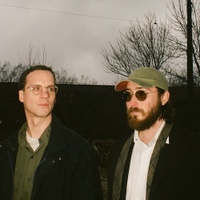
César Fieiras Ceide is a professor and researcher at the University of Santiago de Compostela, where he studies innovation, artificial intelligence, and new technologies in media. He has published over 50 papers in international academic journals and has conducted research at institutions in Porto, Riga, and Bogotá. Beyond academia, he is passionate about documentary filmmaking, photography, and traveling.
Conversation
On the complex influence of AI in creative industries
Researcher César Fieiras Ceide discusses the pros and cons of generative AI on the creative process, the nature of attention, and what creators can learn from this moment of change.
As told to Mercedes Torrendell, 3035 words.
Tags: Research, Process, Mental health, Money, Production, Creative anxiety.
I want to start at the beginning, how did you end up researching innovation and audience behavior in media?
People see my work focused on AI and assume that’s all I do. But that’s not really it. What fascinates me is imagining how media will transform in the next five, ten years, creatively, strategically, functionally. If I can understand what media companies are prioritizing right now, I can anticipate where they’re headed.
I’ve always been curious about innovation. However when I started my final degree project at the University of Santiago de Compostela, my advisor and I identified AI as this emerging force that would reshape media. I was studying a double degree in audiovisual communication and journalism, and AI felt like this perfect intersection.
That was 2019, 2020, there was almost nothing then. Just whispers. Then 2022 hit, ChatGPT exploded, and suddenly everyone’s talking about AI. Not always with much understanding, honestly, but it’s everywhere now.
What’s the most alarming thing you’ve discovered in your research lately?
When I started researching AI in media, I was focused on the cool stuff. Cameras that automatically generate three different shots from one angle, so you don’t need a director anymore. Algorithms that customize content for individual users. Very descriptive work.
But the deeper I got, the more I realized I was asking the wrong questions. It’s not about what AI can do. It’s about what we stop doing.
I have been recently focusing on cognitive delegation and cognitive debt. These are terms I didn’t even have in my vocabulary before, and now I’m opening an exclusive line of research on them because they’re that critical.
Here’s what it means: during the Industrial Revolution, machines replaced our mechanical labor. Our hands, our physical strength. AI is replacing our cognitive labor. The thinking parts. For journalists, that’s the knowledge work, the analysis, the synthesis. AI can do it now.
Cognitive delegation is when we hand that work over to AI. Cognitive debt is everything we stop doing, and therefore forget how to do, because we delegated it.
Do you think people understand what’s happening?
Not really, no. Most people are still caught up in the spectacle of it all, the impressive capabilities. And the people who do point to the negative side often struggle to articulate it clearly. They default to “AI will take our jobs,” which is the easiest concern to voice but probably not the first real impact we’ll see.
For now, AI is actually creating more jobs than it’s eliminating. What I believe, based on data rather than speculation, is that we’ll see a reorientation of professional roles. In communication, the traditional journalist profile will likely shrink by half. But the other half will evolve. They’ll still be communication professionals, just with different skill sets and focuses.
So it’s a readjustment.
Yes, but people don’t want to hear that. Everyone wants to jump into the public conversation with a new take.
When it comes to how people consume media now, is this just a habit we’ve developed from exposure, or has it become cognitive? Like, is it actually changing how our brains work?
It’s already settled. It’s cognitive now.
Society got used to it years ago. Young people today didn’t develop a habit, they were born into it. They were born with immediacy, with fractured attention spans, with constant connectivity.
Let me give you a personal example. In high school, I was excellent at math. Mental calculations, formulas, I was sharp, even though I studied social sciences. Now? I reach for my phone to calculate a tip. Basic multiplication without a calculator? I’d genuinely struggle. It’s alarming.
Future generations, growing up with AI doing even more cognitive work for them, memory, retention, effort. When they face a complex task without AI, will they have the capacity to push through? I genuinely don’t know.
You’re a creator yourself, you’ve directed documentaries. How do you see AI affecting the artistic fields?
I believe the artistic fields will be largely affected. Photography, video, visual arts, the tools being generated from AI are designed to replace exactly those things. But here’s what AI will never replace: professional judgment and good taste.
I teach communication, and I have both creative subjects and strategic subjects. What I tell my students constantly is, I’m not here to teach you how to use a system. Because tomorrow, editing tools for photos and videos will evolve from one day to the next. AI is going to automate all of that. But what the new creators need to be clear about is this: quality, judgment, that’s what AI will never take away from us. Knowing whether a product is in good taste or bad taste, having the judgment to convey feelings and emotions through a photo or a video, AI will never do that.
What AI will do is change the tools. Today I edit my videos with a tool, let’s call it Tool X. Tomorrow I might work with an AI where I say, “These are my shots, gather them this way, I want this result.” And then I keep asking for improvements on that result. But I’m the author. I’m the one responsible for the creative result, not the AI.
So you think creators will survive this?
I believe it’s a sector that will be very affected if we stick to superficial terms, if we think any piece is valid. On the other hand, if we continue to value editorial criteria, creative criteria, I think that will always remain important. We creators will continue to be creators, only the tool will become much easier to use. But here’s the challenge: it will be much more difficult to stand out. Everyone will have access to a prompt. “Generate a two-minute promo with these elements that works well for these digital environments.” The barrier to entry drops to zero.
Which means there will be much more quality out there, and therefore it will be more difficult to be better.
Creators will survive if they focus on developing that judgment, that eye. But they need to understand the landscape has fundamentally changed.
Is AI democratizing creation or just adding complexity?
Both. It democratizes creation, absolutely. But it also generates noise, and that makes me think about misinformation.
In the same way that AI helps professionals like you or me generate better information in less time, it also allows people without any knowledge to create content that appears legitimate. Someone who has no idea about communication can generate a news story that seems true when it’s false, or that looks like it was made by a professional when that person has no training whatsoever.
So there are pros and cons. What we need to do, and I say this a lot in my presentations and with my students, is strike a balance. We need to balance the positive and the negative. We shouldn’t turn our backs on all the good that AI offers just because it has downsides. But we also can’t ignore the problems just because it’s useful.
What we need is information and judgment to know when we should use it ethically and when we shouldn’t. It’s not about rejecting AI wholesale or embracing it blindly. But that’s my opinion.
This makes me think about consumption patterns. There’s such a big gap between people born with technology and people who had to adapt to it. How do you see these generational differences playing out?
Attention. That’s what’s changed most. The media market, but also the creative market, the art market, the music market, it’s fundamentally an attention market. The main value for commercial creators who only focus on results is attention, not the user. Those of us who really want people to enjoy themselves, we think about the user enjoying the experience. But after all, they can only enjoy it if we have their attention first.
And knowing that attention is much more continuous than before, that is to say, before, when people listened to music or watched television, it was a specific moment of the day when they sat in front of the TV. It was when they had a moment and turned on the radio. Nowadays we can listen to music, watch news, consume social media any second we have. By inertia you pick up your phone and enter a social network. You enter a news site and scroll. We’re more connected to media than ever, but our capacity for sustained attention is smaller than ever.
So the media, an artist, a creator, has to know this to adapt their format to then decide. There are also alternative creators who make their own format and strive for their own way to succeed. And that’s amazing! Maybe their audience is smaller, but what comforts is doing things the way they believe is appropriate, which already covers the entire spectrum of results.
The more commercial media or commercial creators, they value results. So what do? Adapt to this situation. And this influences the style of the formats distributed, the objective of the format. I call it the curve, and I teach this to my students. Before, a product was introduction, climax, resolution, a roller coaster. Now it seems like a permanent wave. Because really, if we don’t give the user practically a chorus every 15 or 20 seconds in music, they won’t engage. If we don’t do it in a movie, in a short film, in a documentary…
When I made documentaries, I internally divided what I wanted to tell into many micro-parts. Every two minutes: setup, climax, resolution. Setup, climax, resolution. That’s how you hold attention now.
You mentioned your documentaries. How did you actually implement these ideas without compromising your creative vision? Everyone’s competing for attention, how do you balance that with artistic integrity?
Honestly? I don’t spend much time analyzing what goes viral. That’s not my focus.
What I do is watch a ton of content in the format I want to create. I watch constantly. And I pay attention to when something fills me up and when it doesn’t. When it’s transmitting emotion and when it’s flat. When it’s good and when it’s bad. I’m training my eye.
So first I create something from my perspective as a maker. And then I watch it 15 or 20 times from the user’s perspective. I put myself in the mind of my ideal viewer, someone who will judge the piece with real criteria.
Most of the time, I realize it’s flat. “Okay, this video is ten minutes and nothing’s happening rhythmically.” So I fragment it into micro-pieces. More setups, more climaxes, more resolutions. That creates dynamism.
So at the end I always like to say consume what you would like to create. Become an excellent consumer first. Watch, read, listen to tons of work in your field. Learn to identify what’s good and understand why it’s good. That’s the only way to be competitive and make real art.
I see audiences splitting into these separate ecosystems. Do you see any patterns that work across all of them, or are we just moving toward complete separation?
I think we’re in a moment of hypersegmentation. Digital platforms make it so accessible to create that you can have artists making very specific content for very specific micro-audiences. And that’s fine. There’s also space for generic content that appeals broadly. Both exist simultaneously. I don’t know if there’s a formula that works everywhere. What I do see is that there’s space for everything right now. Abstract art, concrete art, different narrative styles. Before, media consumption was residual, not everyone had a TV. Now everyone has a phone. It’s the primary way we consume art.
So the key isn’t trying to reach the largest audience. It’s focusing on your approach, your area, your specific audience.
What are you researching right now?
I have multiple research lines open at the moment. One major line is how European AI regulation is impacting media. There’s an EU AI law, but it’s generic. It doesn’t specify anything for media companies. So we’re asking: is this sufficient? Or do we need media-specific legislation to regulate AI use in journalism? We believe a concrete law is necessary.
Another line looks at misinformation and education. Everyone says education is the answer, teach people to consume information from reliable sources, from established media outlets, from schools through retirement. Are public policies necessary too? Yes. Definitely.
But on the other hand, and this is really interesting especially related to art, there’s a standardized model being developed. They call it content credentials. It’s designed to provide traceability to content. I was at the offices of Adobe in New York two weeks ago. Big tech companies are starting to group together to develop these content credentials, essentially, creating standards.
Here’s how it would work: when you visualize an image, you see an icon. When you see that CC icon ‘Content Credentialsʼ you click on it and you can see the full traceability of that content. Take an image, for example. From the real, initial image to the one you’re seeing now, you can see what traceability or steps that image has gone through. Maybe it was put into an editing tool, but it was only a contrast adjustment to improve the quality. Or maybe the shape of the image was cropped. Or an additional layer with a secondary image was added. You can see all of it.
So I find it very interesting to know how the big tech companies are working on this issue of misinformation. And one of the key ideas is this: the creation of standards that can help us understand the provenance, the traceability, and the origin of media content.
So users can verify credibility. That changes the meaning of value, doesn’t it?
Exactly. If our eyes adapt, and they will, we’ll start discarding images without CC markers. The human eye will get used to seeing that symbol. The tech companies investing in this are the most powerful globally. If they’re putting resources there, that’s where things are headed.
You’ve traveled extensively for your research. What patterns have you noticed in how different people approach AI?
It’s less about demographics and more about attitude. The real barrier is mindset, those beliefs where someone decides “I don’t like this, so I’m shutting it out completely.” Young people are obviously more exposed to AI daily. But interestingly, some of the most knowledgeable people I’ve met are older professionals who have deep cross-sector experience and chose to really engage with the technology.
It’s about whether you’re open or closed to learning. In media organizations using AI, the more reluctant people often happen to be older, but that’s not because of their age. It’s their reasoning, that fear of “this will replace me.”
But honestly? That mindset exists everywhere. Someone at 25 can be just as closed off as someone at 55. Someone in one country can be just as resistant as someone in another. Context matters, sure. Growing up with technology helps. But ultimately, it comes down to whether you approach change with curiosity or resistance.
I don’t want to generalize because I’ve seen every combination, young people resistant to AI, older people embracing it enthusiastically. The difference is always the individual’s choice about how they engage.
What drives you? Why do you keep doing all of this?
I don’t see my work as work. I’m constantly learning about topics that fascinate me, technology, innovation, AI. But mostly, I work with young people I need to teach.
I try to educate myself deeply so I can bring them the best I can offer, within my limited capabilities. I’m not working to be the most visible person in the world. I’m working so people who really want to dedicate themselves to communication can actually do it. That’s my contribution, making it easier for them to pursue this path. It’s incredibly gratifying. I see it as studying permanently, learning permanently, making things easier and more interesting for others.
I can feel that passion. It’s reassuring to know there are people doing deep work with these massive changes happening.
[laughs] I don’t mind waking up early. I don’t mind traveling when I’m exhausted. I like conversations like this one. It’s a beautiful sector to work in.
Before we finish, is there anything I didn’t ask that readers should know?
My closing thought is for artists: Don’t let yourself be limited. Keep doing what you’re passionate about. This life is for making mistakes and being stubborn. You shouldn’t have a blindfold on, if a trend is going somewhere, maybe you should pay attention. But you also shouldn’t be following everything that is being paid attention to. Each person has to create their own style.
Someone might be happier following their own path and creating what they believe they should create, rather than doing what everyone else is doing. So do what you truly feel inside. Express it through your art form.
César Fieiras Ceide recommends:
A book: The Attention Merchants by Tim Wu, a journey through how media and platforms have turned our attention into big business, and how that defines the way we consume content today.
An audiovisual piece: The Social Dilemma on Netflix, a documentary where former Silicon Valley executives explain how platforms design their algorithms to capture our attention and shape the way we consume information.
A person: I really enjoy interviews by Jordi Évole for their journalistic quality.
A place: A walk along the Roman Wall of Lugo, creativity and inspiration are best stimulated in moments when ideas can flow without pressure. I love walking through the city where I was born with my dog; it works very well for solving problems or thinking through projects.
A general recommendation, but truly important: Be a good person day-to-day and help others when it’s in your power. That translates into the energy we transmit in our work and our daily lives.
- Name
- César Fieiras Ceide
- Vocation
- researcher
Some Things
Pagination