On the power of legacy and community-based practice
Prelude
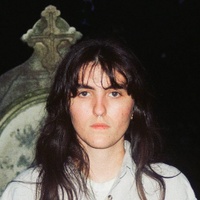
Maddy Inez Leeser is a multidisciplinary artist working in sculpture, ceramics and printmaking. Inez attended the Pacific Northwest College of Art in Portland, Oregon and currently resides in Los Angeles. Inez uses the elements of earth, water and fire to investigate themes of the body and healing. Drawing inspiration from mythology, generational magic, and herbal practices she processes trauma through clay. Her creative practice also includes the recurring themes of water, its history, lore and its relationship to power. Her vessels are votives of ancestral alchemy, memory, and process.
Conversation
On the power of legacy and community-based practice
Sculptor Maddy Inez discusses making art to survive, growing up with artists, and learning from nature.
As told to Claudia Ross, 2502 words.
Tags: Art, Family, Inspiration, Collaboration, Process, Day jobs.
What drew you to ceramics?
My grandfather was a ceramicist. When he babysat me, he would give me a bag of clay and leave me in the corner. I have lots of young memories just playing with clay.
But I didn’t really think of clay as a medium until college. I was looking at Beatrice Wood and the Dada Movement, and I started to break down that wall of craft versus fine art in my own brain, which is something I was exposed to when I was little. My mom and grandma [artists Alison Saar and Betye Saar] both ride that line and also reject that line. I grew up knowing that quilting from Gee’s Bend was as valuable as Van Gogh.
There’s something innately human about the medium that is approachable to people who don’t look at art all the time. Humans have such a long history with clay that it evokes a lot of memories. So I think that’s in part why I love working in it. Also, it’s meditative. I mean, I’m rolling coils all day and squishing things together. There’s something therapeutic about that.

Maddy Inez, Black-eyed Angel, 2026, glazed ceramics, 26 x 18 x 5 in, 66 x 45.7 x 12.7 cm, photo by Paul Salveson; courtesy of Maddy Inez and Megan Mulrooney.
I loved your fountain (The Sower, 2023) that was at Felix Art Fair this year. How do you navigate those imagined divisions between art and design when you’re making something functional?
All of my pieces are sculptural in my brain. But with the fountain I was looking at the idea of the body as a vessel. The fountain is a portrait of my mom. She’s got two babies on her side, and she’s feeding into them and then they feed into her, like a cycle.
I think my work now is like a little bit more alien. That fountain piece is very uniform, monochrome, aesthetically pleasing in those kinds of ways. My recent work is more whimsical. Either way, making objects feels really impactful. They take up physical space. And ceramics last forever. I mean, I used to joke like, “Maybe I’ll get a retrospective when the aliens are uncovering things on Earth.”
The permanence of ceramics can feel kind of daunting. There are definitely times where I will recycle a piece if I’m not feeling it.
I always think I should be going through people’s studio trash cans.
That’s my mom and my grandma for sure.
Speaking of your mom and grandma, family comes up again and again in your work. How do you stay connected to your familial heritage?
Growing up with my family in the art world, the main things I learned from them was that we make art because we have to make art. Even though they’re successful in the art world, I think if it fell apart, if the art world disappeared, we’d still be making art every day. That’s a really freeing notion that helps me with my practice.
They remind me that this is what we do to exist. It’s how we digest the world and think critically about the world, and it’s how we survive. My grandma turns 100 this year and I was like, “How do you keep doing this? You’ve lived for 100 years and you haven’t seen it grow or change,” and her answer was just, “You just have to keep making art. That’s how you keep moving. That’s how you keep going and how you don’t lose hope.”

Maddy Inez, Gumbo Rising, 2025, glazed ceramic, 15 x 9 1/2 x 2 1/2 in, 38.1 x 24.1 x 6.3 cm, photo by Paul Salveson; courtesy of Maddy Inez and Megan Mulrooney.
So those are the parts of my upbringing that I bring into my practice. In my last show I was thinking about the soil in my mom’s garden, where my studio used to be. I was thinking about the lost language of how to care for soil. I made sculptures based on plants that help heal soil, leaching out heavy toxins and heavy metals.
And then, after the fires, I made sculptures based on fire followers, which are wildflowers that need smoke and fire to germinate. Nature can be this metaphor for a lot of the problems that we have in society. I think the root of a lot of our issues is that separation from earth and nature. I think almost everything stems from that. Capitalism, racism can be broken down to a very simple removal from nature.
This show started because I found this certificate of my great-great-great-grandmother who was a midwife through slavery. And I read this book called The Salt Roads by Nalo Hopkinson, which talks about midwives through slavery as well. It’s dystopian science fiction.

Maddy Inez, Benne Blessing, 2026, glazed ceramics, 26 x 18 x 6 1/2 in, 66 x 45.7 x 16.5 cm, photo by Paul Salveson; courtesy of Maddy Inez and Megan Mulrooney.
Anyway, I started thinking about what her garden may have looked like. Basically, they used both African medicine and Western medicine. But because of the way they incorporated spirituality in medicine, they were way better doctors than Western doctors. So, when slavery “ended,” they were allowed to be certified, which is where her certification comes from. It was revoked a couple of years after because they were taking all the White people’s clients.
Wow. That’s horrible.
They were too good. And it was because they had knowledge of all of these plants that had spiritual meanings to them, which was also medicinal. Usually, the spirits of a plant will reflect what they heal in a person. From there I looked at plants that were brought over during the slave trade and also widened my scope to look at the native gardens and plants of people that have been displaced or forcibly removed from land due to colonization, like in Sudan, Congo, Palestine, or during the slave trade.
How do you go about the research process?
I love reading science fiction, which leads me to other nonfiction books. The Land in Our Bones was a book that I read for this show, which is more in Lebanon and Syria, looking at what happens to your relationship to land, even in the third or second-generation of removal from it.
I started reaching out to land stewards and education and community garden people in Los Angeles who were working with the same ideas of gardening as an act of revolution or just as an act of resistance. I started this research when Trump cut all the lunches for kids in public school and I was thinking about how we’re going to rely on people that provide food for their community, how our relationship is about to start changing so drastically.
I started talking to all these really cool people and that has definitely ended me on a note of hope. It has been really nice getting to know people who have similar ideas about how we’re supposed to show up for each other or what our future might look like.

Maddy Inez, Okra Weaver, 2025, glazed ceramic, 25 x 19 x 5 1/2 in, 63.5 x 48.3 x 14 cm, photo by Paul Salveson; courtesy of Maddy Inez and Megan Mulrooney.
Wow. I wouldn’t have connected those dots in your work before.
Definitely. A lot of people ask me, “Are you annoyed that people won’t look at your piece and think about the research that you’re doing and where you’re coming from?” and I’m like, “No, it’s just where the research has led me.” If people love them for how they look, that’s totally fine for me.
Viewing your work also feels like what it would be like to encounter one of these gardens, where there is a kind of esoteric knowledge that is required to decode them. And that leads the viewer on a different educational journey.
Oh, that’s interesting. I think about Anne Spencer’s garden a lot. She was this amazing woman and she had a garden that a lot of people from the Harlem Renaissance would come to and they treated her house like a little refuge. They would come and write. Langston Hughes used to go all the time. She’s a beautiful poet too. But I was drawn to this idea of refuge, creating a little space of peace and maybe beauty too.
It reminds me of when you were talking to your grandma and saying, “Oh, how do you make art through this?” and it sounds like that’s been a question for you too. Has there ever been a period of time where you couldn’t make art, or found it difficult to do so?
I think it goes in ebbs and flows for me. After you make a show, you feel almost postpartum. You push this entire thing out of your body and you’re like, “I need to sleep or rest or not think.” I really feel that way after I make a big body of work.
I’m lucky because I make art about plants. I like spending time in community gardens or with plants or cooking. I love cooking. My creative practice is tied to so many other parts of my life that other kinds of creativity can feel encouraging.

Maddy Inez, Juju Bean, 2026, glazed ceramic, 9 x 9 x 4.5 inches, photo by Paul Salveson; courtesy of Maddy Inez and Megan Mulrooney.
How did you learn to build your own artistic practice?
I mean, as an adult, I rely on how much money and space I have. Ceramics is usually a community-based practice. Los Angeles is so lucky. We have the best clay community ever. I have friends that I can call and be like, “My kiln’s broken,” or, “Can you help me do this? I need this chemical right now for my glaze,” and we’ll show up for each other. But I have also juggled full-time jobs with having the time to create. I just recently made the shift to working part-time.
What were those day jobs like? How did you find a balance?
Before 2025, I worked at Tierra Del Sol as an artist mentor and ceramics teacher for adults with developmental disabilities. I was there for five years and that has always been my dream job. I loved teaching and working with people with developmental disabilities. My cousin has autism and it’s just always been something I’ve been drawn to.
I loved that job so much but it was full-time and I still couldn’t afford a studio space. It was really important to me, though, and it was a huge part of my art practice. It shaped the way I think about art. But then I thought, “Okay, I need actual space.” And then me and my mom decided to get a studio together.
Do you ask each other for feedback?
All the time. We have lunch together and she helps me unload and load the kiln with these giant pieces. She’s one of the most physically strong people I’ve ever met. She deadlifted the kiln with my brother. It’s 600 pounds.
Now I make art part-time and I’m helping my grandmother at her house half the time. I’m archiving everything in her house. She’s lived in the same house since 1962. She literally has her diaries from when she was in kindergarten. And that’s where I found the midwife certificate of my great-great-grandmother. I feel grateful that I get to be with her almost every day and see her making art every day.

Maddy Inez, Za’ atar Pistil, 2026, glazed ceramic, 16 1/2 x 13 x 8 in, 41.9 x 33 x 20.3 cm, photo by Paul Salveson; courtesy of Maddy Inez and Megan Mulrooney.
Wow, that’s amazing. So inspiring.
So nice to witness. She really is a force to be reckoned with.
Was it ever daunting to you to go into the same field as your matrilineal line?
I had no real concept of what art fame was growing up. I do know that I loved my grandma’s friends. They were all super sweet, but I also knew that they had to make their space for themselves in the art world, which I also really respected. So, I grew up with these people, feeling like the art world was family.
I feel like that would be helpful in navigating the business side of art.
Yes. I’m grateful for that. I do still think there needs to be accessible classes on doing taxes for young artists. But I’m lucky because I witnessed very strong women navigating a world that is very male driven and also very white. They taught me that you can work with people that you really love.
Yeah, I was going to say it means you know that you don’t have to stomach poor treatment.
Everyone should advocate for themselves as young artists too. Oh, here’s my mom. You want to say hi?
Alison Saar: Hi. How are you? Sorry to interrupt.
Hi! Nice to meet you. No, all good.
Maddy: Is it already 5:00?
It’s about to be.
Maddy: Oh, she’s leaving early.
Alison: I’m the boss. I can check out whenever I want.
Maddy: Love you. Talk to you later.
Alison: Happy St. Paddy’s Day. Bye, guys. Love you, Maddy.
[Alison Saar leaves]
You guys are so sweet. I have just one more question. Do you have any pipe dream projects you’d love to do?
My dream of dreams would be one day to have a garden space that also doubled as an education space and as my studio. Or like a residency. It’d be really cool to host people in that way.
I also have this funny pipe dream of a sculpture for a community garden that’s based on this type of gardening called keyhole gardening that was invented by engineers in Africa for drought resistance. And basically, it was compost in the middle and then around it, the compost will leach out to feed everything. It also retains moisture better. I want to make a giant sculpture that shares the same ideas, and have kids be able to come and plant in it. I’ll do that one day, when I find space to do it.
Maddy Inez recommends:
Lilith’s Brood by Octavia Butler
Revolutionary Letters by Diane Di Prima
A Monastic Trio by Alice Coltrane
Look at the newts in Millard Creek, Altadena
Eat at Miya in Altadena, CA
- Name
- Maddy Inez
- Vocation
- sculptor
Some Things
Pagination