On keeping your references close
Prelude
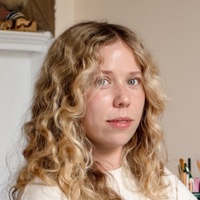
Clairo is a singer-songwriter and producer known for her intimate, genre-blurring, and acclaimed albums Immunity, Sling, and Charm. She has become one of the defining voices in contemporary indie/pop music.
Conversation
On keeping your references close
Singer-songwriter Claire Cottrill (Clairo) discusses having different phases, going down research rabbit holes, and acknowledging that, for better or worse, music is the important thing.
As told to Sammy Steiner, 2511 words.
Tags: Music, Collaboration, Success, Process, Production, Inspiration, Focus.
You took a break before putting out your album Charm. What was it like to take a step back from your work? What did it reveal to you about yourself or your creative process?
At that time, I was finishing up the tour for my second album and I’d just moved upstate. I was kind of in the thick of moving there fully—learning how to maintain a house by myself, cook, clean, meet new friends, and involve myself in a new community. It was around this time when I started writing a lot at home. I was into different types of music by this point than I had been making. I was always just looking for somebody to work with. Then I met my producer, Leon [Michels]. I messaged him just asking if he wanted to work on something, and he actually lived upstate. That was the beginning of my world upstate opening up.
It was nice to take a break. It was nice to take my time. I think I have a new form of confidence from spending time by myself and with the house. Pouring a lot of my energy into real-life things, it became easier to see what I wanted. When you eliminate all these different distractions, move somewhere remote, and have to drive over an hour to even go make music… it took a lot of physical and present energy to make it happen. Once we started working and I got more of an idea about Charm, I could relax and take my time. It’s always the moment before you know what your record is that’s the most stressful part. I was sort of still off-cycle, but it’s still very stressful to have no sense of inspiration when you’re so tired and dead from everything. Once it actually started, that’s when I felt like I was on break. I was actually enjoying the long process of Charm, which is cool. Having a new form of purpose, especially creatively, is difficult to find. But once you find it, I think that’s when I’m the happiest—when I’m in the middle of that process, not searching for it.
What did writing feel like without the pressure for output?
Writing was really fun and easy. Hard sometimes, of course. To me, it’s better to have a process where you’ve been working on it for so long, to where people’s opinions are so far away that you just end up writing what you want. You forget that people are going to hear it because it’s been so long. I wasn’t really worried about reception until maybe the night before the album came out. I think that confidence comes in who you’re working with, your palette, the references you’re sending back and forth. And we were all confident about what we liked. I’d say it’s one of the first times I was feeling really good the whole time: happy, proud to show people, and bouncing around the streets listening to it.
You have one of the largest banks of references out of anyone I know. How do you discover music?
YouTube has a lot of really good music that isn’t on streaming; there’s a lot of good compilations that record collectors have put together. The Numero Group has a really good collection of music. NTS is great, too. You can easily go down a rabbit hole once you find a song that you like. Also, listening to full albums. I think it’s important to actually put in the work. I’ve been listening to a lot of religious quartet music because the harmonies are amazing. I watched a video about The Chordettes and learned about the musicians’ strike in the 40s. All the session musicians went on strike, and the only people left were choirs to sing all the sheet music. I’ll always have that as a reference now, even if I move on to something else. It’s really just about letting yourself have phases. Then you end up knowing so much music.
How do you find your collaborators, and how do you trust them with your creative vision?
My first record [Immunity] was with Rostam, and I was always a huge fan of Vampire Weekend and all of his stuff with Discovery. When I got connected with him, it was sort of like a dream. Then with Sling, I met Jack [Antonoff] before [we worked together], and I had told him about my second record, which was very different from the first. I always loved his work, too. I liked that he worked with women, and that he lets the artist drive the boat. He knew all my references for that record, and I just felt safe with him. Leon [Michels], I found through his label, Big Crown. They were putting out new records that I was always listening to. That ended up being the craziest one because he lived so close to me in a place where I moved to be far away from people. I actually thought it would hurt my process, but that ended up being really wonderful. I think it’s really important to look for nice people who have a huge amount of references, and who can also go as deep as you want or as surface as you want. All of them have a great sense of humor, funny attitude, and don’t mind taking a long time. They’ve all become legends in their own right because of their own paths, so I think that’s really attractive.
I can really hear your journey and how much you’ve sonically matured from album to abum. I’m curious what that confidence feels like, and how you may have shown up differently in the studio during Charm compared to previous records?
It took a long time for me to kind of settle into something. Everyone goes through phases and has parts of their life where they were into certain things. I do think that there’s something on every album that still represents the current me. I don’t have any sort of regrets or look at my records as phases of my life because it really was 100% what I wanted at that time. With Charm, I just felt like it was my most current self. It felt like a blend of all my favorite things from the past two albums, so it did feel like closing a loop or a culmination, which felt nice. I never really like to stay the same, anyway. I’m expecting my next thing to be very different, or go somewhere else. I think it’s nice to not be afraid of that. What Rostam and I made, or what Jack and I made, or what Leon and I made, can’t be replicated because it was so time and place. Even if I were to work with all of them again, it’s never going to be the same, so I think it’s best to embrace change. All my favorite artists have wildly different albums. If you go into their discographies, they’ve tried everything, which I think is really admirable. It makes someone’s career feel really full and interesting.
Charm references a really beautiful, 70s-inspired landscape. I feel like it exists within the world of your references. When I listened for the first time, it felt so familiar even though it was brand new. Can you share more about your creative choice to reference without sampling?
I think it has so much to do with the instruments and the actual choice of gear. We didn’t really use plug-ins for anything. We used the actual instrument that was actually used on those records in the 70s. We were heavily inspired by so many different albums. We put them all in playlists and would just listen to that world and try to make it make sense. It’s definitely more about getting to the source and the real sound, being like, “Did they use tape? Or what kind of bass did they use? Or what synth is that? Maybe we could borrow it.” Then it feels referential, but it also feels new. If we wanted that warmth and we wanted that feel, that was only going to come from equipment.
You’re a world builder. Do you feel like one?
I’m starting to. I think Sling was my first taste of wanting it to feel like a fireplace, and being at the river in the winter, and all these things that we were really living. That was my first time really picturing the environment through the music. With Charm, it felt so good to do it again in a more refined way. Now I’m really interested in visual references. I’m watching tons of movies and for the first time I feel that visual creative push. I stopped making music videos for a while, and I started again with Charm. I saw how they all looked together and I really liked it. I thought it was appropriate for the album.
When do you feel most like yourself in the creative process?
Recording. As of late, I’ve been working as a group with Leon [Michels], Nick [Movshon], Homer [Steinweiss], Marco [Benevento], and Dylan [Nowik]. It’s so fun to really get into a song when everyone sees the vision and gets together to experiment. I think talking about references and sending tracks back and forth is what gets everything flowing and everyone on the same wavelength. It feels so good when people understand what you’re going for, and they can see it too. Also, listening to music. I don’t think anything in my life is above music, which can be a problem and also the best thing in the world. It’s not even performing. It’s not even being in the studio all the time. It’s music in general that has become, and has always been, the most important thing to me.
How do you integrate the you who makes art from the you who lives life between records?
It’s been really hard every time. I’m not going to lie. I think I can lose sight of what I’m supposed to be doing. If you don’t feel purpose or you just don’t feel inspired, it’s a sad place to be. I think if you wallow in it too hard, you can really get off track mentally, which has happened to me plenty of times. Now I’m trying to travel more and kind of see this time less as “rest.” I don’t really have a lot of that in me. I think it’s important to rest, but I’m also trying to work and always make something. It’s been helpful to look at these time periods as research—dedicating a lot of time to watching movies, listening to full albums, and having those big research days. Then you have something to talk about. You have something to write about. You have something to tell people you work with about. It’s kind of like talk therapy where your ideas are only going to come if you talk about them with the people who understand. I can’t always just be cooped up and think I’m onto something but I’m not.
Do you have practices that help keep you grounded, both when you’re experiencing a dip and also when you’re in the throes of touring or promoting an album?
When I’m on tour and things are really crazy, it’s good to [keep] trying to find new sources of inspiration, staying curious, and trying not to feel like this is the only thing that defines you. I have the most fun when I’m in the thick of a new thing. You just have to keep the ball rolling. I never like to assume that the thing I’m doing now is it, or that it’s over. It’s not over because I have another thing that I’m working on and excited about. Not in a stressful way where it’s never-ending work. It’s just about remaining inspired. Everything can become monotonous, so it’s just about shaking it up.
How are you processing major turning points?
Um…
Are you processing?
[laughs] I don’t know. So much gratitude, so much change—personally, and career-wise. There have been so many things that I feel have really shifted. In a way, it feels really good. It makes me feel like maybe there’s more opportunity for me to continue to do something different each time. In other ways, it feels like a lot of pressure. But now I have a group of people around me that can really make my dreams come true. I guess I’m a little bit less scared than I would be if I didn’t have the friends, family, and collaborators that I do. I think the best way for me to go through all these big changes is to not really look at them, or just keep moving. Each day is different. I think if I really sit down, like when I write down in a journal all the things that happened this year, there’s so much movement that I could have never anticipated. Sometimes I just look at those things and I’m like, “That happened. That’s beautiful.” But I can’t let it really get to me yet. Do you know what I mean?
Yeah, you’re just acknowledging it.
You have to acknowledge it, but it’s a strange feeling. It doesn’t really change my sense of self. It doesn’t boost my self-esteem. The way I move through the world without tour or without an album is as if none of that ever happened, because I’m not being faced with it every day. It’s kind of like whiplash. It’s not like every day I wake up and remember I was nominated for a Grammy. That’s the biggest thing that’s ever happened to me, but it’s not something that’s in my psyche at all times.
Did you get to celebrate in the moment?
Of course. It was the biggest, wildest feeling ever. But when you’re not in the throes of things, I wake up, I make breakfast, and it’s just the same. Maybe it’s about not having too much attachment. Maybe that’s what I’m trying to get at: acknowledging something that happened, being gracious and accepting it, but maybe not getting so attached to the good or the bad things that have happened to me. There’s always forward, good or bad. It’s always good to be thankful.
Clairo recommends:
Sing Your Requests by The Chordettes. So special and beautiful to me.
Brown mascara. I recently discovered that brown eye makeup looks good when you have blue eyes. This was a nice development for me.
Cleaning out your closet. You really don’t need that blouse you swear will come back into style. Make some room !
Big Crown Records if you have good taste !
Lace up riding boots. Will last you a lifetime.
- Name
- Claire Cottrill
- Vocation
- singer-songwriter, producer
Some Things
Pagination