On drawing boundaries
Prelude
Emei is an unabashed “theater kid” who grew into an Ivy League-educated pop femme fatale at the helm of a crazy, candy-coated, and colorful world of her own making. With a bold voice that’s as vibrant as her personality, the New Jersey-born Chinese-American songstress delivers clever and catchy anthems meant to be blasted out loud. Emei made major waves with 2022’s “Late to the Party,” surging on TikTok and igniting her End of an Era EP. However, she reached critical mass with the release of her single, “Scatterbrain.” After gathering over a quarter-of-a-billion streams, selling out shows worldwide, and attracting mega-producer Ricky Reed, she embraces her theatricality on her Night At The Opera EP (Atlantic Records / Nice Life).
Conversation
On drawing boundaries
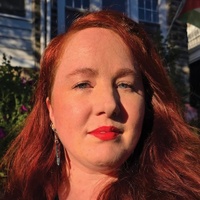
Singer-songwriter Emei discusses protecting her privacy, having her parents' support, and the feeling of becoming the product.
As told to Yang Shi, 1697 words.
Tags: Music, Family, Identity, Beginnings, Education, Adversity, Mental health.
Where does your stage name, Emei, come from?
So, my English name is Emily Li, and my Chinese name is Li An Mei. Ever since I was little, my mom just called me Emei. It was like An Mei and Emi together. When I was choosing an artist’s name, I had so many ideas. Then a friend of mine mentioned Emei, and I loved it. It just sounded so familiar. When people call me Emei, it feels like my mom’s calling me.
I want to talk more about your upbringing. Were you born in China, or were you born here? Did your parents meet in the States?
They met in China, and they immigrated to Connecticut in the late ’80s. I was born in New Jersey and grew up here. We went back to China a lot because my grandparents lived there.
[*speaking in Mandarin*] Nice. I’m also Chinese. Where are you from in China?
[*in Mandarin*] Oh nice. We mostly go back to Hangzhou. It’s so pretty.
How does it feel to grow up in both cultures, Chinese and American? How did it shape you as an artist?
I started singing when I was 9, and had a Chinese vocal coach. So I sang mostly in Chinese songs. I was just this little Chinese kid going to a lot of shows in Flushing, New York.
Do you ever perform in Chinese still?
All my songs are in English, but hopefully one day I will merge the two. I’m very precious about it. I don’t want to force it. One day I would love to put out some Chinese songs. When I’m on tour, I cover a Chinese song every night. I sing fun little songs in the middle of the crowd, and I always do a Chinese song.
When you were 15, you went back to China and finished third on Chinese Idol. How pivotal was this milestone?
I was very nervous. I was less experienced, but I also had a lot less pressure. I didn’t really care where I placed compared to others, other than my own pressure of wanting to be the best. I wanted to do a good job… At the same time, I felt a lot less strongly about what I wanted to sing, how I wanted to look, who I was as an artist. I was just being told what songs to cover. Now that has changed a lot. Looking back, Idol was a performance bootcamp. It was a big part of me getting very comfortable on stage. Now, I’m just so comfortable on stage, and that’s because of Idol.
Were your parents supportive of your career?
Totally. My mom is an engineer, and my dad is an accountant, so not creative at all. I think maybe it’s because I’m the youngest child; they were less strict with me. Also, I would say that Chinese Idol was a test run where they were like, “Oh, she’s serious about this.” So Idol softened the blow of me fully pursuing music after graduation. To be honest, going to Yale and getting my degree in cognitive science also softened the blow, because they’re like, “Okay, well, you always got a plan B, and you can go into consulting.” My parents have always been really supportive and they came to all my shows. They’ve been supportive and realistic. They’re not down for me to just mess around.
Why did you go into cognitive science? How did your degree inform you as an artist?
After Chinese Idol, I came back to my sophomore year of high school, which is crazy. I was a tiny baby, and I was already pretty burnt out. That year in China, I was going really hard, and I wasn’t around any students. Nobody was my age; everybody was much older. When I got back to school, I was really excited by the structure. I knew what was happening next week. I knew what was happening next month. I enjoyed being an academic. High school was really academically rigorous for me. I was very into it. When college applications came around, my three options were going to Beijing to pursue music, studying music at Berklee, or going to a traditional college. I applied to all sorts of schools and then in the end I actually got into Berklee and Yale, and it was one of those good things where I was like, “Uh oh. Where do I go?” I studied cognitive science because those were the classes that I was interested in.
Honestly, I wouldn’t say any of the classes really did anything for me in regards to my music career. They scratched my intellectual itch, but at the end of the day, it was being surrounded by such intelligent, ambitious people that were pushing each other. I had a band on campus. I made a lot of shows happen. I kind of like made it happen while I was on campus. My first video went viral because of one of those shows. I went through a phase after I graduated where I was like, “Wow, that was a lot of time. Maybe I shouldn’t have gone to college.” But I don’t think I would’ve been the same artist or the same person if I didn’t go.
I know exactly what you mean… A rigorous high school experience taught me ambition, structure, and discipline, and I am really grateful for that.
It gives you life skills, to a certain degree. It also gave me the mental strength and the maturity to be in this very competitive music industry.
Outside of music, what inspires you? Are there movies, plays, fashion trends, or other forms of art that have shaped the way you think creatively?
I’ve noticed, in sessions, that everything I consume inspires me. If I watched a movie two or three days ago or whatever, it’ll somehow find its way into my music. I don’t know if I have major inspirations in my life… Recently I watched Obsession. There are definitely scenes that inspired my last song. As an artist, as someone who creates, you should be consuming a lot constantly. That’s a part of the job that I think people forget.
I want to talk more about your love of theater and performance.
I love Wicked, I love Phantom of the Opera, Chicago, Mamma Mia. As a kid, I was obsessed with “Popular” from Wicked. It was one of the first songs I ever learned on the piano.
Do you see yourself performing a musical?
One day. I think it’s hard because theater was such a big part of my life until I graduated college. I even did theater in college, and I made the active choice to really focus on my artistic project and pop music. Right now I’m super focused on that, but I’d definitely love to dabble in musical theater eventually.
I see the theatrical touch in your EP Night at the Opera. Can you share more about it?
I wrote Night at the Opera during a pretty rough year. Last year I was definitely in a quarter-life crisis and experiencing a lot of grief. I lost my grandma. The songs are not specifically about her, but written right after she passed. When she passed, it really rocked my world. I feel like my ground was shaken, and that’s when I wrote all these songs. So it was written in relation to her. Writing the songs and listening to the songs helped me through that time. I held onto the music as a way to get through it. I hope that if someone else is going through something similar, they can listen to the songs and find some comfort in them.
I like the idea of the songs not being directly about her, but about the energy of what you went through. The album doesn’t feel tied to grief in an obvious way; it feels empowering and upbeat. It’s refreshing, when there’s such a tendency in the music industry to monetize heartbreak and grief.
I felt frustrated because a lot was happening in my life—some of it I wanted to write about, and some of it I didn’t. While I was making these songs, I had to keep drawing boundaries around what I was willing to share and what I wanted to keep private. There were so many conversations about that. To me, [the song] “Night at the Opera” came from that feeling of, “Seriously? Do I have to give everything?” I was getting pissed at the music industry, honestly. It was like, “If I’m going to dance and be your little monkey, then you better dance, too.” That’s really what the single is about.
How do you find balance and boundaries in the music industry?
The problem with the music industry is that the artist becomes the product. You’re constantly selling not only your music, but yourself. That’s where it gets complicated with mental health, because when something isn’t doing well—whether the music isn’t connecting or you feel like you’re “flopping”—it can start to feel like you’re not good enough. That’s what makes it so hard for the artist, and for the person behind the artist. At the same time, I understand that we live in a capitalist society and people have to make money somehow. It’s just a tricky thing to mix art and personal expression with business.
What does your future look like, for the next five years? What are your dreams and aspirations?
I have so much music I’m working on right now that I’m really excited about. I’m really enjoying touring. We have a big tour in the fall. Everything I do is for the stage, for the show. I think that this project really leaned into that. That’s what’s next for me.
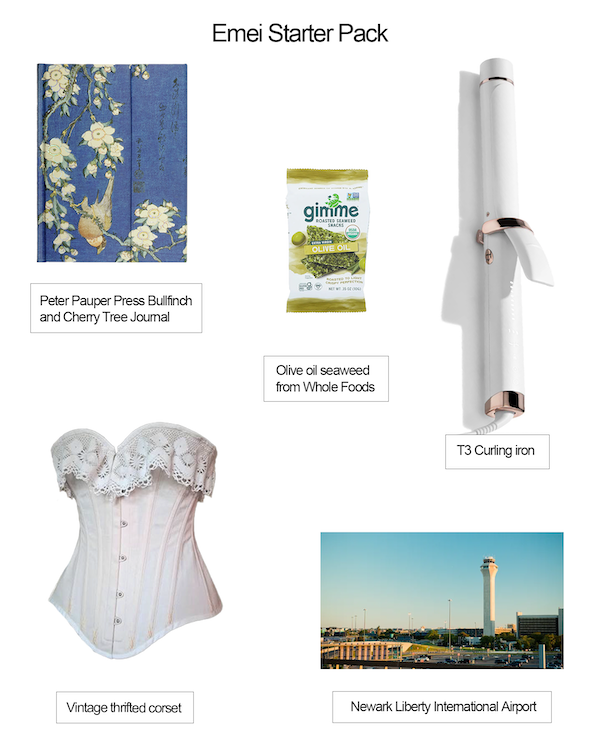
- Name
- Emei
- Vocation
- singer-songwriter, musician
Some Things
Pagination