On creative honesty
Prelude
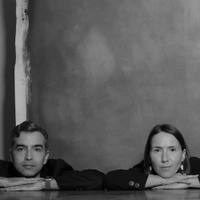
Julia Steiner is a songwriter and musician based in Chicago. She started the band Ratboys as an acoustic duo in 2010, alongside guitarist Dave Sagan. The band, now including drummer Marcus Nuccio and bassist Sean Neumann, has released six studio albums and toured across the world. Their most recent album, Singin’ to an Empty Chair, released in February 2026 via New West Records, is critically acclaimed and has received resounding support from fans. When not writing or touring, Steiner enjoys reading random Wikipedia articles, playing fantasy sports, and going on long, meandering drives throughout the city and countryside.
Conversation
On creative honesty
Songwriter and musician Julia Steiner (Ratboys) discusses niche history, forgoing control, and why an artist's sense of place matters
As told to Sadie Dupuis, 2449 words.
Tags: Music, Collaboration, Politics, Process, Success, Independence.
You’re a champion of Danelectros, which are famously affordable and lightweight guitars. What do you look for in a creative tool?
There is something really special about finding a guitar that invites you to write. That’s the first thing I look for. I started playing on acoustic, pretty exclusively for the first 10 years. I took lessons one summer, and my teacher was like, “You need to buy an electric guitar, it’s much easier to fret on.” So I bought this crappy Telecaster, and it was so heavy and I got discouraged, so I never picked up another electric guitar until I found that red Danelectro DC-3. It was very lightweight and felt indestructible, and is still one of my favorite instruments.
You don’t need to spend a ton of money to start writing music. I like instruments that are a little bit scrappy and not fully formed. The [Danelectro-inspired] Flying V that my buddy Ian [Williams of Nepco] made for me is the perfect intersection of those two things: something that has that badass visual signifier of rock and roll, and it’s not a crazy expensive or super alienating guitar.
How did you get into songwriting?
Mainly to entertain my friends—our inside jokes about boys, I would weave into songs for us. I realized that I really liked writing my own stuff. It became this fun thing I did in isolation, exploratory and chill and emo in a wholesome way.
I started out like a lot of middle-class kids, taking piano lessons at the behest of my parents. Piano was cool because it was all by ear, Suzuki method, but I quit when I was 13. My parents were not stoked, but I picked up a guitar. My mom had one lying around the house, a wide-neck, classical-style guitar. I have tiny hands, so it was a good challenge to figure out how to play chords on a hefty guitar like that.
How do you take care of your body as a musician?
I’m sober on tour. It keeps me even-keeled, as far as anxiety on the road, and helps keep my immune system chugging along. A lot of what goes into this for me is diet, but I want to get better at stretching and especially vocal warm ups.
I called choir my sport in high school. I went to an all-girls school, and was in a large female choir. We would do massage trains at the beginning, talk a lot about the head voice, chest voice, raising your eyebrows, feeling notes in your face, raising your arms. You’re not going to do that during a performance, but it serves me really well in recording.
Are you tapped into different aspects of your voice onstage?
I’m trying to appreciate the imperfections of a live show, and focus on the feeling, rather than the technical merit or pitch. I’m there to give something, and not to critique my own performance in real time. It’s this exercise of giving up control—to embrace that fleeting nature of it, more than the 100 percent on Rock Band. I want to give up control… but also, it’s really fun to have control. One reason I love recording vocals is having the opportunity to craft something that you can fixate on.
Do you write outside of music?
I edited a magazine in college and would like to do more creative nonfiction. Looking at my bookshelves now, it’s mostly nonfiction, some fiction. I’ve loved being in a book club, because I miss the days in school of having a syllabus, especially with poetry. I lost a lot of my books when my parents moved—books that I had annotated, lost to the sands of time.
The first Ratboys songs you wrote were for a class assignment on gender in music history. And it’s apparent how many genres and eras of music you can cite readily. Is rock historianship important to you?
I’m a glutton for context. Anytime I have an opportunity to learn about band specifics—not just what’s happening on the recordings, but the context of the world that they were a part of—brings it to life for me. I’m very interested in history in general. The more niche, the better.
I appreciate looking back and understanding how records I love fit into the time period they were part of. I’m thinking about a scene like Exploding in Sound, and how much music I was discovering in 2013, and how that influenced my own writing. My conception of music on the internet was really evolving, and so that is a very crystallized time in my memory. The idea that our records might fit into a time that someone else assigns importance to is really cool.
When I think about the historical context of your band, I picture Ratboys playing Bernie Sanders rallies. And you recently did a fundraiser for immigrant mutual aid in Chicago. It seems like politics and communal care are huge parts of your lives.
At its core, art is political, whether it’s reacting to history or not. The act of making something is a radical choice. Anything that we can do to use art as a mirror—not just holding it up to our audience, but to ourselves too, to try to understand ourselves and our values—is important and worthwhile. This is unfortunately the second Trump administration that we’ve been making music within, and I have no desire to become complacent to the horrors happening outside our doorstep. It’s important to shine a light on the context that we’re part of. And I think every band is doing that, whether they’re choosing to publicize it or not.
You’re often shouting out session players who don’t necessarily get the credit they’re due. I was curious if you read this Franz Nicolay book, Band People.
I did! This book struck me as more of an academic document than I was expecting. It’s very researched, sociological—a legitimate critical study. The biggest thing I took away is the feedback people offer up about what makes good leadership in a band.
In the role of frontperson, how do you know when it’s time to lead, and when to take a different seat?
I’m constantly on this quest to figure out how to be a better “band leader,” because we’ve had experiences over the years where I can feel myself steamrolling people. One of the hardest parts, and I’m learning this every time we practice, is making [musical] suggestions in a way that doesn’t feel critical, being open to people’s energies, and trying to pick up on things psychologically. I would hope the guys could vouch that I’ve gotten better over the years.
Each of us has individual strengths that we contribute to the group. Sean [Neumann], our bass player, is a journalist, and every time we have a press release or need a band bio, he leads the charge as far as editing. And he runs our merch store and keeps it really DIY for us. [Our drummer] Marcus [Nuccio] is a graphic designer and photographer, and he does so much work on the art side. [Guitarist] Dave [Sagan] is an illustrator, and contributes to that. He’s down in the suburbs right now, changing the brakes out on the van. He calls himself the groundskeeper—maintenance and guitar teching and stuff.
You and Dave are partners. But the individual connections with bandmates you’re not in a relationship with can be just as intense on tour. You really have to nurture these friendships individually. How do you do that for one another?
It’s so true. Sean and Marcus, we’ve been together long enough now and spent enough hours on the road that we’ve seen it all, ups and downs, emotionally, and everything. And physically! God! [laughs]
An important thing for me is having touchstones to return to, outside of the band, that we can bond over. For me and Sean, we both pay attention to sports, whether it’s baseball season or headlines. Marcus is in on that too—we all play fantasy sports together. I don’t drink coffee, but these boys drink coffee, and they need it ASAP in the morning, or else people just won’t be happy. And I respect it, and I will drive their asses to wherever they need to go to get the coffee. Embracing everyone’s little quirks on the road is part of a good, long-standing family member relationship, which is basically what bandmates are.
The title Singin’ to an Empty Chair came from a parts work therapy exercise. And “Anywhere” is a thought experiment from the perspective of a dog. Do you enjoy working with prompts?
Prompts probably come into play a third of the time. Have you ever done Music League? We’ve been doing this for the last five years. Basically, every week, we submit a song to a theme, and it generates a playlist. I often think of those themes as good prompts. This week’s theme was body parts. If I had to write a song about a part of the body, what would I write? Prompts are all around me.
I went to this creative writing workshop when I was 16, and that spurred me on to keep doing this. It was at University of Virginia, and that was the first time I ever wrote to a prompt. Nowadays I’m really drawn to historical songs—they don’t come together as quickly but they’re fun to try. And I read the Jeff Tweedy book, How to Write One Song. He talks about this exercise where you make a column of nouns, a column of verbs, and a column of adverbs, and connect lines and try to randomize your thinking. That’s a really low-stakes, non-intimidating way to get ideas flowing.
Is writing a daily practice?
No, especially not on tour. I sometimes don’t even bring a notebook. I have a very long note in my phone, where anytime I see an interesting phrase or word, I write it in the form of lines of a poem. Every four or five lines, I’ll break it so it feels like random stanzas. This most recent stanza: “I’ve been neglecting you / jailbird Paddington / the four horsemen of the apocalypse.” I try to write at least one line every day.
Ratboys presents as a live band on recording. Is that important to you?
When I first was exposed to recording, it seemed there was a process—you did drums on one day, then bass on the next day, and that’s just how it was done. But then we started playing more, and people would come up to us after the show at merch and expect to buy a record that sounds like we just sounded on stage. And there was a very clear disconnect between those two things.
Going into making Printer’s Devil, we wanted to try to document what we sounded like as a live band, and we recorded live in the studio, which was mind-blowing. It is so much faster and more efficient, and you have more time to experiment on weird overdub stuff. We are really proud of the live arrangements, and the live show is where we shine. And so it’s nice to have that represented on an album.
You’ve gone to special locations for writing and demoing. What does place bring to you as a songwriter?
Printer’s Devil was an excuse to go back to my childhood home, which was being sold. And now I’m connecting the dots. Why did I not get my damn books?
But that was more of a nostalgia trip than a utilitarian need to get out of Chicago and focus, which is what the rest of the trips have been. It’s truly a luxury to set aside a week or more, and leave home, and dedicate this time to music. Lucky for us, it’s always been in these beautiful parts of the Midwest. Northern Michigan is beautiful, and Wisconsin too—Chicago’s backyard.
Chicago is a big part of the band, and how we approach the world—not just in songwriting, but in touring and being proud to represent the values of the city. Something I really appreciate about writing I’m taking in is the writer’s sense of place. I’m looking at Trespasses [by Louise Kennedy], and this story wouldn’t exist anywhere other than Belfast. Every place is complex, and it’s nice to embrace that by immersing yourself.
Alluding to family conflict, as you have on this recent record, is emotionally taxing. How have you been looking out for yourself?
That’s what I’ve been talking about with my therapist—emotionally preempting this rollout and thinking ahead to how my future self will feel. I’m thinking about playing these songs live, and having conversations at merch with our fans about their own lives. I was nervous going into this press cycle that writers would be nosy about who I am speaking to in these songs—I don’t think that detail is relevant. But people have been nice and respectful, and I’m grateful for it, because being honest in writing is the most important thing that I have to offer. At the same time, I respect my family’s privacy. I’m conscious of that layer of realism in our music, and also never overstepping.
Some songwriters who are truthful in their writing experience heightened scrutiny of their lyrics with greater success. Is that an anxiety for you as the band’s profile grows?
Yes and no. We’ve been very fortunate, where our fans seem like well-adjusted people, not digging too deep into the details of our personal lives. We have a Discord, and we’re watching this disaster movie Pompeii tonight, and we’ll be in the chat. It’s nice to have real interactions with other people. And so I really hope that we never get to the level of notoriety or exposure where we feel we have to close ourselves off. That’s half of being in a band, having the opportunity to connect with other people and meet them in reality, not just through the filter lens of PR or social media. If we’re ever Brat Summer-level, I will have to reevaluate.
I’m ready for rat summer.
Rat summer, dude. It’s happening.
Julia Steiner recommends:
Movie: My Old Ass
Book: John Prine’s John Prine (33 ⅓) by Erin Osmon
Instagram account: @brickofchicago
YouTube rabbit-hole: Ringo Starr isolated drums
Song: “Respect Yourself” by the Staple Singers
- Name
- Julia Steiner
- Vocation
- musician (Ratboys)
Some Things
Pagination