On accepting that all things are possible
Prelude
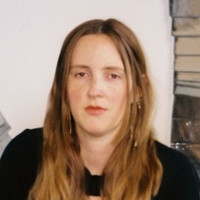
Michael Espinoza is a non-binary, multi-racial, multimedia artist whose work embraces and embodies the undone artistic practices of Queer Ancestors lost to persecution, disease, fatal sadness, and closets. Their current practice utilizes embroidery, quilting, digital media, sculpture, and photography to explore sex and sexuality, intersectional identities, intimacy, the body, and contact with the dead. They have previously exhibited live performance, site-specific installation, and video. Their work can be found in public art collections, digital spaces, domestic and international group shows, and the many spaces intended for queer joy. They live and work in Portland, Oregon.
Conversation
On accepting that all things are possible
Visual artist Michael Espinoza discusses grief and liberation, the realities of working full-time, and impermanence as a key component to creative evolution
As told to Daniel Sanchez-Torres, 2243 words.
Tags: Art, Activism, Process, Promotion, Success, Money, Identity.
What does a day look like for you?
I have had a dedicated away-from-home studio for almost five years now and it became really important to me after my first residency, where they gave me this enormous studio for a month. It was huge, and I looked at it and I was like, “I make these tiny little embroideries, I just take some silly pictures. There’s no way that I’m gonna ever need this much space. This is absurd.” It was intimidating to me when I first encountered it. By the end of the residency I had filled the space, and I was like, “Oh, if I give my practice space, it will grow into the space.”
As soon as I got from the residency I started looking for a studio. My first studio was the size of a closet, but it was away from home and it was a place that I could go to every day. Then, eventually, through a network of Portland artists I found the studio that I’m in right now. It’s 900 square feet, I share it with one other person and I come here almost every day. I don’t really not work, I don’t take very many days off, I have to be really intentional to give myself a day off. I don’t really have weekends; this is all to say that is how engaged I am and how passionate I am about what I’m working on right now. It’s all subject to change and I wouldn’t want it any other way. Being a full-time artist for as long as I have–like six, seven years–it’s made me unemployable because my worldview is so antithetical to the exchange of labor for money. I would rather exchange my labor for community, exchange my labor for being provocative, engaging in culture, than selling it and having someone else profit off the excess of it.

Michael Espinoza, Condolences, 2026.
Does that mean that your entire income comes from making art? Or do you have a day job that supplements things like that?
Money wise, basically what I do is I have 100 little jobs, gigs, and sometimes I pick up contract work with an MFA program to mentor grad students, sometimes I bartend at an art gallery, sometimes I do yard work for a friend. I just have 100 little jobs and I kind of go week-by-week, month-by-month, and figure out how much time I need to dedicate to actual money labor so that I can pay my mortgage and eat.
But I don’t dedicate anything else beyond what is the bare essentials to anything other than my studio practice. The practice maintains itself a lot of the time through grants, sometimes through sales of work, and I currently have a book out and that’s making me a few bucks here and there. It’s kind of regular, and that’s nice.
If you look at my life and how I spend my time, I would qualify as a full-time artist. It’s what I do; but does it support me? No. I would love to mentor another artist into being able to dedicate as much time as I do to their practice, except I make tremendous sacrifices to be able to do this. I don’t go on vacations, I don’t buy clothes, I don’t have luxuries. As soon as my car dies, I won’t be able to replace it. There’s so many sacrifices that I’m making and I’m doing these sacrifices on purpose. I’m doing them with my eyes open. I’m not ignoring my financial situation or my future. I’m just, at this time, perfectly willing to make those sacrifices for the future of this practice because I fully believe in it. I just think it’s really important.

Michael Espinoza, Miracle, 2026.
You have talked about how you have developed a very formal gesture and layout that you continue to return to, which is the instant photo and embroidery. You’ve explained that you’re interested in this juxtaposition between something that’s very quick and something that requires a lot of labor and I’m curious where did that formal consideration around gestures and layout develop and why is this something that you have become obsessed with?
I think obsession is the correct word. I have a renewed obsession with it as I build this newest body of work. Where did it come from? I think it was a mistake. I think it was an accident. It all kind of happened suddenly and unexpectedly.
When I did it for the first time, it really answered a lot of questions for me about what I was trying to express. It’s something quick and instant and something that’s slow and labored, but another way to think of that is that they’re both forms of memory. When you look at a photograph, it is a memory of a very specific instance, of something exactly as it was in relation to the camera in a very specific moment. Whereas embroidery, even when it’s photographic embroidery, I am just focusing on every tiny little second and moment and piece and point of that image and therefore I’m slowly working through and working up and working around the memory that is contained within this fragile singular document that only expresses that one very specific moment. All of the sudden, the embroidery is stretching that instant into something that I am savoring or that I’m experiencing sadness around, or sometimes, when it’s erotic imagery, I get to indulge in the feelings and the sensations and pleasures of sex again. And when it’s something empty, when it’s something contemplative and non-figurative, I am learning from the embroidery itself because it’s repetitive. Even though it amounts to being an image, the image isn’t something that’s satisfying and figurative and doesn’t amount to being a picture of anything. When there’s something missing, what is the memory that it represents? I get to live in that question and I get to experience it.

Michael Espinoza, Winter Diptych, 2026.
Your newest body of work is called Sex with Ghosts. Where did this body of work come from?
The conditions of my life made it so I had to make this work. I had no other choice. This body of work comes from a personal place and the struggle with that is that I had to express it in a way that as many people as possible could relate to this work and I could call as many people in as possible to my specific experience. When I say “people” I really mean queer people, that’s who this work is for.
The work and the details revealed themselves as I began to take pictures and experience the feelings that came with the concept. The concept is that queer people experience a special kind of grief and that grief comes from a world that is not formed to fit us and so we all exist simultaneously with another version of ourselves that would fit. I think a lot of queer people, or assimilationist gay people, or people that have not joined the revolution, believe that they can form themselves to fit. In my experience, in the experience of my peers, it’s just not true. So I wanted to express forms of grief that came from that.

Michael Espinoza, Sex With Ghosts detail, 2026.
What has it been like to finish the images and start to arrange the work in a space for an exhibition?
It’s a whole new way of making, really, to consider how a body moves through a space that has my artwork in it. It’s a whole other language and I’ve always relied on other creative people to help me hone in on how the work can be shown in a way that will give it the most impact. I made a preview of the show just so that I could give the work to my community as soon as possible. The person whose space it is also lives there, so he said we can do whatever we want with the space. We had every option, and that’s really hard. So we looked at the work, gave it a general order and a general idea of what the narrative arc of the body of work is and then he helped me think outside the box about how to show the work. We invented some totally novel approaches to showing the work. The best answer to your question is that I need a lot of help and I have to ask for help because I don’t make work from that perspective.
I’m not an installation artist. I make work in a little five-by-five square for the most part. I think each piece has its own energetic resonance and there’s other people who are experts at hearing the harmonies of the work in relation to each other and helping it exist in space. It’s a skill I’m learning and developing. This particular exhibition showed work in ways that I had never even considered showing the work in. I began to show the works in their frames as objects, so they took on a kind of sculptural quality to them and it transformed the work into something new, something that I had not originally imbued the work with.
Every artist goes through a phase of finding their voice or their point-of-view. Do you have an idea of what makes or defines a “Michael Espinoza” image?
We were just talking about how the work has many hands that make it but the reality is that I do exist as an artist with a persona. There is ego in the work. I do have a strong lived experience of me-ness. I try to be modest and be cooperative and not think too much of myself. But I have to be very honest, I do have a sense of what that persona is, what it contains, and how I wish to use various forms of self-experession–especially the ones that are peripheral to the work–to build a sense of mythology around the practice. So that maybe it will have more resonance or value or strength for certain people.

Michael Espinoza, Sex With Ghosts detail, 2026.
I don’t look at the work and see myself. I look at the work and see something that I’ve taken part in creating and that has a specific need to exist in the world. When I say the work is important, it’s because I believe that I’m participating in a legacy of queer survival. This work is meant to affirm the existence of queer people like me, so that they continue to have a reason to live. This art saved my life and I know that it can save other people’s lives too. It feels very urgent to give that away. I am just a participant in that because nobody survives alone. Nobody could save me. No one person could save me. It’s everyone. We all save each other, and that’s where the work is aimed in terms of what I am there to do. I’m just a bystander. I’m just allowing it to pass through my body.

Michael Espinoza, Fountain, 2026.
What’s something you wish someone told you when you began making art?
The thing that I continue to need to learn is that there are no rules and that accepting one’s identity as an artist is also accepting the reality that all things are possible. I mean that in a very radical way. I believe that artists’ main duty is to accept the responsibility of expressing from the point of view that anything can be imagined. Anything can exist. Any future is possible. That’s high-minded stuff. But the practical thing that I really yearn for, and I continue to try to teach myself and try to learn from others, is that just because something is successful now or feels right now, I can’t rely on its permanence. I have to be able and willing and to pursue constant change and constant evolution. I might make a rule for myself right now, but I have to know that that is impermanent at all times. I have to always always exist in the reality that this is now and this is not then, because otherwise, if we were very strict about making rules for ourselves and making artwork from that point of view, then I mean, the safest and most rational thing to do would be to literally just make the same artwork over and over. I painted the Mona Lisa. Great. I’m gonna paint the Mona Lisa again. Like that’s literally what would happen if we didn’t constantly have the ambition to change our minds to exist in a new way constantly, and to experience reality as being ever evolving.
Michael Espinoza recommends:
Artist-run spaces
Queer, clothing optional beaches
Hosting a weekly community hang
Cruising Utopia: The Then and There of Queer Futurity by José Esteban Muñoz
Sex with your friends
- Name
- Michael Espinoza
- Vocation
- Visual artist
Some Things
Pagination