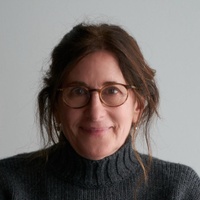
On balancing the home office and dad mode
Prelude
Daniel Ford is the author of Black Coffee and Sid Sanford Lives!. He is the host of the Writer’s Bone podcast. His work can be found on danielfford.com and HardballHeart.com. Ford once performed as the Cowardly Lion in an eighth grade production of the “Wizard of Oz.” Follow him on Twitter @danielfford.
Conversation
On balancing the home office and dad mode
Author and podcaster Daniel Ford discusses on pivoting from one craft to another, creating networks, and juggling creative pursuits with a day job and parenting two kids under five
As told to Scarlett Harris, 2816 words.
Tags: Writing, Podcasts, Family, Collaboration, Multi-tasking, Focus, Day jobs.
Tell me about your backstory. I realize I hear you every week, but I don’t know much about your background. Tell me about how you grew up, what interested you in writing and reading, where you went to school, and what you studied, etc.
I’ve always been a big reader. And writing, I can’t pinpoint an exact moment because it has always just been my thing. I was the writer and the reader in the family. And when I was looking around for majors, I’m like, “I’m going to study journalism because why would anyone want to make money in this world?” [laughs] Especially when you go to New York City, you go to the big city. But I really wanted to go to New York. It has remained one of the loves of my life.
I ended up going to St. John’s for journalism, and I was taught by all these crusty, ink-stained print journalists, and I was coming out in a market that was very much web-based, so I had to relearn everything. I worked for a trade magazine for a while and then got into web editing.
I started listening to podcasts very early, like 2008, 2009, right when they became a thing. And I always had in the back of my head, “I want to do this someday.” Then I moved up to Boston with my now-wife, where I met my friend Sean, and we talked at a party for three hours and ignored everyone else. I was like, “Maybe we should record us doing this.” And we started doing author interviews and the rest is history.
What was it about the podcasting format that made you decide it was the right medium to get your conversations with writers out there?
I knew nothing about audio. I wasn’t a complete Luddite, but close to it. I mean, our first microphones were like $20 from Walmart or Amazon or something. They were bad. And we were recording in this echoey studio apartment in Malden, Massachusetts. But the content was there, the talking-to-authors part, that has kind of been the crux of the show. We just had to learn how to sound okay. I became an audiophile through this.
In terms of the content, what was the learning curve for that in deciding how long you wanted to have the podcasts, who you wanted to interview, what feedback you received from those early episodes?
When you do something like this, you decide, “Okay, we’re going to do this for real, we’re going to talk to authors and we’re going to get bigger names on the show, and we’re going to be a place that authors can come and talk about not only whatever project they have, but their writing process.” There’s not a whole lot of shows out there like that.
Early on, we would talk to anyone. We would send 50 emails out every week and get maybe one or two back. So it definitely was a process.
It was a few years before the pandemic where we got some bigger names on the show, and then the PR people started coming to us as opposed to us going to them. Then we had to really think about the format. During the pandemic me and my [podcasting] partner were separated and we were just doing it alone. We wanted to feature as many authors as possible who had events postponed or canceled altogether. So we were running three or four episodes a week for that reason, and it really took it to a different level. That’s when I was like, “All right, these have to be short interviews, half an hour.” Some of our nonfiction writers go longer, but that’s the sweet spot for us in terms of length. Part of that was because we were pumping out so many episodes at one point where we couldn’t make them any longer. I feel like, especially with today’s attention spans, sitting down and listening to an hour-long podcast is a commitment, but 20 to 30-minute conversations are just perfect for what we’re going for.
Part of the reason that we launch new episodes on Tuesday is one, it’s pub day, but two, it’s coming off of a Monday. The listener has gone through their Monday trials, they want to think creatively or whatever and need a dose of serotonin where they can listen to other writers and learn about their experiences.
Are you still doing three to four episodes a week?
There are some weeks that we’re posting two episodes a week, Tuesday and Friday, because we have a Friday Morning Coffee series every other week. Those episodes have more of a wide-angle lens on a specific topic and we go in depth. We have a great interviewer, Caitlin Malcuit, who does the introductions for those, and usually, she takes a deep dive into something for a couple of minutes and then we get to my interview. Typically we coordinate on what we’re talking about, but it doesn’t always happen. They’re the most fun I have on the podcast because I get sick of editing my own voice. So it’s nice to have someone else to play around with.
And it’s a whole network now right? How did that come about?
I believe we’re mutual friends or at least mutual colleagues with Jennifer Keishin Armstrong, who wrote for Entertainment Weekly and writes all these great pop culture books. I kind of put in her ear, “Hey, you should have a podcast because every time you’re on, we talk for two hours.” And she’s like, “Oh, I have a friend [Kimberly Potts] I could do this with.” So Pop Literacy was born and it’s been off for a little bit. From there, I’m like, well, if other people want to do this, I might as well open the door and say, “Hey, if you have an idea for a podcast, we’re open for business and we can help you.”
We’ve attracted other literary podcasts or writing adjacent podcasts that we’ve added to the network, and it’s really just a marketing thing. We promote their podcasts. We don’t make any money on this deal, but we promote them and what they’re doing because we think they’re cool. It’s a nice little collective we have going, and it grew organically. Nothing more than that.
So you didn’t create any of these podcasts, you just saw them and thought, “Hey, let’s bring you into the fold?”
Pop Literacy, As Told To: The Ghostwriting Podcast, which I do with Daniel Paisner, and The Thoughtful Bro, I have a more active hand in. A lot of the other ones are just we’re just promoting them and they’re promoting us at the same time. We’re trying to slowly grow this thing.
Are you yourself managing that?
This is it. This is the operation.
I thought you had a couple of other people on the Writer’s Bone team, like your wife, Stephanie Ford?
To be honest with you, really, it’s just me at this point. My wife, Stephanie, comes on every couple of episodes. We have a couple of hers in the pipeline that we’re working on. But really, the operation is just me.
Let’s break that down then? What does a typical workday look like for you? How are you dividing up all that work?
The interviews tend to be the easiest. I don’t want to say the funnest part because I like the audio editing, but I’ve got to carve out three hours for editing and we have two kids over here and a day gig, so that gets a little hairy. But really, the interviews take half an hour to an hour, and I have those audio files in the can. Whenever their pub day is coming up, usually that Sunday or Monday before we go live is when I do everything. The way I have it now, it’s so streamlined and turnkey where I almost don’t have to think about it. I just have to execute, which is good. That’s the other benefit of having a shorter show. It’s a half-hour, it’s manageable. Then the rest of the week is interviews. And then if we have a Friday show, getting that Friday show out there.
You mentioned you have a day job. How do you juggle that with the side hustle of the podcast?
I don’t know. Again, it helps that everything’s short, and I’ve been doing more things with my day gig that are podcast-related, so I can flow in some of the audio editing during that time as well. But especially with two kids, it’s a lot tougher to schedule things. So a lot of late nights or early mornings. The early mornings haven’t been happening because my youngest is getting up earlier and earlier.
Some people may go and read a book after work or something to relax, and my relaxation has become audio editing. It’s something I can toy around with. I know nothing about cars, but I imagine this is how car people feel like when they go under the hood and it’s like, “Oh, I’m going to tweak this here, tweak this here.” And at the end of it, you have a car. I just do it in a much more compressed time with audio.
How has becoming a father affected your creative practice?
At heart, I’m a writer, I’m a journalist, but the writing has kind of gone out the window, at least the fiction writing. There’s been a lot of notebook writing, a lot of planning for a short story collection that I have, but most of the creative energy has gone toward the podcast. Those creative neurons are flickering, just in a different way. Really, right now, it’s just keeping the lights on and doing the show that I have now and enjoy as opposed to, “Oh, we could do this as a different show or this.” This is the perfect sweet spot for having two kids under the age of five.
You said you’re working on a short story collection, but do you think there will be a time in the near future where you might have time to sit down and write a fiction story of some kind?
I toy with writing a novel and I have an idea for a really short novel, but I just feel in my heart I’m a short story writer, which is also financially limiting. But I’m also an editor by trade, so it becomes more of an editing thing than a writing thing. And you’re writing in a shorter window and you’re dealing with compression and that compression really forms the characters and the arc of the story and you leave readers wanting more. So I love a short story for that reason. I read novels all the time and we talk to a bunch of great novel writers, but short story is kind of where my heart is for all of those reasons.
I’d also like to do some type of indie publishing under the Writer’s Bone banner. I have a logo cooked up and some ways that we can do it, I just need time to execute it.
How do you find the time to read all the books for the podcast and can you read for pleasure at this point?
That’s where it’s important to be choosy about who we bring on, because I have to be interested in the book and want to read the book. Even if it’s a bigger name and it would be good for the podcast, I may not enjoy that book as much as everyone else.
I do read for pleasure. It was a little easier when our youngest kid was sleeping more and I was able to read long stretches just holding him, but that’s got a little tougher.
I was always a one book guy. I’m going to read that until I finish it and move on to the next one. I have oodles of books that I have started for the pod and for pleasure around here, but finishing them, who knows? The pod ones, I tend to churn through a little bit quicker because I have to at least sound like I know what the hell I’m talking about.
On a good day, everyone goes to bed early and then I have a number of hours to do the podcast or read [for pleasure] or read for the pod.
When we have guests on I’m like, “Who are you reading?” That’s one of the questions I ask, “Put some books on our radar.” It always leads to me thinking, “I should stop asking this because it’s hurting my bank account.”
When you’re reading for the podcast, what’s your research process? Do you read the book once? Do you have to read it multiple times? Are you highlighting stuff to begin with that you’ll then go back to? How do you write your questions?
We do have a set of questions—whether you’re a fiction writer or non-fiction writer—if it’s your first time on the show. If it’s your second time, then it’s more like, let’s just hop into this project and my questions are a little different. Every book that I read leads to some different questions, but the main ones are: I want to know about what inspired the idea, how you develop characters, themes not only that you had in mind when you were writing, but also themes that readers have brought up to you, and then the writing process. We have a bunch of questions about that. Those are the main ones no matter what the book is about. So I know at least I have somewhat of a scaffolding that even if I haven’t read the whole book, by the time that I sit down and talk to them, I have enough of an idea to fill in those spaces, go from there.
I need to read enough of the book, and I may not necessarily finish the book before I talk to the author. I try to do it every time, but at this point, that’s a fantasy. It’s never going to happen. But I have to read enough of it to know the author’s style, to get what they’re talking about, their angle, to get to know their characters. If it’s a fiction writer, I [like to] have enough of a crux [so] I can ask some questions. Non-fiction tends to be a little easier because I read it quicker.
There are also times where I don’t necessarily want to finish the book because it’s so good. And authors who’ve been in the show will tell you that I send emails like, “Listen, I didn’t read the last chapter on purpose and I just read it, and now I have 25 other questions for you. Can I ask them here?”
Another thing you say on the podcast is that you’ve got your Writer’s Bone HQ, which I assume is at your home. If you’re working remotely at home as well, how do you delineate work from home?
This is the toughest question that you’ve asked. I feel like back in the old days, I had a commute where I could read a book or write in a notebook or have a walk where I could listen to a podcast and de-stress. And once I got home, I was the Home Dan Ford. That is a lot tougher now. As we’re talking, I’m going to have to at some point late at night turn around an episode for a client of mine for tomorrow, and I know that’s going to take a couple of hours. During the day, if I have to do a meeting around lunchtime, I’ve got to get out of my day gig mode and go into writer mode. If I’m in my office in front of the microphone, it’s like my brain just flips a switch. As soon as I’m done with that, it’s back to the day gig. And I’m back to being Dad as soon as I walk out of my home office and enter into that world.
I also have to go pick up my daughter at daycare, which I use as a commute, too. We’ll sing songs and I’ll interview her in the car about her day. We’ll listen to music, things like that.
Daniel Ford recommends:
Whatever Happened to Eddy Crane by Kate Crane
Bluey
Mike Mills box set from the Criterion Collection
The West Wing Weekly podcast
The new Tragically Hip live album, recorded before the death of their lead singer
- Name
- Daniel Ford
- Vocation
- Writer, podcaster
Some Things
Pagination