On why we should all get over the shame of self-promotion
Prelude
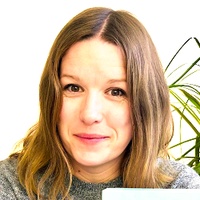
Larissa Pham is the author of Discipline, a novel; the essay collection Pop Song, a finalist for the National Book Critics Circle John Leonard Prize; and the novella Fantasian. She’s written essays and criticism for outlets including the Nation, Aperture, Granta, and the Paris Review Daily, and she is an assistant professor of writing nonfiction at the New School.
Conversation
On why we should all get over the shame of self-promotion
Writer Larissa Pham discusses navigating expectations, advocating for your art, and finding balance
As told to Alexa Margorian, 2564 words.
Tags: Writing, Education, Family, Education, Focus, Success, First attempts, Creative anxiety.
The last time that you spoke with TCI, you were in your second semester of your MFA, you were talking about the fiction that you were working on and it was so different from Discipline.
In my last semester of my MFA, I started working on Discipline, but it arose as a response to this really intense project that I had undertaken for the bulk of my program, which was this multi-generational historical novel dealing with intergenerational trauma and war and patriarchy. That book was written in a close third person past tense. I really wanted to write that book. There’s a part of me that really would like to finish that book.
It was this mix of obligation to my family—not my family asking me to do this—but my relationship to family, my relationship to culture, my relationship to language. I was like, “I need to write this big historical book.” And I still feel that way. I wasn’t an amazing fiction writer when I started at Bennington. I think I was okay, but I hadn’t written very much fiction before because I’d never really had the time. In the process I realized that there was so much more that I needed to learn to be capable of writing that big book. I began to feel frustrated by the third person; it was not as freeing as I wanted it to be.
Discipline arose as a response to the issues that I was having with this project. It was too big, it was too ambitious. I needed to do more research. I needed to learn how to write in third person. The voice in Discipline, which is so distinct, is this really freewheeling first person narrator who’s really moving through time and doing all those fun things that you can only do in first person because I really craved that kind of writing. Treating it as a secret side project, treating it as something that wasn’t the main focus allowed that freedom to exist for as long as possible until I realized about four chapters in that I was like, “Oh, I actually want to try to finish this. I need to stop fucking around and figure out where this thing is going.”
There’s a lot of pressure that comes with having a strong connection culturally with your family. In my writing, I feel like I’m writing so many frivolous stories about people having affairs. Being Armenian, I’m like, “Shouldn’t I be thinking more about the bigger things that have affected my family?” I’ve strayed from doing that because maybe I don’t want to do the thing that I feel obligated to do because it’s expected of me. I don’t know if that resonates with you.
Totally. It’s a thing where you’re like, “Does the world need another multi-generational immigrant novel?” And the answer is, probably it does, actually. But it’s like, how do you do it well? Then there’s the nitty-gritty of: What are your plot elements? What areas of history are you focusing on? What are these characters going to endure? That was the part that daunted me.
I could imagine in broad strokes how it would feel and what I wanted it to be, but when it really got down to the page-by-page plot level, I was like, “I don’t know enough about this to convincingly write a novel.” I’m actually in the middle of doing some interviews with my parents, oral history type interviews to try to get more information because there’s so much that I assumed I knew, but that I didn’t actually know. That sense of obligation I think is very strong, especially as a writer of color being like, “Oh, I have to carry this burden of representation.”
How do you know that something is a success?
I had such excitement writing this book. Even when it was difficult, I was like, “No I’m going to do it. I’m going to finish it. I really believe in this idea.” There’s a moment in a project where you figure out what it’s about and you know how to describe it and why you’re writing it. If those things don’t happen for me, I can’t do it. With Discipline, I knew what it was.
The reason why I’m hesitating is because I’m remembering Sheli Heti says in Motherhood that when you’re working on a project, you have to be really careful not to describe it because the moment you describe it, it gives shape to it and then it dies, because you already know what it is. There’s a balance there.
There’s a sense of discovery where it gives you a boundary when you know what it is. “This is my sandbox, but I can still play in my sandbox.”
While I was writing Discipline, I thought of it as ice skating. “I am going to do some tricks and some little jumps.” I don’t ice skate, obviously. I knew what the rink was. I knew how big it was. I knew the showcase for what the book was going to be.
Our reflexive mode now when we talk about books that maybe slightly draw from an author’s life—obviously I’m not giving away spoilers in this, but clearly this did not happen to you—but being an artist and being someone who wrote their first novel, I think we have this tendency to be like, “Oh, this is autofiction,” and reading way too much into the work. I want to know what your relationship was with people projecting things onto the work that you didn’t really design.
It’s interesting because the things that people may assume are from real life are usually not the things that I did take from real life. I like to use the example of Colin, Christine’s formerly alcoholic ex. I was getting sober around the time that I was writing that chapter, and I was like, “I have become boring. I do not know who I am without alcohol. I do not know how to socialize.” So I put that into the book, but if you look at the book, you’re not like, “Oh yeah, Colin is directly inspired by the author’s sobriety.” Those elements that we take from life can go through a lot of metamorphosis or maybe synthesis before they show up in the book again.
My sort of major beef with criticisms of the book that strike me as maybe lazy or maybe just misreading are when the whole [premise] of the book is Christine has taken something from life and changed it beyond recognition. She’s also, as a character, navigating these assumptions that are being made about her because of the kind of book she’s written. If someone is writing in a paper of record and they’re like, “We must assume that this has something to do with Larissa’s past.” I’m like, “Do we? Isn’t the whole point of the book that we try not to do that? That things transform in fiction?”
I do value criticism in all forms, so I’m not going to go out and try to correct anyone’s interpretation. I wouldn’t be bringing up these ideas of art and the artists being conflated or women being especially scrutinized for the subject matter of their books if it didn’t happen in real life. So I can’t be so surprised when it happens to me in real life as well.
School and academic life play a huge part in the novel, but it’s not a campus novel by any means. I know that you’re teaching at The New School. How has being a teacher informed your writing?
Entering a position of responsibility over young people who are trying to work on their creative practice changes you, in a good way. When I was in college, I had a completely different understanding of power because I was young and I didn’t really have that responsibility. I remember so distinctly when I entered this teaching role after my senior year—after I graduated and I was working in this program in France, which I write about in Pop Song a little bit—I wasn’t a professor, but I was in this para-educator place where I was responsible for the well-being of these young people. I was like, “Oh my God. It’s actually really bad to cross that boundary.” I didn’t understand it when I was on the other side of it when I was young. When you’re on the teacher side, you’re like, “This is my boundary. We are not friends. We cannot hang out. I’m responsible for you.” I take that really seriously. That definitely influenced [me] when I was writing Discipline and thinking about this power dynamic between a mentor and a student, it felt much more serious even if the relationship is complicated—which I think the other big part of the book is that you can have positive and negative interactions with someone in a mentorship.
I definitely read a lot more than I did when I wasn’t teaching because I’m always looking for things to bring to my students, and I’m looking for things that are really great examples of what they are, things that are really good to teach. I am teaching things where I’m like, “Oh, actually this isn’t my favorite author, but this is a really great example of something, so I’m going to bring it in.” Teaching has also encouraged me to read things that I’m not necessarily drawn to or authors that I’m not necessarily, I wouldn’t necessarily reach for right away and to bring that in. There’s a benefit to reading very broadly.
Do you have any tips about writing about another medium? What was your process like with engaging with other works, but also writing a fictional work?
Thinking about how to do it, which is maybe more interesting than why I did it, is: what relationship does the character have with this work that they want to bring it in? I find that it’s really successful when the characters have a strong connection to the work, or it’s making them ask questions about something, or there’s something connecting to the plot. I am thinking right now of The Silver Book by Olivia Laing. It’s a really wonderful blend of a mystery thriller with historical fiction, and it focuses on Danilo Donati, who was the set designer for both Fellini and Pasolini. It follows him as he’s working simultaneously on these two films, and there’s a love interest who is Laing’s invented character, but Laing has clearly done a lot of research around set design and what goes into creating these pieces. It’s about how much it’s actually incorporated into the substance of the novel. Would the novel stand on its own without those things, or does it need them?
I was going through your Instagram and I was reading through your New Year’s post with your different—I feel like resolutions isn’t the right word—guiding principles. I want to ask you to speak about a couple of them. The first one is: “To show up for my book and my work and to do things I feel alignment with.”
I wrote that and I was specifically thinking of the writer, Hanif Abdurraqib, who is really great at showing up for his work, and he has his own Instagram post about this where he’s like, “I wrote this book. I wanted to show up for it. I’m really present in all these interviews. I know I wrote something good, I’m going to stand up behind it.” I’m paraphrasing, obviously, but I was really inspired by that.
There’s something so clownish about selling a book. It’s humiliating. You’re like, “I am putting on my little jester hat and I’m entering the public square. Look at this thing I made. Please buy it.” It’s so horrible. And I hate capitalism.
There is this predilection for writers to be ashamed of self-promotion. I don’t know if you were on Twitter for this, but there was this phase of people tweeting, “So I did a thing,” and then it was some breaking news story. I don’t want to do that. I want to stand up behind this project because first of all, if I don’t do it, no one will. We have to be our own advocate for the art that we make in the world, not only to be an advocate for us, for oneself, but for art’s power and to advocate for art’s existence in the world.
Those things were running through my mind, “I don’t want to be embarrassed of this book. I don’t want to shy away from promoting it, even if I don’t particularly like being in the spotlight.” Part of being an artist is that you have to go into the world and share about your work. The beauty of that is that you’re not alone in that. People are out writing criticism, people are out reading, people are out doing interviews like this one. It’s not just you alone in the world as an artist, but I think there’s some responsibility to go out there and represent it.
Another is: “To release expectations (as much as possible).” What is your relationship to that now having had the book out for a month-ish?
The things we have control over are very few. There’s a sense in which the goalposts for success are always moving. This is a good thing because when you’re young and you’re first starting out. You’re like, “Oh my gosh, I want to publish anything.” And then you publish and you’re like, “Yay.” And then you’re like, “Okay, now I want to publish and I want to get paid.” And then you’re like, “Yay.” It’s good that your metric for success becomes higher and higher.
With a book, there’s a moment at which it can become never-ending where you’re like, “Well, now I want to be shortlisted for this prize.” And then it’s like, “I want someone to option my book.” And then all of a sudden you’re really mad that you didn’t win a Pulitzer. The bar just keeps moving because someone is winning these prizes. I think it’s good to reward artistic production, but there’s always someone to compare yourself to. There’s always something that you won’t get. My intention with releasing expectations was, “I have all these ambitions and dreams for the book, but I have to be okay with it not meeting all or any of them.” The truth is that the book has done really well and people have been quite generous with it, so I really have nothing to complain about and I’ll continue to release my expectations.
Larissa Pham recommends:
The Plum Village meditation app, specifically just for the meditation timer
Electrolyte tablets that come in a tube so you can carry them in your bag and just throw one in a water bottle to stay hydrated. I like to give these out at raves, like candy
Taking public transit when traveling abroad
Drive My Car by Ryusuke Hamaguchi — a perfect film
Enter Ghost by Isabella Hammad — a perfect novel
- Name
- Larissa Pham
- Vocation
- author, assistant professor, essayist, critic
Some Things
Pagination