On the importance of daily creativity
Prelude
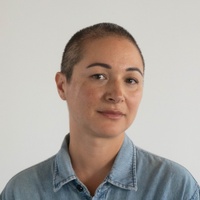
Sophie Strand is a writer based in the Hudson Valley who focuses on the intersection of spirituality, storytelling, and ecology. Her poems and essays have appeared in numerous projects and publications, including Emergence Magazine, Lit Hub, Spirituality & Health, Atmos, Braided Way, and Art PAPERS. She is the author of The Flowering Wand, The Madonna Secret, and The Body Is a Doorway as well as the creator of the Substack Bestseller “Make Me Good Soil.” You can follow her work on Instagram @cosmogyny.
Conversation
On the importance of daily creativity
Writer Sophie Strand discusses the pros and cons of vulnerability, how storytelling can make us more resilient, and not waiting for inspiration to strike.
As told to Mariah Irwin, 2681 words.
Tags: Writing, Focus, Process, Success, Inspiration, Adversity.
I would love to start with talking about your personal ecosystem, specifically writing?
I was lucky to be born to writers and natural storytellers, my parents are writers. And they’ve worked on both sides of publishing, editing other people’s work, working with children’s literature, working with spiritual literature, and then writing their own stuff. And it was storytelling, I would say, more so than writing even, storytelling with the family culture, that you could make sense of things through storytelling. Loss, grief, illness, things that were very, very hard to make sense of.
If you planted them in a robust enough story, an ecosystem of characters and other beings and complexity, there was a way of possibly alchemizing things that otherwise might be unbearable. I am a survivor of early childhood violence and so storytelling for me was fairly lifesaving early on. In the books of C.S. Lewis, Mary Stewart, Tolkien, these books weren’t just diverting to me. They very much gave me an adjacent possible, an idea of worlds where people who had been through immeasurably hard things could persevere and create community and friendship and stay alive. And so, I think at a very early age, I realized that I wanted desperately to tell stories that would help other people stay alive.
And then of course, as I grew older and more aware of the environmental catastrophe of our current world, those two things symbiotically fused, which is I truly believe that one of the best ways to get people to pay attention is with a really compelling story. And they are one of the most durable modes of knowledge transmission. And so, for me, I thought, okay, if I want to make people care about the Earth, the species that are going extinct, I better plant those concerns in stories that are big and wild and sexy enough that other people want to pay attention.
Do you find it to be a spiritual practice?
Absolutely. I mean, I also think I grew up with writers who were very much clear and sober about the brass tacks of it, that you had to have other jobs to support your writing, ghost-writing for other people, the consistency and practices that actually help you accomplish finishing a book and editing it. So, I’m really grateful that I got the practicalities, but also the more holistic spiritual element. For me, the most important thing is to do projects that feel like they involve my entire heart.
I have a hard time finishing books or essays or poems that aren’t urgent to me. I always like to summon Scheherazade of the 101 Arabian Knights who is telling a story to convince a king to keep her alive. I always want to say that we do live in a moment where sometimes earnestness, urgency, and passion can be seen as perhaps cringe or embarrassing. And I would like to argue against that and say truly nourishing storytelling is urgent. It’s your emergency. It’s your passion. It’s the story you would tell to keep yourself alive.
Leading from that, what do you see your role as a writer in this moment, especially around being ecological?
On a good day, I have great optimism about it. On a bad day, I wish I had more practical skills like growing foods. My brother is a farmer and I oftentimes think he’s doing the real work. But I do think that one thing we know is that stories can convince people to care about things they wouldn’t otherwise care about. And I truly believe that love stories are a powerful way of making people care again and there are things that I really, really care about. One of them is mycorrhizal fungi, which are underrepresented in conservation assessments. They’re under researched. We degrade the soil, we degrade the foundational underpinnings of complex ecosystems and just because we don’t think about these fragile, often invisible life forms.
And so, for me, it’s been very important to plant mycorrhizal fungi in my storytelling so that I can invite other people into this love story. I think we operate with more ferociousness, with more creativity when we operate from a space of play and love than from one of atonement and shame. And I think that it’s very hard in our current ecological collapse to not get into a state of paralysis when we confront how much harm we’ve caused. And I think that one way to sidestep that paralysis and that shame that doesn’t actually activate any type of change is to activate people’s lover, their sense of play and storytelling and saying, “Well, what if you operated from a place of real compassion, courtship, and devotion?”
You are very vulnerable in your writing. How did you come to that choice and how do you negotiate it?
Thank you for that question. This is something I’m constantly renegotiating and we live in an age where we are encouraged to self-cannibalize. It’s a cult of confession. Because trauma is very click-baity, we are encouraged to cannibalize the worst things that have happened to us and to share them online. And especially as artists who are struggling to make money and to support ourselves and pay our bills, especially sick artists who have medical bills to pay, you can get into a very tricky spot where you sell more books or get more eyes on your work when you share things that are really, really vulnerable and really hard.
I think for me, I started to share really vulnerably when I did not have a very big platform and mostly, it was during the pandemic and I was looking for connection at a moment of extreme isolation. And I was struggling with chronic health issues and PTSD and not finding a lot of help from the practitioners who I had sought healing from. I was trying to see if other people had clues and part of reaching out for those clues was by sharing what was most tender for me. That being said, when the work spread on a much wider scale, it was a little bit like a frog in boiling water, which I didn’t realize how destabilizing it could be to my body and nervous system to have so many people reading things that were so personal.
These days, I try and make a distinction between privacy and secrecy. And this is something I’ve been thinking about a lot… Secrets are when you’re hiding, you’re not disclosing something that if it was disclosed, might change how people view you, or actually might open up the risky terrain of connecting you with other people’s pain and other people’s creative paradigms. And so, for me, I don’t like to keep secrets, but I do think that there are parts of my life that I don’t have consent to share yet, and I’m trying to get better at asking myself and the other beings involved in my stories, whether or not they should be kept private.
And I oftentimes think about that when you write about animals or insects or plants, you should ask them for consent. You should ask them, and I very rarely write about animal encounters these days, unless I really feel like I’ve been given explicit consent by them. We live in an age where we can videotape everything that happens in our lives, and it has a way of flattening things. There are things that shouldn’t be shared, should only be shared in person and breath and community, and it’s very easy to self-betray and to betray the other beings in our lives.
Can you talk about your ideas around compost, around rot?
I have an incurable illness that causes my body to degenerate, and so I’ve had to get really, really intimate with death and darkness and irresolvability and decay and have had to be very curious about the ways in which our culture is very death phobic and yet produces so much harm. Very interesting to me that a culture that’s very good at producing waste is not very good at integrating it back into a complex web of appetite, a food web that in a healthy ecosystem, rot becomes the food that fuels another being’s life, and that rot is the womb of life.
That the soil, if nothing broke down, there would be no soil nourishment and no space to grow new life, that during the carboniferous period, the world was swamped because white rot hadn’t developed to break down woody matter, and all of these fallen trees swamped out the ability for other beings to grow. And I think about when we interrupt these cycles of decay and regrowth, they have oftentimes very harmful consequences. So, I always want to pin rot back into a cycle that also includes moments of ascendancy and growth and sunshine, but to say that in order to grow new life, you also have to go into the underworld of things breaking down and transforming and becoming something new.
I always say that I work by addition, not subtraction creatively. We live in an antibiotic culture that says if you purify things, if you kill things off and you clear things out, they’re somehow optimized, but the truth is that ecosystems are resilient in as much as they are messy and complex and populated with many different beings. And so, for me, I think of my work as being very rot based, like it’s a compost piece.
If I throw enough on the pile, something will sprout, something new will happen. And so, it’s in a maximalist approach. And it also problematizes this idea of the individual and the individual artist who’s creating something new. I’m not really a new artist with new ideas. I am the rot-scape where many different things are merging and melding and producing in some type of soil.
What are your outlets for play, to be curious?
I like to follow my pleasure and read romances, romantic and young adult fiction, and to read playfully in a way that’s not inquisitive or I’m not trying to research or gain some knowledge or expertise. I think for me, the most fun realm is the realm of fan fiction, which is what I came up in, which is writing into other people’s stories, stories that didn’t necessarily originally allow for queerness or for disability, to compost older stories.
And I love the realm of fan fiction because it’s very much outside of capitalism and individuality. It’s not about writing a book to sell. It’s not about writing a book that’s your ego or your ideas. You’re writing into someone else’s work and you’re writing in real time, in community with people who all share a fandom. And so, for me, the sexy, messy world of fan fiction has always been such a playful, fun place for me to experiment with craft, with style, with storytelling, and with writing in community.
Do you have advice for people who want to cultivate a creative practice?
Well, I have two important things, one is I do think that thinking of creativity as being hygiene and daily. For me, I think of my writing as being as important as brushing my teeth and that I can’t wait for inspiration and that you have to show up diligently for those moments of inspiration to strike. And if you wait for them to strike, things will be rare and they will very rarely be finished. It’s very easy to have a great idea. It’s very hard to finish a book and finishing a book happens in small footsteps that happen every single day. And so, to create a small enough ritual, and I think ritualizing creativity is really powerful because then you create a whole cognitive switch that happens.
For me, I have a candle that I associate with a certain book, a smell, I have music that I play, I make my coffee. So, I very much trick myself into believing that as this ritual begins, so does the creative energy begin to rise, and I do it every single day. And it’s a small enough chunk of time that it doesn’t feel undoable. It’s only 500 words for me, and I think that that word count might be different for different people, but it’s small enough that I can definitely accomplish it every day. And that’s how a book gets finished, not on these giant sprints or marathons, but in the slow, daily, almost hygiene-like mundanity of showing up, doing a little something, and then continuing for the next day.
The other piece of advice though is a little bit less practical, and it’s about following your love, really paying attention to where your flow state is. And I think that it’s hard, because I think sometimes we can be good at things that we don’t love and we can make a living for a while or make work that we don’t love, but I do think your most powerful work will happen most easily if you pay attention to what you love to read, to listen to, to create, and then you begin to infuse that love into your actual work. A great example of this is I was listening to a lecture by a romance author who said, “Pay attention to the tropes you read for in romance because those are the tropes you’ll write best. That if you write towards the things that you love, something else will show up to help you.”
But I do have a slight superstition about that, which is that there’s a third element that arrives when you sit down and devote yourself to a project that you love, that there’s something else that comes in that can give you ideas and momentum and speed and magic that isn’t necessarily from inside of you. You open up space and part of that open space, those open hands is sitting down at your practice every day. And if you show up, sometimes something else shows up too.
How do you unsnarl creative blocks?
Here is one of the methods I use that has been really helpful, which is I very rarely get blocked when I’m doing something I really love. So, I do think that when you encounter a block, questions you can ask are, “Is this project really where my heart is?” “Is this the most urgent practice, project, book, piece right now?”.
And I have found that if I try too hard to fix a plot snarl, to break through, to keep writing past this point of frustration or paralysis, I will oftentimes destroy the thing I’m working on or my sense of joy with it. And so, I oftentimes think that the direct approach is not helpful when I am dealing with a block, that it’s very much about going to the side, approaching it obliquely. For me, if a block happens, I walk in the opposite direction.
Do you have any upcoming projects that you want to share?
Yeah, thank you. I have two different… I would say eco-romantic fantasy series that both have two initial books, and they’re with my agent right now. One of them is an eco-symbiosis, dark fantasy spin on Tristan and Isolde in a world with horizontal gene transfer and then I have another series, which is a re-wilding fantasy spin on Joan of Arc. So, I have hope that they will find a publisher, and if they don’t, I may experiment with self-publishing. We will see, they will reach the world in some form.
Sophie Strand recommends:
Eros the Bittersweet by Anne Carson
The Forgotten Dialect of the Heart by Jack Gilbert.
When We Cease To Understand the World by Benjamin Labatut
The music of Gal Costa
- Name
- Sophie Strand
- Vocation
- Writer
Some Things
Pagination