On growing as an artist without waiting for inspiration
Prelude
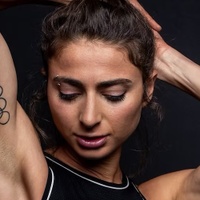
Louise Campion is a French artist and writer, based between Tiohtià:ke/Montreal, Glasgow, and Paris. She has exhibited works internationally, in galleries such as The Untitled Space (NYC, USA) and the Patrick Mikhail Gallery (Montreal, CA). She holds a BFA in Studio Art from Concordia University and just completed her MFA from the Glasgow School of Art, for which she was awarded The Ranald and Jennifer May Postgraduate Painting Scholarship. Campion maintains a studio practice through grants and residencies, that she pairs with research jobs, stimulating projects, curation and writing. She recently joined the executive team at Fais-moi l’art Gallery, while focusing on a painting collaboration for the prestigious French fashion house Hermès.
Conversation
On growing as an artist without waiting for inspiration
Artist Louise Campion on the joy of an inexhaustible subject, the value in reflecting on past work, and the triviality of inspiration in a creative practice.
As told to Jancie Creaney, 2584 words.
Tags: Art, Adversity, Focus, Time management, Day jobs.
How did your ongoing series Wondering if men in suits turn me on or piss me off begin?
I started this series, or this research, I’d say my last year of undergrad in 2018. At first, I wasn’t really focusing on men in suits, I was focusing on the weird stock images that you see of offices, of a meeting or a conference. This aesthetic was very alienating to me and weirdly, so normalized. A little later on, I started watching the show Suits and I was like, damn, I’m focusing on the wrong things. The aesthetic obviously is weird and absurd, and we all tolerate it, but the issue lies within the people that are facilitating these spaces. That’s when I started focusing on not just the aesthetic of the office, but the aesthetic of the person in charge in particular, then the corporate world specifically.
At first, I was basing my paintings off stock photos. Eventually I moved on to screenshots of movies. And later, I did a video shoot with models and friends that were all wearing suits, so now I work from my own images, but that’s how it all started.

Louise Campion, Body of work/bodies at work? 2, Oil on canvas, 100 x 140 cm per panel, 2022
What draws you to painting as a means of exploring these environments or your experience around them?
I was always a painter so it wasn’t about what medium will accommodate my subject best, it was: my medium is painting, what is the subject that I want to show most, but painting was always going to be the way. Painting has such a massive history that is linked to politics and religion, all of these are super patriarchal and socially oppressive, and so my subject is brought up in contrast with the medium.
I’m really interested in projects that consider a specific subject over many years. I wonder how your relationship with the series evolves with each new painting. Having begun it in 2018, what keeps it interesting or how’s it changed for you?
When I started this series, I was looking for a subject that would be interesting enough for me while still being relevant from a social and climate justice point of view and that would allow me to just keep painting beautiful things. I just wanted to paint, to be honest. I wanted to paint beautiful colors. In a world where everything was perfect and I wouldn’t have to think about the end and the people who suffer, I would just paint flowers every day.
So I was trying to find a subject that could keep me doing the things that I love. I found my subject, it doesn’t mean that the subject is not important. Obviously, it’s highly relevant. I’m talking about oppression, I’m talking about people in power, I’m talking about classism, racism, homophobia, climate crisis, patriarchy. All of these things, they’re not resolved. People say, “Oh yeah, it is not the same now.” And I’m like, okay, how many women do you see in charge of countries or big corporations? There are more, but they’re still very little.

Louise Campion, Body of work/bodies at work? 1, Oil on canvas, 100 x 140 cm per panel, 2022
I think my relationship with the subject has changed a lot. When I started, I was still in undergrad, you don’t have a lot of confidence in your topic or even yourself as an artist, so I was tentatively talking about these things. Then you have this wave of [confidence], you just got your degree, and I had a few nice opportunities. I was like, okay, I’m a strong woman, I’m going to talk about men in suits, wondering if men in suits turn me on or piss me off.
[Early on] I was often told sexism doesn’t really exist anymore. Or I was asked questions that were rather problematic or I was made fun of because I was seen as one of the “raging feminists” or whatever. So I kind of took a step back. When I was in my masters, I went through a very painful period. I got sick and then my dad also got very sick and I had to care for him for a little bit and he was in a lot of pain. So I didn’t really have the strength to be that person who doesn’t care about the negative comments anymore.
Slowly [the project] kind of moved toward empathy. I kind of empathized with all of these—I’m saying men, but it’s the symbol of men or the system of men, not personally men—but the system of men that suffer from these issues, as well. Especially, my dad never cried in his life and then he was in such pain, crying all the time because of the pain. He is a businessman as well so this whole overwhelming empathy was put into the topic, that’s why at that point I changed the name to The Attractive Value of Greed because I wanted to change towards something kinder.

Louise Campion, David, oil on canvas, 150 x 200 cm, 2024
It’s a privilege that I have, to have found a subject that never stops giving but that is also stable enough that I don’t have to think about what I’m going to paint next. I already have a bank of images that I built when I did my video shoot four years ago, there are 1,400 screenshots. I don’t have to think, what’s the next subject, I can just deepen this one. In theory and in practice, my brain is stimulated, I can [focus on] what is important, how to deepen my topic, how to be smarter about it, how I can have discussions about it and see where I’m right and where I’m wrong.
Any subject is worthy of attention and is inexhaustible if you bring awareness and genuine interest. It has no bottom.
Yes exactly. It’s so funny because in art school and even in art bubbles in general, there is this word people love to use: “interesting.” They are always like, “Oh yeah, this is interesting.” I’m also guilty of that, I say that word all the time, “it’s so interesting.” The thing is, everything is interesting if you look at it long enough. This is not a word that I can use to know my next step, it’s not an opinion. Everything is interesting. So, it’s like why?
I’ve heard you talk about keeping an earlier painting of yours close to you. You said that you had a piece in your bedroom that you refer to often because of the way you had painted a glass of water. Could you talk about why you return to that early work or to early work in general?
I have this painting in my bedroom. [In it] you see parts of two different bodies at a conference table, looking at a computer screen and there is a glass of water. I look at it often because it is so imperfect, not in a bad way, but in a way that now, if I was to do that painting again, I would look at it and be like, this is not done, there’re so many things missing. But when I look at it now, I think, no, it’s actually beautiful. I wonder: when do you finish, when is your work done? If my partner is looking at me making my painting in my studio and I’m asking their opinion and they’re like, “It’s basically done.” In my head I’m like, no, I’m missing seven layers? It’s not done.
I think I look at this [early] painting a lot because I made it in school when I wasn’t really sure what I was doing and I was on a deadline. I was tired. I had to finish it. I did that glass really fast even though I was super stressed because glasses of water, fuck sake, it’s so hard. The year after I tried to make another one and it was looking like shit and I gave the painting away and I’m so happy I never have to look at that glass again. And I think, how was me in 2018 able to make a perfect glass like this, and me in 2020, couldn’t?

Louise Campion, Work buddies, oil on canvas, 100 x 140 cm, 2024
It’s funny how it works. It’s a reminder that over time, I got better since 2018, ultimately you can see this, but on a shorter period, one or two years or even month to month, whether something is good or not does not necessarily depend on whether it was done at the beginning of the month or at the end. It’s more going to be about how you were feeling that day? Were you tired? Were you frustrated? Were you stressed? Were you saying it’s done because you are over it and you want it to be done or is it done because you objectively think that it’s done? Maybe sometimes it’s just random.
I look at this painting on my wall every day in the bedroom, and I’m like, yeah, there are some things that at the time I said it was over. Now six years later I think they’re beautiful but I know that if I was to make this painting today, I wouldn’t think so and I would change it. It’s a mystery to me, and I try to understand it because my goal is to make beautiful things. So I want to understand why the brain is like that, why this is beautiful even if I know that if I was to do it again, I would not do it like that.
Do you think of each piece as the continuation of the last piece?
Definitely, that’s how I see my series. I mean, it’s one painting after the other, but it’s also a big, massive life’s work. The same way that Patti Smith and Mapplethorpe, for example, they’re just artists living their lives. If she wanted to write poems, she wrote poems; she wanted to write an essay, she wrote an essay; she wanted to take pictures, she did, she wanted to make songs, she did. We don’t see one piece of work and think, this one is genius. When we think about Patti Smith, we think about a life’s work.
How do you think about discipline?
I use that word when people ask me about inspiration. When I have my parents on the phone, and I haven’t painted in a while, they’re like, “Oh, you’re not inspired?” But nothing that I do is about inspiration in my professional life. Inspiration is something that I use for my hobbies, for my friends, for my partner. When it’s about my professional practice, it’s never about inspiration. Obviously, it’s about interest, but I think they’re maybe two different things. I don’t wait to be inspired because it’s unreliable. You can’t count on inspiration, you have to count on discipline, I think that’s how I see it.
That being said, there is what you’re aiming for and what happens. I’m trying to know myself better, I look at how I’ve been working since I finished undergrad, and I go through phases where I paint tremendously and then I don’t for six to nine months or whatever and I feel very guilty about not painting. But I just can’t do it. So, I use that time to update my statement, to apply to things, to work on different projects. I’m not only a painter, I try to have different stuff going on, or just refocus on myself, refocus on the people around me. It’s so hard to do everything. Groceries are twice what they used to be, my rent is going up every year, I’m trying to not lose more friends than I already have because I was sick, all the doctor appointments, and trying to not lose my partner, call my parents every week, and pay my rent. It’s a hard balance.

Louise Campion, John at home, oil on canvas, 203 x 152,5 cm, 2024
I don’t see discipline as something that demands focus on one thing, but more about your life in general, what are the things that you’re trying to achieve? Let’s say you have a pile of paper for everything: you have a pile of paper for your paintings, a pile for your admin work, a pile for the work you have to do to get money for rent, a pile for friendships, a pile for health, and a pile for family. You’re trying to build up all these piles roughly at the same time. Not exactly at the same time, but you don’t want one to take over the others too much because it needs to stay kind of always the same. Discipline is about all these piles, I don’t know if the metaphor is the best one, but about growing them, having them always be slightly leveled depending on what’s most important to you.
If I wait for inspiration, it’s not going to come. Maybe one day and then I am going to be so excited, I’m going to start the project, I’m going to have all these great ideas, whatever. And then anything can happen, first of all, I can get my period the next day and be in bed for two days or my parents are going to call me and there is an emergency or something to take care of, or my partner has an opportunity and needs me to help out. I’m going to be pulled from that excitement. By the time I go back to that thing I was excited about, I’m tired already, it’s gone. So it’s going to be forgotten and then I’m going to feel guilty about it and I’m going to feel like a failure again. It’s not reliable because I don’t know when that energy, the “inspiration” will come back.
I think that’s how I do things. I’m using inspiration as the opposite of discipline, I don’t know if it’s right. But my art is also my professional practice and I am taking it seriously and I hope one day it will be my full-time job. So if you want to make it your full-time job, you can’t rely on something unreliable.
Louise Campion recommends:
The app Finch. I used to have a basic habit tracker on my phone, but this app made self-respect fun, and warm, in an incredibly well-thought-out manner
Big fan of @hopehealingarts on instagram
Getting a bike. It is the fastest, cheapest, healthiest, most self-satisfying mode of transportation (friendly reminder that it is okay to go slow)
I have had the same agenda for 5 years and I will not go back: Moleskin Classic Planner, Large, Weekly vertical, hard cover, 12 or 18 months, Black (1. met my partner 3 years ago / 2. Accepted we were soulmates / 3. Realized we had the same agenda all along.)
A shower usually helps
- Name
- Louise Campion
- Vocation
- artist, writer
Some Things
Pagination