On trusting yourself (and your team)
Prelude
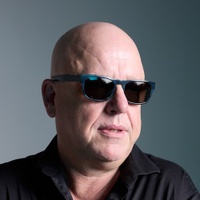
Chef Sandy Tran is the culinary leader, head chocolatier, and a partner at andSons Chocolatiers. She grew to acclaim as a pastry chef at Mainland Inn near Philadelphia and then as Executive Pastry Chef at three-Michelin-starred restaurant The French Laundry in Northern California. In 2022, she joined andSons and made her mark on modern, fine chocolate through hand-selected ingredients, regional inspiration, and seasonally-driven creations. She lives in Venice, CA with her husband, also an accomplished chef, and their two young sons.
Conversation
On trusting yourself (and your team)
Chocolatier and chef Sandy Tran of andSons discusses the importance of intuition, working with a responsive medium and the benefits of challenge.
As told to Nereya Otieno, 2766 words.
Tags: Food, Chef, Collaboration, Process, First attempts, Time management.
How did you go from pastry chef at The French Laundry to this?
The French Laundry is a very different world. As a restaurant, it’s just a different format. There’s a formula: an ice cream course, a fruit course, a chocolate course—and the three shall not meet. Working within that kind of structure was cool. My chef taught me how to really make those things shine. Learning from him, having a big garden process, and just watching how that resonated with guests was great foundational learning.
Transitioning that kind of knowledge base to here was a complete 180. I could put a perfectly oiled strawberry on a plate and give it to you, and you’re like, “This is fantastic.” Making that translate to a bonbon takes a lot of art. Sometimes, I’ll have a strawberry plucked and eat it, and be like, “This is great.” And then try to put it into a bonbon, and I’m like, “That’s bad. How did it go from there to there?”
Do you start with just throwing things at the table, thinking, “these are the ingredients that I need to get towards this flavor profile,” and rejiggering it from there?
Exactly. I’m very trial-and-error. I like to have a wild, crazy thought, and then I’ll struggle and try to make it, and then realize that there are limitations to what I can do. So it’s like, “Okay, cool. That was a good idea, Sandy, but let’s rein it in. Maybe we’ll just do a basic ganache to let the other ingredient that you’re really trying to shine, shine.” And then you just find inspiration from everywhere, walking the market. I need to be out in the sunshine, smell, taste, and think about ingredients. I’m always thinking about things even though I might not look it.
Is that very different in your experience as the head chocolatier versus the restaurant environment?
It’s kind of crazy because the restaurant is very fleeting. At The French Laundry, the menu was supposed to change every day. So you could put something on the menu and if you didn’t like it, you can change it tomorrow. But with this, it’s a permanent box. It’s a collection. If people don’t like it…welp…it’s there and we’re selling it.
But I’m hopeful. I always think, “Well, if it tastes good to me, then I should trust that it tastes good.” I have to trust my palate and my vision. If that gets muddled, then the box doesn’t have cohesion. So ultimately, that’s what I’m trying to lead in one way or another. I just want to make something that tastes good.
When you guys developed your proprietary painting style, did you feel like that changed the way you were thinking about the bonbons?
Yes. Everyone typically sprays with an air compressor with a paint end, and as we got bigger, there’s just so much spraying…It’s very taxing on the wrists and the lungs. I can understand that aesthetic is really nice, but I think we should put a lot of money and a lot of work on the outside of the box that people actually keep. Things can look nice without killing the people who make it. We decided as a company to shift. We thought we’re not going to spend hours and hours on deco, so let’s just spend hours and hours on finding the best ingredient. Let’s spend hours and hours making a wonderful jam out of fresh strawberries. Let’s do that. Let’s not spend hours decorating a bonbon and injuring ourselves doing it.
When you’re working with chocolate, what about it do you find particularly exciting and what is very challenging?
The challenging thing is making a shelf-stable product. It’s hard because what really drew me to the food world was restaurants. I want to make something that tastes really good and then just put it on the plate, and you can eat it. Trying to make it shelf-stable is such a tough nut to crack while still…I don’t want to put a bunch of stuff in it. I don’t use potassium sorbate. If anything, we use citric acid or ascorbic acid. It’s a small acid that is a preservative. We try not to use too much of it, obviously, but sometimes we just need a little bit to preserve that bright acidity, but that’s about it.
There’s a flavor that I’ve been wanting to nail. Peaches. I have tried so many times because I love peaches. Peaches might be my favorite fruit. I have not been able to put peaches in a bonbon because that flavor just goes so fast. I can do all the stuff, and then a month from now, if I try to eat it…It just tastes like sugar.
So it is challenging to make a quality product that is shelf-stable and maintains its integrity. What is exciting for you?
The same thing! It is challenging, but it’s so fun.
I feel like you like a problem to solve.
Yes, exactly. I love to tinker. Chocolate making is so satisfying because when you do a good job, it tells you that you’re doing a good job. The chocolate will tell you. It will just flop out of the hole. When you’re doing a bad job, it won’t seal, it won’t crack, it will split. It’s a medium that is so responsive to the maker.
If you’re making ganache, or a praline, or whatever, the filling, and if you didn’t follow the principles of good ganache making, it splits. But if it’s right, then it’s shiny and it emulsifies nicely. It pipes beautifully. Then, when you go to cap it, it caps beautifully. And when you go to knock out, every single one of the things just flops out.
What else in the whole world does that for you? I can’t parent like that. It’s as if your child looks up at you and says, “A-plus job, Mom.” That doesn’t happen!
But there is a lot of intuition along with the formulas. I’m sure you see patterns in the chocolates and how to compensate for changes.
Absolutely. We have a system. All my staff here have been with me for a very long time, so they know to spot things that might go awry. So, say on a shelling day, they’re doing double what they normally would do on a specific day. You have to know how to read those signs. You can’t just follow three steps and get the same result. You’re doing three steps, but you’re doing two times those steps. The room heats up by two degrees. A person who might not know this—
Wait. So, even just working on the chocolate might be harming to chocolate?
Yes. The room is warmer now because we’re doing twice the amount of product. My staff intuitively know to move out of rooms. Say our coma is full, which is the conditioning cabinet that we keep the chocolate in. They know they can’t work in there today, so instead they’ll work on something that needs six hours to crystallize. They’re so good, honestly. They’re craftsmen and so many of those things can’t be taught. The chocolate will tell you.
What do you do when you can’t quite achieve a flavor? How do you keep your spirits up?
Oh, my God. Actually, I work well under duress—say a hard service or busy night. But I don’t do creative work well under duress. If it’s busy and I need to come up with a really good flavor…I’m just like, “I can’t right now. I know I can later, but you’ve got to give me space to do it.”
What really gives me the mental space to do the creative work is doing the other stuff. As a break, I’ll move out of the kitchen and go to the ship line and start shipping boxes or packing boxes. It keeps my hands moving, that makes me feel like I’m productive and gives me positive momentum. Sometimes I just need to ship 1,000 boxes to feel like I have the space to be creative. It’s not a self-care day, but, dare I say: a self-care task.
I feel similarly. I’ll re-pot a plant and then know how to fix the pages I was toiling with by the time I’m done. I needed the problem not to be the number one highlight of my focus. How do you know when a bonbon is done and needs nothing else?
I’ll taste it, taste it, taste it, taste it. I ask myself, “How can I make it better? It needs more whatever, salt, vanilla.” Taste it again, again, and again until I think, “Okay, this is it. Let’s not mess with it anymore.” Then I’ll taste it one final time and be like, “Okay, add a percent. Just increase it by one more percent, just a little bit more.” For example, salting a ganache, I’ll salt, salt, salt, salt, salt; taste it. Okay, it can use a little bit more salt. And then I’m like, “Okay, it’s good now.” And then, at the very final moment, I’m going to put a little bit more salt. Walk away. That’s good. Whatever it may be.
What’s really crazy is I don’t have to answer to anybody, which I love. There’s not a single person in this building that will tell me that I can’t make something. It’s wonderful. I know I work for a company that thinks, “Hey, you’re the chef. We trust you. Do whatever you want. If it tastes good to you, it tastes good to us.” I definitely use my staff. I ask them, “What do you guys think? Is it good?”
How do you factor in collaboration with what you’re doing?
Honestly, it’s so much easier to have a team and ask what they want to make. Then I’m just helping. It’s one of the reasons why I think people come to work, or I want people to come here, because I’m not a one-trick pony, and I don’t want to make all the flavors myself.
For Christmas, this is a big, big one. We think about Christmas all year because, well, it’s Christmas. But everyone has a holiday story. One year, we made champurrado. I did not grow up Hispanic, but a member of my staff said, “I love champurrado. It’s a corn-based drink made with chocolate, vanilla spices.” I thought that would land really well with our audience and our community.
I went and found good corn. And we got a great masa as a base. Then we got really good Mexican vanilla and found a really good chocolate to pair. As I was making it with my staff, they kept telling me what it needs. It belongs to the person whose idea it was, and I’m just a steward of making the creation. I love that. Because their ideas are just as good as anyone else’s, right? Just as good as mine. And then, hopefully, I’m just relying on my palate and their palate to nail it. That feels collaborative to me. I hope it does for them, too.
What is something that you wish you had known about this profession before becoming a chocolatier?
I don’t know. I knew that it was going to be hard on the body, but I very much picked it knowing that.
In which way is it hard on the body? Constantly bending over?
It is so heavy. Any chocolatier will tell you. The mold itself is a certain polycarbonate weight. Once you fill it with chocolate, then you fill it with ganache, and then you work with it, and it’s so repetitive, the repetitive nature of chocolate. You’re doing this 4,000 times across the course of that flavor. Basically, to make the economics of this business work, you have to do a lot.
So, it’s an abuse on the body. It’s one of those things that’s like sculpture or something, I guess. I don’t know, maybe ceramics.
There’s so much you’ve been saying that reminds me of ceramicists. Especially when you were mentioning the chocolate talks back to you. My ceramicist friends all say it’s easy to mold when you follow its lead. Otherwise you’re fighting the clay.
Imagine throwing that clay all day long. I’m sure it’s really bad on the body, but what do you do? If you love it, what do you do?
So what do you do to protect yourself physically and also creatively in the off hours?
In the hours, we make sure that you’re rotating tasks. No one individual is doing a task for too long, and we try to spread it out as much as we can. Obviously, taking away the spraying was huge. So, finding new and innovative ways, talking to engineers, and we’re like, “How do we eliminate this because we can’t just do this anymore?”
In the off hours, to protect myself, I can’t pick up my baby.
That’s the number one thing I was thinking about.
I’m so sad. He loves being picked up. My husband does a lot of holding. There’s mom ways, I guess, that you figure out. Defensive positions that help maintain. I don’t want to destroy my body to make this product, so we just try to find really good, protective ways. Pivot when we need to pivot, and hire more staff and spread the workload.
How do you nourish your creative side when not at work?
I honestly just try not to think about work when I’m not at work. It’s such a fun profession. It’s not that serious. My sister’s a doctor. I’m not, it’s not that serious. Eating bonbons is such a fun thing to do.
But, I also try and plan ahead so I’m not stressed. And surround myself with people who are super positive. Music is really helpful. We listen to a ton of music in the kitchen. When everyone’s having a great day, we’re listening to music. We’re vibing. The chocolate’s working really well. Then we just naturally start having conversations about the future and what we want to do creatively.
I have a confession. I don’t like the taste of chocolate. But I will always try a really good chocolate or truffle because the feel of it in my mouth is so rewarding. I love tasting someone’s experiment. Engaging with their understanding of this food source that people have been crafting for centuries is really interesting to me.
What’s funny about chocolate is that it is…I keep saying that shelf stability is a bad thing, and, as a creative, working in that paradigm is hard, but it’s also magical in that it’s a snapshot of time. How does [our peanut butter and jelly] bonbon taste exactly like a peanut butter and jelly sandwich that I had when I was little? Chocolate does span centuries. We’ve all been eating this stuff forever, and because it’s fat-based, it holds onto flavor so well. And again, if you play its game and you pick a flavor that it holds, it really holds it. I can’t do that in a restaurant.
It’s kind of amazing how you make a tiny crafted dessert, and it’s shippable. It’s like a time capsule.
Everyone’s also probably smiling when they’re experiencing it. It’s a celebratory thing you’re working with. Other food can be that as well, but it’s often just sustenance. But this is a luxury, a way of enjoying life.
I love that. You’re right. It’s not sustenance. A cookie is like…sometimes you’re really hungry, and a cookie will do. It’s a little sidecar to coffee and breakfast. Chocolate will never be sausage. Can you imagine how much you’d have to eat if you’re hungry to fill you? You’re very much opting in when you’re eating, and you’re like, “I’m trying to fill a hole that nothing else can.” And it’s a little piece of chocolate.
Sandy Tran recommends:
Slowing down and having an afternoon nap with your 18 month old baby
Enjoying the numerous small sidewalk restaurants in Montreal
Riding a three wheeled cargo bike to the beach with all your gear and kids in tow
Escaping to thoughtful and warm boutique hotels in beachside towns with your favorite person
Walking through Philadelphia during the 1 week in Spring where the weather is perfect and the humidity is below 60%.
- Name
- Sandy Tran
- Vocation
- chocolatier, pastry chef, business partner (andSons)
Some Things
Pagination