On connecting with community
Prelude
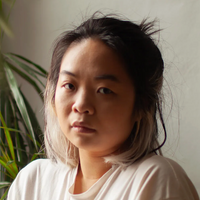
Melissa Sáenz Gordon is an award-winning digital storyteller, multimedia producer, and cultural worker based in Queens. Her work sits at the intersection of the arts, community organizing, and urban planning.
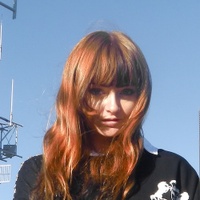
Molly Salas (she/they) is a music supervisor and community advocate based in Bed-Stuy, Brooklyn. In their work across film and advertising, they champion voices underrepresented in these spaces. She helped successfully landmark Bed-Stuy’s newest historic district in 2024—expanding her advocacy into housing justice, community land trusts, and collective power-building.
Sáenz Gordon and Salas run Soft Power Vote, a civic engagement initiative working to make voting more accessible in NYC for Millennial and Gen Z voters. It was founded in 2020 by Sáenz Gordon, Yojaira Alvarez, and Glenn Robinson.
Conversation
On connecting with community
Civic engagement duo Soft Power Vote (Melissa Sáenz Gordon and Molly Salas) discuss moving with intention, balancing day jobs with organizing, and the importance of strategy.
As told to Miriam Garcia, 2919 words.
Tags: Activism, Music, Day jobs, Process, Collaboration, Focus, Education, Time management.
Can you both tell me a little more about your backgrounds and what led you to decide to collaborate on a project?
Melissa: My background is pretty diverse and non-linear. I have a background in social media, storytelling, and editorial work, as well as restaurant work. And my organizing background was shaped by growing up in San Francisco, a city that was pretty seasoned in community organizing, information sharing, and skill-building. So when I first started voting, I would get information from various sources, from talking to my parents, but also going to coffee shops in college and seeing ephemeral printed matter that would share information about the ballot.
I started organizing little get-togethers in San Francisco with my friends to go over what was on the ballot and whatnot. When I came to New York in 2017, I noticed that New York didn’t have as much independent information. So in 2019, I pitched the Soft Power Vote idea to a couple of friends of mine, and we launched it, and Molly joined within the first year.
Molly: I’m a music supervisor, so my first job was in television, and then I was at MTV, but it didn’t have music anymore. I grew up in San Diego, a border and military town, which has all of these politics that California doesn’t share, or it is also kind of in between these two cultures, which is why it’s not my place. In 2020, I was working as a music supervisor in a big, scary tech company and hated it. And Soft Power Vote was something that a friend had recommended, who was doing some jail support during the early part of the pandemic. And I was like, where do you go for the judges? Who do you trust? I quit my job and really wanted an outlet to help. Luckily, Soft Power Vote blended the creative industry that I work in and my political wonky nerdiness, and here we are.
Molly, is there a place, a person, or a moment that tends to spark your best ideas?
Molly: It’s less a particular place than it is a setting. Over the years, I’ve figured out particular playlists or vibes that help me accomplish different tasks. There’s one that helps me get in the zone for projects that are really creative writing involved, others for more rote data entry, lots of music that is best for deep diving research. It’s a little like music supervising my own creativity, but now that it’s been a practice of mine for years, it helps me focus and dedicate time to things that are important to me. Settling in with a playlist, a coffee or something, and a cozy place to sit is the first step to feeling really grounded before diving in.
Melissa, as you mentioned, you grew up in San Francisco, a city known for social movements and a vibrant artistic community. How important do you think it is to have mentors or role models to develop your creative discipline or to get into making art?
Melissa: Growing up in San Francisco definitely shaped me as a person and my creative practice with Soft Power Vote. The reality is that I’ve had a community of mentors, with friends and peers proving to be my most vital collaborators. I’m someone who needs to workshop ideas, methods, and discuss the world around us—this simply cannot be done alone. Right now, the fabric of the San Francisco arts community is being challenged, with recent closures of major art schools like the San Francisco Art Institute (founded in 1871) and the California College of the Arts (founded in 1907, FKA California College of Arts & Crafts), but folks are already organizing around it, because the opportunity is there and so is the creative spirit and will—it’s inspiring to witness. I’ve found NYC to be a super collaborative city, but it’s also easy to feel overwhelmed, [either] with opportunity or simply distracted by the amount of fun things to do, so it’s important to have grounding moments to pause and connect with people one-on-one, in-person, and talk about projects, life, and more. Mentors and role models are pretty core to a creative person’s artistic expression, nurturing ideas that may lead to projects or movements, but they may not be who you expect, so stay open-minded about that.
When launching a project, there’s the creative idea, but also the strategy: how it will land, how it’s planned, and how it’s tested. Before you launched Soft Power Vote, how much did you think through those elements?
Melissa: It’s a little bit of both. The project is about five years old now, so at this point we’ve seen what works and what we realistically have the bandwidth for. That’s always the balance with this project. It’s a passion for both Molly and me, so it’s hard not to want to invest everything in it–but it can also take over your time. In the nascent years and months of building, the project was also just a totally different cultural moment. I was unemployed and just had so much time on our hands, and that was also what really informed the nature and the structure of it.
From the beginning, we were intentional about it being digital-first. We cared a lot about the aesthetics, something catchy and shareable that people would want to circulate online. There was definitely experimentation in the launch: testing what worked, figuring out our voice, and seeing how people responded.
Molly: A big part of our strategy was making our research publicly accessible. We wanted to empower people to seek out the information themselves and to demystify politics. For us, that connection between politics and the cultural community is systemic and fundamental.
Melissa: And also on a practical level, launching was scrappy. You come up with the idea, pitch it to friends, secure the Instagram handle, make an email account, and start talking to your community. A lot of it was grassroots–making sure the people who needed the information were actually getting it. On a higher level, a big mission of the project is to show how politics and being engaged in this subject matter aren’t just for a certain type of person. It’s so easy to just be like, that’s not my thing, or, I’m not interested in it. I wanted to create a project that made it easier for us to connect those dots.
Some social media platforms are prioritizing a certain kind of content. Since a lot of your work is published online, is there anything that you’ve learned about protecting your work in a digital space, for example, archiving content, or anything else that has been helpful?
Melissa: I don’t think we necessarily do it intentionally, but in some cases and in some iterations of the project, we were creating a community folder where we would put all of our digital assets. These platforms force us to get creative with how we preserve and share content. As platforms can now read text, they’ll sensor and shadow ban posts that use certain language, so we’ve had to adapt, circling back to things like pager code to work around that. It also forces us to think about how our content lives and survives on these platforms.
In terms of archiving, we want our resources to endure, not just as something people rely on, but as a starting point for their own research. Part of protecting the work is also making sure it points outward, beyond just our platforms. We’ve also learned that collaborating with other creators is very helpful to extend the life and reach of the content. Another thing that we have learned is that, rather than trying to do everything ourselves, we work with people who are already doing certain things really well, and we fill a different need. That’s been a helpful strategy for sustaining the project long-term. Lastly, it’s a little bit of learning the new updates and what is evolving. Also reminding us that you don’t have to chase trends all the time. We get to curate what we think makes the most useful and interesting, and we stay true to our mission.
You both seem to juggle a lot of different activities and projects. How do you manage your time while also maintaining healthy boundaries?
Molly: I got a new full-time job in September, and before that, I was a 1099 freelance music supervisor and had consistent work that felt good, but I had a lot of free time during the workday, so I would open my laptop and do work related to Soft Power Vote. I don’t have the luxury of that time in this new job now.
I’m still adjusting. I’m figuring out how to set boundaries with my own time, but I also find this work to be really interesting, fun, and generative. But just sitting in my little container, making a big spreadsheet is really fun for me.
This work usually brings me joy, but right now it’s bumming me out. And it can be really hard, especially for creative pursuits–in the world we live in, we’re expected to hustle or monetize it. That is part of how creative work is oriented around your own values. It’s hard to set aside the time, particularly when you’re often encouraged to earn income for the things that don’t pay you money, especially if you’re struggling to live in a city as expensive as New York.
Melissa: Just to build on that, I consider this my creative practice and my creative output in a lot of ways. And like any other practice, you have to choose to do it. That’s just something that is always in the back of my mind. And money is such an interesting thing to bring up with this, because, even though we’re doing it for free, we still invest in it, and it requires capital to keep going.
That’s also why I love highlighting that artists are teachers, organizers, restaurant workers–people with full lives outside their creative practice. It was fun to have and create a project that really blended it all, because that’s kind of how we live our lives.
Melissa, in 2020, you wrote an article in Hyperallergic called “We Need More Creatives in Politics.” What were your major findings from that article, and what has changed, or what are any new insights that you’ve had since you published it?
Melissa: What we can see is that when artists run for office, they’re great leaders. Some of our most exciting new electeds are all people who have an arts and a creative background. For example, Jabari Brisport was an actor and a public school teacher.
My main finding is that art is also something that, just like politics, if you don’t know a lot about it, it can feel very intimidating. Some people like it that way, and I don’t. There are lots of studies that show that art makes neighborhoods safer, it makes us more excited, and it makes our walk more enjoyable. It just makes life more enjoyable, and it helps us learn how to relate to each other. I grew up in San Francisco, and a lot of art spaces and venues are closing. And nightlife is a huge part of a healthy culture in society. And for us to be able to go out and see all this crazy stuff on the news and see just all the crazy stuff that’s happening in the world, to have spaces where we can decompress is also really important.
I’m sure you have spent a lot of time working on something that did not work out. What advice would you give to creative people who invest a lot of time and effort into something, and they don’t achieve the result they expected?
Melissa: Hope and joy are two of the most vital and powerful feelings. And we can see the kind of impact we would have if we all just show up. Much like Soft Power Vote, it’s just get out there and try something. There’ll be a lot of disappointment, but it’s more like, how can we turn that L into a win?
Molly: For this project, I feel successful when a bunch of my peers feel more empowered to do the thing. It can be a bummer. There is so much fear of the undesired outcome that it often results in not trying. And I am grateful for the platform we created because, at the very minimum, it means that we’re always trying. We’re always trying to continue imagining the best New York City that we can.
And for creatives more broadly. It can be disappointing when the outcome doesn’t work out the way that you expected it to. And often the work of trying or the effort might unlock some other things that you weren’t expecting.
You both have worked on many creative projects involving organizing groups and producing events. In your experience, what do you think sparks engagement and excitement from audiences?
Molly: Authenticity is really important. Audiences can see through trying to be sold to or cajoled into doing something. It’s true in politics, and it’s true in art. An authentic connection is a much more meaningful one, and builds trust, which then keeps those audiences engaged, than something that feels forced or trying too hard. It’s a big learning, too, to be able to follow your creative gut rather than try to fit into something prescriptive, branded, or following trends. The creator economy tends to lend itself to lots of folks copying each other, chasing viewers and followers, but it’s refreshing and captures attention when creative people try something new.
Melissa: Timing is a big factor. You may want to coordinate an event or project launch to dovetail with a specific date or venue, but sometimes you just have to go for it. In the end, just getting it over the finish line is the most important element. What sparks engagement and excitement in people is simply the opportunity to gather around a topic or theme, so creating that opportunity and platform is the ultimate objective. I saw this line a decade ago (probably on a coffee cup or on Instagram), and it echoes in my mind when clouded with logistics: “Finished is better than perfect.” So just execute the thing and apply your learnings to the next one.
Molly Salas recommends:
Everything for Everyone: An Oral History of the New York Commune, 2052-2072 I’m working my way through this now, and it’s such an imaginative exploration of what we can do if we stop accepting the status quo, fight for the collectives, and completely subvert our understanding of society, commerce, and more. It’s daunting to imagine some of the steps in our future this alternative history describes, but being set against the backdrop of a future New York City makes it lofty and tangible at the same time.
Sudan Archives - The BPM Saw her live recently, I don’t know what she puts in that violin but it keeps me coming BACK.
The Word Is Change bookstore in Bed-Stuy. Support small businesses! Get off of Amazon! They have a great selection of new and used books, often with a leftist lean, and the events they host reflect their values and their politics. We love to see it.
Take a ferry ride on NYC Ferry. One day it will be warm again in New York City, and the ferry is such a nice way to see the city, get to where you’re going, maybe have a beer in the sunshine on the roof deck. Whatever youth that runs their Instagram is also such a chaotic good.
Laziza, also in Bed-Stuy, a vinyl listening bar and restaurant that is delicious, has great funk records curated with care, amazing staff, great vibes, no notes.
Melissa Sáenz Gordon recommends:
Love regional audio, so I’d be remiss not to suggest tuning into local FM radio wherever you are. In an age of AI-playlists, it’s so grounding to enjoy thoughtfully curated tracklists by a human, which often reflect a given area’s local culture and history. A couple of quick hits: In NYC, I listen to Brian Lehrer on WNYC in the mornings, Jazz on 88.3 WBGO, and 89.9 WKCR. Love 89.5 KPOO when I’m in the Bay Area. What I’m listening to right now, however, is Joe Bataan’s “I Wish You Love,” Parts 1 and 2.
Take public transit to LaGuardia Airport (Slayguardia if you will).
1# log of organic butter from the farmer’s market (affordable luxury, you deserve it).
“The Gift of Strawberries,” a chapter from the book Braiding Sweetgrass: Indigenous Wisdom, Scientific Knowledge and the Teachings of Plants by Robin Wall Kimmerer. A preview: “A species and a culture that treat the natural world with respect and reciprocity will surely pass on genes to ensuing generations with a higher frequency than the people who destroy it. The stories we choose to shape our behaviors have adaptive consequences.” (Page 30)
It’s an election year! Double-check your voter registration and find your representatives at the link in bio @SoftPowerVote on Instagram (shameless plug). Remember: We the people hold the power!
- Name
- Soft Power Vote (Melissa Sáenz Gordon and Molly Salas)
- Vocation
- music supervisor, activist, producer, cultural worker
Some Things
Pagination