On making a choice
Prelude
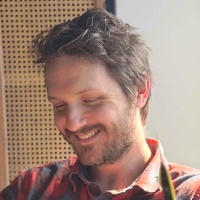
Ira Silverberg has worked with writers and artists since the mid-1980s. He has been editor-in-chief of Grove Press, publisher of High Risk Books/Serpent’s Tail, senior editor at Simon & Schuster, and was a literary agent and foreign rights director at two New York agencies before joining the National Endowment for the Arts as Literature Director during the Obama administration. He’s an adjunct assistant professor at the MFA Writing Program at Columbia University, and has written for ArtForum, Document Journal, Frieze, New York Magazine, Rolling Stone, and Vulture. He lives in Bellport, NY with his partner and a dachshund named Rita.
Conversation
On making a choice
Editor, publisher, and literary agent Ira Silverberg discusses his storied career in the arts, the benefits of the nightclub being around the corner from your day job, and why agents are fundamentally promiscuous.
As told to Chris Molnar, 3457 words.
Tags: Writing, Publishing, Beginnings, Identity, Failure, Day jobs, Income, Money.
I want to go through some pivot points of your career in publishing to see how you got from A to B. When I think of what I want to do with my life, it’s whatever you’re doing.
It’s following your passion. If you’re working with writers who are not thought of as mainstream to begin with, writers who are coming from marginal communities, writers whose work is too outré, right off the bat, you begin on the outside. So you understand an alternative path into supporting their careers.
For me, it began in publicity, moved to editorial, and then agenting. There were some other things thrown in—nightclub doorman and promoter, memoir workshop leader in the maximum security unit of a women’s prison—I try to mix it up. But, it’s always been about a certain continuity—working with the people I believe in. My loyalty is to the artists first, not necessarily to whatever organization I’m working for. I remember my partner at Serpent’s Tail yelling at me, “You’re too close to the writers,” as if that’s a problem. Maybe for him it was but it’s pretty much the fuel for me. I’ve been blessed to be surrounded by the inspiration they provide, even the assholes.
You started at Overlook Books in publicity?
I was trying to finish my degree and needed work. I’d met Peter Mayer, who was then the CEO of Penguin, at the Naropa Institute, the summer of the 25th anniversary of the publication of On the Road by Jack Kerouac. I was there with James Grauerholz and William Burroughs—my lover and his boss who was kind of like my mother-in-law. Peter owned Overlook and I thought why not? Working in the arts never seemed like an option. My parents were first generation, very middle class, they wanted their son to be a lawyer. That didn’t quite work out.
I landed a $10 an hour part-time job that grew into a $10,000 a year job. I should have stayed part-time. I was going to Hunter and I was doing 20 hours a week at Overlook, typing on a typewriter with four carbon copies behind every piece of correspondence. One was for a chronological file, one was for the book’s file. One set went to Woodstock, where Peter Mayer had a house, and the other went to London, where he lived mostly. Months later, you would get your correspondence marked up with suggestions or criticisms or encouragement.
What kind of correspondence?
Maybe trying to get an event for someone at a store, or maybe it was just responding to an editorial query. Or even pursuing a book idea. Peter would send back a marked up carbon copy, like four months later. I think I learned more about publishing from those notes of his than anywhere.
Can you tell the story of how you and James met?
I grew up in the Bronx in a somewhat mafioso, racist enclave. Not exactly my scene so I moved to Chelsea the day after I turned 18. I was in a six-year BA/JD program that was the precursor of the CUNY Law School, basically a social justice law program, and a friend there had a spare room. From there it was on to Avenue A and 11th Street for $500 a month, which seemed insane for a five-room flat. I shared it with two friends from high school.
There was a great gay bar on 2nd Ave & 4th street called The Bar, that was our regular place. That’s where James and I met. We fell in love pretty quickly, and I left school, home, friends and family to live with him in Lawrence, KS. It seemed very exotic for a kid from the Bronx. We got William out of the Bunker first. I followed a few months later.
What else were you doing when you came back from Kansas?
I grew up in the nightclubs of New York. When I came back, maybe even before I came back, I started hosting parties at both Danceteria and Limelight. Penguin reissued Junky, and Overlook reissued William’s son’s work, so I did something at Danceteria for those. One of the doormen, Haoui Montaug, had been my boyfriend when I was in high school so it was easy to get going with events there.
Limelight was brand new and I got to know Claire O’Connor, the PR person there. She was all for doing seemingly literary events—class the place up, I guess. The first event I did was a book party for Dennis Cooper and Brad Gooch, one of the gay presses of New York. Then I did something for David Hockney, for his book Cameraworks. So I pitched them on Burroughs’ 70th birthday.
William had been away for a couple of years. He’d done Saturday Night Live just before we all left New York, and his cache as a subcultural hero brought out the celebrities. Limelight said, let’s do it and we threw a dinner for 300 people. We went with a Moroccan theme—he had done his time in Tangier and serving couscous was cheap.
I looked at the pictures recently and they’re amazing. There’s Lou Reed sitting with Jim Carroll at one table, at another is Sting with the other members of The Police. Then there were the writers like Norman Mailer, Kurt Vonnegut, Allen Ginsberg, and Anne Waldman. Artists, downtown celebs, and a lot of folks who were just friends alongside them.
So I was doing that—for not a lot of money—working in publishing , and I was really kind of struggling. I had my own place on Rivington Street by then, two rooms in a walk up with a tub in the kitchen for $400. Hard to make that rent on $10,000 a year. Claire knew as much and made me an offer, “You know a lot of people. Why don’t you do the door to the VIP room on the weekends?” It was glam, debauched, and I was all in—money, drugs, and free drinks at 22 years old? Heaven. Sometimes they would call me in during the week. Overlook was around the corner, so I could just go over there at the end of my shift and sleep on the sofa. Going from the nightclub to the day job, literally around the corner, was how I could afford to stay in publishing.
Barney Rosset, who was the founder of Grove, and Fred Jordan, his editor-in-chief, were at the birthday dinner for William. By then, I was becoming a reader—William fed me books during my time in Kansas. A lot of the authors were on Grove. Every time Grove posted a job in Publishers Weekly, I would apply for it, even if I wasn’t qualified. I remember Fred saying, when I applied for a production job, “You can’t do this. This isn’t what you want to do.” But Andrew Wylie called one day and said, “Barney’s about to get a lot of money.”
You knew Andrew Wylie through Burroughs?
Yeah, through William. He was an early client when Wylie was starting out.
Barney had leveraged so much through many years, since the founding of the company. He’d sold off the rights to Malcolm X’s autobiography to Random House because he needed cash. His first wife was Joan Mitchell, the painter. And at some point, he goes into his barn in East Hampton, and he finds ten canvases. I know the dealer who bought them from him, who ran out to East Hampton with a check for a quarter of a million dollars—which was a lot of money then, and a lot for Barney.
The Joan Mitchell money got you a job?
No, it got Barney some cash but not enough to save Grove. The money came in when Lord George Weidenfeld, the only Jew in the House of Lords at that time, possibly the only Jew ever, went into business with his friend Ann Getty. He convinced her that they should buy Grove and start a US branch of his house Weidenfeld & Nicolson. They booted Barney, a bunch of us left, the Getty’s were burnt, and Morgan Entrekin, with Joan Bingham, bought and saved Grove after that fiasco.
When did you start representing writers?
I left Grove in, I think, ‘89 and started a business after Barney had been thrown out. He had office space and he gave me a desk. If you’re a true believer, if you’re working outside the mainstream, it becomes very easy to move. It’s either that or suffer. It was very easy for me to start this business on faith. I was doing PR and agenting. I was too enthusiastic as an agent though and took on too many people. I wound up dropping much of my list and focusing on PR.
Who were you taking on?
It was all people I knew, but I took on a lot of people. Dennis Cooper didn’t have an agent. Kathy [Acker] wanted to leave her agent. I was the agent who couldn’t sell David Sedaris. I sold him to a gay press that doesn’t exist anymore called Amethyst. I mean, I could not give that book away. I have all the rejection letters in my archive, it’s hysterical.
It was about the same time that Amy Scholder and I were also doing the High Risk anthologies. We saw a lot of writers and artists censoring themselves; writers were getting very quiet. Nobody wanted to talk about sex and the outré stuff. So, we sent a letter out to writers we knew and/or liked saying, “What’s the piece you’re most uncomfortable sending out to publishers or magazines these days?” We went to Karen Finley, Sapphire, David Wojnarowicz, and a lot of other folks who were dealing with the 90’s culture wars. It was a busy time. Staying busy was one of the ways I coped with loss. The AIDS death toll was getting higher and higher.
How did PR work then?
Marina Rosenfeld, the composer, was an assistant at the LA Weekly back then. I’d sit by her desk while I was waiting to see the editors I’d pitch books to. Ron Athey was working there also. Colson Whitehead worked at the Village Voice Literary Supplement. So many artists were working in the arts in the media to support their careers. It was before the MFA industrial complex took over.
Marina and I got to know each other and stayed in touch. Years later she said, “You were like the Fuller Brush Man of experimental literature.” I was working with all these fantastic independent publishers—Exact Change, Serpent’s Tail, City Lights, Atlas, Incommunicado, Re/Search, DAP, Scalo, and others—at least a few don’t exist anymore. I had a portfolio that showed the vitality and adventurousness of what people still thought of as the fringe. They each paid a reasonable monthly fee and I’d divvy up the expenses amongst them. I got to travel, their catalogs were seen by editors at newspapers and magazines around the country. I’d see booksellers, and programmers at places like Intersection for the Arts in SF, LACE and Beyond Baroque in LA. It was genuinely satisfying, and completely appreciated by the clients.
The business was at the center of a cross section of networks that worked outside the usual channels—performing arts centers, nonprofit art spaces, alternative weeklies, small presses, college radio, zines… The same things exists today, some in different forms like podcasting or online publications. It was a world of print then. There’s just less of a lot it in New York City given the rents. The essence of what people mythologize about downtown in the 70’s through the early 90’s has moved to Kingston, and Newburgh, and other affordable smaller cities with access to NYC. There are still alternative scenes, just not as many in NYC, particularly Manhattan.
Through High Risk, you became a partner at the publisher Serpent’s Tail, and then that broke up. What happened?
The publisher of Serpent’s Tail wanted a US presence. I told him we had to do US publishing, not just imports. We started with a fiction anthology from the Village Voice Literary Supplement, and eventually Amy and I created High Risk Books. Serpent’s Tail had done the anthologies in London; those books were published by a large press here. It was the right list at the right time—the culture wars and the AIDS crisis combined to make fertile ground for launching writers who lived differently, were suffering, were the marginalized due to what America actually was–a dying capitalist patriarchy that would soon reckon with its hideous creation story and the reality that there was ‘otherness’ in its midst. The list took off and established writers like Sapphire, honored others like Burroughs and June Jordan and our elders, and created space for serious careers for Lynne Tillman, Gary Indiana, and others. Simultaneously Barnes & Noble was expanding and building superstores. There were miles of shelves. They were buying everyone’s back list. Serpent’s Tail has an exquisite list of translations but when you see copies of Juan Goytisolos’s books heading to midwestern superstores, you can smell the books coming back before the books ever land on the shelves.
At some point the returns came in, and we had negative numbers that were so severe we were getting more books back than we were selling in a a given month. The UK books were coming back at a faster rate than the US books, the part of the list that did well, were going out. This effected the bottom line for the whole company, US and UK. My partner was a real genius—a faux Marxist living on inherited wealth. “It’s either the house in France or the New York office.” You know you’re in trouble when you hear that. Finally, I was given the choice to either continue publishing US books—but with no staff, or to keep the staff and not buy any new books. All I could manage to say was, “I can’t do this anymore.”
So you left High Risk and then you moved back to Grove, but in what capacity?
Morgan Entrekin brought me on as Editor-in-chief. I brought Burroughs back to the list. I brought Valley of the Dolls back into print. It’s been one of their best selling backlist titles. I published poetry by Fernando Pessoa that hadn’t been seen in English. But when I came up against problems getting Allen Ginsberg’s last three titles on the list, I split.
Then you went back to agenting.
I rallied some of the old troops and expanded my list so I could just be an agent and not have to do PR. Neil Strauss came to me with The Game, and said, “You’re going to tell me not to publish this book. Just do the contract and we’re both going to make a lot of money.” I had written to him when I was an editor at Grove to say, “You’re the best rock critic the New York Times has ever had, except maybe [Jon] Pareles, and I would love to work with you.” Years later he told me, “You’re the only editor who ever wrote to me, and now you’re an agent, so I want you to be my agent.”
Kate and Andy Spade were clients. We did a seven-figure deal with S&S for Kate, and set Andy up with an imprint at Harper Collins. I had three clients nominated for the National Book Award. Ishmael Beah, a family friend, became an international bestseller with A Long Way Gone, his memoir helped to change policy regarding children in armed conflict. There was Sam Lipsyte, Minna Proctor, Adam Haslett, Andrei Codrescu, Wayne Koestenbaum, and other writers whose work I believed in wholly. I took on translations from Europe and Japan.
It was great until it wasn’t. It wasn’t the business itself that was trouble so much as it was how close I was with certain clients, and not knowing how to shut the gates at the end of the day. One was having an affair with one of my co-agents while he was married to a very dear friend who was also a client. She wound up having an affair with another client of mine, also married. Two marriages ended, one survived, one kid was subjected to a paternity test. A lot of Brooklyn drama. And then there was the JT Leroy thing. When the opportunity arose to leave for Washington to work as Literature Director at the NEA, I got on the Acela.
Do you think this happens particularly in the world of agenting?
Everyone wants an agent, and agents are certainly polyamorous. You’ve got to make a living, so you’ve got to diversify, and everyone wants a connection in publishing. Your job is to fall in love with your clients. There’s a lot of false intimacy, a lot of tribalism amongst writers that isn’t always good. It’s telenovela turf.
After the NEA, you briefly worked in mainstream publishing, right?
I did a little time at Open Road Integrated media and learned about eBooks. There was consulting work via Bloomberg Philanthropies’ Arts Innovation Management program where I was the lit guy. It kept me busy.
Then Jonathan Karp from Simon & Schuster called me. We’ve known each other for years, and he said, “Why don’t you come over here? I want to up the ”literary ante.” I missed making books. I liked Jon. The problem was I didn’t report to him directly but to someone who didn’t get what I do. I was losing auctions, the marketing people sought success from the obvious things, and I’d never worked in corporate publishing before. I lasted three years.
What’s a book that you’re proud of from Simon & Schuster? And when did you start teaching at Columbia?
Asymmetry by Lisa Halliday is a debut I’m particularly proud of.
I started at the Columbia MFA Program in 2014. Teaching has been more satisfying than a lot of other things I do. Especially when I have a lot of poets in the room, they’re so much more sensitive, and able to have nuanced conversations, than a lot of other writers.
And now you want to get back into not-for-profit.
I don’t know what I want except to work with people I respect. I think about things that could be a singular activity—running a foundation’s literary program, overseeing grants to writers would be amazing. It would be so nice to just focus on one activity at this point in my life. It’s the fantasy that I think of as the last job. I doubt it will happen.
Ira Silverberg recommends:
The Wonderful World That Almost Was: A Life of Peter Hujar and Paul Thek by Andrew Durbin, from FSG. Andrew has captured everything the title suggests. It is an intimate, artful, foundational tale of a lost and magical time as seen through the inner lives of two artists.
The Rothko Chapel, Houston, TX. I’ve only been to Houston once. The experience I had sitting in the Rothko Chapel was so profound that I’ve been hesitant to go back. I can’t imagine repeating something so transcendent.
Dennis Cooper. I had read The Tenderness of the Wolves at the recommendation of a friend in my early 20s. We met a couple of years later when I hosted the launch of Safe, and Brad Gooch’s Jailbait, & other Stories at the Limelight in 1984. When I brought Closer to Grove Press it began a lifelong friendship and professional relationship that I cherish. His work brilliantly captures a particular psychic malaise in the culture profoundly. Watching him become an artist of such great influence in the creative community is a balm.
Jonathan Adler. My everyday life is more joyous because of him. My home has a few pieces of his furniture that brighten my day, and evoke an imaginary nostalgia in which I’m wearing a caftan and using a cigarette holder. I’m waiting for him to make a mahjong set so I can finally learn how to play.
Julius Eastman Vol. 1: Femenine, from Wild Up, part of a multi volume anthology of the late composer’s work. My partner is an oboist whose practice specializes in new music. When we were getting to know each other I asked him for a playlist of music he liked. Eastman, who I probably was in the same room with back in the day, provided me with the soundtrack for falling in love.
- Name
- Ira Silverberg
- Vocation
- editor, publisher, literary agent
Some Things
Pagination