On facing your fears
Prelude
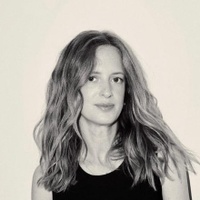
William Mellon is a writer/director/producer from the San Fernando Valley who has spent over a decade working in different creative capacities across commercial and narrative projects for clients like Disney and T-Mobile. After graduating from Texas State University, he produced feature films such as MIRROR IMAGE and his directorial debut Discomfort, Texas in the independent space under the banner of Magic Panda Productions. William also recently closed a limited, Off-Broadway run of the new musical Unconditional, which he produced alongside La MaMa Theatre Club in NYC. After losing his twin sister, Nora, in a car accident at 19 years old, William has dedicated everything he’s done to her memory. You can support Discomfort, Texas, via late pledges, on Kickstarter.
Conversation
On facing your fears
Filmmaker and writer-producer William Mellon discusses working through the things that scare you, exploring other mediums to avoid burnout, and creativity being like prayer.
As told to Max Freedman, 2733 words.
Tags: Film, Writing, Adversity, Beginnings, Creative anxiety, Mental health, Success.
Discomfort, Texas is loosely based on your experience losing your twin sister to a car accident. When you’re making work based on your life, how do you decide what to keep based in reality versus shifted to fit your creative goals?
It was important to me that I was able to bring something artistically beneficial to this project, and not get so caught in the reality of my own pain that I forgot to create something that was still beautiful and still contained some hope, and an avenue to connect with other people and their stories of grief. It also kind of came naturally as I was writing it. The process of deciding what was real and what was not was always feeling-based.
The things I felt and experienced in my emotional journey through my grief were a one-to-one translation into the movie, but things like the physical place, the names, and some character details were all things that, in order to safely work on it, I had to change to make sure I wasn’t just seeing my actual life in front of me. In order to have some objectivity while making it incredibly specific, I changed some of the places and names.
Can you tell me more about feeling safe while working on something creative?
When I look at my grief, I would rather smile at the sadness. I’d rather have this almost Buddhist relationship of, “I accept that this suffering is part of my experience, and that’s how I move through it.” That’s kind of what I mean by safety—this acceptance that this is going to be painful, but there’s a reason for it.
With everything in entertainment, you step into a film, story, or experience, and you’re putting yourself into it. But you know how it ends, and because of that, you have this relative safety. For me, if I had gone in and done exactly as it happened, as I experienced it, then it wouldn’t have been me working through the things I feel and experience. It would be me just reliving all of that.
I have always approached my art as a means of working through the things that scare me. I came out of this experience [my sister’s death] with this idea that this would break me and I would never be able to come back. It took me a good two, three years to realize that it can’t break me. It can change me, and it can change my life. When I started this, I knew I wanted to engage with that lesson and not the fear.
When you’re working on something and you don’t yet know how it’s going to end—if that’s ever been the case with something you’ve worked on—how do you find your way through that?
Everything I work on [comes from] my neuroses and fears. I’ve written things based on my worst fears of a relationship and life, and it’s almost therapeutic because, if I find my way through all these trials and tribulations in a fictional world, I now have somewhat of a framework for my own life as well.
With Discomfort, Texas, you’re going to follow Frank Hines through this experience not just of loss, but of re-finding himself in the wake of that. In writing that and going to shoot it with some amazing actors [with whom] I learned even more about myself, I found my way through that. Everything I work on, even if it’s fictional, it’s still emotionally very real for me.
On the Kickstarter page for Discomfort, Texas, you said something about making lifelong collaborators through the process. At what point do you realize somebody’s a lifelong collaborator, and how do you realize that?
At its base, if somebody’s humanity speaks to my humanity—if somebody’s a curious person and they’re distilling their questions of life through this artistic flair, and their image and my image have that overlap—then they’re somebody I could work with into the future.
My lead actor is a childhood friend of mine, and it was important to me to work with him because he lost the same person I lost. We already had been working together and collaborating for a long time, but in doing this, we had conversations surrounding grief, our childhood, and nostalgia, good and bad, that we never knew were there.
I found that, even with people who weren’t my lifelong friends, when you’re dealing with things as universal and as impactful as grief, you cut through the skin of all the superficial bullshit in this life and you realize, “Here’s the fundamentals of who I am as a person,” and if that lines up with yours, we can continue to make beautiful things.
I can also speak as somebody who is queer and in the LGBT community. I’ve worked with people who don’t have the same understanding and background of where I come from and what that world is, and yet, we can still find this common language because of our shared humanity. Maybe they leave this experience understanding a little more, and maybe I leave this experience understanding how to connect with somebody who doesn’t have the full picture.
To zoom out from Discomfort, Texas, was there a moment at which you knew you were going to become a filmmaker? Tell me how you came to that realization.
I’ve been carrying a camera as long as I was given one. I was given, I think, my first camera in 2000 as a baby, and there’s pictures of me trying to hold it up.
I knew throughout my childhood that my family situation was different. I was co-parented by two gay couples in a period where I didn’t know a single kid with one set of gay parents. I wanted to capture this thing that everybody was telling me was different, so I filmed a lot of family functions and vacations. Even then, it was a way for me to understand and figure out, “What about my family is different? If I can capture it, I’ll understand why I’m seen so differently.”
That desire to understand through filmmaking got buried under a lot of trauma in my younger life. Throughout high school, I was kind of a burnout, and I didn’t have a clear direction for where I wanted to go. I thought I was going to maybe join the military. Anyone who knows me now is like, “That is so polar-opposite of where you ended up,” but I had no plan.
And then, at 19, my sister died. She had a very clear picture of her life, everything she wanted to do, and everything she was going to do. When I saw that get wiped away, I started to realize that we only have however much mysterious time on Earth that we do. I now want to make sure I can go out with a real purpose, leave my mark, leave her mark, and create this sense of community.
I came back to filmmaking. I was an actor when my sister died. The first thing I did in the writing world was, my therapist was like, “Have you ever considered just writing everything down?” I sat down and wrote my first screenplay, and I felt immediately that sense of community, but it was internal. I was in community with these characters, and it was that word “safe” I used earlier. It was like I could feel all these things I was terrified to feel that I thought would break me. Growing up as a man in a world who was told you’re not supposed to have feelings, it gave me all these avenues to really feel and express.
My journey started as having no direction and no route, and when I lost something really important to me, I realized I had to carve my own route.
Do you feel any draw to returning to acting at all?
I do not. I come from a family of theater actors, and I think there was always the expectation that I was going to be an actor. I had largely done it in my childhood, and I went to college for acting because it was something I felt I just knew how to do. This is going to sound awful, but I could kind of skate by with what I had. I didn’t need to put too much in, but because of that, I don’t think I ever was a great actor, because I was never giving myself over in a serious way. I was always staying safe in the un-positive way. When I found writing, I was like, “Now, I can let go of that definition of safety, and in the confines of this boxing arena, I can deal with all the things I want to deal with.”
I’ve done a little bit of acting here and there because it’s a fun way to don an experience and try to feel vulnerable and have that communication with life, but it terrifies me. The anxiety does not align anymore. I deal with really bad clinical anxiety. I can deal with that a lot easier from the production side than if I’m standing on a stage in front of 200 people.
When you’re working on something like a film for such a long time, how do you avoid burnout? I ask because, to me, anxiety and burnout are coextensive.
What’s important to me is, I always look at film as an expression of life and not the end goal. What I’m working on, I’m not working on because I want to get to the end of this process and have a finished result. I work on it because it’s like prayer. Anything I can do to engage with life in that way just feels like prayer to me, so it’s an ongoing practice.
Because of that, I also understand that life’s a big pie, and this is just a slice. I was raised by people who are very spiritually aligned with the transcendentalists as a literary movement, so being outside, being in the world, is the place where I feel closest to my version of God. If I’m spending six hours inside writing, I’m also making sure I spend four hours outside gardening and doing the other things that connect me with the larger pie.
You have to make the thing you would make anyway, because that’s the only way to avoid burnout. If I’m working on something I don’t truly believe in and I’m being fed as much as I’m feeding, then this is not going to be a tenable experience.
Can you talk about your journey to getting to the point where your filmmaking and your other work—I know you’ve also done musicals–is how you earn your income?
Well, I pick up plenty of extra work every month that I need to, so I can’t pretend it’s the entirety of my income. However, I’ve always tried to lead with my passion. I’ve always tried to make sure that, when I come onto something, it doesn’t feel like work because I really do care. That attitude of people seeing say, “Oh, he would be doing this if he gets paid or not”—I mean, I need to get paid because I need to live and pay my bills, but the passion and positivity I bring to the experience, I think, has enabled me to have a lot of people call me back and bring projects to me. That’s the biggest boon I could ever have.
I think that’s because I’ve made it really clear that I care about championing stories that otherwise would not be championed. I worked in development previously, so I was reading a lot of scripts, and a lot of scripts that I cared about never stood a chance of getting made. That feeling of “This is brilliant and it’s going to get thrown in the trash immediately” created a sense of, “I need to hunt down the things I care about and make sure they happen.” Because of that, I think people have been really excited to keep calling me and bringing me little shiny rocks, and we make it into whatever we can.
One of my biggest things that allows me to not burn out and continue to be successful is the amount of other artforms I engage with. If you’re creative, having other things that have nothing to do with your business—you’re able to just sit down and pick up the guitar and play for an hour, or go outside and paint something for an hour—having other forms you can engage with and express out helps in your other creative pursuits.
For me, it’s nice to be able to shut off the inner critic with music. It’s hard as a writer, especially as a writer-producer, because you’re giving yourself the feedback that you would be giving a writer as you’re reviewing a script. But when I pick up an instrument, it’s just a pure flow outward. It’s almost similar to how I feel directing on the day. It’s like, “I’ve learned how to play guitar, I’ve done my scales, I’ve done all the things I need to do, but now, I can just sit down and let it all flow out, and we get something beautiful.”
I’m curious how you quiet your inner critic on set.
I have a very loud inner critic who loves to come up at the worst moments. For me, it’s been about trying to smile at that voice. I’m a big fan of this thing called Internal Family Systems, which is a therapy practice that basically establishes all the different elements of your personality as characters in your mind and little versions of yourself. For me, recognizing that there is no bad part of my mind [means knowing that] even my inner critic is trying to keep me safe and trying to use the structure it knows to protect me.
When I’m able to sit—I’m a big transcendental meditator—and meditate and get to this place of, “When I feel this voice telling me I’m not good enough, or what I’m doing isn’t good enough, or I don’t have the right to do this, then I know that’s just because I’m scared.” And if I’m scared, I’m probably doing the right thing.
I sat with somebody recently who said something that’s been echoing in my head ever since, which is, oftentimes, if something in your head is telling you it’s the worst idea, it might be the best idea. With a creative application, if that fear is coming up, I’ve really tried to rephrase it as, “You’re scared, good. That means you care. That means you’re doing something risky. That means you’re putting yourself on the line and your heart on the table. And if you’re doing all those things, something good will come of it.”
Is there anything more you want to say about the nature of creativity in general, or as an addition to anything I asked earlier that you didn’t quite get to say when I first asked it?
As I’ve entered the professional world over the last decade, it’s become apparent to me how many young people are focused on commercialization and trying to make something so universal it lacks life. Right now, we’re really blessed to be experiencing an influx of filmmakers and other artists who are getting back to complete subjective experiences, so much so that it becomes universal. If I could just implore the world to connect with their creativity in spite of all things telling them to the contrary, we would have a much more beautiful world and a lot more beautiful art.
William Mellon Recommends:
10 tiny salvations:
Accepting that time runs out whether you’re looking at the clock or not.
Moravagine by Blaise Cendrars.
“Hello in There” by John Prine.
Anything that unlocks the power of childhood nostalgia.
“Bears” by Lyle Lovett.
Loving something/someone/a time/a place/an experience.
Inhaling art like oxygen.
Overheard conversations at restaurants.
The law of reciprocity.
Banishing any external definition of normality.
- Name
- William Mellon
- Vocation
- filmmaker, writer-producer
Some Things
Pagination