On surrounding yourself with people and ideas that excite you
Prelude
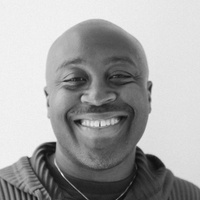
Carlos López Estrada is an Academy Award-nominated filmmaker from Mexico City. His debut film, Blindspotting, premiered on opening night at Sundance 2018, earning him a DGA nomination for Outstanding Directorial Achievement of a First-Time Feature Film. He followed with Sumemrtime (Sundance 2020) and Disney’s Raya and the Last Dragon (2021), which received an Academy Award nomination for Best Animated Feature. At Disney, he contributed to the Story Trust for Frozen 2, Encanto, Strange World, and Wish, originating the story for the latter. His documentary LLil Nas X: Long Live Montero premiered at TIFF 2023 and was released by HBO. He began his career directing music videos for artists including Billie Eilish, Katy Perry, Thundercat, and Carly Rae Jepsen, winning a Latin Grammy in 2012. As founder of Antigravity Academy, he produced Dìdi (弟弟), which won the Audience Award at Sundance 2024 and two Film Independent Spirit Awards. He chairs the Latino committee of the Academy of Motion Picture Arts and Sciences.
Conversation
On surrounding yourself with people and ideas that excite you
Filmmaker Carlos López Estrada discusses cultivating talent, hustle over inspiration, and working collaboratively.
As told to Miriam Garcia, 2674 words.
Tags: Film, Process, Money, Beginnings, Inspiration, Focus.
You started directing music videos with friends before going on to work with artists like Billie Eilish, Carly Rae Jepsen, and Thundercat. What’s the most important thing that this experience taught you about directing?
I made music videos through the end of my 20s. That’s when I learned what indie filmmaking was, even though I wasn’t making movies. I worked with a low budget, and my friends were the crew. I went to film school, so the earliest version of my filmmaking community was my friends from there, and we would all help each other out. We never really had money to pay each other, so we were trading favors and finding ways to give each other jobs. And most importantly, we were trying to do a lot with a little.
I think that’s the part of that chapter of my life that really awakened my imagination. Because we were working with cool artists, we wanted to do things that were exciting and singular, but we had to find clever ways to do that when we couldn’t afford big toys, super nice cameras, or a big cast. I really forced myself and the people I came up with to find a different kind of creativity. And I think that unlocked something for me that I still use these days.
You’ve mentioned that having a personal connection to the project you’re directing is important to you. What’s behind that belief?
It’s this realization that making films is so hard, and it costs so much money. And I believe that films have the potential to open eyes and change lives. But, for any work of art to do that, it needs to come from an honest place and needs to capture a feeling that’s really meaningful to the artist. I have been an advocate for the type of filmmaking that embraces personal storytelling. And it doesn’t mean that filmmakers should only be making movies about their lives, their childhood, or their trauma — but I personally respond the most to stories that feel like they have a strong, intimate connection between the work and the artist.
As a director and for the stuff that I have been producing, that is my first filter, because I’m a lot more excited about having these sorts of beautiful human moments with people who are going through deep processes, asking complicated questions, and learning about themselves in the world as they go along. That’s a lot more fulfilling than pursuing projects because they’re cool, or because I want to make an action movie, or because I want to make a lot of money. The process of making it, to me, feels deeply existential, and the other one feels a little bit superficial. It’s not black or white, but I try to push my film universe toward the one rooted in that sincerity.
In film, production schedules favor speed, and filmmakers need to keep income coming in. The moment you finish a project, people are already asking, “What are you working on next?” How do you balance those industry pressures with taking the time to properly develop something?
There are many wonderful things about the filmmaking industry, and there are also lots of things that I find challenging, because it is an industry — and industries worry about the product, but they also worry about the bottom line: making sure people are being efficient, that stuff is being produced as fast as possible, and that it reaches as many people as possible. I find myself constantly in an area of tension between really loving what I do and finding the value in what I do, but also struggling a little bit with the industry of it. And I feel like many times here in LA, people favor the efficiency and the profits, and the recognition, and sort of the results more than the product or the process.
For the projects that I’ve done both in directing or producing, we really try to set them up so that the process is equally as important as the product, and understanding that film costs a lot of money and that there’s certain efficiencies that you cannot ignore, really trying to create space for artistic discovery, play, and growth, because it’s important. All the people making these are artists, we forget about that. Sometimes we think of directors as sort of heads of a company, or heads of this organism, but they’re artists, and art does mature well with time, and being able to take a step away from something, and thinking about it, and being able to take a weekend, or a week off, and see some other art, and clear your mind, and then coming back to the thing, and seeing how your relationship has evolved, that’s really important.
Sometimes you need an idea to flourish and develop, and you also need contact with the world around you so that it can inspire you as well.
I made a movie that we’re finishing up right now, and it took me 10 years to make. And I was very frustrated that it would take this long, and a year would go by, and then another year would go by. But I did realize that all those years made this film so much stronger than it could have been had I done it 10 years ago. And even once we were doing it for sure, and we had money, and we had a date, I still had to go through this process, and it wasn’t perfect. Two years ago, I took a trip to Europe, and I was there by myself for a few weeks. I was walking around, going to museums, reading, and listening to music. And a lot of the answers that ended up shaping the movie came from that trip. I wasn’t sitting in front of my computer with the final draft open in an LA cafe trying to figure out how to make the movie cool. I had to do the opposite. I had to sit in nature and not be surrounded by anyone I knew, and look at beautiful art, and listen to music that inspired me, and kind of had to grow my own connections.
It’s important to be patient and to find inspiration in places that are not directly in front of you. And if you’re making movies that are not in LA, that are not in the industry, or your friends who are making movies. Because I feel like often, movies, stories, ideas, and people’s creativity get a little stilted because your sources of inspiration are the same as everyone else’s. And if all you’re hearing is conversation about how to make movies, then it’s going to be hard for you to pull in from other places. That’s why I think traveling is so important. Just traveling around the places where you live, you don’t need to spend a ton of money on it. Breaking the routine, and seeing new faces, hearing new sounds, trying new foods—all of a sudden unlocks new paths for you.
In your view, what behaviors or experiences help a director build a healthy environment on set?
For most of the time that film’s been around, I feel like we’ve been fed this narrative that a director has to be this voice of authority, and unflinching, and very uncompromising, and a strong hand that can command a group. Of course, it’s a leadership position, so you need to have some of those qualities. But as the world has continued to evolve, newer generations have become much more aware of healthy work practices and of avoiding toxic patterns or toxic dynamics in the workplace. I feel like the culture has shifted to the point where that’s not the case anymore. To me, the directors I respect the most, and the directors who I feel like can get the most out of their crew and their cast, are the directors who listen, who ask questions, and who embrace the more curious, vulnerable, open sides to themselves.
You co-directed the Disney film Raya and the Last Dragon. There’s a common assumption that once you make a Hollywood film, you’ve made it—you’re set. But after that project, you went back to indie filmmaking. How did you navigate that transition?
I really loved my time at Disney. I learned so much, and I’m very proud of the movie I did there. But also, it’s an environment that’s very specific; it’s a big corporation, it’s a big studio, there’s lots of politics involved, lots of layers to these movies that go beyond creativity and storytelling. There’s so much money at stake that it’s an exchange that you have to be willing to make, because then these movies get seen by millions of people.
But the freedom that comes with indie films leads to the ability to ask questions, get lost, and to say, “Oh wait, in the process of making this, or in the middle of making this, I’m having some big realization about myself, or the movie, or the world, or whatever. Let me take a step back and recalibrate, and maybe this is taking me in a different direction.” That sounds like such a simple, intuitive thing, but when you’re working in a machine that has 600 people in the crew, and every week you’re spending millions of dollars, it’s really hard for you to have those types of realizations, or for you to have that kind of space, or to get lost. If you get lost in that machine, as you’re wasting so much money, you can’t; you get fired. You have to be so efficient and quick; you have to prove that you’re making progress in their eyes. It was really difficult. And I wanted to go back to the roots and really pursue indie filmmaking.
You funded Antigravity Academy, a creative home for singular storytellers, with a unique emphasis on emerging talent. You must be in touch with young filmmakers. In your view, how much of the path to building a sustainable career success relies on talent versus perseverance and working on improving your craft?
I believe that there’s talent, but talent is what happens when you’re exposed to other talent. Maybe someone would argue that you’re born with some crazy natural gift; I guess some people are biologically good singers, maybe. But most talent is absorbed from other sources, whether it’s your family, whether it’s people that were close in your life, whether it’s artists that you grew up listening to, or watching.
It’s about surrounding yourself with things that move and excite you, and then learning to absorb them rather than passively consume them. Some people see a beautiful work of art and forget it in two seconds. Others see the same piece and their life is transformed—they start seeing everything differently, trying to copy it, break it down, understand it. It’s as much what you were given as what you’re taking in.
And that’s work, too. If you read something that moves you and then all of a sudden you’re like, “Okay, let me learn more about this author, let me read some other stuff, let me understand why it moves me,” that’s hard work. And then you’re like, “Okay, now let me try to write something in this voice because it excites me.” I also feel like starting from a place of hustle rather than inspiration can also lead to you becoming very talented. Because if there’s someone who doesn’t have these natural skills but is spending so much time learning, trying, and putting themselves out there, 10 years will pass, and something that you thought you were horrible at and could never stand out for will all of a sudden be second nature to you.
I felt like that about my public speaking. I’m not the greatest public speaker, but I was born in Mexico, and my English when I moved to the States was not great. I was really shy, I hated the spotlight, and I hated talking in front of people. I would always sweat and feel horrible. And I came to terms with the fact that I was like, “I’m not going to be a person that’s speaking in front of other people. That’s not going to be me. I’m going to do other things that are important, but not that.”
Then life kind of happened. I was working at Disney Animation, and they make you pitch every day, 10 times to multiple teams, everything you do. It’s like a presentation culture. You think of something, and then you present it to this team, and then to another team, and then you hear other people present. That’s all you do 24/7. And then I left there, and all of a sudden I started feeling so much more comfortable speaking in front of people. And I was like, “Oh my God, did I develop this talent, or was this a skill that I always had but didn’t know I had?” The thing that I thought was least likely to ever happen to me happened. I’m not the best public speaker, but I feel comfortable now, and I’m excited to speak to groups and do things I never imagined I’d be doing. So I do think it’s possible to develop some of these talents.
How has your ambition as a filmmaker changed over time? Does the 20-year-old Carlos aspire to what you aspire to now?
I come from a family that has been involved in social causes for many generations. My grandma used to run a retirement home for actors who couldn’t afford to sustain themselves. And my aunt runs a foster home for kids whose parents are in prison. I feel like there’s a real joy that a lot of people in my family get out of being useful and supportive to people who need support. Ever since I started wanting to do film, I knew that I didn’t want it to feel like a self-serving practice. I didn’t want to make movies to get famous, or I didn’t want to make movies to get rich, or to be cool. I wanted to make movies for social reasons and to impact, influence, and inspire other people.
Because of that, since the beginning, my aspirations have evolved in different ways, and I’ve found new avenues, and now it’s through my company and through the work that I’m doing. That has remained consistent. The thing that has changed is obviously that I’ve grown a little bit, and I would like to believe that I’m asking deeper questions with the work that I’m doing now, conscious of other layers of life that I wasn’t aware of when I started in my 20s.
I feel pretty lucky that at such a young age, I had a sense of what I wanted to do. I remember writing my college application essay, and I didn’t even know how to write an essay. So, I kind of wrote an artistic manifesto. It was a long list of things that I believe in. And the first line was so innocent; it was “I believe in magic.” And even though it’s a sweet, charming thing to hear, I still do. I think that there’s something really powerful that happens with the work that artists do that is magical. And if I had to write that manifesto today, 20 years later, I would probably still make that my first line.
Carlos López Estrada recommends:
Cinema Paradiso by Giuseppe Tornatore
The Bad Bunny Super Bowl performance
This Short Doc about Xochimilco in Mexico.
Like Water for Chocolate by Laura Esquivel
Juan Gabriel’s 40th Anniversary concert from Bellas Artes (recording and YouTube videos)
- Name
- Carlos López Estrada
- Vocation
- filmmaker
Some Things
Pagination