On redefining success
Prelude
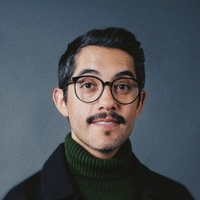
Larry Ossei-Mensah is a Ghanaian-American curator and co-founder of ARTNOIR, a global cultural platform that supports and celebrates artists and creatives of color. For nearly two decades, his internationally focused curatorial practice has connected artists, institutions, and audiences across North America, Europe, Asia, and Latin America. Ossei-Mensah has organized exhibitions, public programs, and cultural projects internationally. His projects have been presented at institutions including the Museum of Contemporary Art Detroit, the Museum of the African Diaspora, MASS MoCA, the Denver Art Museum, the Contemporary Arts Museum Houston, the Seattle Art Museum, ICA San Francisco, Storm King Art Center, and the Metropolitan Museum of Manila. He previously served as Susanne Feld Hilberry Senior Curator at the Museum of Contemporary Art Detroit and Curator-at-Large at the Brooklyn Academy of Music.
Conversation
On redefining success
Curator and ARTNOIR co-founder Larry Ossei-Mensah discusses what it means to be a curator, how goals change over time, and why being curious is foundational to everything we do.
As told to Tara Fay Coleman, 3010 words.
Tags: Art, Curation, Success, Collaboration, Inspiration.
When you were first starting out, what did success mean to you?
When I first started out in my career in the art world—or the business of art—it was as a photographer, just wanting to share my point of view and share my creativity. That evolved into writing first, and then curating. This was around 2008 or 2009.
At the time, I was still working a day job, so success was really just being able to mount a show, being able to get a byline for an article. Success was being able to make a contribution to my ecosystem, to my culture, and to platform the creative expression of artists in my community and artists of my generation.
It was a very simple concern: How can I participate? I came to the art world as someone who, at the time, was probably considered an outsider, and I really just wanted to make my mark and make a contribution.
Do you remember when that definition started to change?
My definition of success started to change around 2015 or 2016, when I left my corporate job doing marketing and embarked on doing this full time as an independent curator.
For me, it presented a new challenge, and it also required a new level of focus because my income was attached to what I was able to produce and put into the world. It became about creating monumental opportunities when I could, but also walking that walk with artists and helping them do their first museum shows—in the case of Allison Janae Hamilton with PITCH, with Susan Cross, or Amoako Boafo’s Soul of Black Folks, which went to MoAD, CAMH, Seattle Art Museum, and Denver Art Museum.
I was still continuing to figure out what my contribution was going to be, but expanding that scope. In the beginning of my career, it was primarily exhibitions in New York City. Then, fast-forward, I was doing exhibitions in Rome. I was doing exhibitions in London. I’ve done exhibitions in the Philippines. I started really thinking about what a global perspective looks like. What does exhibition-making on a global scale look like, require, and entail? What are the cultural nuances I have to be aware of in order to create effective, impactful exhibitions?
I think it went from a micro to more of a macro point of view, and really understanding that there was an incredible opportunity to make a contribution to the canon, whether that’s doing exhibitions with museums, art centers, or galleries.
But it was also about writing, helping writers, helping other curators, helping artists. Once I was doing this full time—10 toes in—it was really about asking what my contribution was going to be to reshaping the dynamic in contemporary art in terms of who was getting seen and who was having platforms. I was trying to be expansive and global in my view and in the work I sought to accomplish.
What parts of your work have stayed consistent, even as your career has changed?
The thing that has stayed consistent in my practice is being curious. I think everything starts with being curious, being inquisitive, and trying to answer a question that may be the result of a conversation with an artist, a curatorial colleague, or something I read, and really allowing that to guide how I want to answer those questions or explore those hypotheses.
Then it becomes: Is exhibition-making the format? Is it writing? Is it a program? Is it a talk? Is it a performance?
I think it’s always going to be guided by curiosity and trying to understand how creative expression can be the vehicle to answer those questions—and maybe not answer the question. Maybe it stimulates more questions.
At the end of the day, being curious is foundational. Obviously, being passionate, being hungry, and being humble are all consistent variables that have guided me not only in my career, but in my day-to-day life.
How do you know when it’s time to move toward something new?
I think you just trust your gut. Part of being a curator, someone who is an observer of what’s happening in culture, is reading the tea leaves, looking where the hockey puck is going, talking to artists, talking to writers, fashion designers, chefs, everyday people, and really listening to what their concerns are. What are the things keeping them up at night? What are the things they’re really excited about that change the rhythm, change the vibe? What is something I’m not used to, something that is fundamentally different from what I understand?
It goes back to that previous point about curiosity. I’ve been doing this long enough to kind of know when to shift. It’s not always in response to what’s happening in the market. Most of the time, it might be in response to what’s happening with me and how I’m seeing things or not seeing things in the world.
As we grow and evolve as human beings, as adults, as people, as a brother, as a son, as a friend, you hope that your concerns and your interests continue to grow. Part of that has also been catalyzed by being blessed with the opportunity to travel around the world, do projects around the world, and learn how different cultures synthesize information and what they find important. Then I ask: Is there a correlation to what happens in my day-to-day, in my community?
Right now, for example, I’m thinking a lot about earthwork and land art. There’s this incredible Ana Mendieta exhibition at Tate Modern right now, and I was reading an article in The New Yorker. It was the first time I had heard her referred to in relation to land art. For me, it got me thinking about who the contemporary artists are working with land, working with earth, collaborating with the environment.
That’s also a ripple effect from my collaboration with Nora Lawrence and Adela Goldsmith on Sonia Gomes: Ó Abre Alas! at Storm King last year. It was the first time that I really had to submit to nature and also collaborate with it.
A lot of times, you do things and you’re just like, “Wow, this is really interesting. Is there more?” You kind of know based on your curiosity and based on your gut.
Part of this exercise is continuing to find the things that feed you mentally, physically, spiritually, intellectually, socially. I’m always keeping my eyes and ears open and listening to my intuition—my Spidey senses—to know when there’s something there.
How do you keep your work aligned with your values as new opportunities come along?
I think a lot of that is just research. Doing research on potential collaborators the best you can, whether that’s an institution, a gallery, an artist, or a publication, and really looking at the arc of what they’ve done in the past.
It’s doing your due diligence, talking to people who have worked with these entities before. It’s a mix of due diligence, but it’s also intuition. Experience has taught me which opportunities are genuinely legitimate and which ones might just be people blowing smoke or sniffing around.
Sometimes it’s simple questions like: Is there a budget? What kind of resources are going to be provided to support this? You want to make sure that the opportunity, the time, the labor, and the compensation all kind of jibe.
As I’ve mentioned before, I really want to collaborate with people I feel like I’m going to learn from—people where the challenge is going to be one where there will be growth, expansion, and evolution.
And I think, ultimately, having fun. Doing this job, working as a curator, particularly independently, is already a challenge. I want to collaborate with people, entities, and organizations that are going to make the experience fulfilling. This work is hard work. Anything that makes it unnecessarily hard is usually a red flag not to participate.
I think you look at the type of projects people support, what they stand on, and then you talk to people, and you get a sense of whether it’s the right opportunity for you or not.
A lot of times people just jump at something because the person inviting them might be somebody of importance, which obviously can be flattering. But at the end of the day, it’s not just about seeing eye to eye or agreeing on everything. Fundamentally, is there respect on a human level? Is there respect on a professional level? Do you treat collaborators, colleagues, and employees with respect?
There are a lot of things you try, to the best of your ability, to do due diligence on. At the end of the day, though, it’s a gut feeling. I can do all the due diligence in the world, but if it doesn’t feel right in my gut, in my spirit, in my soul, then I’ll usually forgo the opportunity and try to recommend somebody else who might be a better fit.
That’s something else I’ve developed over the years. If there’s an opportunity that comes across my desk that, for whatever reason, isn’t a fit—and it wouldn’t be detrimental to a colleague—I’ll recommend another colleague. I’m a believer that the pie is big enough for all of us to benefit, for all of us to have opportunities. Anytime I can open up a door of opportunity for a colleague, I’m going to do my best to do that as well.
What does success mean to you today?
I think success means happiness. Success means being challenged to grow and evolve, not only professionally but personally.
Success for me is leaving a mark on society in a positive way. I think success is also working on your own terms, being able to define the parameters within which you work.
Obviously, monetary success is great as well, because it’s well documented that working in the arts can sometimes be challenging financially, to make it work consistently. I’ve been blessed over the last almost two decades.
But I think, for me, as I mature, it’s really about happiness, mental wellness, doing things that I enjoy. The mechanics of a lot of these projects are already difficult, so at least enjoying it and feeling like I’m learning is important.
I think success is being able to provide forums and platforms for artists who I’m excited about, where they have an opportunity to just flourish and do their thing.
But I also think that definition is something that continues to evolve over one’s lifetime. When you’re young, it’s one thing, and then as you mature and you’ve had life experience, it becomes another thing. My hope is that that definition continues to evolve as I evolve and grow and continue on this journey called life.
What are you still learning?
That’s a really good question. For me, I just try to remain in a posture of learning. You don’t know what you don’t know, right? So I think it’s about developing the habit of being open to things that might not necessarily be on my bingo card.
I’m continuing to learn how to be a better person, how to be a better brother, son, partner, friend. I think that’s kind of a natural thing.
Then, in terms of the professional work, you’re always trying to improve and learn how to be a better curator, how to be a better collaborator. I operate from the premise of always trying to maintain being a student, always being in a posture of learning. There’s so much we can continue to learn throughout our lifetime.
I look at ceramics, for example, and my ceramic practice continues to teach me every time I go to the ceramic studio. Learning never stops. I think anybody who approaches life that way—it can be kind of illuminating.
For me, I’m still learning a lot, and I think I will be learning for the rest of my life. I’m excited about that. It’s just a matter of taking the things that you learn and asking: How do you then make use of those new insights, ideas, information, languages, experiences? How do you utilize that in your daily life? How do you utilize that in your professional life?
What advice would you give someone who’s in the process of redefining success for themselves?
I would say be honest with yourself and really reflect on whether you’re pushing yourself. Are you raising the floor, or are you just comfortable? Are you operating at the status quo?
So I think it’s about being honest with yourself and constantly raising your personal bar of expectation. Life is not meant to be easy. Obviously, nobody wants an incredibly difficult life, but I think you want challenges that are going to enable you to grow and get to the next phase, get to the next chapter that has been ordained for your life.
So I think it’s about being honest with yourself, constantly trying to raise the floor of expectation and raise the bar of expectation. Really think about what will bring you happiness. What will bring you joy? What will bring you nourishment?
Redefining success is something that’s a continual exercise. It’s about checking in on yourself. It depends on how you calibrate these things. Some people like to write them down as lists. Some people do Post-it notes. Some people have an accountability partner. I think it’s really about defining how you measure what success is and how you’ll check in with yourself on a continual basis.
The main thing is: How do you feel? It’s not about trying to satisfy the expectations of someone else. I think it’s really about satisfying the expectations of what’s going to allow you to reach the highest heights and self-actualize.
That process is an internal one. Sometimes that’s challenging. We all have so much happening in our lives day to day, but I think it’s necessary to constantly recalibrate and evaluate where you are in your journey.
Are you achieving your goals? Are you working toward achieving your goals? If you’re not working toward those goals, what are the impediments?
For me, I’m always asking myself questions. There was a question earlier about knowing when to move on. If I’m not feeling challenged, or I feel like there’s another level, that’s also part of that process.
So be honest. Be self-reflective. If you’re someone who’s a writer, put it down on paper. If you’re someone who meditates or prays, go down that road. If you’re someone who likes to have an accountability partner, do that. It’s really about understanding how you process information and how you work through this exercise of defining and redefining success.
And really reaching for the stars. At the end of the day, the only limit in this life is your imagination. So much is possible if you are focused, imaginative, driven, disciplined. It’s not going to be spoon-fed to you, but I feel like I’m an example that there’s a lot that can be achieved in this life.
And there’s a lot contained within however you define success. Some people define success as monetary. Some people define it as emotional. Some people define it as material. It’s really about calibrating what success is for you and then going through the steps.
There’s no rhyme, reason, or formula; it starts with you. If you center your emotions, your aspirations, your ambitions, your goals, your passions, and really evaluate whether you’re working toward those things on a consistent basis, you’ll find that you’ll have some incredible incremental growth. Some people have exponential growth.
At the end of the day, it’s about putting a framework in place that works for you and then going out and making it happen. No one’s going to give it to you.
I’m a believer that true success, however that’s defined, is earned. So the question is: How are you going to earn your success?
Larry Ossei-Mensah Recommends:
Alchemy by Rory Sutherland: I love this book because it challenges the idea that everything has to make rational sense. As someone who works across art, culture, and different creative communities, I’m always interested in what happens when you follow intuition and make room for unexpected connections. Alchemy is a great reminder that sometimes the most interesting ideas are the ones that don’t immediately make sense.
The Low End Theory by A Tribe Called Quest: This is an album I can listen to anytime, anywhere. It’s deeply rooted in jazz, but it’s also completely its own thing. I love the sense of experimentation and ease in it—the way Tribe made something sophisticated without losing its warmth or accessibility. It’s a reminder that you can honor your influences while still creating something that feels entirely new.
Rio de Janeiro: Rio continually inspires me. Something about the relationship between the landscape, architecture, music, art, and everyday life feels very alive. I always leave Rio seeing and thinking about things differently.
Accra, Ghana: Accra has fascinated me with its energy and the conversations happening across art, fashion, music, design, food, and technology. There’s a real sense of possibility there. As a Ghanaian-American, being in Accra also gives me a different relationship to home—one that is both familiar and continually being rediscovered.
Cocina Consuelo, New York City: Karina and Lalo are like family to me, so this recommendation is deeply personal. What they’ve created with Cocina Consuelo feels like an extension of who they are: generous, curious, warm, and deeply connected to family and community. It started during the pandemic as something they cooked for friends in their apartment and grew into a restaurant that still carries that sense of intimacy and hospitality. The food is incredible, but for me it’s really about the feeling of being there.
- Name
- Larry Ossei-Mensah
- Vocation
- curator, co-founder ARTNOIR
Some Things
Pagination