On misusing the tools you're given
Prelude
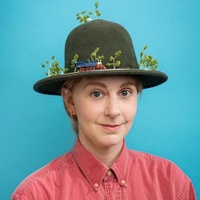
Aaron David Ross is an artist and composer based in New York. In his day job as the in-house producer and engineer at Yamaha’s Manhattan studio, he provides visiting artists with technical support and project development. In his own time, he cultivates an often collaborative practice that spans weird and wonderful audio-visual worlds, cutting-edge runway scores, and a deep-cuts coded discography. In addition to his solo work as ADR, he has worked with many contemporaries across the fields of music, art, and fashion, including Oneohtrix Point Never, Kelela, Ryan Trecartin, Telfar, and Luar. His longest running partnership is with fellow artist Matthew Arkell in the electronic music duo Gatekeeper. Their new record is out now.
Conversation
On misusing the tools you're given
Musician Aaron David Ross on asking people directly to listen to his music, turning new technologies inside out, and not just accepting the reality you inherit.
As told to Ruth Saxelby, 2658 words.
Tags: Music, Art, Money, Promotion, Production, Day jobs, Politics, Collaboration.
You’re in the Yamaha studio right now. Can you tell me what your day-to-day looks like there?
I do a lot of production for Yamaha artists, who have access to this studio as a perk. I’m the in-house producer, engineer, collaborator. People will come in with recording projects or ideas for how they want to use instruments in unconventional ways, and I help develop the projects and facilitate the recording and production side of what they’re doing. So it’s a lot of setting up mics and listening to beautiful piano music all day, which is a very nice grounding for my creative life here. This studio can be a resource for whatever people dream up. I’m the technical guy who figures out how to make it all go.
We first encountered each other back in 2009, when I was a music journalist discovering Gatekeeper for the first time. The world has changed a lot since then.
The industry aspect is really different, but the creative process feels like there’s a lot of continuity for me. I’m coming up with unusual approaches to use instruments with artists that I’m inspired by—that’s a little bit the same thread. It’s different in the context of having the Yamaha resources.
I don’t think a lot of the same logic of our time really applies anymore. The value systems that are attached now feel a lot more optimized. I think that’s because of the algorithmic feed optimizing for attention, which is the mean of the culture, as opposed to the edges of it. You’re going to be rewarded for a very different kind of engagement with your audience. In our time, [it was about] having a critical distance from the audience and being in the moment with your friends creating the work. The conversations that are had amongst your colleagues, between musicians, between labels, between journalists… That’s the community that’s fueling the thing.
The early Gatekeeper stuff, we really didn’t consider audience, and you can probably tell if you look at the series of releases that we did. If we had been considering audience, we would’ve found the thing that people liked and just kind of repeated it. Which is certainly what the feeds reward now. And also really explain it to people, explain what our influences are… All of that stuff, we were trying to hide it. We did some “in the studio” stuff and we deliberately obscured some of the techniques we were using to make music because it was more interesting to create a narrative around it that was removed from us as individuals, creating characters or a persona that you could perform into. That frees you up to not be cringey talking to your phone. Since 2009 to now, that’s only been a diagonal line going up, as far as rewarding more and more of that, and optimizing more and more for that. What we were actually creating back then was a dialogue across a community or several communities that overlapped in different ways, and trying to find the edges of those conversations to shock your own community.
Can you give me an example of that?
I think a response to witch house was us going super HD IMAX. That would be an obvious one that comes to mind, of being a little bit reactionary because you’re observing the trends and then acknowledging that a lot of that is from the same community, so you’re looking for the edges of those styles and worlds that still felt fresh, that you could explore without falling into something that was overly easy to categorize. There was the joke at that time that as soon as a scene got a name, it was totally rinsed. It was dead. Once you start calling it something, it’s already years past it being an interesting moment. We responded a lot to that.
I came up through the DIS world; those were my early colleagues in New York. That was all a response to the hipster culture of twee, the stock hipster culture that we all came through. It was a reaction to that, really dramatically and with a totally different set of values, a totally different set of aesthetics. It was all about building a shared set of codes that was a little bit cheeky but also extremely sincere, and meant to push the whole conversation forward a little bit, inch by inch.
You and Matthew [Arkell] recently put out a new Gatekeeper album. You’re in a different stage of life compared to the 2010s. You have day jobs so perhaps you don’t have to worry about catering to the algorithm. How are you approaching making music now?
I’ve never made money selling music in my career, ever. Certainly performing, or scoring, or doing projects with collaborators is making money, but it’s never really been about turning it into a career. Because when I was 13, I had Napster, do you know what I mean? Music’s always been free to me. So it hasn’t even changed that much, in that context, because I’ve never really tried to monetize music. We made $500 on the Gatekeeper Bandcamp and it’s like, “Wooo! Nine years of our labor!” But it’s also awesome because it shows that there is still this funny, engaged community of people who are interested in it. But coming with a record now, after more than ten years of not having released anything under the Gatekeeper project, we had no idea what to do.
We connected with Jack [Callahan] from Nina who helped a little bit with conceiving of how a release should work. He helped us put some things on the calendar and approach it in a logistical way. Then the big thing that I really enjoyed, that I didn’t do for some of my solo records that I put out recently, was emailing the record to people directly, with one-on-one emails. Chucked into the feed, we all know it gets flattened into a contextless square that’s served between genocide and fascism and ads for whatever else. The context in which you’re finding that stuff, and the speed that your brain is going when you’re scrolling, is really not conducive to any real engagement. My friends will put out music and I’ll see it and like it on Instagram and then I’ll have to remind myself later to actually listen to it. You’re not really able to engage in any meaningful way, or in a way that’s going to offer you the transformative power of what music can do to your brain. It doesn’t even work there. Email is the opposite. It’s this much slower speed limit. Where you’re pottering along and then you have some exit ramp onto a new street that has some different feeling…
So we built this Winamp-inspired website that was old-school Web 1.0-style, referencing some of the early internet music discovery tools—which creates context for music that you’re listening to in the moment, by having a specific skin and a type of interaction and a customizability that draws you into it. And I just emailed it to my friends and colleagues… It actually started some dialogue, some back and forth in our inboxes that feels grounded in community. I don’t feel that at all on the platforms. I really recommend reaching out to people directly and not being promo-y about it. Just being like, “Hope you’re well, here’s a cool thing we did, hope you like it.” There’s something really honest and vulnerable about that too, because you’re asking people to care. I don’t even think you’re doing that on social media, where it’s just, “Here’s what happened.” It’s a grim thing that they tell you: that you can only release music by chucking it onto the platforms and hoping for the best. I don’t think that’s the reality. It’s not like email and websites are some great innovations but it’s a little bit of effort in a different way, less commodified through these huge platforms.
The way you’re approaching it feels natural, but it’s also alien to everything being a product these days. The real end goal, as you’ve said, is community.
Right, that’s what gives you purpose. Without that, I feel like there’s no purpose at all. It’s weird that systems that are designed to support communities can be so isolating… I do think a lot of community stuff happens in real life. Or from a shared set of values that people inherit: aesthetic values, or political values, or whatever it is. Those are kind of built into your understanding of the world, so sometimes it can be easy to find people who share that value system and connect through that. Maybe that’s an idealistic way of looking at it from the 2010s era, but that’s me.
The non-commodified aspect is only possible because I can tolerate having my job, and that frees me up. People come to me with projects, and if I think they’re interesting, I work on them. Maybe I’ll get paid; maybe it’ll change my life and I’ll win some crazy award; maybe no one will ever see it and that’s okay, too. You have no idea, and that’s a cool starting point.
I feel like the most sense of community I’ve discovered outside of my own world in music or art is in activism. I feel like that is a place where there is a lot of building and learning from each other and supporting each other. It doesn’t have the same output, obviously, because the goals are really different, but there’s a lot of effort being put into cultivating community there. Even just like, canvassing for Zohran [Mamdani], I made all these cool friends that have this great optimism and shared sense of values, that are very local and mutual aid-y. Maybe because of the shift of the platforms to try and control the narrative, you see this offline version of activism that feels a lot more community-orientated. That’s a true multi-racial, intergenerational, coalition-style community, which I think is obviously important for our future.
Artists can have really strong political messaging in their work, especially if it’s coming from a personal place, but that tends to be the minority. A lot of times, art isn’t the place to be having these really literal conversations about how to make the world better. I feel like it’s a better place to reflect back the state of things and propose questions that people can take out of that what they want. It leaves an open-ended-ness.
I’m thinking about the parallels between resistance to political ideologies and resistance to cultural ideologies, like the idea that you have to be on the platforms in order to release music. On one hand, these things seem worlds apart, but on the other, they’re related because of who owns these big tech companies and what they’re doing with our data.
The tech conversation is interesting, as a guilty techno-utopian thinker myself. I’m someone who is very drawn to new technology, consumed by the possibilities contained within this stuff that hasn’t been unleashed yet. I think our generation had a lot of that built in—as kids, we all believed in this future that technology was creating for us. It’s taken me a long time, longer that it probably should, to realize what the end goal of some of these technologies are.
I do end up feeding the beast all the way along, because I’m just trying to play with it and break it and find weird things it can do that it’s not supposed to. I think that’s a pretty natural process, especially for artists in electronic music. That’s always been part of the game: finding how to misuse the tools, and then by some misuse of the tool, you’ve spawned some amazing new thing that’s going to live on for decades.
Acid house!
Exactly. There’s so many examples. I mean, hip hop! The tools presenting themselves as these open-ended rabbit-holes that you can fall down and make whatever you want in, is really appealing to me. But then you realize what goals those technologies are ultimately meant to serve and how incongruous they are with your own goals. I know I’m not going to get to design reality in society for everyone, but I do think it’s important to dream that up and not just accept what you’ve inherited.
It’s hard to square those goals because maybe I want to explore a tool, but I know that by doing it, I’m laundering the technology for the world. So the world sees it as having this creative value or possessing possibilities that then obscure what the true intention of the technology is. Which is often a much more anti-human approach to the future, in the AI sense.
It’s funny, a lot of times we’re using mainstream tools to build non-mainstream tools… There’s a weird, cyclical process there. It is interesting that you can develop your own software without having the basis of software engineering. As an electronic musician, imagine what that could mean. Your own design of specific tools that you could just spin up with no friction, to use right away for whatever you’re imagining. Or you have some weird problem that you’re trying to solve and you can create this extremely bespoke solution to the problem, that is yours and runs offline on your computer but doesn’t exist without some conglomerate training its data on you writing it.
You mentioned friction. How do you think of friction in a creative context?
Sometimes friction can be really productive, especially if it’s two collaborators who have different perspectives on something. Finding that middle ground can be really interesting. Even Matthew and I usually approach things in such a different way; we have such a different background and world model for music, and the productive friction that comes from us disagreeing on things and trying to debate through that in real time is what gives the project its special sauce. If I were to try to make a Gatekeeper track on my own, or he were, we couldn’t at all. It would sound like somebody else trying to copy us. It wouldn’t have the same productive tension in it that I think makes our music good.
But friction can sometimes be: This tool doesn’t do what I need it to do. I like to feel frictionless in the way that a piano or a guitar is frictionless; once you have your sense of it, you’re just channeling something. It’s the flow-state thing. In electronic music, because there’s clicking and mouses and hard-drives, sometimes that can break the flow. I really like optimizing workflows [by organizing my libraries and developing shortcuts] to reduce that, so it’s more about playing an instrument than it is about doing my homework on the computer.
Aaron David Ross recommends:
Vapor Drawings(1983). Searing pads and sequenced metallic transients from the legendary film composer and trumpet player Mark Isham. “On the Threshold of Liberty” is part of my musical BIOS [Basic Input/Output System].
Shadowbanned Magazine. Design-forward anti-imperial zine and community, hosting events and fundraisers for Gaza and NYC activist groups. Publishes well-researched hot takes that cut through the bullshit, with hilarious merch.
Null Object. A new community space/gallery/boutique on East Broadway resembling a walk-in freezer, programming work and launching novel hybrid products straddling art, fashion, food, design, media, etc.
Dripping. Surreal abandoned ren-faire grounds in the New Jersey woods. Hosts a festival of music and experimental performance. I saw some amazing stuff last year. Chuquimamani-Condori, Laraaji, and Foodman stand out as highlights.
Bog Fog. Froggy’s Fog Extreme High-Density Fog Juice, the only option for low-lying, long-lasting dense plumage. Not sponsored.
- Name
- Aaron David Ross
- Vocation
- artist, composer, producer
Some Things
Pagination