On the creativity of care work
Prelude
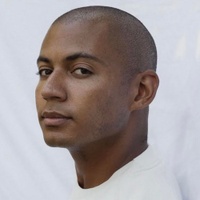
Courtney Hartman, a Wisconsin-based, Colorado-born guitarist, singer, writer, and producer, has spent 15 years deftly knitting together music communities across the bluegrass, folk, and indie scenes. She turned early acclaim (including a 2014 GRAMMY nomination for her work with folk quintet Della Mae) into true partnerships, writing and recording with an ever-growing family of fellow artists. Over the past decade, Courtney has spent time in 28 different countries, seeking to bridge cultural divides through music diplomacy and creative cooperation. Her new release, With You, is a richly collaborative album centered around the themes of care and motherhood.
Conversation
On the creativity of care work
Musician Courtney Hartman discusses moving through the seasons of her life, the twinned act of giving and receiving, and being brave to set an example for her daughter.
As told to Laura Brown, 3188 words.
Tags: Music, Inspiration, Creative anxiety, Collaboration, Family.
What are you finding comfort and inspiration in right now?
I find myself in seasons of output. I think earlier in my life I used to freak out a little bit more, or feel worried that I wasn’t continuing to create when I was also releasing music. I can see it now almost like a pendulum swinging, or a need to fill up a cup after it’s been emptied. I’ve turned to some writing about creativity. Permission by Elissa Altman is a book I just finished and found a lot of comfort in as I’m releasing music that’s very personal and vulnerable. That book is a book about writing a memoir. I’m also currently reading a book by Sally Mann called Art Work. Sometimes I think I just need to hear from people that are older, that have created so much in their life, [and hear that] still so many of the ups and downs are universal.
I also want to tell you that it felt very serendipitous that someone reached out to connect us because in October, I saw you play at Sweet Land Farm in Trumansburg, NY.
Yeah! How did you end up there?
I live in Ithaca. I mean, I’ve known Rosie for a long time, just from the music scene. And I kept thinking about that show, but specifically about you handing out the note cards with the question, “What did giving or receiving care look like for you today?” I want to talk to you about those words and that act. How did you land on that question?
I was exploring a number of different ways of phrasing it or asking people: what is care, or why is care important? And so I handed out a bunch of different handwritten ones at a house show. And then as I was reading them, it felt like the act of noticing. What happened today? Just the smallness of that and the particular-ness of that felt really meaningful. We can’t always answer big questions, but we can think back on today. I can’t remember last week, but I can remember today. And if we can remember today, then maybe tomorrow we can remember what today looks like, when tomorrow’s today. Now I sound like Winnie the Pooh. But the giving and receiving felt like an important piece because both are so important, and sometimes we’re in a season where it feels like all we are doing is giving. Noticing how we are receiving care in those times, I think is important. How even just walking out into the sunshine is a form of the earth caring for us. Or when we’re in a season of needing a lot of care, noticing small ways we can give care.
Do you read them after each show to remember a certain time and place?
Mm-hmm. Not always, because some shows on that tour, we were driving late. But then I would go through them and they almost always made me tear up, if not totally cry. Just the tenderness and honesty. Something I noticed, or was kind of mulling over, was care as a choice rather than care as obligation. Like having a doctor write down, “Today I gave care in the form of giving my full attention.” They were going to be there for those appointments regardless of whether they chose to give extra care and attention. But care as a choice—I’ve been thinking about that.
I only vaguely remember what I wrote, but I feel like writing it down made me remember all the details about that day so much better. Earlier that day, I met someone for the first time and we kind of lost track of time because we were really connecting and I went from there to the show. So I was reflecting on time and attention, and even sent them a picture of the card, just the question. It keeps coming back up. And now that’s a person who is very present in my life. So to have the beginning or the seed of it somewhere is special.
That means a lot to hear. I have an album release show on Saturday and I’m figuring out a way to display them in a way where people can read them. So yours will be in there. And they’re all anonymous, but then at the show, people will be able to clip up their own cards as well.
I love that. I’ve been thinking about this lyric from “Honey, Honey” that rings in my head, which is, “This is how I love you, this is how you’ll know.” Can you talk about that line and the idea of knowing?
It’s interesting you bring up that line because initially I thought that the chorus wasn’t finished. I thought that there needed to be something that came after that line. This is how you’ll know the way that I do this or that; or, these are the ways that I care for you. But I was writing that with a writer named Tift Merritt, and she was so articulate in the way that she asked questions. Rather than just throwing out a bunch of ideas, she would ask me questions. And then I would take a couple weeks and reflect and look at, what are the details of our day? This is a song about being with my daughter, asking, what are the actual details of our day that we can weave into this, rather than it being a bunch of cliches? Taking some of the vagueness out of it. But that moment of the song needed openness, I think. This is how you’ll know. I don’t know how she’ll know. I don’t know what she’ll remember. And so much of loving her now, she will not remember, even though it’s absolutely formative. We don’t remember most things until we’re five years old. It’s wild to think that she won’t remember this, but I’ll remember this.
I also read that you at one point weren’t sure if “Softening,” which is a song that opens and closes the album, would be a song that was just for you. How do you know when something might just be for you?
There’s a song—it’s not even a full song, it’s like a short lullaby—that I wrote when I was pregnant, that I would sing to Temple, our daughter. And I knew that one’s just for us. For “Softening,” it was written in such a vulnerable moment. I didn’t set out to write the opening song of an album while I was in labor. That’s a kooky thing to do. But it was a song that felt like it was given to me. It’s like you’re almost given an urging or a permission to then give that away also. I think songs, or any form of art—I can only speak for myself—are first given to us as we navigate a season, and then we give them away. That can be kind of a tenuous feeling, going private to public.
There’s this other lyric from the song “With You,” which has been keeping me company, which is, “What I wanted most was what I feared.” I was wondering if you could talk about how you walk through your own fear.
I think in seasons where I’ve tried to avoid fear or push it away, I become paralyzed. I think so much of my own creativity is about being curious about the fear, asking why it’s there, being tender with it, and then not expecting it to leave. Throughout the writing process or creating process—or the singing in front of people process—we expect to deal with it and get it over with and be able to move on. So I think I have often been kind of caught off guard when it shows up again. Because sometimes you’re afraid or you get nervous out of the blue. You’re like, “I’ve done this a hundred times, I should be fine by now.” But the shoulds never really get us anywhere.
So much of your work and this album in particular embody this idea of letting others in, which maybe goes along with fear a little bit. But I think asking for help and bringing other people into your vision is such an intimate act. How has doing that changed your understanding of your work, or what has surprised you about it?
In the process for this album, it took singing a song for somebody else or even preparing to show it or give it to someone else, a collaborator, for me to recognize the good in it. Or to get to know, “Oh, there’s something there.” Sometimes, it took one step further and took them believing in it as well. I feel like I often have a pretty strong instinct, whether it’s right or wrong. I have a pretty strong instinct of, “This is one to pursue, and this is the song that I can let go of and it doesn’t need to see the light of the day.” But then opening that up to someone else, all of a sudden it allows the piece to have all these new dimensions because of someone else’s perspective.
Almost all of this album was written over Zoom. I had the song seeds. Some of them were just a verse and not very much at all. Some were very flushed out and it was literally changing a word or something. But then I had clear ideas of exactly who I wanted to write with, which didn’t always pan out. Sometimes those folks were on tour or just dealing with life.
The Zoom aspect of it was a little nerve-racking. But as soon as we get on, it’s like sitting here with you—now it feels like we’re having a conversation and it’s awesome. And having the common experience of caregiving and motherhood brought an extra level of just like, “You see me, and you’ve been there, and I’m trying to play guitar and nurse and sing you this song and all the things, but I don’t feel embarrassed or inadequate. You make me feel seen.”
Did you already have relationships with all the people that you worked with on this album? What relationships have bloomed because of music, and what music has bloomed because of an existing relationship?
I like the thought of both of them being a blooming. Some of them I feel like were more acquaintances than close friendships. And so that was really sweet, because you write with someone and now I’ll definitely reach out when I’m in their town. There’s that shared experience. And then there were some, especially the musical collaborators, who were really close friends. Even if they were guests who had to record in their own town or country—one of my friends in Scotland sang on the album—it felt really, really connecting and sweet. It’s so fun to get to weave together projects with close friends. That’s the most special thing.
If you had to give that level of collaboration a physical image, what would that look like? How would you describe it?
The first thought—which is maybe more obvious, but we were just talking about that line from “With You”: “What I wanted most was what I feared, now woven together, a covering as I lay here.” It is a weaving together. But the other thing I saw is on the cover of the album, this really gorgeous watercolor wash that my friend put behind the cast of the hands. And the colors weave into each other, but it just makes this whole picture. I think that’s maybe more accurate.
I actually want to spend a moment with images and textures and things that don’t fully settle, those in-between spaces that your music seems to touch. When I’m listening to your music, I start to think about how some words like “mother” or “artist” or “caretaker” feel like rooms we have to slowly grow into. I’m curious how you take ownership of identities as you’re stepping into them.
At first glance, those words can feel really small or restrictive because of the boxes we’ve put around them or society has put around them. I think the more accepting I become of my role in the world or in my season, the more expansive I see those roles become. This morning I was just doing some chores, thinking about how connected motherhood and creative work really are, in that they’re unwieldy and you don’t know who this child is, you don’t know what you’re creating, and it’s always informing you of the process. And as much as we want to envision what it’s going to be, or the kind of child we’re going to raise, none of it is in our control and all of it needs our attention every day. Or it needs us to give ourselves to it. But it takes me a while. Or I think it’s continuing to take me a while to fully step into roles or to feel comfortable with identifying myself with those things.
When you became a mother, did your idea of who or what you were singing or writing for change?
One of the first shifts I noticed was a couple months after my daughter was born and I was at a gathering of musicians. I was teaching, and I just was overwhelmed by this feeling. Someone asked me, “How has it changed?” Let’s see if I can articulate this… I just felt like the last thing in the world that I want her to see is me holding back because of my own pride or fear, and whether that’s not wanting to sing out loud because my voice sounds funny or not playing… I don’t want those things to keep me from expressing joy in our home—just like, everyday kind of expression. And then on stage too, I want her to see me being brave. So that feels different. There’s someone who’s watching me, which is a little terrifying because sometimes I feel like, “Don’t watch me! I feel mad right now.” But that’s the reality, is that there is someone watching me.
I was thinking too about how in your song “Growing,” you share this image of being pregnant and realizing that your daughter had a view of your heart that nobody else has ever seen. And I was wondering if you feel like you have started to see other people’s hearts from a different angle.
Totally. It’s so easy to judge people when you haven’t been there. Maybe “judge” is a strong word, but maybe it’s also appropriate. I think something I keep coming back to is that caregiving expands our capacity for compassion. I feel like I see people in the airport differently. And that happens for all of us and whoever we’re in a season of caring for. I have a completely different level of appreciation for people who work in child care or elder care. It’s just like, these people are absolutely incredible, what they do every day. Or people who are in healthcare. There are so many different forms of caregiving. And they’re so important.
As everything in your life has expanded [through becoming a mother], how has your ability to capture a creative idea changed?
I created all of these songs during the first little small sliver of motherhood, so I have yet to know how it’s changed for the next season. And a real buoyant, chatty two-year-old is a different level of needing attention. I am learning that I am better and I’m more whole when I am creating, and so finding ways to have disciplined creativity… But not always. Sometimes sleep is more important or just the caregiving is the priority, and there’s creativity in that. Recognizing that there’s creativity in mothering. There’s creative energy. But creating space for myself also, so that she can witness me making that a priority at moments. And maybe she will be able to do that at some point in her life, if she follows a similar path in any way.
That’s something I think about a lot. I think being a supporter in itself is a very creative act. If you are there helping whatever it is that someone is trying to put into the world, then you are a part of that creation.
Absolutely. I [advocate for] expanding our view of what creativity is so that people understand that they’re perhaps currently living a creative life. It doesn’t just look like an album or a painting. We all have that energy in us and we can choose to see it and live into it, I think.
I want to start to close the loop by talking about being held and holding onto something at the same time, because that feels like the thing that’s behind so many of your songs. I’m curious how community and place fall into that. What have you found yourself looking for in a place, or what makes something or someone feel like home to you now?
Holding and being held… You’re right, it is a part of this music and a part of what I want to give. I think there’s a mutual holding when you’re in a place that feels like home, and there’s mutual care. We live in a place right now where we don’t have family, and so that becomes even more stark. It’s important to have people who you feel comfortable saying yes to when they offer to bring dinner. Food is such a universal way of caring, but it’s so important. And then place, too—whether it’s the front porch with some pots of plants, having a place where you can give care to the land also makes it feel like home, where you are nurtured and able to nurture.
My final question for you is, what helps us feel like less of strangers to one another?
Seeing each other, I think. Feeling seen. It’s amazing how often you go through your day and you haven’t really looked at the people that you’re living with, let alone the people you interacted with. And that takes attention and intention and care, to be really willing to see each other and willing to be seen. But we’ve all experienced it. You can feel like a stranger in a house with someone you really love, and you can also see a stranger and have a super brief moment of connection and feel not so estranged. You feel seen.
Courtney Hartman recommends:
Books: Permission by Elissa Altman, Art Work by Sally Mann, The Way of the Heart by Henri Nouwen
Friendship. Seeing people I love create.
Brandi Carlile’s song “A War With Time” …played loud.
Our first blanket of snow and getting outside to breathe.
Noticing what I am holding, and what holds me.
- Name
- Courtney Hartman
- Vocation
- musician
Some Things
Pagination