On learning as an endless process
Prelude
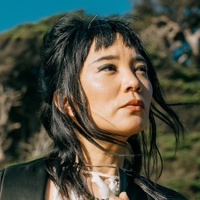
Hana Stretton is an Australian ambient-folk producer, composer, and multi-instrumentalist known for her intimate, detail-rich production and expansive song structures. Her debut album, Soon, released in 2023, was lovingly reissued by Mount Eerie’s Phil Elverum through label PW Elverum & Sun. Of Stretton, Elverum said, “I hear an artist who has entered completely into the stream where creation originates…Hana Stretton has truly recorded the deep flourishing sound of a quiet listening mind in full blossom.” From the fires and floods of the Australian bush on Soon, Stretton’s forthcoming album, tiarn takes us to the shores of the Pacific Ocean where classical and electronic arrangements move with an ever-present longing for connection and nature.
Conversation
On learning as an endless process
Musician Hana Stretton discusses finding beauty in a lack of control, sinking into silence, and thinking about the future.
As told to Laura Brown, 2440 words.
Tags: Music, Mental health, Focus, Creative anxiety, Process, Anxiety.
What are some things you’re still teaching yourself how to do, musically?
Everything. Absolutely everything. It’s an endless road of learning. And I am so grateful for that, because there’s never a moment where I feel like I’m done or I’m not sure what to do next. There’s always something to pick up and learn. Not just physically on instruments, but mentally. It’s taken me many, many years to feel like I can even attempt to do some of the things that I’m doing—and that’s a learning curve, too. So just knowing that it’s possible for me to do what I want to do, what I want to achieve.
Your music is incredibly sensory. Do your senses tend to guide your process? Do some senses lead you more than others?
We’re talking sight, smell, taste kind of thing? That’s a really good question. I think the main thing is moving my body. I’ll do a lot of silly dancing or just get up and be on my feet while I’m producing. And I’ll also go away from what I’m doing a lot. So I’ll go for a run or I’ll go for a swim, and I’ll get physically into a natural environment, literally under a wave. And that will bring me back to a sense of what will come next. The movement.
I also feel like senses are very tied to memory. Do you have that kind of connection too to your senses?
Generally, massively, especially smell. If I smell something that has a heavy memory attached to it, it’s like being hit, slapped in the face. I don’t know if you’re the same.
Do you feel like memory is something we retrieve or something we keep rebuilding and reinventing? Or what kind of memories do you often find yourself in? Are they from certain periods or specific places?
I’m going to have to give you a really boring answer here, and I have a feeling that when I’m a bit older, I’ll look back at saying this and go, “You idiot. I don’t know what you were talking about.” But I don’t feel like I tend to spend a lot of time thinking back to old memories. I think I will be slapped in the face by them sometimes, like with smell or something visually will remind me of something. But I don’t tend to look back—which is funny considering I, as a lot of people have told me, make seemingly nostalgic music. I did use stimuli in terms of video from my family many years ago, but I wasn’t born yet. I tend to think or imagine myself in the present moment or in the future. And that’s my main propeller.
What do you mean when you say you envision yourself in the future?
I spend a lot of time thinking about the future, and thinking about what I want to do and where I want to be, and the things I want to see and do. Just imagining things for myself. That’s kind of what I’m doing in the music as well. I tend to spend time in the future and in the present, and I don’t really look back, which is interesting considering the music I make. But yeah, time will tell as to whether that’s true or not. I think the older version of me will have something to say.
I’ve been thinking about how my favorite dreams are the ones where I’m somewhere I’ve never been before, and that’s what your music feels like to me. When you are making music, do you feel like you are building a world you already know, or discovering a new one?
On this album, it’s the latter. It was working inside of a world and building inside of a world that I’ve never been to before, but that in some ways reflected my day-to-day life. But I was not where I was making. I was not there. It wasn’t my place. It wasn’t my time at all. But I did certain things during the day that would help me get into that place and that person that I was. In my head, I wasn’t even female. The person who lived in that place was somebody completely different to me. And there was a freedom in that. Soon really came from me and my more immediate experience. But there is still a separation there, and an imagination.
I read that you lived in isolation for a number of years when making this album. Could you talk at all about what that looked like and how you found yourself within that?
I know that I struggle to be entirely creative, or creative enough to make something true, unless I’m alone. So I had to find a space where I could feel that. And I ended up in Lac de Labarre [in France]. There were stretches—and there still are—in my life where I won’t speak or say much at all out loud for weeks at a time. And it’s a very beautiful life, and very conducive to making something like this, because you lose a sense of the day-to-day and the normal experience of a normal stressful environment.
Basically I would just swim and run and make things, and that’s a pretty good place to start. I really recommend it. I really recommend silence for people who are people-pleasers, especially. I’m a massive people-pleaser. I grew up one of the worst. And I really recommend it for people who struggle to find themselves in, or give themselves permission to be, who they are and make what they make.
When you’re alone for those long stretches of time, where or in what do you find companionship in?
Just nature. The weather is a great companion and changes so vividly. You’ll suddenly be in a lightning storm and your world will look completely different. And I’ve found the animals and the birds and the whales and the sea to be great companions.
Do you have any sort of routine when it comes to making music, or do you find you reach for it more organically?
I do it very little actually, and I’ll have huge periods between making things. I’ll have long stretches of about nine months or something where I don’t do anything at all. And in fact, that happened a lot. It’s happening a lot more recently because I’m pulled away from those environments. I’m going on tour. I’m doing “real musician shit.” And it means that I’m not making things, just because I need a specific kind of set of things to be able to do it and to feel like I want to. So I haven’t made anything for at least a year. And I hate that. I’d like that to change. I’d like to find balance.
[As for routine], I get somewhere quiet. I set up a really rudimentary amount of stuff and spend a lot of time in nature and inevitably something will come. But I do have to wait in that space for a sustainable enough scene… I can make a song inside of one scene, but if it doesn’t feel like a sustainable enough scene, then it will be shifted and move on, and move on, and move on. And at some point, something will feel so real and tangible that it sustains me long enough to write a whole album to it. But that takes time.
Your music feels, to me, like you’re meeting something where it is rather than asking it to come and meet you. How much of making something for you is about what is sought, and how much is about what you are encountering?
I mean, a lot of music-making is completely intangible, and I can try to force these scenes I was just talking about. I can try to force it. And some songs want to be there and some songs go, “Absolutely no way. This is what I look like and I’ll show you.” And I think it’s actually pretty obvious on this album which ones were happy to be there and which ones weren’t, and which songs didn’t require a fight. There’s a lot of fighting happening on this record. And it’s pretty fun, but it is kind of futile because a song will tell you what it is. You could try to tether it, but in the end, the song decides where it wants to go.
There’s also these wonderful acts of invention on the album, where you almost build a scene and multiply yourself to fill this imaginary room. What role does play, or being playful, have in your process?
You try, as a maker, for play to be the only reason you are there. And it is such a joy to be getting closer and closer to that. I used to have a really hard time coming to the page and doing what I like doing. And a lot of that was down to a really low sense of self-belief. But that is, bit by bit, kind of dissipating. And the play that’s left, I’m really grateful for. I feel like that’s all I’m striving for, is for this thing to be fun.
You were talking about how there was a lot of fighting on the record, and actually, I like that idea of there being a little resistance. I’m curious what kind of tension you find to be useful.
I think that’s a difficult question to answer because useful suggests that I have control over these things, and I don’t. It’s not like a tool. I can’t create tension. The song will show up as tension or it won’t.
I’m still new to production and I’ve never been taught how to do it. I’m completely in the dark per se, as to how this thing works. So naturally, there’ll be fighting until we come to some sort of equilibrium, which actually I don’t think will ever happen. And I hope it doesn’t because it’s kind of fun. But yeah, I’m still in my production infancy. I’m still working this thing out.
I don’t mean for this to sound a bit woo-woo, but I find the lack of control very beautiful and I’m very grateful for it. I think if I had to control every single thing that I was doing, I would not find it fun.
When you’re writing, do you ever choose to keep some things only for yourself? Do you ever set out to create something just for the purpose of interacting with it in the moment it’s made?
I’m not precious with music-making. I’m quite brutal, and I’ll cut something up hugely and move things around until it feels right. And I’ll take out the whole song and just use the end. I’m very, very feel-based. So if something doesn’t feel right, I’ll cut it immediately and just go with whatever feels right.
I don’t think about releasing things as I’m making anything. That would really stump me. I would do nothing, because as a people-pleaser, I would be thinking about what you thought of it, and what the random guy down the street might think of it. Hearing a thousand different voices and opinions before you even start is a really terrible way to start making something, for me. It’s a really good way to do nothing at all.
Do you pay attention at all to the noise that comes after releasing an album? How much weight do you put on that response?
I don’t think any of it sinks in, and I find all of it quite strange and humorous. It feels very funny and dumb, in honesty. And if I ever have a conversation about it with somebody, I’m usually laughing. But sometimes there are young people who come up to me at shows or email me and they want to know something about production or about releasing music. And that’s when I really engage and I’m really happy. I’m happy to try to be somebody that can pretty confidently say that you can make stuff in your bedroom; anybody can, and it’s possible. And if you want to do it, you should try. So that’s the bit that I like.
Sometimes I feel like music acts as something that carries me elsewhere, but your music does the opposite. For example, I was sitting outside listening to your album the other night when it started to rain, and this streetlight was hitting the pavement. And I swear I’ve never noticed raindrops hitting something in this way. It was like they were jumping on a trampoline. I just think your music is a flashlight. I tried to take a video of it and it totally erased whatever it was that was happening… Your music is always showing what’s right in front of you, in all its beauty and complexity.
How do you think one can direct attention to something through sound? Or, what do you hope to point your flashlight towards?
This whole album, and pretty much most of what I make, is just a dedication to the planet. I deeply, deeply love this place and all of its diversity. And I would say that I can get pretty down about what it all looks like sometimes. But music and making it helps me to get out of a sad or apathetic state and figure out how to get involved, and to start helping and to start seeing what’s in front of me. Yeah, I don’t know. I deeply, deeply love. I’m so grateful to be alive. And I’ve got to put that love somewhere. It’s just happened to be in music in the last few years, but I’d like that to change. A lot of my music on this album is telling me that I need to get out more and work with animals more. I used to work in regenerative farming and I would go and help other farmers how to work with their cows in better ways in Australia. I’d like to get out more and put my hands towards something useful. I’m an optimistic pessimist… Yeah, it’s just a big love letter, really.
Hana Stretton recommends:
Tasmania, the place
Washington Baths, a bathhouse in Portland, Maine
“Turning A Cup and the Water Falls From It” by Nick Huggins
Flames by Robbie Arnott
Doing less less less
- Name
- Hana Stretton
- Vocation
- musician
Some Things
Pagination