On letting go of the shame of being great
Prelude
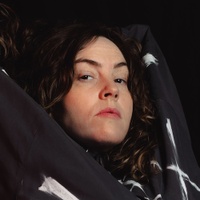
Naima Mora is a multidisciplinary artist whose career spans modeling, acting, writing, public speaking, and directing, marking global influence and dynamic creative range. Trained in classical ballet at the Dance Theatre of Harlem while studying English at the City College of New York, she rose to international prominence after winning America’s Next Top Model in 2005, helping to lead the fashion industry’s shift toward diverse inclusion of “untraditional beauty.” She became the face of CoverGirl Cosmetics and went on to grace major international runways and publications including Elle, Cosmopolitan, and Vogue Italia. Naima is a sought-after speaker at leading institutions, known for talks on personal empowerment, Buddhist theology, and now her grandmother’s legacy as a filmmaker. She is the author of her critically acclaimed off-Broadway one-woman show and Model Behavior, a university-touring book supported by brands such as Harvey Nichols and L’Oréal.
Conversation
On letting go of the shame of being great
Model and filmmaker Naima Mora discusses removing self-limitations, inspiring others, and the importance of ancestors
As told to Miriam Garcia, 3118 words.
Tags: Film, Process, Inspiration, Beginnings, Success, Family.
You studied ballet for many years, won America’s Next Top Model, appeared in multiple magazines, and starred in and wrote an Off-Broadway show. Now you’re making a documentary film that’s both archival and personal. Beyond what’s easy to find online, what is missing from your work that people usually don’t know?
People don’t know much about my storytelling and writing. My twin sister recently cleaned out a storage space and sent me boxes of my old modeling portfolios and journals I’d been writing since I was 11. Seeing it all again made me realize how long I’ve been documenting and making sense of my life through writing. That part of me has deeply influenced my creative path.
Being in front of the camera, in your case modeling and acting, requires a certain kind of vulnerability. But there’s another kind that comes from directing or writing. Now that you’re working as a filmmaker, how do you sit with that other kind of vulnerability?
It has felt natural, in part because I have so much experience and so many creative outlets to draw on. That’s what lets me create in my own voice. For example, I studied acting with a private coach in New York, Marishka Phillips. She directed my one-woman show and gave me principles for developing a character and allowing that character to fill a lot of space. I had already been doing that in dance performance. With ballet, you have to learn how to move your body in a way that reaches people in the audience on the balcony.
I took that into modeling, and then into acting. And I have been emoting so large for most of my life; I had to pull it back a little for the camera, because when you’re acting on screen, the camera picks up so much. But I let that instruction feed the sensitivity I bring to directing. My upcoming documentary, Elizabeth Speaks, is about my grandmother, Elizabeth Catlett, a Black artist and activist who was silenced by political censorship. I can look at my grandmother as a character and understand, with empathy, what drives her. When I take on a character, even a villain, I ask, “What about this character can people fall in love with?” When you approach directing and writing that way, you can create an emotional tug-of-war for the audience that makes the story more complex and more compelling. If the audience is rooting for both the villain and the protagonist, you’re much closer to real life.

Following up on what you just mentioned about characters, you will also appear in your documentary. How are you approaching the separation between yourself as the director and your character in the film?
It’s hard. The challenge with this film is developing a visual language specific to the film and its materials. After months of talking to Melanie [Herzog], my grandmother’s biographer, she offered me the interviews she had recorded with my grandmother, which I’d only found in archival spaces. But I really had to earn that trust, and the trust of everyone, even as Elizabeth’s granddaughter. So I had these interviews, and then I had her unpublished memoirs, written in this very studio where I am, a couple of years before she passed away.
I was filming for three years. I realized I had a lot of footage of museums and many interviews with people talking about my grandmother, and then suddenly I was like, “But where is Elizabeth?” A lot of people know her work, but she never had the opportunity to share her story fully, because of the danger, the implications, and the risks. And I wanted to give her that opportunity. As a Black woman, and in my own experience as a Black and Indigenous woman, there’s so much of yourself you have to censor to get the bigger goal accomplished.
I wanted to provide her with a very safe container to express herself fully, even though she’s passed away. I’m pulling from the interviews that let her share parts of this story, but I didn’t know what to do with the parts she couldn’t share. I was like, “What do I do? Do I copy her voice with AI? I’m not doing that!” So I became the most likely candidate to help her tell her story. Finding the balance between whether this was about me or about my grandmother was extremely challenging.
In that, I recognized that our relationship is a symbiosis. I felt this is how Black women support each other. It’s a give-and-take, because it’s an experience we understand. I wanted the voice in the film to emulate that, but I also wanted to present myself as the pedestal for her voice, as the monument, almost like a sculptural figure.

You mentioned finding the balance between yourself and your grandmother. Has that come up in feedback on the film?
The biggest challenge was hearing many people tell me, “Well, this is just a film about you. There’s too much of you.” I was like, “Well, what’s wrong with that?” No one says that to white directors who place themselves in films. I had to give myself space to explore what it looks and feels like to place myself physically in the film, while honoring Elizabeth as much as I could. Allowing myself to be present in the film speaks to what I’m trying to accomplish: giving Black women a voice.
I took the feedback as a chance to reflect on that balance and to protect myself. This film is as much about Elizabeth as it is about her granddaughter finding all these hidden materials that might never have seen the light of day. All these grant applications ask me, “Why are you the perfect person to tell this story?” And I’m like, “I’m the only one looking.” Literally, in the whole world, I am the only one looking for all this information on my grandmother, a historical figure who inspires millions.
You’re the only one looking, and you also have incredible access to the materials and to the story itself, since it’s your family. Is there anything that still feels unreachable?
No. I started this film because my grandmother called me in a dream. She said, “I’m waiting for you in Mexico. You’ve got to get down here.” So I left New York and started this journey. Then, in another dream, she told me, “Just do the work, and I’ll take care of the rest, Naima.” And that’s really how this process has felt. Every time I’ve needed something, it seems to find me. I just have to keep showing up and doing the work.
Showing up can be half of the work.
It’s more than that, Miriam. It’s like a calling, and everything flows because it’s such a spiritual and ancestral thing.
Tell me more about the calling.
She’s been calling me into her orbit since I was very young. I’ve always felt like I’m reaching for her and she’s reaching for me. A lot of that has come back to me through sobriety—remembering her strength and how, through her artwork, she reached women and empowered them.
There are moments that make me feel like I’ve been moving toward this work for a long time. I went to Oprah’s Legends Ball with my grandmother when America’s Next Top Model was just airing. She was like, “I’m taking my famous granddaughter.” My grandmother had been invited to the ball, and she brought me. She had actually gone to the hospital that morning, but she was like, “No, I gotta get back to the ball. I have to make this.” And even before that, I was the first grandchild she sculpted a bust of. I was 13.

She talks about it in a film called Sculpting the Truth, where she describes what she saw in me and how she felt about me. She says, “This isn’t a direct portrait of my granddaughter, but it’s what I feel about her.” Looking back, I think she’s been calling me to this for a very long time, without the exact words, until I had that dream where she was on the phone. And even now, the process has felt like that. I’ll think, “Oh, I need an editor,” and someone will say, “Let me introduce you to so-and-so.” I’ll tell them about the film, and they’ll say, “I know the perfect person.” And there it is. The next piece falls into place.
From what I’m hearing, you seem to know how to navigate different environments and personalities really well. For example, high fashion, the performing arts like ballet, and now filmmaking. Has anything been challenging about building connections or fitting in?
I have a two-part answer. First, what helps is my mutability. I think it comes from the Buddhist philosophy I was raised with. My parents are both Buddhist. I also have a deep spirituality with West African and Mexican deities. Underneath everything we do, we’re human beings, and our humanity connects us in any environment. What I like about Buddhism is its scientific approach to life and spirituality, and the understanding of the oneness of self and environment, and how one reflects the other. If your environment directly reflects you, what are you offering your environment to have this beautiful, enlightened experience on Earth?
So I try to offer value to people, because underneath it all, we’re all just trying to connect and be seen. The part that’s challenging is internal. I’ve had to stop trying to prove myself to people. Some people would say, “You’re just a model,” and dismiss me, and because I haven’t had institutional training in a lot of what I do, I’m not taken as seriously. I have to find a balance in that, or trust that how I show up will speak for itself, rather than trying to prove I deserve to be in the room with them.
How did you learn to trust how you show up, rather than living up to other people’s expectations?
I had to let go of the shame of being great. For a long time, I felt ashamed of being in my fullness, afraid of making the people around me feel small. I think that’s a trauma response, but I had to start exploring my subconscious and checking in with myself. I had to take a lot of personal time to become more meditative and aware of why I feel embarrassed about sharing this amazing thing I’ve done. Or why I minimize it or diminish my accomplishments. And it has largely been to maintain relationships. The interesting part is that some people can meet me where I am in my career, understand it, and I’m learning to trust other folks’ limitations while still being in my fullness. The shame I carry, though, inhibited me for a long time from just showing up and being me.

Yeah, it’s so interesting. I also don’t know if it’s a women’s thing. Sometimes I feel like I don’t want to make people uncomfortable, so I feel like I have to hold back.
That’s the self-censorship I’m talking about, and I’ve had to get real about it. I’m tired of feeling confined by my own mind’s limitations, because I want connection. If I want to be seen, I should allow myself to be seen. It’s weighing the options. Do I stay small and stay in this very confined emotional and mental space, or do I liberate myself and risk what it costs?
At this point, especially after becoming sober, which has been a big thing for me, I almost died. I almost killed myself, for real. People don’t talk about that journey much because there’s so much shame and taboo around it, but the more sober I am, the more I realize how dangerous the way I was living was and how I was self-medicating. After a great year of somatic therapy, I understand it thoroughly now. I nearly faced my death and my own mortality at my own hands, from my own mind. It allowed me to release a lot of fear and really start challenging the inner workings that have kept me from stepping into this for so long.
How has that changed how you think about your role as an artist?
I think the artist’s job is to liberate people, to allow them to feel what they can’t feel within themselves, to go deep. And if we don’t allow ourselves to do that as artists, it’s a mundane effort.
How are you going deep with your new documentary about your grandmother and her story as an artist and her life in exile?
Miriam, I haven’t even finished the film yet, and people are already in tears. People are already receiving it. It’s my grandma and me. Those are two powerhouse women. It will be nothing short of amazing. I recognize that my experience as an Afro-Latina Black woman, light-skinned, raised in the United States, coming from an amazing family of legacy artists with cultural influence all around me my entire life, is very unique. Because of that, I’ve been able to tap into parts of the magic of our people that are normally not tapped into, that have been taken away from us by imperialism, colonialism, and such.
My life has been transformed. I saw myself at the beginning, when I was filming, and now I’m a completely different human being, more of myself than I’ve ever been: more powerful, more vocal, unforgiving, graceful, and more trusting of myself. And we are all witnessing grave atrocities on this planet, and there are resources to be able to combat this situation externally and internally. I want to show how to do that internally through my relationship with her in this film. How do you honor your ancestors and really bring what they left us into our lives, even if it’s just memory, because memory is cellular; it’s in our bodies. I want people to reach for their magic after they see this film.

I read a story about how, during the final episodes of America’s Next Top Model, you traveled to South Africa and visited the jail where Nelson Mandela was imprisoned. You held the key to the cell and felt called to win. It reminds me of what you mentioned earlier about the call to make your documentary.
I have always been drawn to the art forms I have lived through. My first ballet teacher found me. I was just taking a weekend class, and she said, “Oh my gosh, you are so absolutely talented. Where are you training?” I said, “I’m not training anywhere. We don’t have any money.” And she said, “Come to class; I will train you.” And I went, devoted. It was three days a week.
And when it came to Top Model, I was working at the coffee shop in Union Square. The casting directors came up and said, “Oh my gosh, you’re so gorgeous. Can we take your photo and submit you to this show?” I said, “Cool.” And they cast me for the show. I didn’t really audition. When I went, I realized I was gaining momentum as it went on. And when we got to South Africa, I knew that I had an opportunity for my own career, but I also had an opportunity to impact people. And it gave me so much to look within myself and just like, “Oh, I can really do this. I can do this. All my dreams are possible.” I realized in that moment, when we were in South Africa, that I had that opportunity to do that for other people. And Tyra Banks was telling me, “Oh, you want this because you want to be famous.” And I never wanted to be famous. I just wanted to inspire people and be able to work and earn a check for what I like to do.
Visiting Robben Island and Nelson Mandela’s cell was significant. Holding the key to his cell was extremely significant. Imprisoning a voice—his voice was just too powerful. They had to lock him up. And this is similar to what my grandmother experienced. Her voice, her artistic voice, was so powerful that she had to run into exile under threat of abduction during the McCarthy era—a time when people were being killed, assassinated, for having voices like hers.
When I was holding this key for Nelson Mandela’s cell, I realized how significant it was to have that in my hand, to open the cell, to stand inside it where this man spent so much of his life, silenced, censored; people were being killed. And it was a couple of nights later; I remember we were in this holding space, being sequestered with a judging panel, and it was like a rooftop where you could go on top, and I just climbed up there, and I went to the top of the roof, and I looked at the stars, and I had a conversation with God, and I said, “What do you need me to do? And I’ll do it. Help me, and I will use this opportunity for good.” I went back down into that judging panel, and I won the show. I decided I was going to do it, and I did. And I think I look at my grandmother’s life as I’m studying her, and she was the same way.
Naima Mora recommends:
Favorite book ever: The Alchemist… a must-read for any dreamer who feels their dream is out of reach
Dance, every day… in your living room, in your bedroom, with the world watching or no one watching… dance!
Sing, every day… Get used to hearing your voice, loudly and with command…
Meditate, pray, redetermine, surrender, surround yourself with beauty and talk to the universe around you… everyday!
Be relentless with surrounding yourself with people that give you permission and challenge you to be full, to grow, to be honest, to persist, who expand your limiting beliefs, who love you … and do what they say. Sometimes the people around you can see you more than you can see yourself… your beauty, your magic, and your fullness.
- Name
- Naima Mora
- Vocation
- model, actor, writer, public speaker and director
Some Things
Pagination