On owning your process
Prelude
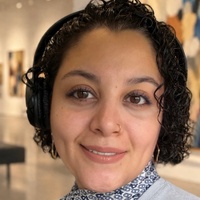
Blondshell is the project of Sabrina Teitelbaum. Her self-titled 2023 debut landed on Barack Obama’s Best Songs of 2023 list and established her as one of the most lauded new artists in years, while her acclaimed 2025 follow-up, If You Asked For A Picture, drew on touchstones from Queens of the Stone Age to Smashing Pumpkins and earned a place on best-of lists at Billboard, Rolling Stone, NME, with the New York Times dubbing her “an alt-rock supernova.” She released a a 2025 companion release, Another Picture, featuring Conor Oberst, Samia, Folk Bitch Trio, John Glacier, and Gigi Perez. Her third album, Violins, arrived in September 2026.
Conversation
On owning your process
Musician Sabrina Teitelbaum (Blondshell) discusses trusting your instincts, navigating a creative industry, and living your art.
As told to Giliann Karon, 1980 words.
Tags: Music, Process, Collaboration, Inspiration, Beginnings, Focus, Mental health.
How do you navigate the space between Sabrina and Blondshell, and are there parts of yourself you consciously protect from the project?
I don’t protect anything from anything. It’s all the same. I don’t know if that’s for better or for worse. There’s nothing different between the two. When you write music, I guess it’s a job, but it’s also completely personal. I’ve tried to differentiate between the two, but the music is just me.
In that case, what led you to release music under a name that wasn’t your legal name?
My legal name is just clunky. I felt like it would be hard to say, “I’m Sabrina Teitelbaum, come to my show,” and people wouldn’t know how to spell it. It wasn’t about wanting to be somebody else. My legal name just didn’t feel like a stage name.
What was the process of coming up with Blondshell, or did the name just come to you?
It came to me at dinner with my sister. I had been putting music out under different names for years. In high school, I tried different things and had a SoundCloud. In college, I put music out and played shows. When I made my first record, I knew I needed a new name. So I went to dinner with my sister, and we talked about stage names and riffed on ideas. I think she came up with it, and it stuck.
It feels like me. It’s also funny because the concept of a bombshell is so not me. It doesn’t feel like me at all, so it’s kind of ironic.
Does it feel like you have to live up to the expectations the name conjures?
I don’t think so because everything is so digital. For the most part, people see photos, cover art, and things like that before they even hear your name.
You’ve released three albums in four years. Is that your natural rhythm, or did something shift over the past year or so that made you want to write more?
It’s a lot of music to ask people to digest, but it felt natural and right to me. I would never hold onto music and wait another year to put out something I’ve finished for the sake of creating scarcity. When I make music, I wanna put it out.
When do you feel it’s time for you to start a new album?
I just write when I have something to say. Once I have around five or so songs, it occurs to me that maybe it’s gonna be something.
Usually there’s a song where you feel like it’s now a project. For me, that was “Violins.” That’s why I named the album after it, because it so clearly made what I’d written feel like an album.
When does an album feel complete?
It’s really hard to just let it go. I personally have a really hard time with mixing and mastering. When you’re recording, there’s always something next. You can always keep editing. Once you send it to mix, you can decide you don’t like something, or you wanna change something.
But once you send it to be mastered, and then once it’s done being mastered, there’s nothing you can do. It just exists as it is for the rest of your life and for the rest of time. That’s a very intimidating concept to me, and I have a hard time letting go of projects.
How has your songwriting style changed from your debut to Violins, and are there any songs that best demonstrate this evolution?
My style feels different, like how someone’s appearance changes as they get older. People just change. And, as the person who’s writing, it feels subtle and gradual. You don’t even realize it, and then one day it hits you that things are really different than they were five years ago.
I think it feels more visual and a little bit less literal. It feels less like I have a really urgent need to explain things now than I used to. It’s a bit more settled in. I feel more comfortable letting things just speak for themselves.
How do you identify creative leads worth pursuing, and how do you know when to abandon something?
That’s so interesting. Usually, it comes down to instinct and desire. Abandoning is a terrible feeling. I abandon things often, but only when I get that feeling that it’s not good.
Sometimes I’ll write a song and know it’s not good, but I can’t accept it yet. Then it lives on your phone, and you go to sleep. You wake up the next day, and you just know it’s not good when you listen to it the next day. Then you have to just leave it.
Are there any rituals, environments, or mental shifts that you use to help drop into writing mode? Or do you feel like you’re always noticing and collecting information?
It’s changed over time. When I was writing my second record, I was actively collecting stuff. When I was reading books or watching movies, I was trying to mine for things and wanted to really find stuff.
I felt more passive with this third record. Things just hit me. I feel more patient. I don’t need to create an environment. If I have something to say, I’ll say it no matter where I am. I don’t want writing and performing to feel like a big deal.
That’s why my show—and I’d like to change this because I think it would be fun for other people—is so no-frills. It feels weird to feel like I consciously have to become somebody else, or now I have to go do this big task of writing a song. It has to be normal, everyday stuff.
How do you translate your emotional themes into visual language for music videos, promo photos, and other album assets?
I worked with a fantastic creative director on this album who just got it. We talked a lot about what the songs mean to me, what she hears in them, and the TV shows I like. I’m not really a visual art person. I don’t know much about art history, and she taught me about it. We were sent a lot of references back and forth. We talked about the themes of my songs. That was our process. For a lot of it, we just talked like friends.
Normally, when we’re looking for someone to make a music video, I’ll tell someone at the label, “Here’s what I think the song is about, what I was feeling when I wrote it, what I’d like the video to convey, and some references.” I’ll work on that with Amy, the creative director. Then the label puts together a list of people who might be a good fit. They decide whether they want to do it, and we go from there.
How do you nurture creativity that feels genuine and harmonious in the era of algorithms, comment sections, and this low-level buzzing surveillance of social media?
I will be honest with you, that stuff makes me sick. I feel super averse to all of the things that you just mentioned.
That being said, I’m on them a lot. I’m pretty online. My Instagram’s on my phone. I have friends who delete it, and they just use Safari for Instagram. I have the app. I have the TikTok app. To be fair, I mainly use TikTok for videos of cute dogs and things like that, but it’s really important for me to find ways to put my phone down and feel inspired by relationships and being with people in person, and leaving my phone in my bag, and going to a show, going to a movie. The phone for me—it’s giving sickness.
What are your thoughts on music about the internet?
I feel both ways. There are definitely songs that refer to digital things that, I think, will be timeless because this is something that happened. People don’t have to be experiencing this iteration of the digital age to still feel it. My guess is things will get worse with AI, with just software and screens being in your face all the time.
If you’re a great writer, and a lot of people who’ve written about this stuff are, I think it will still apply. Phoebe Bridgers said, “I’ll look up from my phone and see my life.” I don’t remember what song it is. I think it came out six or seven years ago, and that still tracks. I’m sure it will keep tracking because people will keep having phones. It is a trap for things that can be corny, but it can also be really great.
How do other people or collaborators factor into your work, and what do you find most helpful about working with others?
My process is pretty isolated. I don’t write with other people. If other people are credited as writers, it’s because I brought the music in after writing it. Then we tweak things, which I love doing. It is incredibly important because I can’t hear everything from a distance.
I have an amazing guitar player who played on all three of my records, Sam Stewart. There are a bunch of songs on this project that I brought in, and he’s like, “Hey, what if you actually changed this chord to this?” And I was like, “Hell yeah. You have a great ear.” But if it’s lyrics, if it’s melody, things like that, it’s super isolated.
I just have to be alone. I look for collaborators who are professional because it’s so deeply personal. I couldn’t cope with doing something so vulnerable and then, on top of that, having people guess who the songs are about. There are a lot of people where you go in, and they’ll be like, “Who’s the song about?”
I need people to treat it like we’re all doing a job in the studio, and my producer does that even though we’re friends. He is so professional about the music and boundried. I couldn’t do something so boundary-less without having those walls up in some ways in the studio.
Studio spaces are not historically something I think of as particularly safe for artists, especially women. It makes me really happy when people put intention into studio spaces. Young artists go there a lot. Being a young artist and feeling intimidated by a massive console, and then, on top of that, by all the men who work there and know everything about it, creates a power dynamic.
I remember going into studio spaces when I was 17 or 18, and I’m 29 now. At 17 or 18 in a studio space, you are deeply vulnerable because of the power imbalance with everyone else there. It’s so important that people put that kind of intention into it.
What’s a creative instinct you have to fight against, and how do you do it?
I can get too granular, and that’s not good. I have OCD, and that’s the way my brain works. I can become hyper-vigilant about details nobody will ever hear or care about, and that can come at the expense of the bigger picture in the music.
If you’re focused on one tiny little breath sound that happens, you’re not focused on other things. I have to fight against that, and I have to remind myself that nobody’s hearing that stuff or caring about it.
Sabrina Teitelbaum (Blondshell) Recommends:
Radishes and Dubliner cheese
Sterling Point
Waiting until 7pm to take a walk during a heatwave
Mining other people’s Spotify playlists when you think they dress well
The new Brennan Wedl record
- Name
- Sabrina Teitelbaum
- Vocation
- musician (Blondshell)
Some Things
Pagination