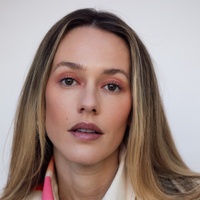
On separating what you want from what you're pressured to want
Prelude
Queens-born Yaya Bey followed her 2025 album do it afraid with Fidelity, a deeply reflective project shaped by grief, identity, and resilience. Fidelity explores what she calls the Three Deaths: personal loss, the erosion of community, and the loss of innocence. The core of the album is indeed found in its title. For Bey, Fidelity is the ultimate Black skill. It is the ability to fall down and get back up—to be “religiously joyful” even while the world is on fire. It is a grand pivot away from a yearning for mainstream accessibility, and toward a radical faithfulness to self and community. Fidelity is not just a foil to do it afraid; it’s a reclamation. As she puts it, the veil is lifting and the work is being done, and she’s still here.
Conversation
On separating what you want from what you're pressured to want
Musician Yaya Bey discusses what it's like to travel the world, career longevity and leading with emotion in your work
As told to Mary Retta, 1666 words.
Tags: Music, Collaboration, Process, Mental health, Success.
How did you get started making music?
My dad was also a musician, so I was just always around music. I started writing songs, and I thought I was just going to write songs for other people. And then that kind of turned into writing songs for myself, and then I guess ultimately recording my own songs.
When you make an album, do you have a typical process that you go through in terms of finding inspiration for songwriting?
I guess it’s whatever emotions I’m processing. I’m a really emotions-first kind of artist. So I’m really making music based on my interior world. I’m just always starting there.
When you’re thinking about your emotions, are you journaling about it or having conversations with friends? How do the emotions come to the surface?
A little bit of everything: conversations, journaling, just reflecting on the experiences I’m having and how I’m responding to those experiences. And examining myself–why I’m doing the things I’m doing and how I’m reacting to things. That kind of leads me down a rabbit hole like, “Oh, how am I feeling? Why is this coming up?”
When you were making this most recent record, what emotions were coming up and what experiences were you thinking through in the way you just described?
I was coming off of the last album and I was beating myself up a lot. I was being really hard on myself and I kind of hit a wall where it’s like, “Okay, enough is enough. Why are you being so hard on yourself? It doesn’t have to be this hard. It doesn’t have to be this difficult.”
I was trying to find my way to peace of mind, and I was trying to regulate myself and I was trying to get the clutter out of my head. I guess I was just trying to be okay. I started there: what does it take to feel worthy of being okay, just allowing myself to be okay? A bunch of other stuff came up after or as a result of that.
Why were you beating yourself up after the last album?
I think I was letting market pressure and things that don’t matter get in the way of just making the music. It’s not fun that way. It was taking the joy out of it, and it’s harder to be grateful when you’re in that head space. Because I think you need to have some form of gratitude just to keep your head on straight.
When you’re making an album, what does a typical day or week look like for you?
Mostly I’m just writing songs all day. I guess I spend a lot of time just reflecting and writing, and I guess I kind of use the album process as a way to get to the bottom of how I’m feeling and to process it. And then when I feel like I’ve gotten a hold on it or I feel like I’ve sat with it enough, then I record it.
When you’re kind of writing to figure out how you’re feeling, what form does that come out in? Does it come out straight as lyrics or it comes out in a different way and then you edit it later?
I think it comes out as melodies first without the lyrics, and then I add the lyrics as I go where it’s just kind of humming melodies and playing around with melodies, and then some words come.
I know you’re from Queens. I was just wondering if you feel growing up in New York influenced the way you approach music. Has your relationship with New York changed over the course of you being a professional musician?
Being from New York influenced the way I approach everything. But with music in particular, I think it’s kind of given me some sort of agency to move through genres, because blackness in New York is so vast. You hear all kinds of Black music, hip hop and reggae and soca and house and techno. I kind of moved through genres because of that. It’s soul music and funk and jazz … I just get exposed to so much of it here, because back in the day if you were walking through a neighborhood, you could hear Phyllis Hyman on one block and then you could hear Tony Rebel on another block, and Alison Hinds on another block, and The Gap Band on another block, and fucking Wu-Tang on another block. And that’s just like a five block radius. It’s just given me the freedom to be whoever I want to be musically because of that, I think.
Tell me about your creative community and collaborators.
I feel like in some ways I’m still finding that, but in some ways I’ve already been really blessed to have people that I collaborate with. And I think we just all kind of rub off on each other. You spend enough time around a person, you even start to kind of talk alike.
I’m married to a DJ, and also my friend Mike is a photographer and videographer. I have friends that are painters and curators. I think the people that are around me are always sort of showing me what’s possible. And I think music is the kind of thing that bleeds into other art forms. So it even shows me different ways to think about my music, and maybe even different intentions to set for my music.
When you’re not writing songs, what are some ways you stay creatively inspired? Are you going to the movies, going to concerts, taking walks?
I’m trying to get back to that. I feel like the last year I’ve just been working. I travel the world for a living, so my perspective is always shifting because I’m understanding the world outside of the world that I’ve always known. And so that’s always shifting how I think about things, how I approach things. I’m also aging, and in the process of aging I’m even reflecting on my own life in a way that I didn’t when I was younger. And I don’t know. I’m trying to get back to a little bit of a lighter life. I played a show yesterday, but then I went and I hung out with my friends after.
How much traveling are you doing?
In the last year and a half, I’ve probably been to Europe five times. You have to travel: you do all Berlin, the Copenhagen, and I did a US tour, and I went to Australia, I went to Brazil. I don’t know. I live on the road. I just came home from a tour.
When you look to the future of your career as a musician or just as an artist generally, what are you thinking? Is it, “I want to make more albums,” or “I want my life to be slower?”
I think a little bit of both, which might sound like a contradiction, but I want to make more albums. I probably want to make albums until I die. And also, I want the more normal, slower life; day-to-day I want to have a routine. I think the last year and a half, it’s been hard to keep up a routine because I’m never home and harder to take care of your body and your mind. I don’t want to be on the road to that extent. I want to play some shows. I want to have some fun. But I always want to make albums. I love making albums. I would do that anyway, even regardless of money or career or whatever. I just like making the album. So hopefully, I can always do that, but I do like the idea of waking up in the same bed for 30 days, taking my vitamins, and going for a walk. I really want to have a dog, so I want to be able to take care of a dog.
Is there something that surprised you about yourself as you’ve gone through this journey of making records and becoming a professional musician?
I guess I learned that I’m not hard to please. Don’t get me wrong, I hope to have a fruitful music career–but I think what that looks like for me is longevity. I don’t need to be a superstar, or a really rich person. I just want to make music and pay my bills and like the music that I’m making. And I think maybe I thought I was more ambitious than that, but I just want to be around for a long time and get the opportunity to express myself. Obviously I need to eat and pay rent and shit. But I think I thought that I wanted more, and then I went through a spiral for a minute when I realized that everything I’m pressured to want is not actually what I want, and to live in the tension of that, the contradiction of it and how uncomfortable it was until it’s just like, “Well, actually I think I’m already living my dream.”
Yaya Bey recommends:
Find something you like to do just for fun and make time for it.
Make time for your friends, even your long distance friends. To that point keep a running list of things to do that cost little to no money so you can always afford to hang out with your friends.
Find ways to be happy now. With what you have now and who you are now.
Find ways you can be useful in the community you live in especially if you are new to that community.
Find out if they need help distributing meals somewhere or extra hands at a community garden. You’ll meet people and help people so it’s a win win.
- Name
- Vocation
- Musician
Some Things
Pagination