On choosing to make a change
Prelude
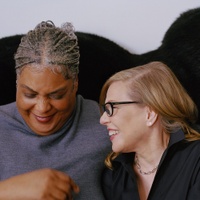
French-Cuban twins, Lisa-Kaindé Diaz and Naomi Diaz, are Ibeyi. The duo have been creating quiet, shimmering, hypnotic musical magic since childhood, but sharing it publicly since their first self-titled album on XL Recordings in 2015. Just over a decade on, the sisters have gifted the world with albums Ash in 2017, Spell 31 in 2022, and now, Offering, released this year. It is their first independent release, the result of a broad set of collaborating musicians and producers, and a willingness for both Naomi and Lisa-Kaindé to take on new instruments, roles, and experimentation. While their earlier music has been influenced by tarot and witchcraft, the song “Offerings” begins with the line: “I don’t make spells anymore, now I make offerings.” Lisa-Kaindé is London-based, while Naomi calls Paris home.
Conversation
On choosing to make a change
Musicians Lisa-Kaindé Diaz and Naomi Diaz (Ibeyi) discuss moving between grief and joy, dedicating their art to their community, and the power of offerings.
As told to Cat Woods, 2188 words.
Tags: Music, Collaboration, Adversity, Process, Production, Family, Independence.
Your new album Offering has been years in the making. Can you tell me about the decisions that led up to committing to making it?
Lisa-Kaindé Diaz: It’s interesting because this album is probably the most personal album we have done—along with our first. Perhaps even more personal than our first album, because our first album talked about our dad and our sister, who both passed away, and our mom. But this one talks about us, about what we went through. Also, we wrote the album in the studio; we wrote the album in real time.
The first album we wrote between [ages] 15 and 18, so you have time to sing those songs and to alchemize the whole feelings of them. With this one, it’s us in real time. It went so personal, and so specific, and I think at one point it also went very community-based. First of all, we knew we couldn’t do this album without people we really fell in love with, without producers we really fell in love with. It took us three years to find the right people to work with and to create that sort of community. It was the first time we were doing an album without Richard Russell, who was our producer for three albums over almost 10 years. It was leaving a marriage to go find a new community and build it.
Where did you record Offering?
Lisa-Kaindé: We recorded everywhere in the world. We recorded it in Paris, in London, in New York, and in LA, because all of the producers lived in different countries and different cities. What was incredible is at one point we realized that the music was so personal that we wouldn’t be able to do the music videos in a studio. We felt like it needed to be based in realness, and it needed to be home. So then the question was, “Okay, do we do it at our grandma’s in Paris or do we do it in Cuba, in Havana?”
We started dreaming about it, and it became so clear that it should be in Havana. We called our family, and we called our friends in Havana. We were like, “What do you think? Do you think it’s the right time?” Because Cuba’s going through a difficult time. And they were like, “No, it matters even more.” We knew when we were making it that we wanted it to be also about them. We wanted to show Cuba. We wanted to show our community. We wanted to show their beauty, their energy, their faces. So we also knew that it would be community-focused in terms of visuals. We didn’t want to just lip sync the song walking down a street…
Naomi Diaz: Oh, no.
Lisa-Kaindé: It needed to be immersed within community. Those visuals are one of the pieces of work we are the most proud of.
When did you choose to make music independently? Was that a difficult conversation to have with Richard [Russell]? It sounds like he had been really hands on with your other albums.
Naomi: No, it was never a hard conversation. We never talked about it. It was more like we knew. We knew that, for now, we had to part ways, but always with love. I just texted him yesterday. He’s part of our family, but we knew we had to do our own separate lives.
Lisa-Kaindé: And when we said to him that we were thinking about leaving, he said, “I’ll follow you.” So this is who he is, and I think he really wanted us to be happy. We always talked about the next album. When we were making the first, we talked about making the second. When we were making the second, we talked about making the third. When we were making the third, we didn’t talk about making the fourth. But that doesn’t mean we won’t make another album together. I think we all perhaps intuitively knew that after that one, we would branch out. We would part ways for a little bit and explore and grow.
How did you go about bringing together the team that handles the logistics of making and promoting an album? I’m talking about financing it, booking the studio, organizing the photographers, the marketing, the touring…
Naomi: Without a team, you don’t do anything. We have an amazing team.
Lisa-Kaindé: Deep breaths. Deep breath and trust. Because you have to face everything. There’s no illusion of a safety net. There’s nothing at all.
Naomi: I’m the filter. I’m her filter.
Lisa-Kaindé: Yeah. Naomi is way more business oriented and better at doing all of that. I’m more creative. I have a hard time with numbers.
If your first album was a dedication to the memory of your father and your sister, how do you see Offering as rooted in the present and how vulnerable we can feel?
Lisa-Kaindé: Offering is an offering to ourselves first, I think. Naomi sent me this text that I loved and she said, “For us, by us.” And what was the last thing you said, Naomi?
Naomi: “From us.”
Lisa-Kaindé: Yes. And I loved it because I thought, “Oh, this is literally why we’re doing it. It’s coming back to the self.” It’s a jump into the unknown… It was our first time working differently, with different producers. It was our first time writing in the studio in real time and being the links between all of those producers, and being the link between the whole story and holding the album as a whole. I think something kind of magical happened, which is that both of our lives ended up syncing, and we went through exactly the same things at the same time.
Naomi: [This album] talks about the last three years, while the first album was talking about pretty much our whole life and the people in our lives. Or it was talking about the world. This one is really talking about us and us not long ago. It’s really, really personal and vulnerable.
At what point did you start living apart and how have you adjusted to that?
Lisa-Kaindé: Oh, a long time ago.
Naomi: It’s been a long time.
Lisa-Kaindé: We’ve been living apart for more than 10 years, but also Naomi left home around, like, 16. So, we’ve been living apart for a long time.
On this album, there’s grief even in the joy. And with the visuals in Havana, there’s this love for music and dance and food and togetherness even while the country is suffering. What were both of you going through your personal lives to tap into grief and joy?
Lisa-Kaindé: On a personal level, I felt like everything that I had built was falling apart. And so the grief felt so direct and so immense, and it also felt like it was not just one thing. It was everything in my life at the same time. Perhaps it’s the first time I allowed myself to really be taken by it, and just lay down for a sec and be like, “Whoah, that sucks.” I think what happens when you do that, when you really accept how you’re feeling, is that slowly the feelings move on. So you go from anger, to sadness, to deep sadness, to feeling totally lost, to suddenly starting to feel like, “Okay, what do I do? What do I need to learn from this?” And then you reach acceptance, to finally get to a point where you not only see the light at the end of the tunnel, but you actually feel a sense of peace and of growth. We say, “I’ll be brave. I won’t numb the process. We shall embrace it all.”
Naomi, I’ve got a question for you. “Aset” is my favorite track. Sorry, I know that we’re not allowed to have favorites, but it is my favorite. And that video, it is so sexy. It is so amazing. The dancing is absolutely wild. Did you choreograph that? Did you plan it out or did you just kind of let go?
Naomi: Not really. We had an amazing movement director, but it was really kind of what you said. I was, for example, doing a few moves, like distinctive moves, but he was like, “I’ll let you do whatever you want to do.” It was really a beautiful thing to do. I’ve always wanted to dance for a music video or on stage—but really, really dancing. It was a good moment, and it happened, and it was incredible to do it with the people that were there in Havana. Everybody’s energy was great, and I went into trance. And it was intense, but beautiful. I would do this a million times.
Lisa, you had your long, luscious hair shaved off by Naomi in the video for “Offerings.” It’s a powerful thing to shed your layers, whether it’s clothing or hair or makeup. What did that act mean to you?
Lisa-Kaindé: It felt like liberation, and it felt like the permission to reinvent myself. And it’s not reinventing like creating characters. More reinventing like letting go of the things that didn’t serve me anymore. Letting go of the traits, of the weight, of the past that didn’t serve me anymore, and facing this new person I was—facing this new part of me, this new side of me… Not a new personality per se, because you kind of are still the same person, but accepting that you can change. You don’t have to keep things that don’t serve you. It was also an act of self-love in the sense that my hair had been such a huge identity to me. I think three months before cutting it fully, when I had already announced to the whole team and it was in the books that I would get my head shaved, I achieved the perfect hair. I can honestly say to you that I had my perfect hair.
Naomi: Yeah. She was like, “Naomi, I’m going to let you cut my hair when I feel like my hair is exactly how I always wanted it to be.” I was like, “You can change it. I mean, it’s fine if you don’t want to cut your hair.” She was like, “No, I’m going to do it.”
Lisa-Kaindé: I felt like I had the hair I wanted my whole life, but also my hair signified so much. It linked me—because it was an afro, and then I had dreads. Not only did it link me to my ancestors and my Blackness and my identity, it became my identity. The afro became also a sign of liberation for me when my mom cut it in an afro, and suddenly there was only my face. So, it was a very, very important moment for me, and it was real. I think I needed Naomi in that moment, and I couldn’t imagine doing it with anyone else. I knew I would be emotional, but I was actually shocked at how immediately, as soon as she cut one dread, I started crying. I could feel the energy leaving me, and it was a very special moment. And it happened while we were listening to D’Angelo singing “How Does It Feel?” on the day of his death, so it was a lot of emotions.
When you’re on tour, do you have rituals or practices that feel like non-negotiables? Do you have understandings about when you need alone time or a particular food when you’re on the road?
Naomi: Oh, yeah… We work a lot, and we always love touring. So we think really ahead of the tour. Even when we make songs sometimes, we’re like, “Oh my god, this song on tour is going to be crazy.” Like “Moshpit,” for example, is going to be quite amazing. This album was going back home, going back inside ourselves and back home. So we decided to go back on tour, the two of us. The last tour, we were a band with other people. The non-negotiable for this tour is having fun and enjoying ourselves.
I think for those three, four years, it was also a way of us letting go of showing that we can sing, that we can play, that we’re producers… We arrived in this business and industry and we were really young, so it was important for people to understand that we were doing pretty much everything. And I think now, at 31, we really don’t give a fuck. So the non-negotiable is having fun, enjoying ourselves, and sharing. It’s a sharing thing with you all. We give you a gift.
Lisa-Kaindé Diaz and Naomi Diaz (Ibeyi) recommend:
The Prophet by Kahlil Gibran
Offering by Ibeyi
Time of the Gypsies, directed by Emir Kusturica
The Substack Fruiting Bodies by Niellah Arboine
- Name
- Lisa-Kaindé Diaz and Naomi Diaz
- Vocation
- musicians (Ibeyi)
Some Things
Pagination