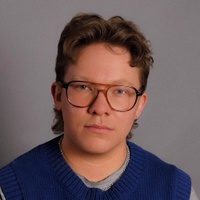
On finding the courage to create
Prelude
Roxane Gay’s writing appears in Best American Mystery Stories 2014, Best American Short Stories 2012, Best Sex Writing 2012, A Public Space, McSweeney’s, Tin House, Oxford American, American Short Fiction, Virginia Quarterly Review, and many others. She is a contributing opinion writer for The New York Times. She is the author of the books Ayiti, An Untamed State, The New York Times-bestselling Bad Feminist, the nationally bestselling Difficult Women and The New York Times-bestselling Hunger. She is also the author of World of Wakanda for Marvel. She has several books forthcoming and is also at work on television and film projects. She also has a newsletter, The Audacity, and once had a podcast, The Roxane Gay Agenda.
Debbie Millman is a designer, author, educator, and host of the award-winning podcast Design Matters, one of the world’s longest-running podcasts. She is the author of eight books, including Why Design Matters: Conversations with the World’s Most Creative People and Love Letter to a Garden. She is the co-owner and Editorial Director of PRINT magazine and co-owner of The Rumpus. Debbie co-founded the first graduate branding program at the School of Visual Arts in New York City and spent two decades as President of Sterling Brands, where she led branding initiatives for clients including Hershey’s, Tropicana, Gillette, and Star Wars. She is a former president of AIGA, serves as an Executive Fellow at Harvard Business School, and continues to write, illustrate, lecture, and create work at the intersection of design, storytelling, and culture.
Conversation
On finding the courage to create
Writer Roxane Gay and designer Debbie Millman discuss getting back to the page, thinking about the future, and remembering that publishing a book should not be easy.
As told to Arriel Vinson, 2823 words.
Tags: Writing, Publishing, Design, Collaboration, Success, Time management, Multi-tasking, Focus, Mentorship, Money.
What made you two want to take over [online literary magazine] The Rumpus and head in a new direction? Where do you see it going?
Roxane Gay: At first, I didn’t know that I wanted to take over The Rumpus. It didn’t happen accidentally, but the previous owner, Alyson Sinclair, had started putting out feelers to people who had been involved with The Rumpus over the years, asking if we had any ideas about someone who could buy The Rumpus because she was getting stretched thin, financially and in terms of time. It takes a lot to run a magazine, especially an independent magazine. So I told the woman who had approached me—Marisa Siegel, who was the owner before Alyson: “No, I don’t know anyone who’s in the market.”
[Debbie and I] were visiting my parents and walking our dog, and she was talking about some things they were dealing with with PRINT Magazine, which she co-owns. And I said, “Oh, it’s funny you should mention that because someone asked if I wanted to buy The Rumpus and I said no. Ha ha ha.” Debbie said, “Oh, we’re buying it.”
Debbie Millman: I think it was more like, “Are you crazy? We have to buy this.”
Roxane: She was very into it. I was into it, but I also knew what an endeavor it would be, because it’s not my first magazine rodeo… One of the most important things is to preserve a really wonderful legacy. This magazine has been publishing for 18 years now. We have a deep, deep archive full of really brilliant work from so many writers, both well-known and lesser known, but all equally talented. I really believe that independent publications matter. Having that kind of editorial freedom matters, especially at a time when we’re seeing so much contraction in the magazine space, especially the literary magazine space.
What is your favorite love story tied to The Rumpus or your favorite love story published on The Rumpus?
Debbie: Well, I’ll say Isaac Fitzgerald having a tattoo of The Rumpus on him. I love that. That’s love.
Roxane: I would say my favorite love story on The Rumpus was the relationship between Cheryl Strayed and her readers. She published “Dear Sugar” on The Rumpus, where it originally started. Those remain some of the most-read pieces on our site, even though many of them have been there for 15, 16 years. I read them and reread them occasionally. Talk about lightning striking and creating a really unique alchemy. The level of generosity that Cheryl extends to her readers—not only in her books, but in this column—is a really grand love story.
Debbie: She created a way of communicating with the people that wrote to her that you now see everywhere. If you look back at advice letters and responses before Cheryl and after, she absolutely changed the game.
Debbie, I know you have a lot to do with the design of The Rumpus. How do you two balance prioritizing the journal while keeping your own art at the forefront, especially at this point in your careers? How do you juggle it all?
Debbie: It’s challenging. Roxane is definitely taking the heavier lift with the day-to-day management, because the magazine has historically had more literary poetry, fiction, criticism, essays and so forth. My role initially was spearheading the redesign. Now that that’s pretty much done, I’ve been working with another editor that we brought on to help expand our coverage into additional areas. So my work has shifted primarily from creative to now working in the editorial realm as well. But Roxane is still doing a lot more than I am.
Roxane: I think we each do what we do. For example, I don’t know much about design—I know what I like and what I don’t like, and what looks good and what doesn’t. So Debbie has spearheaded the look of The Rumpus and will continue to do so. And she’s really building out a lot of cultural coverage, the art scene, music…
Debbie: We’re expanding into performance, food, art, and design—things that are close to my heart. I mean, they are to Roxane’s as well, but that’s the area that I’m running. So we’ve already brought on a number of new writers and columnists that will be writing every month. Yesterday, we debuted our first iteration of the Best Book Covers, which is now going to be monthly. But because it was the first one, it’s the “Best Book Covers of the Year (So Far).” Zac Petit—he was actually my editor at the printed version of PRINT Magazine years ago—will be spearheading that every month. We started the book club two months ago, which I’m hosting. We have some exciting things happening.
Roxane: In terms of balancing my work, right now it’s a bit of a struggle. It’s always been difficult. Someone told me early in my career that the more success you have as a writer, the less time you have to write, and that is absolutely true. So right now, I’m trying to figure out: “How do I balance the day-to-day and the administrative aspects of running The Rumpus with the fact that I am primarily a writer?” The balance is not necessarily there right now, but I do believe it’s coming because we’ve made some really good hires.
Roxane, you’ve been a stronghold in the literary scene, and your work both on and off the page has helped define what it means to be a writer and a literary citizen. What are you hoping to explore next in your work? What is inspiring you right now?
Roxane: My most important goal right now is just getting back to the page. I’m working on several book projects. I’m writing a book of writing advice, I am writing a romance novel, and I’m writing a YA novel. I just love writing, I always have. And I want to remind people I’m a writer first. It’s my creative ambition. It’s not that I haven’t been publishing books, but it’s been a while since I published a book that is a single-author book. And I have many of those on the horizon, fortunately.
I’m really excited to write a book of writing advice. I never thought it would be something I would do, but I was looking at the landscape and I realized that there aren’t many [single-authored] craft books by writers of color, to this day, and I just thought, “Why is that?” Our work is as informed by craft as anyone else’s, if not more informed by craft. So I’m hoping to fill that void a little bit, and also to encourage other writers of color, and Black writers in particular, to put out a craft book.
Debbie, you are prolific as well. You’re a writer, illustrator, and host of one of the longest running podcasts. You mentioned in an interview that design influences every part of life. What part of life is it influencing for you right now, and where are you allowing that to take you?
Debbie: I think that the design of my future is the focus right now. I feel like I’m turning a page in the direction that my life is taking, or ending a chapter and starting a new one. I’ve been giving a lot of time to thinking about how I want to spend my time moving forward, because I do a lot of different things. Time is finite and seems to be shortening in terms of how many days in front of me I have, as opposed to how many behind. I’m calling this the third chapter of my life.
Sometimes artists say, “I’m going to stay in my lane,” but you have so many different lanes. What is your advice to designers who are trying to do the same thing?
Debbie: I don’t think about lanes at all. If I want to try something, for me, it’s about getting up the courage to do something, not think about where it belongs. What abilities do I have that I can continue to grow? What new things do I want to try that don’t scare me too much to keep me from trying them?
Sometimes it’s just a matter of getting over that fear of trying. I don’t think at all about what I should or shouldn’t do, and I never have. It’s always more about can I do it as opposed to should I do it. I’ve always been someone that enjoyed doing a lot of different things at once, and having those things all influence each other. So I might be doing a podcast, but my students might be listening in and using that material as a way to think about their own lives. Everything has a bit of an overlap and a blur to it, and I really, really enjoy that.
I’m really impressed by how both of you manage to still follow your art and find ways to make that work.
Debbie: Well, I am 64, so I’ve been doing this a long time. And there is something that happens when you do things for a long time. There’s a sort of volumetric way of thinking about how the work you do evolves. In the body of work that I do, I don’t see them as separate entities, I see them all as a practice, and each part of the practice informs the other parts. I don’t think I would be as good a designer if I didn’t write. I don’t think I’d be nearly as good a writer if I didn’t read as much as I do. All of that informs every aspect of my practice.
What has running a journal taught you about your own work? What has it taught you about how to show up for emerging artists and writers?
Roxane: I remember when I was getting started and I was living in the middle of nowhere. Even as a kid when I was in Omaha and other places, I always wondered how on earth I would ever get my writing noticed in this world when I don’t have any magical connections. As I’ve gotten older and deeper into my career, I have found that people have a lot of conspiracy theories around publishing. And generally those conspiracy theories flourish in a void where there’s not enough information. They also flourish in a void that is created by rejection—and this just happens when you’re not yet mature enough as a writer— where you start to think, “I’m being rejected; clearly it’s a conspiracy theory because I’m brilliant.” You’re probably brilliant, but the writing may also need some work.
When I used to nurture some of these conspiracy theories about, “I guess you have to know someone to get anywhere,” it’s because I wasn’t ready to consider the probability that perhaps the work wasn’t good enough. Now I look back and I know the work was not good enough. Whatever else may have been going on in terms of systemic racism, misogyny, etc., the work wasn’t ready.
So I love to support emerging writers because I feel like those of us who have made it through the gates can bring others with us and share the ladders that we climb, and also fill that void of misinformation with facts and reality. We aren’t saying it’s not difficult, but it’s actually supposed to be difficult. It really is. Somewhere along the line, I think people started to believe that publishing a book should be easy.
Debbie: Nothing is easy. Working at Starbucks isn’t easy. Working at McDonald’s isn’t easy.
Roxane: Oh my god, I frankly find working in fast food to be one of the hardest jobs you’ll ever have. And this idea that easy means success is something I love to be able to disabuse writers of. There are so many amazing voices out there and that we can create spaces where emerging designers and writers can gain a little footing, get some mentorship—even if it’s a one-off moment of mentorship—is incredibly important. I have found a lot of amazing writers this way, and I’ve been doing this since I was at PANK, and I will continue to do this.
Debbie: I’m endlessly fascinated by how people create their lives, how they create and embark on being creative. I’m endlessly fascinated by the way in which people design the arc of their lives. And the more I understand how much effort it takes, the more in awe I am of the people that do it and the courage that they have to create art and music and beauty.
So many journals and magazines have folded in the past few years—a lot of my favorites like Bitch, Catapult, so many… What do you think your responsibility is to the literary landscape in taking over The Rumpus?
Roxane: I think it’s important to remember that nothing lasts forever. Magazines have always come and gone. People always [mourn] when a magazine shuts down, but you ask them if they subscribe to that magazine and 9.9 times out of 10, the answer is no. I think a lot of people support magazines in theory and not in practice. So I always try to remember that context when I see magazines closing because I know what it takes—not only in terms of time, but financially, if you want to pay writers. But even if you don’t pay writers, it still takes money to run a magazine. The website needs to be paid for. Everything costs money. The newsletters cost money. The social media posting tools cost money, and that money has to come from somewhere.
So our responsibility is to keep The Rumpus thriving for as long as we can and to always prioritize writers first and remember money flows to the writers. Paying writers and increasing our pay for writers to our current levels was our first priority. And right now, we pay very robustly. We pay a lot more than a lot of big magazines, and I hope we can sustain this for as long as possible. I’m also mindful that I’m trying not to put too much pressure on us because we’re going to do the best we can for as long as we can.
Roxane Gay recommends:
Adult Legos. This summer, I discovered the pleasures of building elaborate Lego sets, the kind with thousands of pieces that take countless hours to assemble. Putting these sets together is deeply relaxing and engrossing and frees me up to think through writing problems in my current project. I started with this gumball machine that dispenses mini-figures and then did a baby grand piano that actually plays music and now I am making an aquarium. Lots of excitement ahead. Get into it.
Singing along with “Rapper’s Delight” by The Sugarhill Gang is such a simple, deeply satisfying pleasure.
A perfect American buttercream recipe:
2 cups high fat butter
1 cup vegetable shortening
7 cups powdered sugar
2 tbsp good vanilla
1 generous tsp salt
1/4 cup heavy cream (milk also works but is not recommended)
In a mixer, combine the butter and shortening until it is glossy and smooth, it won’t take long. Add the sugar, one cup at a time, mixing until the sugar is fully incorporated. Add the vanilla and salt and mix until combined. Add the heavy cream, and mix at a high speed for 10-15 minutes. When done it should be glossy but firm enough for piping. Add food coloring as needed. If it seems too loose, add another cup of powdered sugar. If it seems too thick, add more cream, a teaspoon at a time.
One of my favorite TikTok rabbit holes is guys, mostly, who go into the wilderness with an axe and a shovel and maybe some sticks and matches and builds an elaborate little shelter or cave house or snow fort, for no apparent reason and at the end of the video, he makes himself a little meal with multiple ingredients. It’s very entrancing.
If you love a good glass of wine, you can never go wrong with the offerings at Brown Estate.
Debbie Millman recommends:
I can’t resist recommending a site about recommending: Recomendo
A daily read: Kotte.org, home of fine hypertext products since 1998
“The Morning After,” a poem by Ellen Bass
Glenn Gould, The Idea of North, part one, part two, and a bit of background on this remarkable piece of art
- Name
- Roxane Gay and Debbie Millman
- Vocation
- authors and owners of The Rumpus
Some Things
Pagination