On why technology doesn’t have to be hard
Prelude
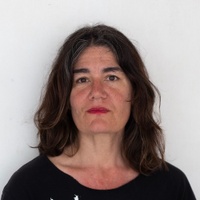
Nicole Jonasson is a digital designer and Ida Lissner is a digital artist. Together they co-founded SOFTER, a non-profit organisation and movement on a mission to change the narrative that tech is hard. Built on a feminist consciousness, SOFTER explores how softer values such as care, empathy, community, multiplicity, and collaboration can contribute to more equitable futures, through conferences, learning programs, labs, residencies, digital activities, and creative collaborations.
Softer Digital Futures, “the softest tech conference in the world,” takes place October 1–3 in Rødvig, Denmark.
Conversation
On why technology doesn’t have to be hard
Digital designer Nicole Jonasson and digital artist Ida Lissner (SOFTER) talk about what happens when the people affected by technology get to shape it.
As told to Mercedes Torrendell, 2151 words.
Tags: Design, Art, Technology, Culture, Inspiration, Collaboration.
How did SOFTER start?
SOFTER started because we were building render computers. Through that experience, we began questioning why technology felt so intimidating in the first place.
The aesthetics surrounding hardware and software were often stereotypically masculine and aggressive: products with names like “Predator,” interfaces designed to feel inaccessible, and branding full of fire, smoke, and machinery. It reinforced the feeling that maybe you were simply “not technical enough” to belong in that world.
It became clear to us that the problem wasn’t only that tech was male-dominated. The aesthetics, the culture, and the way technology was taught also made us feel uninvited. So SOFTER became a way of rethinking all of that: not just how technology looks, but how it’s taught, the cultures around it, and the assumptions about who it’s for and where it should be going.
What was missing that made you feel something like this needed to exist?
We wanted a space and a direction where we could see ourselves and our values at the front. A network of people helping each other learn and grow, and showing each other, and the world, that tech doesn’t have to be “hard.” It can be creative, soft and different. We wanted to support a new kind of tech person who cares about softer values.
We’re living in a world where we’re often presented with a very narrow version of the future, as if there’s one inevitable destination. We want to challenge the idea that the future should be shaped by a small group of people deciding the direction of technology for everyone else.
Why the name? What does “softer” mean to you?
We wanted a softer alternative across all layers: a way of working with technology that doesn’t feel so hardcore, serious or intimidating.
We call SOFTER a movement because we want to act as an interface for change and agency. We want to give people the resources and the confidence to change the way we live with, and interact with, technology.
What was hardest in the early years? Funding, time, being taken seriously?
All of the above. Funding has been, and still is, a journey. For many years we worked on SOFTER alongside freelance and full-time jobs, and it’s hard to balance all the things we could do, should do and want to do. It’s also hard to go from a project where no one is paid to having people working and getting paid. That creates new expectations and new ways of organizing.
We still work with small budgets. People from the outside often think we’re a much bigger organization than we are, when in reality we’re a very small team figuring things out as we go. The hardest thing is probably accepting that you will make mistakes, and that there are always a thousand things you could have done better.
Was there a point where you thought about stopping?
Yes, many times. But we always seem to find the drive again. Sometimes we just need to step back and see things from a bigger perspective.
Events like Softer Digital Futures give us so much motivation. When you feel the energy in the room, and see that the project is meaningful and changes something for someone, it reminds us why we continue.
You started as two people. Now SOFTER is a team, a lab, satellites and volunteers. What has that taught you?
More people means more perspectives. It opens doors to things we couldn’t do if it were just the two of us. We’re very proud of the London satellite, for example. We’ve built a really strong relationship there, and it feels like a natural extension of SOFTER.
The path of SOFTER has been shaped by the people who’ve become involved over the years. People come in with their own energy and passion and help change the direction, so SOFTER is constantly being shaped by the community around it. Everyone changes what SOFTER means. That’s both the blessing and the curse.
Acknowledging the people who shaped your work seems central to how SOFTER works. Why does that matter so much?
Knowledge is built and grown through relationships. We build on knowledge from people who came before us and from people working alongside us. We grow with each other and learn from each other, and we should acknowledge that. For us, it’s less about the individual “genius” and more about collective understanding.
Why keep saying these things out loud in tech? Softness, care, everyone at the table. What changes when all voices are part of the conversation?
The digital systems we build are shaping our working lives, our relationships, our democracies and our understanding of the world. So the conversation about technology also needs to be a conversation about power, ethics, care, community and human wellbeing.
Historically, keeping people in ignorance has been a strategy for maintaining power and control. Mystification creates hierarchy: When knowledge is concentrated among a few people, everyone else becomes dependent on their authority. Technology can work in a similar way. People are made to feel that computers and digital systems are too complicated to understand, so they become dependent on companies and experts to make decisions for them.
More diversity and more transparency change that relationship. When people understand how their devices work, they gain agency. They can question systems, repair them, change them and imagine alternatives. Knowledge creates participation instead of dependency.
SOFTER’s line is “rewriting the narrative that tech is hard.” What do you want to replace it with?
Since the beginning of technological development, we’ve been promised a better life: more connection, convenience, creativity, and more time for what we love. But to be honest we’re starting to question whether the direction of digital development is actually making the world better. We want to question a tech culture shaped by competitive systems that prioritize optimization, and endless growth.
We ask questions like what would happen if the people affected by technology were also designing, building and regulating it? If we were in charge of our personal data, our lives and our attention? Imagine a world where the promises of technology are actually fulfilled. Where we spend as much time caring for ourselves and our surroundings as we do checking notifications. A world where we can actually feel ourselves.
For us, feminist consciousness means understanding that there’s no single universal perspective. In practice, that means asking: who is excluded from this technology? Whose labour is invisible? What resources are being extracted? What impact does this have on people, communities and the planet? Rather than simply rejecting the technologies shaping our world, we ask what it might mean to reclaim them, reshape them, and tell different stories about them.
The loudest conversation in tech right now is about AI, speed and scale. Where does SOFTER stand?
We’re deeply concerned about the way AI innovation is being pushed and rushed forward. It has intensified climate concerns and created a sense of precarity and uncertainty around the future.
At the same time, there’s a silver lining. AI has made it easier to learn about subjects that used to seem incredibly difficult. We’re seeing it contribute to a rise in home-built hardware, and make it easier for people to imagine different ways of interacting with their devices.
We can imagine a future where homemade cyberdecks and other self-built technologies become real alternatives to mass-produced corporate devices. If more people learn to build, repair and modify technology, and companies make more customizable and transparent tools, it could fundamentally shift our relationship with digital culture. But that requires education, and creativity is one of the best ways in.
How do you see the relationship between technology and art?
Artists can translate things that are difficult to describe with words into images, emotions and experiences, and that opens our minds to new ways of seeing. We think creative practice can make technology more accessible and easier to understand, and help us imagine new digital futures. Art can be a tool for education and speculation, but sometimes it’s also the first step towards making something real.
A lot of the people around SOFTER taught themselves the technical side. What does that do to the work?
We always say the “beginner” or “amateur” perspective is really interesting. When you’re not formally trained in something, you don’t necessarily have the same ingrained ideas about how things “should” be done. That can be a real benefit when you want to imagine alternative futures.
For someone who wants to get into 3D, code or electronics but finds it intimidating, where should they begin?
Come to a SOFTER event! Find people to follow online, and reach out to people in your area who are doing things you find interesting. There are so many resources online, and there’s a growing movement of “softer” people teaching technical subjects. The important thing is finding a balance between learning alone online and meeting people in real life who are doing what you’re interested in.
And don’t be afraid to make mistakes. It’s a cliché, we know, but you only learn if you try.
What do you wish someone had told you when you were starting out?
Don’t be afraid to ask questions and ask for help. Most people love to help. And you don’t have to know everything before you start. Being curious and willing to experiment can be just as valuable as being an expert.
What is Softer Digital Futures, and how has it changed since the first edition?
We made the first one in 2022, after the years of lockdown. We wanted to meet people in real life, and we wanted an excuse to invite a lot of the people we looked up to and who inspired us.
We called it a conference because we had strong ideas about what a classic tech conference looked and felt like, and we wanted to challenge that. So we called it the softest tech conference in the world.
The first five editions centered around a main-stage program. This year we’re expanding the format, with hands-on workshops happening at the same time and SOFTER’s Lab format brought into the program. It sits somewhere between a conference, a summer school and a festival: intimate, interactive and experimental, with more time for making and talking. It’s less about consuming information and more about building things together.
This year’s line-up is almost all artists and makers. What do you want people to leave with?
We want to show creatives who use creativity as a way to play with digital devices, learn new skills and find new ways of building technology. Ultimately, we want people to leave with a feeling of agency.
Participants might build a tiny soft computer from fabric and electronic components, set up their own local server network, explore generative image making, work with nature and technology, question the relationship between humans and technical objects, or simply slow down and notice the world around them.
What are you most excited about this year?
As organizers, we’re excited to see how it works with all the workshops and sessions happening at the same time. And we’re especially looking forward to the Glitch workshop with Kalpana Arias, where we’ll plant flowers. We love the idea of actually going into a garden and planting things in the middle of a tech conference.
Where do you see SOFTER in five years?
The movement is growing. We believe it’s more important than ever to rethink how we learn and who we learn from, and that the future of learning will be shaped by creativity, curiosity and communities, not only by AI and institutions as we know them today.
Alongside our physical events, we hope to build a “small tech” infrastructure: breaking up with big tech, and moving education beyond traditional classrooms.
We imagine a digital universe combined with a physical network, where education and community can live, grow and evolve over time.
What would you say to someone finding SOFTER for the first time this October?
Come as you are. You don’t need to be a programmer, engineer or tech expert. You don’t need to arrive with the right knowledge or the right equipment. Bring your curiosity.
SOFTER is a place to meet people, learn something new, make things, ask questions, experiment, and imagine what technology could look like if we built it around different values. You’re invited to be part of it.
Nicole Jonasson and Ida Lissner recommend:
Homemade meals from seasonal vegetables
FKA twigs (the perfect mix between soft and hard)
Slow mornings, and days where we can just go with the flow
- Name
- Nicole Jonasson and Ida Lissner
- Vocation
- digital designer, digital artist Ida Lissner, and founders of SOFTER
Some Things
Pagination