On when to divert from the plan
Prelude
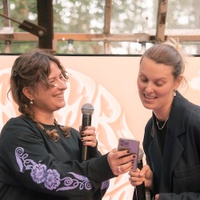
Classically trained pianist, composer, producer and vocalist Marina Herlop has established herself as one of the most distinctive and innovative voices in contemporary music. Following the release of Pripyat (2022) and Nekkuja (2023), two albums that positioned her among the most acclaimed artists in the international experimental scene, the Barcelona-based artist spent three years touring some of the world’s most renowned festivals and stages.
She now returns with Dja Dja, her boldest work to date. The new tour marks the live premiere of this body of work through a completely reimagined performance, developed over more than two years of research, composition and production. It opens a new chapter in the career of an artist who continues to challenge the boundaries of contemporary music and cement her place as one of the most compelling creators of her generation.
Conversation
On when to divert from the plan
Musician Marina Herlop discusses the joy of creation, reckoning with absurdity, and finding another way when you aren't convinced.
As told to Maria Owen, 2823 words.
Tags: Music, Process, Collaboration, Focus, Inspiration.
Your background is in classical piano, but you have a very avant-garde style. Were you always writing avant-garde songs, or is that something that came later?
When I started making music, and even nowadays, I don’t have a direction in terms of genre or sound or style. I just have a direction in terms of quality and criteria and joy. Basically, what I want to experiment with is feeling aesthetic pleasure. I want to reach that feeling of, “Wow,” when I listen to it.
I feel like I don’t choose the features that configure the style of the genre. For example, my first two albums in 2016 and 2018 were made up of just piano and vocals. I never sat down and thought, “I’m going to make avant-garde music because I want to reach these people.” I just played piano because it’s the only instrument that I knew, and I tried to make music that made sense to me with the little knowledge that I had. I remember thinking that maybe I was more drawn to intricate, unconventional music because that’s the kind of music I was listening to back in the day. But I never made a decision to be an avant-garde musician. It was a discovery in hindsight, never something premeditated. It came naturally.
Did it feel normal to you because you were referencing artists who you already knew and loved and were interested in?
I never think of references when I’m making music. It’s not something that I know how to do. If I had to try, I think I would fail. All the references are accumulated in my subconscious and blended in a particular way that comes out in different proportions every time, depending on what music I’m making.
There was a lack of awareness, especially when I first started making music. I was 24, but I was so naive. I had no idea what I was doing. I had no agenda at all. I just made piano pieces because I wanted to have gigs.
It seems like so many artists struggle to escape the people they admire, but it sounds like you’re having the opposite experience where you’re in your own world. You admire other people, but it’s impossible to imagine them entering what you’re making.
I mean, I would love to sound like the people I admire because I admire them a lot! It’s difficult to categorize myself as a composer when they are composers. It’s difficult for me to think we are doing the same thing because what they do, in my view, is on another level. So whenever someone says “Your music reminds me of…,” it’s a huge compliment. I would love to know more music, to learn more and have more tools to make different kinds of music. That’s my plan, actually.
What you’re telling me is making me think about the role of the ego in making art. When the ego can fade into the background, the most authentic or free work happens. Is that something you think about?
Yes, and my opinion on this has been changing. At least for the moment, I’m quite at peace with my ego because I don’t think it interferes with the creative process. Sometimes it can be an ally. When you first get deep into the creative process, your ego gets weak because you understand that none of this makes sense, and then you yourself don’t make sense, and then you don’t want to have any kind of success because what’s the purpose? Because we don’t matter. But, then if you want to keep on making music, you need to not have another job, and to do that, you need the project to have a little success. And ego helps sometimes, so it’s like, “Come here. Welcome back. Please join us again for a second because we might actually need you now.”
Sometimes it can help if you’d like to have some approval, even if it’s from your friends. All those things that are a mixture of ego and love. I want to be a part of a community, or part of a social group. I want to be accepted there. I want to be loved.
Your ego wants you to be special. It’s like a little kid. The moment you look at it and laugh at it and make fun of it, it sort of gets transferred. It disappears. It’s like you cannot look at it. It’s like silence. The moment you name it, it’s gone.
It sounds like you have a good relationship with it. You know when it’s helping you and when it’s hurting you.
I like to find the comic side of things. I like to make fun of everything. Even though I take music really, really seriously, I also make fun of myself. I can’t help it. It’s a bit absurd sometimes.
Tell me more about the absurdity.
I’ve just finished an album. I was very determined for things to be as good as possible, but I don’t know why. I’m trying to find an answer. I know that music is essential. For me, it’s one of the top two best things in the world. But I’m not saving lives like a doctor, and I’m not building a house. I find myself feeling intense emotion for something that is not vital. This process has dragged me emotionally. The creative process was leading, and I was following, and along the way I was having ups and downs. I didn’t want to give a lot of credit to all of those emotions because I know that no matter what, everything would be okay. I’m a very privileged person, I’m healthy, so is it fair that I’m feeling this way if nothing severe is going on? Making music can be very virtual and very absurd.
Do you see yourself as a channel or a vessel for a larger creative impulse? Do you think it’s a question of purpose; are some people fated to create things for others to experience?
I don’t know if I am a channel, but I certainly do not feel free or like I’m creating. I feel I’m always trying to understand what is needed and working to achieve that. It’s like the music is asking for stuff, and I just need to understand what it’s asking for and to follow its command. There’s always one option that is better than the other, and you need to find out which one to pursue.
When the music is asking for something but you don’t know which road to take, what helps you make a decision?
There is a lot of analysis in the process, but what drives that decision is like electricity, like an amygdala sparkle. It’s intuition and it’s a sense of pleasure when you’re listening to it. It’s a question of which option brings more pleasure? It’s very difficult to find the right path, but it’s very easy to know when it’s right.
Sometimes it’s dramatic because you put a lot of work into something, but when you listen to it you realize that it’s not what you’re looking for. Sometimes it’s like, “I wish I could cheat on myself.” But if it’s not what you were looking for, then you need to redo it. And believe me, 100 percent of the times that you redo it, you end up finding the right way. And when you find it, your brain learns that it was worth it to go through all of that difficulty.
If you’re not fully convinced, it’s always worth it to try to look for something better.
That’s good advice for many things, not just music. Tell me a little bit about this new album and if there was something specific that you wanted to explore in making it.
I wanted to try to make an upgrade internally as a musician, not as an external project. That’s not my responsibility. I cannot control that. But internally, I wanted to try to do something more. It sounds very abstract, because what does that mean?
I knew that I needed to put my attention on the structure of the whole album. I wanted to understand the album as a single piece because that felt more challenging. The comparison would be like writing a novel instead of writing short stories. I’m more used to working on the structure of the song, but the structure of the album was new to me. I planned it out from the beginning because I was trying to avoid writer’s block. The more commands or the more prompts I had for myself before starting, the better.
I designed a big map of what the album would be. I tried to be specific. The main pro was that I had a schema to follow. But then the con was that I had restrictions. Well, restrictions are a pro and a con at the same time. I had some restrictions that I really had to follow, which, again, is a bit comic because I never had to follow them because I made them up. No one in this universe forced me to follow any rules. Despite that, it felt valuable for me as a musician to stick to them. I wanted to prove myself that I was able to try to diagnose what the music needs. “This part of the album needs this vibe, or needs this tempo, or needs these instruments.” If I’m a musician, I should be able to make that, and if I don’t know how, I’m going to learn how.
This became a bit of a problem because there are a lot of sections. Every song had its challenge. So it became like research. At first, a lot of things were not working. The first take was never the good one. You know what they say about how in the end, you end up keeping the first take? No! That was not the case here.
What’s an example of something you tried that ended up being really challenging? Something you scrapped, or maybe you ended up learning how to make it work.
There’s a moment in the album, song number 10, that I wanted to be very short. It lasts less than two minutes, but it had to be disturbing. It’s the lowest point of the album—all is lost, there’s no hope.
The easiest way to do that is to make really atonal music, like a cluster or very harsh sounds. But I didn’t want the album to have a song that I wouldn’t listen to. I never listen to stuff that is too disturbing or too “horror movie.” I didn’t want the album to have a song that people would skip or that I myself would skip.
I organized the work that I needed to do, but ended up not achieving any of my own deadlines because everything took longer than expected. I thought that I would do this song in two days, because it’s a short one. The songs that are complex need more time.
Then I started on song 10, trying to figure out how to create this effect. I thought about how repetition makes you sometimes feel like you’re in a safe space. I decided to remove a loop and that sense of familiar repetition.
It ended up taking many more days than expected because nothing was right for it. It was very challenging to do. I wanted to do something that felt disgusting, but also needed to be beautiful in a way. How do you do that? If it’s too disgusting, you don’t want to listen to it. But if it’s too beautiful, it’s not disturbing. It was a very thin line.
I’m going to appreciate song number 10 so much when I hear it! No skips.
Hearing you speak, there’s a real sense of joy and pleasure in what you’re doing. You clearly appreciate that you have this opportunity. You’re consciously creating an architecture for your own experimentation. The most difficult thing is when somebody says, “You can make whatever you want.” There are always too many options. It’s easier in many ways to have parameters or a specific goal.
After approaching this album with a kind of assignment, I don’t really know how I used to do it in the past. It feels strange to think that I once approached music without any premeditated idea or set of parameters. The process used to be more random and unconscious, less deliberate, and I’m not sure I could (or even know how) approach it this way again. I started music just without having any plan. And this time, I felt like I was trying to tame a horse—the music was indomitable and it was trying to go its own way. Eventually, we found a middle ground. Following the plan was a good idea, but there were also moments where the music took me to more interesting places than the instructions. I stuck to the plan quite a lot, so there were moments where I said, “Okay, we can afford to not stick to the plan 100 percent on this one.”
Did you have a narrative in mind for the plan?
I followed the Hero’s Journey mainly for architectural reasons. The amount of intensity in each section is quite balanced. I wanted for this album to be simultaneously aggressive and delicate.
In my personal opinion, I see music serving other things too often—like image, narrative, a love story, or an artist. The music complements the artist, and the artist is the focus. The poor music! For me, music is the queen. I don’t want the narrative to be the main character in this album. The main character is the music, and the narrative supports the process.
I ended up following the story and trying to recreate the particular vibes from every moment of the journey. But the purpose was not to explain that story. The purpose was to make music. Ideally, once the album is done, the music can work on its own even if the narrative is taken away.
Narrative can also offer an entry point for people who are new to your music. I think that experiencing certain emotions in a recognizable order can awaken something familiar inside the listener. What was this process like?
The album is a big picture, and you need to step back a lot to see the whole structure. While you’re making it, you cannot step back because it doesn’t exist yet. You have no clue if, when you step back, it’s going to make sense.
I put my trust in a piece of cardboard that I had on the floor of my studio with the map written on it, but my acoustic imagination was not developed enough for me to hear the whole thing in my head. I had no idea if it would work.
I was using orchestra instruments and the album started to take on an epic vibe. It could easily become too much. Every piece depends on the other pieces. I had to change certain things in some songs to avoid unnecessary repetition. You cannot just chop a section off because you might lose the climax. Every song has its internal balance and structure. I learned a lot.
Finally, are there any words of wisdom or advice you’ve received that influenced you or encouraged this creative process?
With this album, I was working with my friend Adri, a great musician. He’s been like a score doctor. He used to come to the studio, listen to what I had been working on, and give his opinion. His main advice was to remove stuff—I’m very maximalist. In the later stages of the journey, that piece of advice started to really make sense to me.
When you’re recording the vocals and instruments and mixing them to sound nice, everybody starts to ask for your attention. The vocals, of course, ask for your attention, the bass line, and so on. Everything sounds nice and has its own kind of glitter. But in the later parts of the process, I removed many things. Even still, if I had to redo the album again, I would put less elements into it. For the next one, I’m going to try to be more minimalist! It’s not very profound, but it was really good advice.
Marina Herlop recommends:
Music: I recommend giving Ravel’s La Valse an active listen.
Movie: Come and See (1985)
Book: Immortality by Milan Kundera
TV Show: Nathan for You
Activity: I recommend learning to play a new instrument, or picking up a new hands-on hobby, simply in search of joy and without too many expectations. It will only bring good things into your life.
- Name
- Marina Herlop
- Vocation
- musician
Some Things
Pagination