On balancing creative work and parenting
Prelude
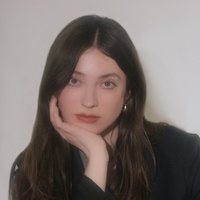
Elizabeth Weinberg is a photographer, director, and creative based in Los Angeles. Unbounded by traditional constraints of genre, she spans the worlds of portraits, advertising, and reportage across motion and stills, working in a relaxed, no-frills manner that brings out the shared humanity in all of her subjects. Her unique ability to fuse a loose approach with measured precision for the moment has made her a sought-after creative partner for respected clients across the editorial and commercial spaces. She is passionate about seeing a vision through from start to finish, from initial creative direction and writing, to production, down to the edit and grade.
Conversation
On balancing creative work and parenting
Photographer and director Elizabeth Weinberg discusses the pros and cons of a fluid schedule, diversifying what you do, and why a little chaos is good.
As told to Giuliana Mayo, 2670 words.
Tags: Photography, Film, Income, Family, Beginnings, Independence.
You come from a classical photo background, and then segued into the digital world. What was that like, having a traditional education and then moving and adapting as technology changed?
I started working in New York when I was 22 at this small dark room and it was very film based. We would have guys coming in with hundreds of rolls of film to develop. And it taught me a lot about that world, not only the agent world and the client world and how everything worked, but just about the labor involved. Getting photography out from the shoot to the magazine took like 10 more steps than it does now…
The digital boom kind of corresponded with the financial crash about 2007 to 2008. That’s when I began doing my photography to try to make a career of it. And I found that I had an advantage in that I was able to take the knowledge I learned from the dark room. I learned how to do color printing really well from masters, like people who were printing for Annie Leibovitz, people who were printing for the big guys around the world. That color knowledge and that kind of attention to nuance and just tone and stuff like that on the image was very helpful to me.

Then, around 2008 to 2009, you could tell that there was a really big disconnect between people who didn’t really understand how to do digital photography and people who were film people.
I was just thinking about how it’s so irrelevant now, because anyone can do it with filters and stuff, but I was able to make my digital images look really good and filmy. And I was like, wow I think I have something here. Now I feel like it’s kind of the expectation of a photographer to be able to make your digital images look good. But for a while there, I remember we would have really really high end photographers coming into the lab with beautiful film imagery, and then I’d see some of their digital stuff, and I’d be like, “Oh God, they don’t know how to process this.” Because it’s just like, you need to learn. You need to go on the computer and figure it out.
There were no smartphones to shoot photos with. You had to have a digital camera. You had to have the practice. And I remember I got my first digital SLR to shoot the CMJ music fest. It was in October, and I maxed out my credit card, buying a [Canon] 5D so I could shoot it. That was my first camera in that world. I was broke, I was 24 years old and that was how I first started trying to bridge that classical photography gap.

You’ve talked about the challenges of being a mother and a freelance photographer. How did things change for you when you had a kid, and how have they changed since you had a kid?
When I first had my son, it was 2013 and looking back, I think things have changed for the better, but at the time, I didn’t really know much about what was going to happen. I was one of the only people I knew in my friend group who was even pregnant. I was 31, which is not that young, but it’s kind of young for LA and even New York. You know, creative people kind of want their career to get started first. So when I had him, I really did not know what to expect in terms of the work.
At the time I was married and my husband had a full-time job, and so we were stable in that way. And what I realized was I did not want to just be a stay at home mom. Around two months [after giving birth], I started getting really antsy. I was like, “I need to work. I need to be proactive.” So I made all these promos. I strapped him to me, I went to the post office and sent a bunch of stuff out. I did a big email blast being like, “Hey, I’m back. I had a baby, but I’m ready to work again.”

Because what happened was, when you’re pregnant, it’s like, you don’t know how you’re going to feel in four months. So I was getting put up for these jobs, and I was like, “Well, I feel great now. I don’t want to be put up for this job, this six figure budget job that they’re going to be relying on me, and then I can’t do it…” But it’s the kind of thing that you just don’t know, and it’s hard. You don’t want to get blacklisted for failing.
Word had kind of spread through the art production world that I was pregnant. So I noticed that work slowed down a lot for me and I got really, really, really sad about it. I was at this point where we couldn’t afford a nanny, but I also needed to be able to work at the computer and to get work.
What people don’t think about is that photography is not just shooting. It’s slogging through emails. It’s putting together PDFs to send to clients. It’s a lot of computer work. And when you have a baby, you just really don’t get those chunks of time to concentrate on that. I started doing personal projects whenever I had the chance to try to make new work, make new work, make new work. And it slowly started coming back. But it’s really difficult when you’re a freelancer and you don’t have maternity leave and there’s no real way for you to come back to work.

I have a friend who’s pregnant right now, and she’s a nurse, and I asked her how long she was planning on working, and she’s like, “Oh, until it drops. There’s no support here.” I think she’s got four weeks of maternity leave, and then has to go back.
Wow. I mean, you don’t even go back to the doctor for your checkup until six weeks later. That’s like, when you’re kind of cleared to live your life again, The idea of having to go back and then you’re paying for daycare or whatever, and it’s more than you’re making, or, oftentimes can be. You’re kind of stuck between a rock and a hard place when you’re a freelancer and you need to work, but you also want your baby to be taken care of.
Looking back, I really just kind of cobbled it all together for two years straight. I would take him with me on set when he was a baby up until about seven months old, because he was very chill. I would just, you know plop him down [in his car seat] and he would chill there. The last shoot I was able to take him to… I photographed Aubrey Plaza for Refinery 29 and he was screaming so badly that I got yelled at by the photo editor. I was so upset that they were blaming me for my baby crying. And they were like, “You need help with childcare? You should have let us know.”
What were they going to do?
Exactly. Now I have photos of her holding him and it was fine. I was trying to change the narrative a little bit like, “Hey, why can’t I bring my son with me? He’s not hurting anyone.” They were so worried about this air of being “professional.” And I’m like, Why does being a mom have to be unprofessional? I made a human. It’s pretty cool.

You started out studying photojournalism, but now you’re doing commercial work, you’re doing video work, celebrity work. How did you diversify so much?
Well, I started in music, so I’ve always had the storytelling aspect of my work just in that. I would go be backstage at shows documenting and learning how to tell a story that way. But the path is so funny, because I was an early internet person. Starting around 1994 I was online. I had a website by 1995 or 1996 and I was always putting my work out there. I wanted to be a graphic designer, but then I was taking photos of bands, and I was always putting my work out online, on Flickr, on my blog, that kind of stuff. And people started seeing it, and I didn’t really ever think about genre looking back.
My first ever editorial shoots were for Nylon, and they were kind of like fashion trend pieces. I would have a model and just a bunch of clothes, a stylist would come and we would shoot stuff. I never thought “I’m a fashion photographer.” I never thought “I’m this, I’m that.” I was just taking pictures. I never thought about the larger: How am I marketing myself? Those things just never entered my head. I’m kind of envious of my previous self in that I wasn’t really overthinking all of the strategizing of a career.

I guess that’s what I’m curious about. Does anyone teach you how to do this, or do you just kind of find your own way?
I never went to school for commercial photography. That’s the sort of thing where, if you’re in those kinds of programs, they’re helping you build a portfolio, they’re teaching you how to make a portfolio. I came out of school learning how to be a visual journalist, someone who can tell a story. I didn’t know anything about advertising. I didn’t know anything about even editorial, really, except newspapers.
The first big ad job I got was in 2009 for Sony Ericsson…It’s just so funny to look back. I was 26 and I made more money on that than I ever had in my life. I was able to pay off all of my debt. It was a kind of lifestyle shoot with the Sony Ericsson phone. So I was shooting it with the phone, which is funny to think that that was a novel idea back then, because that’s kind of all we do now. But even in that time period, I wasn’t thinking, “Oh, now I’m an advertising photographer,” or “Now I’m just a lifestyle person.” I was still figuring out what I like to do. And then the next year, I remember very clearly having this lightbulb moment where I did a shoot on Coney Island for this brand, Mishka. I don’t know if you remember that brand.
Yeah! I styled some shoots for them back in the day.
I had a friend who got me hooked up with them somehow, and I didn’t get paid. I had like, four or five models. We went down to Coney Island and we ran around all day, and I was like, “This is what I want to do. This is so fun.” Whatever this is, this fashion/lifestyle is awesome, just running around, having a blast, getting great pictures of the clothes, getting people in their element, just action, and using the visual language that I’ve been trained to try to tell a story, but, you know, advertise something. And so that’s kind of what I’ve really focused on over the intervening years.

When you’re talking about working with a big client like Sony, or you’re talking about working with a small brand like Mishka there’s a different level of management and collaboration required. How do you learn to run a set well?
I think that just comes from the fact that I’m good with people. And I also remember very clearly not wanting to be a bad boss, because I had had so many bad bosses before that I wanted everyone to have a good time and not be stressed and be happy to be there.
So kind of the opposite of an Annie Leibovitz set, from what I’ve heard.
Yeah, and that’s why I love it. I have my assistants who are like, “When’s the next shoot?” I’m like, “Yes! I want you to want to work with me.” I don’t want you to be scared. I really do like the social element of being on set with a big crew of, you know, 50 people. And then I also love the element of being in a really intimate setting with just me and a subject. I like going back and forth, because I never want to do the same thing every day.

So what does a typical day look like, then?
I have my son every other week. This is an off week, so I can sleep in a little bit. I just walked the reservoir. I went to grab coffee and I’m going to have a friend come over later, we’re going to edit photos. I have the things that are set, like, I have a shoot tomorrow, I have a meeting on Thursday. Those are in my calendar as set things, but everything around that needs to be just whatever happens.
Obviously I have deadlines and things that need to be done, but the magic for me of being a freelancer is that I’m not in a rigid schedule. My brain can’t do it… There needs to be an element of mystery for every day. And so the days when I have my son, it’s a little more planned out. I love having that go every other week. So it’s [he goes to] school and then I can figure out what I’m going to do. Then I have to pick him up, or he has all of his activities so I have to drive around. That kind of fills up the time. Every other week has a little bit of a more rigid schedule, and then I have a kind of free-for-all schedule. Which is, within the ecosystem of my schedules, perfect because it’s all still chaotic.

I feel like everyone I know who is divorced talks about how much better parenting is because they can have some time and personhood.
I’m a big co-parenting evangelist. It’s amazing. When I’m with him I’m so on. I think that I’m a more present parent those weeks that I’m on. I think it’s made me a better mother, truly, because I’m able to have that time to myself. So many of my friends have babies and they’re like, “Oh, I gotta get out of the house.” I’m like, “I will hang out with you. You need to get out of the house. Yes, your dude can stay home.” It’s so important to remember who you are as an individual, and not just you know, have a baby attached to you all the time.
Elizabeth Weinberg recommends:
KPBJ 95.9 FM: Freeform community radio serving the eastern San Fernando Valley and beyond. Coming to the airwaves later in 2026 and streaming online at kpbj.fm :)
The new Tiger’s Jaw record Lost on You
Seth Speaks by Jane Roberts (or any of the Seth Material, but this is a good start). From the 60s to the 80s Jane channelled an entity named Seth who explained consciousness in ways that mirror what quantum physicists are still discovering.
Weed as a social supplement instead of alcohol
Eckhart Tolle and The Power of Now
- Name
- Elizabeth Weinberg
- Vocation
- photographer, director
Some Things
Pagination